

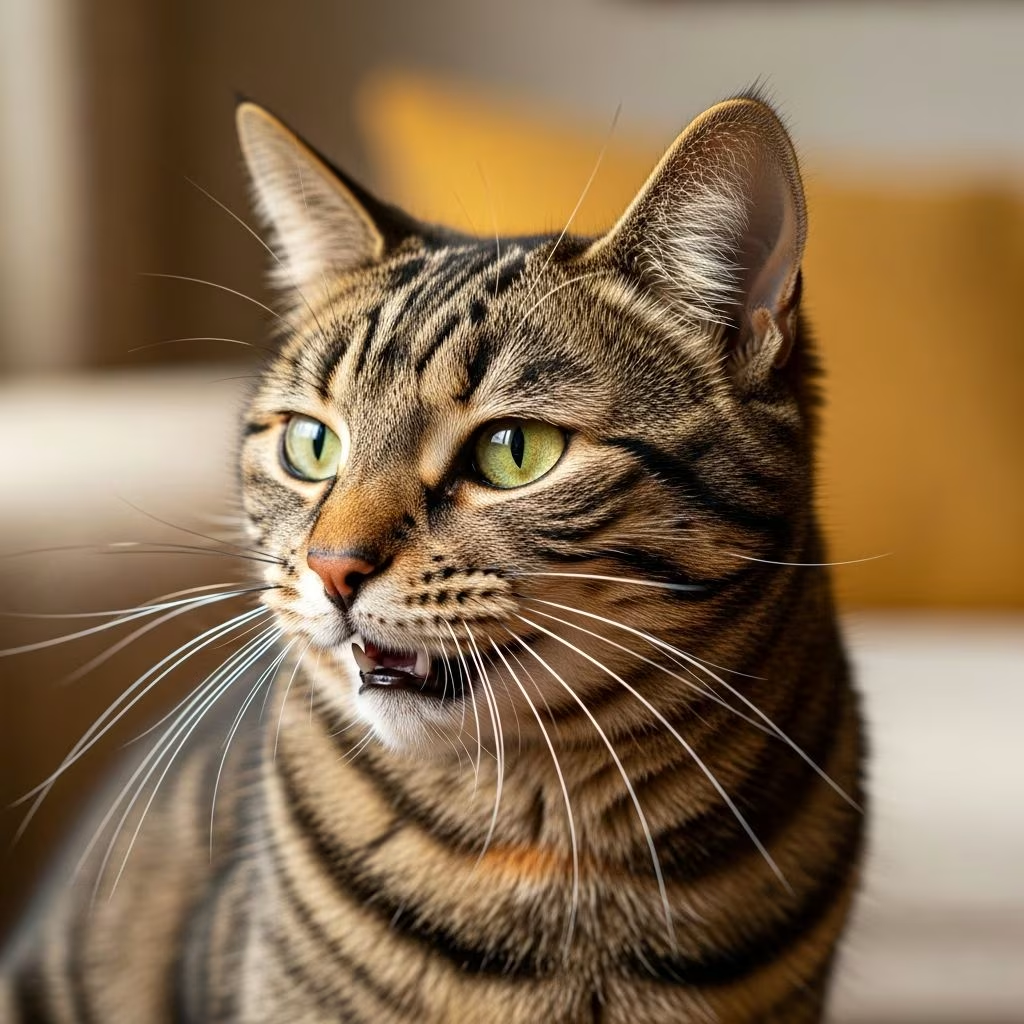
Cats are renowned for their soothing purrs, but when your feline friend purrs excessively, it sparks curiosity. Is it pure bliss, a cry for help, or something else? Purring occurs at frequencies of 20-30 Hz, produced by specialized vocal cord pads that enable low-frequency vibrations without constant brain input. While often linked to contentment, research reveals multiple triggers, including healing, communication, and stress relief. This article delves into the science, reasons, and when to consult a vet.
How Do Cats Purr?
The mechanism of purring has puzzled scientists for decades. Early theories suggested active muscle contractions in the larynx 30 times per second or blood flow through the vena cava, but recent studies refute these. A landmark experiment in Current Biology isolated larynges from euthanized domestic cats, pumping air through them to produce purrs at 25-30 Hz without neural input, confirming passive self-sustained oscillation like meows or hisses.
Key to this is fatty ‘pads’ in the vocal cords, increasing density for slower vibrations despite cats’ small size (around 4.5 kg). Laryngeal muscles and diaphragm collaborate, with a neural oscillator in the brain firing 20-30 times per second to open and close the glottis, generating pressure bursts and sound on inhale and exhale. This passive process starts with a brain signal but sustains itself, explaining why cats purr effortlessly during sleep or distress.
- Vocal cord pads: Enable low-frequency purrs in small cats.
- Neural oscillator: Triggers rhythmic glottis movement.
- Passive vibration: No ongoing muscle contraction needed post-initiation.
Reasons Why Cats Purr
Cats purr for diverse reasons beyond happiness. The 20-150 Hz vibrations serve communication, healing, and soothing. Kittens purr within days of birth to bond with mothers, signaling needs like feeding. Adults continue this, using purrs contextually.
1. Contentment and Happiness
The classic image: a cat purring during pets or cuddles. This signals safety and pleasure, often with kneading or drooling from euphoria. In clinics, relaxed cats purr in sunny spots, content and alive.
2. Self-Healing and Pain Relief
Purring may promote healing. Frequencies (20-50 Hz) align with bone growth, wound repair, and pain relief, per researcher Elizabeth Von Muggenthaler. Studies show vibrations aid bone strengthening, tendon repair, and reduce swelling. Cats purr when injured, potentially self-soothing or accelerating recovery. Mouse studies confirm low-intensity vibrations promote granulation tissue for wounds. In hospitals, stressed cats purr continuously for comfort.
3. Communication with Kittens
Mother cats purr while nursing, guiding kittens to milk via vibrations. Kittens purr back, strengthening bonds and alerting to needs. This instinctive behavior persists lifelong.
4. Stress and Anxiety Relief
Counterintuitively, cats purr under stress—in traps, vet visits, or pain—to self-soothe. Submissive cats purr to dominant ones, reducing aggression risks. It calms nerves, like human humming.
5. Soliciting Food or Attention
Cats manipulate owners with ‘solicited purrs’ embedding high-frequency cries (like baby wails) in low purrs, triggering caregiving instincts. Hungry cats purr more insistently at mealtime.
6. Greeting and Social Bonding
Purring greets owners or other cats, fostering bonds. It signals non-threat, promoting harmony.
| Reason | Context | Frequency Range | Evidence |
|---|---|---|---|
| Contentment | Petting, relaxing | 25-30 Hz | Observational |
| Healing/Pain | Injury, distress | 20-50 Hz | Vibration studies |
| Communication | Nursing, soliciting | 20-150 Hz | Behavioral research |
| Stress Relief | Vet visits, fear | 25 Hz | Clinic observations |
When Is Purring a Concern?
Excessive purring isn’t always benign. If paired with hiding, aggression, weight loss, or lethargy, it may mask illness like kidney disease, hyperthyroidism, or pain. Purring persists in pain for healing, but monitor changes. Consult a vet if:
- Purring increases suddenly without reason.
- Accompanied by vomiting, diarrhea, or appetite loss.
- Cat seems uncomfortable despite purring.
- Non-stop purring disrupts sleep or eating.
Healthy purring is intermittent and contextual; constant purring warrants a check-up.
How to Encourage Healthy Purring
Foster positive purrs through enrichment:
- Interactive play with toys mimicking prey.
- Quiet spaces for relaxation.
- Gentle brushing or massages.
- Consistent feeding routines to avoid stress purrs.
- Pheromone diffusers for anxious cats.
Observe body language: relaxed ears and eyes indicate happiness; tense posture suggests distress.
Frequently Asked Questions (FAQs)
Why does my cat purr when I’m petting them?
This signals contentment and trust, often with kneading.
Do cats only purr when happy?
No, also for pain, stress, healing, or communication.
Can purring heal my cat?
Vibrations (20-50 Hz) may aid bone/tissue repair, per studies.
Why does my cat purr while eating?
Heightened pleasure or solicitation for more food.
Is constant purring normal?
Not always; check for health issues if excessive.
How do cats produce purrs?
Vocal cord pads and neural oscillator enable 25-30 Hz vibrations.
Conclusion
Your cat’s prolific purring reflects a complex emotional and physiological world. From joy to resilience, it’s a window into feline life. Embrace it, but stay vigilant for health signals. Understanding deepens your bond.
References
- How do cats purr? New finding challenges long-held assumptions — Christian Herbst et al., Science.org / Current Biology. 2023-11-01. https://www.science.org/content/article/how-do-cats-purr-new-finding-challenges-long-held-assumptions
- Why and how do cats purr? — Library of Congress. Accessed 2026. https://www.loc.gov/everyday-mysteries/zoology/item/why-and-how-do-cats-purr/
- Why Do Cats Purr | The Science Behind A Normal Feline Behavior — TVMF.org. Accessed 2026. https://www.tvmf.org/articles/why-do-cats-purr/
- Why do cats purr? — BBC Science Focus. Accessed 2026. https://www.sciencefocus.com/nature/why-do-cats-purr
- Why Cats Purr | The Science and Meaning Behind Purring — PetAssure.com. Accessed 2026. https://www.petassure.com/new-newsletters/why-cats-purr/



