

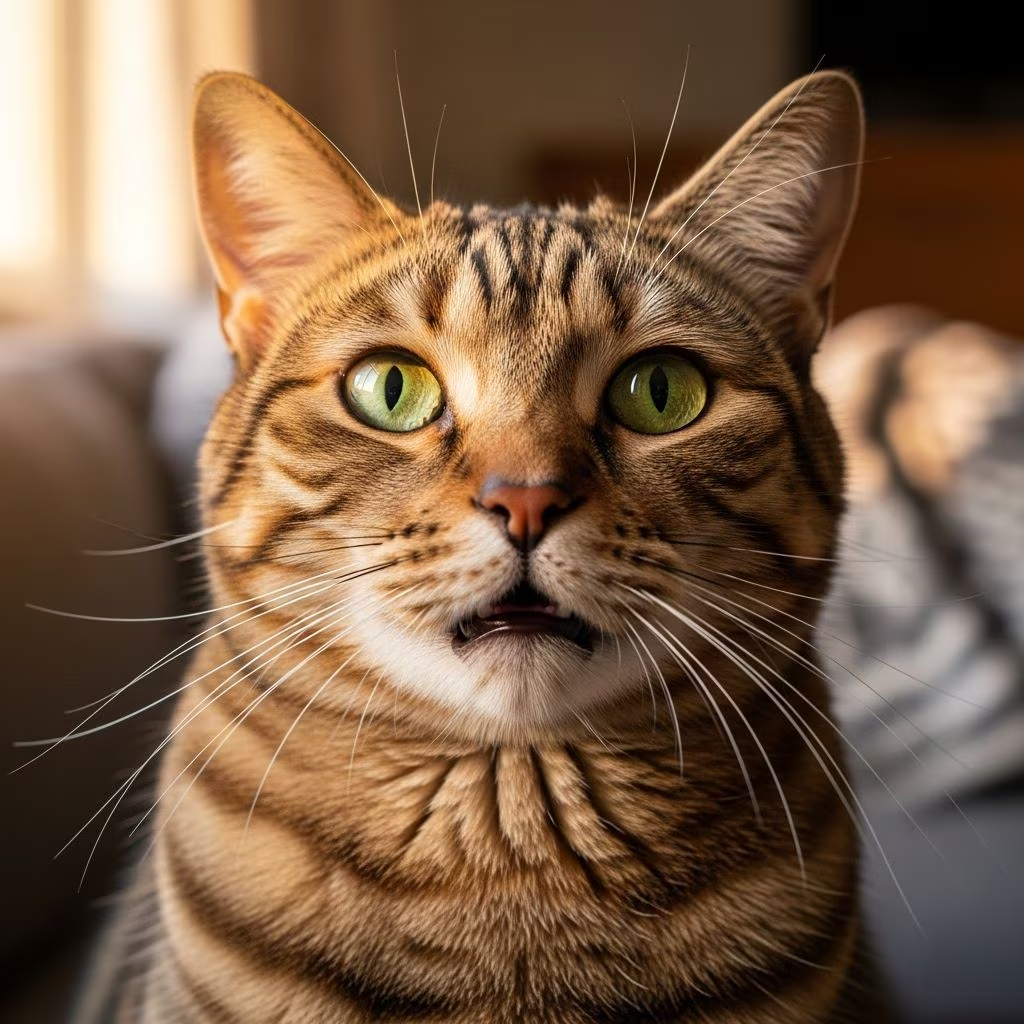
That deep, resonant rumble from your cat can feel like a mini earthquake on your lap. While all cats purr, some produce exceptionally loud purrs that echo through the room. This phenomenon fascinates cat owners worldwide, blending adorable charm with intriguing science. Understanding why your cat purrs so loud reveals insights into their emotions, health, and unique physiology.
Loud purring isn’t random; it’s tied to anatomy, breed traits, individual personality, and context. Recent research has demystified the mechanics, showing specialized structures in cat larynges enable these low-frequency vibrations without constant brain input. Whether it’s a sign of bliss or self-soothing, a booming purr often signals a strong, healthy feline.
How Do Cats Purr?
The mystery of purring has puzzled scientists for decades. Long-held theories suggested cats actively contracted laryngeal muscles 20-30 times per second or that blood flow through the vena cava caused the sound. However, groundbreaking research challenges these ideas.
A study published in Current Biology examined larynges from eight domestic cats. By pumping air through isolated vocal cords, researchers produced purring at 25-30 Hz without neural input or muscle activity. This reveals purring as a passive, self-sustaining oscillation, similar to meows or hisses, once initiated by the brain.
Key to this is the discovery of ‘vocal pads’—dense, fatty tissue embedded in the vocal cords. These pads increase mass, allowing slower vibrations for low frequencies despite cats’ small size (around 4.5 kg). Larger animals like elephants purr-like sounds naturally, but cats’ pads mimic this effect.
Other studies confirm laryngeal muscles and diaphragm collaborate, with a neural oscillator in the brain firing 20-30 times per second. This closes the glottis, builds pressure, and releases it as sound on every breath. Cats purr on both inhale and exhale, creating continuous rumble. No purring occurs in laryngeal paralysis, underscoring the larynx’s role.
- Frequency range: 20-30 Hz typically, up to 150 Hz in some cases.
- Mechanism: Self-sustained vibration post-brain signal.
- Anatomy highlight: Fatty vocal pads enable low-pitch in small throats.
Why Is My Cat’s Purr So Loud?
Not all purrs are equal—volume varies by cat. A loud purr often stems from robust vocal anatomy, confident personality, or intense emotion. Here’s what amplifies the sound:
Breed Differences in Purring Volume
Certain breeds boast louder purrs due to genetics and build. Maine Coons, known as ‘gentle giants,’ produce notoriously thunderous purrs from larger larynges and chests that resonate sound. Their size (up to 25 lbs) amplifies vibrations like a natural subwoofer.
Similarly, Ragdolls and British Shorthairs purr deeply, while Siamese are quieter but higher-pitched. Breed standards note Maine Coons’ ‘chirps and trills’ alongside loud purrs, tying volume to throat structure.
| Breed | Purr Characteristics | Notable Traits |
|---|---|---|
| Maine Coon | Extremely loud, low-frequency | Large size, resonant chest |
| Ragdoll | Deep, rumbling | Relaxed demeanor enhances volume |
| Siamese | Higher-pitched, softer | Vocally chatty overall |
| Domestic Shorthair | Variable, often moderate | Mix of genetics influences |
Individual Anatomy and Health
Beyond breed, cats with thicker vocal pads or larger larynxes purr louder. Healthy lungs and diaphragms project sound better. Obesity can muffle purrs, while lean, muscular cats broadcast clearly.
Age plays a role: Kittens purr softly to signal mothers, but adults develop stronger mechanisms. Seniors might purr softer due to weakening muscles, though some retain volume.
Personality and Confidence
Bold, extroverted cats purr louder, using it as communication. Shy cats may purr quietly or silently. A confident purr motor indicates security and trust in you.
Reasons Cats Purr Loudly
Purring isn’t just happiness—it’s multifaceted. Loudness often correlates with strong feelings.
Contentment and Bonding
The classic reason: pure joy. During petting, cuddles, or meals, cats purr to express pleasure. Mothers purr to soothe kittens, who purr back, strengthening bonds from birth.
Loud purrs during these times amplify affection, sometimes with kneading (‘making biscuits’).
Self-Soothing and Stress Relief
Cats purr when anxious, in vet visits, or injured—up to 70% louder in pain. It calms them, like human humming. In hospitals, purring signals comfort or coping.
Healing and Therapeutic Benefits
Purring’s 20-50 Hz vibrations promote healing. Studies link them to bone growth, wound repair, pain relief, and reduced swelling. Frequencies match those used in human therapy for fractures and muscles.
Dr. Elizabeth von Muggenthaler proposes purring as a ‘natural healing mechanism,’ aiding cats’ resilience—explaining fewer fractures than dogs. Research in New Zealand Veterinary Journal supports vibrations fostering tissue growth.
Communication and Manipulation
Cats embed ‘solicitation purrs’ with cry-like frequencies to urge feeding, tapping human instincts. Louder versions demand attention effectively. Submissive cats purr to appease dominants.
When to Worry About Loud or Excessive Purring
Usually benign, but context matters. Constant loud purring with hiding, appetite loss, or lethargy signals illness. Monitor for:
- Vomiting, diarrhea, or weight loss.
- Aggression or avoidance.
- Lameness or breathing issues.
Hypertrophic cardiomyopathy can cause purring-like murmurs—vet check needed. Excessive purring might mask pain.
How to Encourage Healthy Purring
Foster loud, happy purrs with:
- Interactive play daily.
- Cozy spots and routines.
- Gentle grooming sessions.
- High-quality diet for vocal health.
Avoid stressors; use pheromone diffusers if needed.
Frequently Asked Questions (FAQs)
Is a loud purr always a good sign?
Not necessarily. It often means contentment, but can indicate pain or stress. Observe body language.
Why do some cats purr louder than others?
Breed, size, vocal pad thickness, and personality determine volume. Maine Coons exemplify loud purrers.
Can purring help heal injuries?
Yes, 25-150 Hz vibrations aid bone repair and pain relief, per research.
Do all cats purr the same way?
No—big cats don’t purr; they roar. Domestic cats’ unique pads enable it.
Should I worry if my cat purrs constantly?
Check for illness signs. Vets recommend exams for sudden changes.
References
- How do cats purr? New finding challenges long-held assumptions — Science.org. 2023-11-16. https://www.science.org/content/article/how-do-cats-purr-new-finding-challenges-long-held-assumptions
- Why and how do cats purr? — Library of Congress. Accessed 2026. https://www.loc.gov/everyday-mysteries/zoology/item/why-and-how-do-cats-purr/
- Why Do Cats Purr — Tufts University Cummings School of Veterinary Medicine. Accessed 2026. https://www.tvmf.org/articles/why-do-cats-purr/
- Why do cats purr? — BBC Science Focus Magazine. Accessed 2026. https://www.sciencefocus.com/nature/why-do-cats-purr
- Why Cats Purr | The Science and Meaning Behind Purring — PetAssure. Accessed 2026. https://www.petassure.com/new-newsletters/why-cats-purr/



