

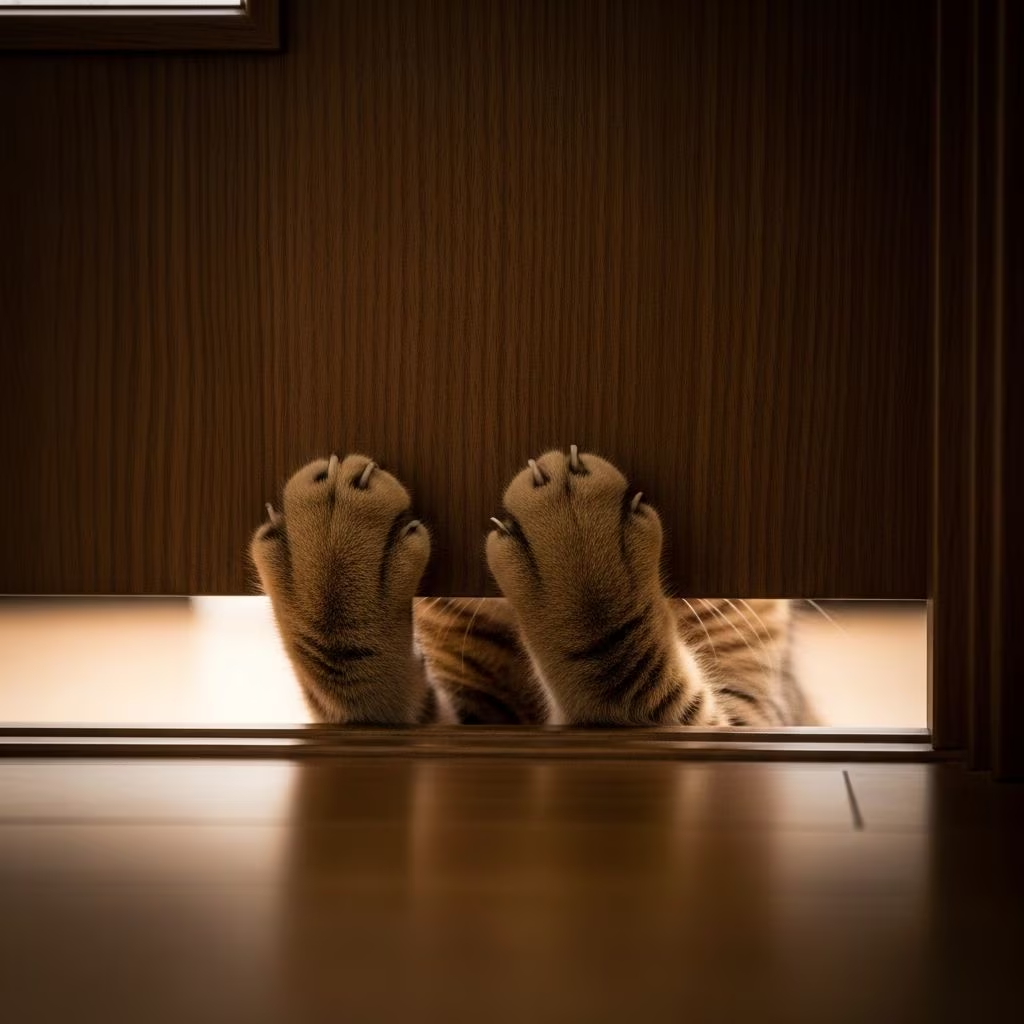
If you’ve ever heard a gentle scratching or seen a furry paw slipping under your closed bedroom or bathroom door, you’re not alone. This quirky behavior is incredibly common among cat owners. Cats paw under doors for a variety of instinctual and emotional reasons, often signaling their desire to connect, explore, or satisfy natural urges. Understanding these motivations can help you respond appropriately, strengthening your bond and reducing frustration for both you and your feline friend.
In this comprehensive guide, we’ll dive deep into the science and psychology behind why cats exhibit this behavior. From their evolutionary hunting instincts to their need for social interaction, we’ll cover all the key factors. You’ll also find practical tips on how to manage it, when to worry, and how to enrich your cat’s environment to prevent excessive pawing. By the end, you’ll have the tools to decode your cat’s door-pawing antics and create a more harmonious household.
The Main Reason Cats Paw Under the Door
**The primary motivation is simple: your cat wants in.** When a door separates them from you, their food, a cozy spot, or simply an unexplored area, pawing becomes their go-to signal. Cats are intelligent creatures that quickly learn this action grabs attention. If you’re in a room with the door closed, that small paw is their polite (or insistent) way of saying, “Let me join you!”
This behavior often escalates if ignored. Some cats add meowing or even “shouting” to ramp up the urgency. According to veterinary behaviorists, cats meow almost exclusively to communicate with humans—a learned behavior from kittenhood. Pawing combined with vocalizations is a powerful combo, evolved to ensure their needs are met.
Consider this: cats are crepuscular (most active at dawn and dusk), so late-night pawing sessions might coincide with their peak energy times. They’re not being naughty; they’re wired to seek companionship and resources relentlessly.
Why Do Cats Paw at Closed Doors?
Cats view closed doors as barriers to their territory. In the wild, felines roam freely, patrolling their domain. Domestic cats retain this territorial drive, becoming restless when access is restricted. A closed door disrupts their mental map of the home, prompting investigation via paws.
- Territorial Frustration: New cats especially paw to claim every room, walking from nook to cranny upon arrival.
- Habit Formation: If you frequently let them in after pawing, it reinforces the behavior through intermittent rewards—psychology’s most addictive reinforcement type.
- Resource Access: Food bowls, litter boxes, or favorite beds behind doors trigger persistent efforts.
One owner shared how their cat, obsessed with food, learned to paw open cabinet doors after observing humans. This perseverance highlights cats’ problem-solving skills and adaptability.
8 Reasons Your Cat Paws Under the Door
Here are the most common explanations, backed by feline behavior experts:
- Seeking Attention and Affection: Cats crave closeness. If you’re on the other side, they want pets, play, or lap time.
- Hunting Instinct: Door gaps mimic mouse holes. Cats instinctively “hunt” by poking paws to grab prey-like toys or shadows.
- Curiosity and Exploration: Innately inquisitive, cats must investigate unknowns. Their superior senses—dark vision, acute hearing, 40x human smell receptors—drive this.
- Play Invitation: Multi-cat homes see paws batting toys or each other under doors, turning it into interactive fun.
- Territorial Marking: Paw scent glands release pheromones, claiming space. Bathrooms and bedrooms are hotspots.
- Separation Anxiety: Excessive pawing with signs like vocalizing, pacing, or inappropriate elimination signals distress.
- Learned Behavior: Past rewards teach them it works. Intermittent success (door opens sometimes) makes it persistent.
- Boredom or Understimulation: Without outlets, cats default to door play to alleviate ennui.
These reasons overlap; a single paw session might blend hunting play with attention-seeking.
Cat Pawing Under Door: Video Examples
Videos capture this behavior vividly. In one popular clip, a cat relentlessly paws a bathroom door, meowing for entry—classic attention bid. Another shows two cats “fighting” paws under a door, purely playful. These visuals underscore it’s normal, instinct-driven fun, not mischief.
When Should I Be Concerned About Cat Pawing?
Occasional pawing is harmless, but watch for red flags:
- Intensity Escalation: Scratching damages doors or leads to injury.
- Anxiety Symptoms: Pacing, excessive grooming, litter avoidance, or destructive behavior.
- Sudden Onset: In senior cats, could indicate cognitive decline or pain—consult a vet.
- 24/7 Persistence: Signals unmet needs like insufficient play or diet issues.
If pawing disrupts sleep or household peace, intervene early to prevent habituation.
How to Stop Your Cat Pawing Under the Door
Redirect rather than punish—cats don’t respond to scolding. Strategies include:
| Problem | Solution | Why It Works |
|---|---|---|
| Attention-Seeking | Ignore initially, then reward calm behavior with play. | Breaks reinforcement cycle. |
| Hunting Drive | Interactive toys like feather wands or laser pointers. | Satisfies instincts indoors. |
| Boredom | Daily 15-20 min sessions; puzzle feeders. | Prevents excess energy buildup. |
| Territory Issues | Install baby gates; provide vertical spaces. | Allows supervised access. |
Environmental enrichment is key: cat trees, window perches, and rotation of toys mimic wild exploration. For multi-cat homes, ensure equal resources to curb competition.
Why Do Cats Like to Play Under the Door?
This isn’t rebellion—it’s biology. Cats’ exploratory nature, honed by survival needs as predator-prey, makes door gaps irresistible. Whiskers detect air currents, paws probe crevices. It’s enriching, reducing boredom and destructive alternatives like furniture scratching.
Play under doors also bonds cats with owners or housemates, fostering social ties in solitary-evolved species.
Why Does My Cat Meow and Paw at My Bedroom Door?
Bedrooms trigger strong responses. Cats associate them with sleep routines, warmth, and you. Sudden exclusion feels like rejection, prompting meows (human-directed communication) plus paws. If they usually co-sleep, transition gradually with familiar bedding nearby.
Why Does My Cat Paw Under the Bathroom Door?
Bathrooms are prime targets: cats follow owners there habitually. Closed doors lock them out from “prime” rubbing spots for pheromones. Showers mimic rain hunts, piquing interest. Reinforce by occasionally allowing supervised entry, or distract with bathroom toys.
Why Is My Cat Suddenly Pawing at Doors?
Sudden changes signal stress: new pets, moves, schedule shifts, or health issues. Monitor for anxiety markers like over-grooming or hiding. Vertical territory (shelves) and pheromone diffusers (e.g., Feliway) soothe transitions.
Final Thoughts
Your cat paws under the door because they want something—access, attention, or adventure. Embrace it as a sign of trust and vitality. With enrichment and understanding, you can channel this into positive interactions. Create a stimulating environment, and those paws will paw at toys, not doors.
Frequently Asked Questions (FAQs)
Q: Is pawing under doors a sign of aggression?
A: No, it’s typically playful or communicative. True aggression involves hissing or swatting above the door.
Q: How can I train my cat to stop?
A: Use positive redirection: ignore pawing, reward quiet sitting with treats or play.
Q: Does it damage doors?
A: Frequent scratching can; trim nails regularly and provide scratching posts nearby.
Q: Is this more common in kittens or adults?
A: All ages, but kittens are most energetic. Seniors may do it from habit or confusion.
Q: What if two cats paw at each other under doors?
A: Normal play; supervise to ensure it doesn’t escalate to resource fights.
References
- Why Do Cats Like to Play Under the Door? — YouTube (Jackson Galaxy). 2023-10-15. https://www.youtube.com/watch?v=fEsqpV0-gS0
- Why Does My Cat Paw Under The Door? The Reasons For … — Catster. 2024-05-20. https://www.catster.com/cat-behavior/why-does-my-cat-paw-under-the-door/
- Why Do Cats Like to Play Under the Door? — Rover.com. 2023-08-12. https://www.rover.com/blog/why-do-cats-like-to-play-under-the-door/
- Why Does My Cat Paw at The Door? — PetPlace.com. 2022-11-05. https://www.petplace.com/article/cats/pet-behavior-training/why-does-my-cat-paw-at-the-door
- Is Your Pet Trying to Escape? Clawing at Doors Might Be a Sign — MyProtecto. 2024-02-18. https://myprotecto.com/blogs/news/is-your-pet-trying-to-escape-clawing-at-doors



