

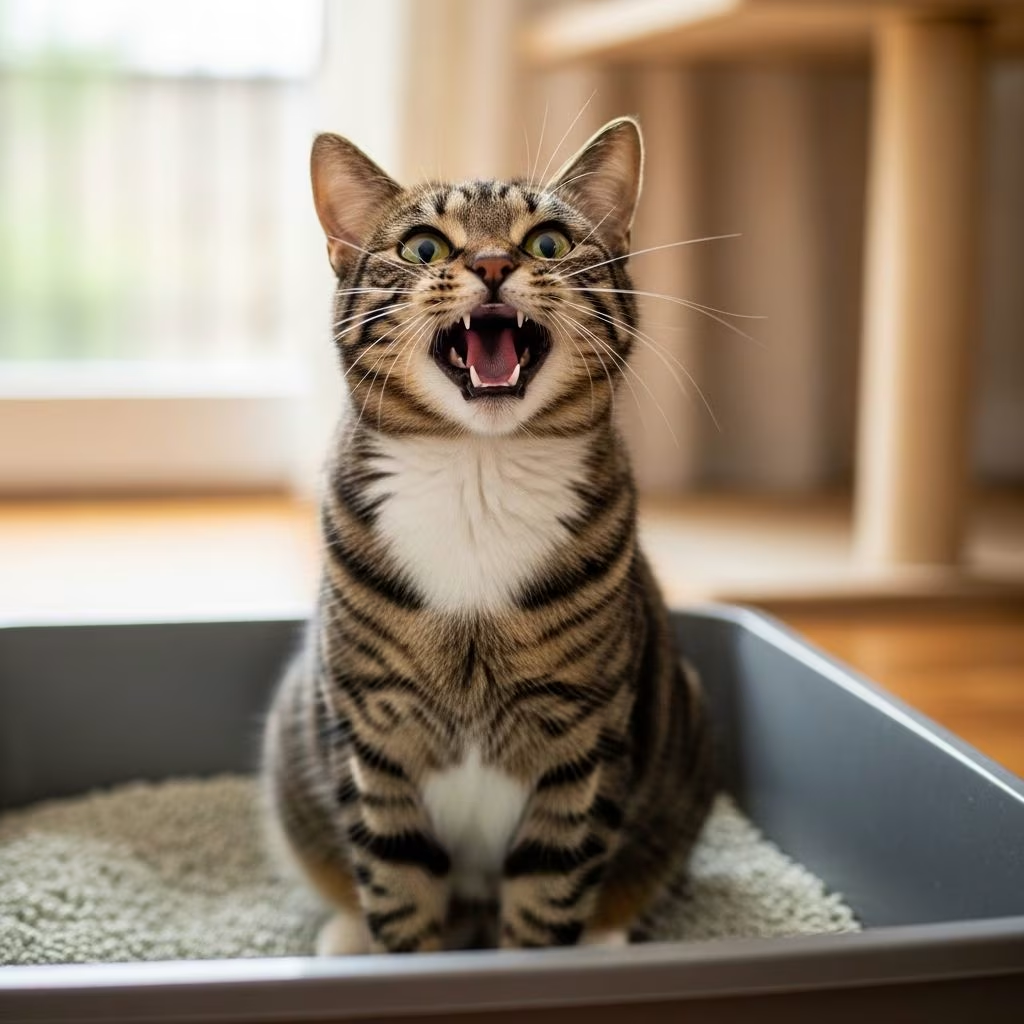
If your cat suddenly starts meowing while using the litter box, it can be alarming. This vocalization often signals discomfort, whether from a dirty environment, unsuitable setup, or a serious health issue. Cats are generally private about their bathroom habits, so meowing stands out as a cry for attention. Understanding the causes helps you address the problem promptly, preventing escalation to accidents outside the box or life-threatening conditions.
Meowing in the litter box isn’t always problematic—some cats “announce” their success—but new or persistent vocalizations warrant investigation. This guide covers the six primary reasons, drawing from veterinary insights, to equip you with actionable steps. Always consult a vet for personalized advice, especially if accompanied by straining, blood, or lethargy.
The 6 Reasons Why Cats Meow in Their Litter Box
Cats meow for various reasons during litter box use, ranging from environmental dissatisfaction to pain. Here’s a breakdown of the most common culprits, prioritized by likelihood and severity.
1. The Litter Box Is Dirty
Just like humans avoid unclean bathrooms, cats protest dirty litter boxes with meows. A soiled box filled with waste odors signals poor hygiene, prompting vocal complaints or elimination outside the box. Cats have a strong sense of smell—40 times more sensitive than ours—so even slightly used litter feels intolerable to them.
Scoop daily and fully change clumping litter weekly, non-clumping every 2-3 days. In multi-cat homes, bacteria buildup happens faster. If meowing persists post-cleaning, inspect for other issues below. Dirty boxes contribute to urinary tract infections (UTIs) if cats hold urine too long.
- Signs: Meowing before/after use, pawing excessively, or avoiding the box.
- Solution: Clean immediately upon hearing meows; use enzymatic cleaners for odors.
2. Your Cat Doesn’t Like the Litter Type
Cats are creatures of habit and may meow if you’ve switched litters. New textures, scents, or materials (e.g., from clay to pine) irritate paws or noses, causing distress. Scented litters, popular for humans, often repel cats due to overpowering fragrances.
Transition gradually: mix 75% old litter with 25% new, increasing over a week. Unscented, fine-clumped clay mimics soil best for most cats. If allergies or respiratory issues arise from dust, opt for low-dust alternatives. Persistent meowing post-reversion suggests deeper problems.
| Litter Type | Pros | Cons | Meow Risk |
|---|---|---|---|
| Clumping Clay | Affordable, dust-controlled | Dusty for some cats | Low if unscented |
| Crystal/Silica | Odor-absorbing | Hard on paws | High |
| Pine/Wood | Biodegradable | Strong scent | Medium-High |
| Paper/Recycled | Soft, low-dust | Poor clumping | Low |
3. Your Cat Doesn’t Like the Size of the Litter Box
An ill-sized litter box forces awkward postures, leading to meows of frustration or pain. Kittens outgrow small boxes quickly; adults need 1.5 times their length. Too-small boxes cramp digging and squatting, especially for large breeds like Maine Coons.
Open-top boxes suit most cats better than hooded ones, which trap odors and feel claustrophobic. Measure your cat: box length should exceed body length by 2-4 inches. Elevate sides for seniors with arthritis. Upgrade if meowing coincides with growth spurts.
- Ideal Sizes: Kitten: 12×9 inches; Adult: 18×14+ inches; Large: 22×18 inches.
- Test Tip: Place cat inside— they should turn comfortably without touching sides.
4. The Quantity of Litter Is Not Suitable
Inadequate litter depth hinders natural burying instincts. Cats prefer 2-3 inches for digging; too shallow (under 1 inch) exposes waste, too deep (over 4 inches) feels unstable or messy on paws. Meowing signals this imbalance.
Start with 2 inches, observe preferences. Low litter suits finicky diggers; deeper for heavy buriers. Avoid overfilling to prevent tracking. Adjust based on feedback—happy cats exit silently.
5. Not Enough Litter Boxes
In multi-cat households, competition breeds stress and vocal protests. The golden rule: n+1 boxes (n = number of cats). Three cats need four boxes, placed in low-traffic areas for privacy. Shared boxes lead to territory disputes, meowing, or spraying.
Distribute across floors/rooms. Bullying or illness isolates weaker cats from preferred boxes, amplifying cries. Monitor usage patterns to optimize placement.
6. Your Cat Has a Medical Issue
Medical causes are serious and demand immediate vet attention—urinary issues top cat emergencies, often fatal if untreated. Meowing indicates pain during elimination, far from normal “announcements.” Common culprits:
- Urinary Tract Problems: Bladder stones block flow, causing straining/yelping. Bacterial infections inflame the tract; urethral plugs (crystals) obstruct males. Idiopathic cystitis (stress-induced inflammation) mimics infections.
- Cancer/Anatomical Issues: Tumors or birth defects hinder urination/defecation.
- Diarrhea/Food Allergies: Loose stools from diet changes prompt cries; rule out parasites.
- Impacted Anal Sacs: Swollen glands cause straining/scooting; vet drainage needed.
- Arthritis: Seniors struggle entering/exiting, avoiding boxes altogether.
Symptoms: Blood in urine, frequent small voids, licking genitals, lethargy. Vets diagnose via urinalysis, X-rays, ultrasound. Treatments: Antibiotics, diet (e.g., urinary formulas), surgery for stones/plugs. Kidney disease may vocalize thirst alongside. Early intervention saves lives—don’t delay.
Other Behavioral Reasons Cats Meow in the Litter Box
Beyond setup and health, behaviors play a role. Cats may meow to summon cleaning (post-use announcement), seek protection (vulnerable position), or express excitement/relief after relief. Boredom, stress, or hunger amplifies vocalization; lonely cats “talk” more. Siamese breeds are naturally chatty. Hoarse meows signal respiratory infections.
Observe context: Pre-use meows = anxiety/confusion; post-use = satisfaction or request. Play, affection, or routine reassurance quiets behavioral cases.
What Should You Do If Your Cat Is Meowing in the Litter Box?
- Inspect Setup: Clean thoroughly, revert litter, check size/depth/quantity/boxes.
- Monitor Symptoms: Track frequency, urine volume, feces consistency, appetite.
- Vet Visit: Urge if new/persistent, straining, blood, or age >7 years. Bring urine sample if possible.
- Behavioral Fixes: Enrich environment (toys, perches), pheromone diffusers for stress.
- Diet Trial: Vet-approved urinary or hypoallergenic food post-checkup.
Act fast—FLUTD (Feline Lower Urinary Tract Disease) progresses quickly in males.
Frequently Asked Questions (FAQs)
Q: Is it normal for cats to meow in the litter box?
A: Occasionally yes, for announcements, but new/excessive meowing signals issues like dirt or pain. Investigate promptly.
Q: Why does my cat meow after pooping?
A: Relief, request to clean, or anal sac discomfort. Check for straining or scooting.
Q: Should I worry if my kitten meows in the litter box?
A: Yes—could be small box, wrong litter, or parasites/UTIs common in young cats.
Q: Can stress cause litter box meowing?
A: Absolutely; cystitis links to stress. Use Feliway, more playtime.
Q: How many litter boxes for 2 cats?
A: Three—one per cat plus one extra, in separate locations.
Conclusion
Cat meowing in the litter box ranges from simple fixes like cleaning to emergencies like blockages. Prioritize vet checks for peace of mind, then optimize your setup. Healthy cats use boxes quietly—your vigilance ensures their comfort and longevity.
References
- Why Does My Cat Meow in the Litter Box? 6 Vet Reviewed Reasons — Catster. 2023. https://www.catster.com/cat-behavior/why-does-my-cat-meow-in-the-litter-box/
- Why Is My Cat Meowing So Much? — PetMD (Veterinarian-reviewed). 2024-05-15. https://www.petmd.com/cat/behavior/cat-meowing
- Guidance on Feline Lower Urinary Tract Disease — American Veterinary Medical Association (AVMA). 2023-08-10. https://www.avma.org/resources-tools/pet-owners/petcare/feline-lower-urinary-tract-disease
- Arthritis in Cats: Diagnosis and Management — Cornell University College of Veterinary Medicine. 2024. https://www.vet.cornell.edu/departments-centers-and-institutes/cornell-feline-health-center/health-information/feline-health-topics/arthritis-cats
- Urinary Tract Infections in Cats — Merck Veterinary Manual. 2025-01-01. https://www.merckvetmanual.com/cat-owners/kidney-and-urinary-tract-disorders-of-cats/urinary-tract-infections-utis-in-cats



