

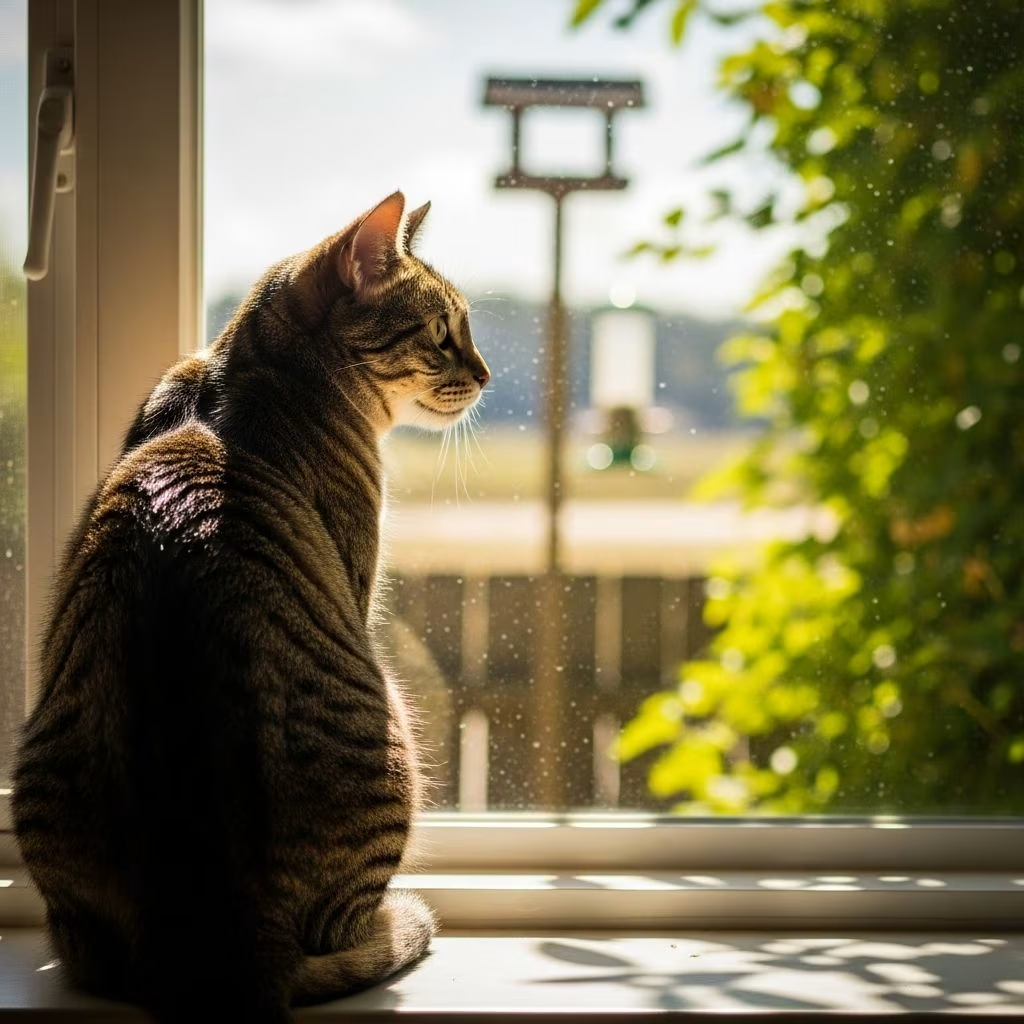
Have you ever caught your cat glued to the window, eyes wide and tail twitching, utterly transfixed by the world outside? This common feline behavior fascinates cat owners everywhere. Cats staring out windows isn’t just random—it’s a window (pun intended) into their instincts, curiosity, and daily needs. Whether it’s birds flitting by, sunlight streaming in, or neighborhood activity, windows serve as portals to entertainment and stimulation for indoor cats.
In this comprehensive guide, we’ll dive deep into the **reasons why cats look out the window**, drawing from veterinary insights and behavioral studies. We’ll cover everything from primal hunting urges to simple comfort-seeking, plus practical tips to make your home more engaging. By understanding this habit, you can enrich your cat’s environment, reduce stress, and prevent frustration—all while keeping them safe indoors. Let’s explore the captivating world of cat window-watching.
Table of Contents
- Curiosity and Entertainment: Cat TV
- Hunting Instincts in Action
- Territorial Surveillance
- Sunbathing and Comfort
- Waiting for Their Humans
- Enjoying Breezes and Scents
- When Window Gazing Causes Stress
- Enhancing the Experience: Perches and Toys
- Safety Tips for Window Watching
- Frequently Asked Questions
Curiosity and Entertainment: The Great Outdoors as Cat TV
Cats are naturally curious creatures, evolved from wild ancestors who needed to scout their surroundings constantly. For indoor cats, windows act like a live-action television show, providing endless entertainment without the risks of the outdoors. The swaying of trees, passing people, rustling leaves, or even distant cars capture their attention because cats have exceptional motion detection—far superior to humans.
Imagine the outdoor world as a non-stop nature documentary for your cat. Squirrels scampering, insects buzzing, or chipmunks playing offer dynamic visuals that keep them engaged for hours. This behavior stems from their exploratory nature; studies on feline cognition show cats spend up to 50% of their waking hours in observational activities. Without windows, indoor cats might resort to boredom-induced mischief like knocking over plants or excessive meowing.
To quantify this, consider that cats’ eyes are optimized for low-light and quick movements, making even subtle outdoor stirrings riveting. If your cat races from window to window tracking a target, it’s their way of ‘following the action,’ mimicking wild stalking without leaving home.
Hunting Instincts: Birds, Insects, and Prey Drive
One of the most intense reasons cats stare out windows is their innate **hunting instinct**. Domestic cats retain the predatory drive of their feral forebears, who hunted for survival. Even well-fed pets will chatter, crouch, or paw at glass when spotting birds, rodents, lizards, or insects—sounds of excitement mixed with frustration at the barrier.
This ‘chattering’ is a well-documented feline response, believed to stem from involuntary tooth clacking during intense focus. Birds in particular trigger this; their erratic flight patterns mimic perfect prey. Cats may also fixate on reflections in the glass, mistaking them for rivals or additional prey, leading to prolonged staring sessions.
- Birds and squirrels: Prime targets due to speed and agility.
- Insects and reptiles: Small movements provoke stalking postures.
- Follow-the-prey: Cats dash between windows to track moving animals.
Providing a bird feeder just outside (out of reach) amplifies this safely, turning the window into a hunting observatory.
Territorial Behavior: Guarding Their Domain
Cats are fiercely territorial, viewing their home as sacred ground. Window gazing often serves as surveillance, scanning for intruders like neighborhood cats, dogs, or other animals. Puffed fur, growling, or intense staring signal defense mode—even if the ‘threat’ can’t enter.
This instinct ensures safety; wild cats perch high to monitor territory. Indoor cats adopt windowsills as lookout posts, especially at night when activity peaks. If stress signs appear (e.g., dilated pupils, pacing), it may indicate overwhelming stimuli—consider sheer curtains to diffuse views.
Sunbathing and Comfort: Seeking Warmth and High Perches
Cats’ preferred body temperature is 101-102°F (38-39°C), higher than humans’, so they gravitate to sunny windowsills for toasty naps. Morning sunlight provides perfect warmth, combining comfort with views. High perches also appeal, echoing ancestral tree-sitting for safety and oversight.
Additionally, condensation on cold windows offers moisture licks, and open windows let in breezes carrying intriguing scents—olfactory stimulation is huge for cats, whose sense of smell is 14 times stronger than ours.
Waiting for Their Humans: Emotional Bonds
Despite their independent image, cats form strong attachments. Many wait at windows for owners’ return, recognizing routines like car sounds. This behavior reveals affection; they anticipate interaction, food, or play upon homecoming.
Breezes, Sounds, and Smells: Sensory Overload
Cracked windows deliver fresh air, cooking aromas from neighbors, or street noises— all novel to housebound cats. Humid indoor air drives them to cooler breezes, reducing stress in stuffy homes.
When It Causes Frustration or Stress
Not all window time is blissful. Seeing unreachable prey or rivals can lead to anxiety, vocalizing, or destructive behavior. Monitor for signs: excessive pawing, yowling, or lethargy post-session. Veterinary behaviorists recommend rotation of views or calming aids like pheromone diffusers if chronic.
| Sign of Stress | Possible Cause | Solution |
|---|---|---|
| Tail thrashing | Intruders spotted | Curtains or blocks |
| Chattering + pacing | Frustrated hunt | Bird feeder or toys |
| Avoiding window | Overstimulation | Limit access temporarily |
Enhancing Window Watching: Perches, Toys, and Enrichment
Turn passive gazing into active fun:
- Window perches: Suction-cup or clip-on seats for comfort.
- Bird feeders: Attract wildlife safely distant.
- Toys: Feather wands, laser pointers indoors mimic hunts.
- Outdoor walks: Harness training or strollers for real air.
- Night lights: Attract insects for evening shows.
Environmental enrichment prevents boredom, vital as cats sleep 12-16 hours daily.
Safety First: Secure Windows for Happy Watching
Secure screens prevent escapes—cats squeeze through tiny gaps. Avoid toxic plants outside feeders. Regular vet checks rule out vision issues mimicking staring.
Frequently Asked Questions (FAQs)
Is it normal for my cat to stare out the window all day?
Yes, it’s completely normal and healthy, providing mental stimulation. Just ensure it’s not causing stress.
Why does my cat chatter at the window?
It’s an excitement response to prey like birds, blending anticipation and frustration.
Should I block the window if my cat seems stressed?
Yes, use sheer curtains or limit access, and consult a vet for persistent issues.
Can window perches help?
Absolutely—they offer comfort, height, and better views, reducing jumping risks.
How can I enrich my indoor cat’s life further?
Combine perches, toys, puzzle feeders, and supervised outdoor time via harnesses.
References
- Why Do Cats Like Looking Out the Window? — K&H Pet Products. 2023-05-15. https://khpet.com/blogs/cats/why-do-cats-like-looking-out-the-window
- Why Does My Cat Look Out the Window? A Kitty’s Point of View — FELIWAY US. 2024-02-20. https://us.feliway.com/blogs/news/why-does-my-cat-look-out-the-window-a-kitty-s-point-of-view
- Why Do Cats Look Out The Windows So Much? — Precious Petcare SD. 2023-08-10. https://www.preciouspetcaresd.com/news/why-do-cats-look-out-the-windows-so-much/
- 10 Reasons Cats Love Windows — Chewy. 2024-11-05. https://www.chewy.com/education/cat/general/10-reasons-cats-love-windows
- Feline Behavior Guidelines — American Veterinary Medical Association (AVMA). 2025-01-01. https://www.avma.org/resources-tools/pet-owners/petcare/feline-behavior



