

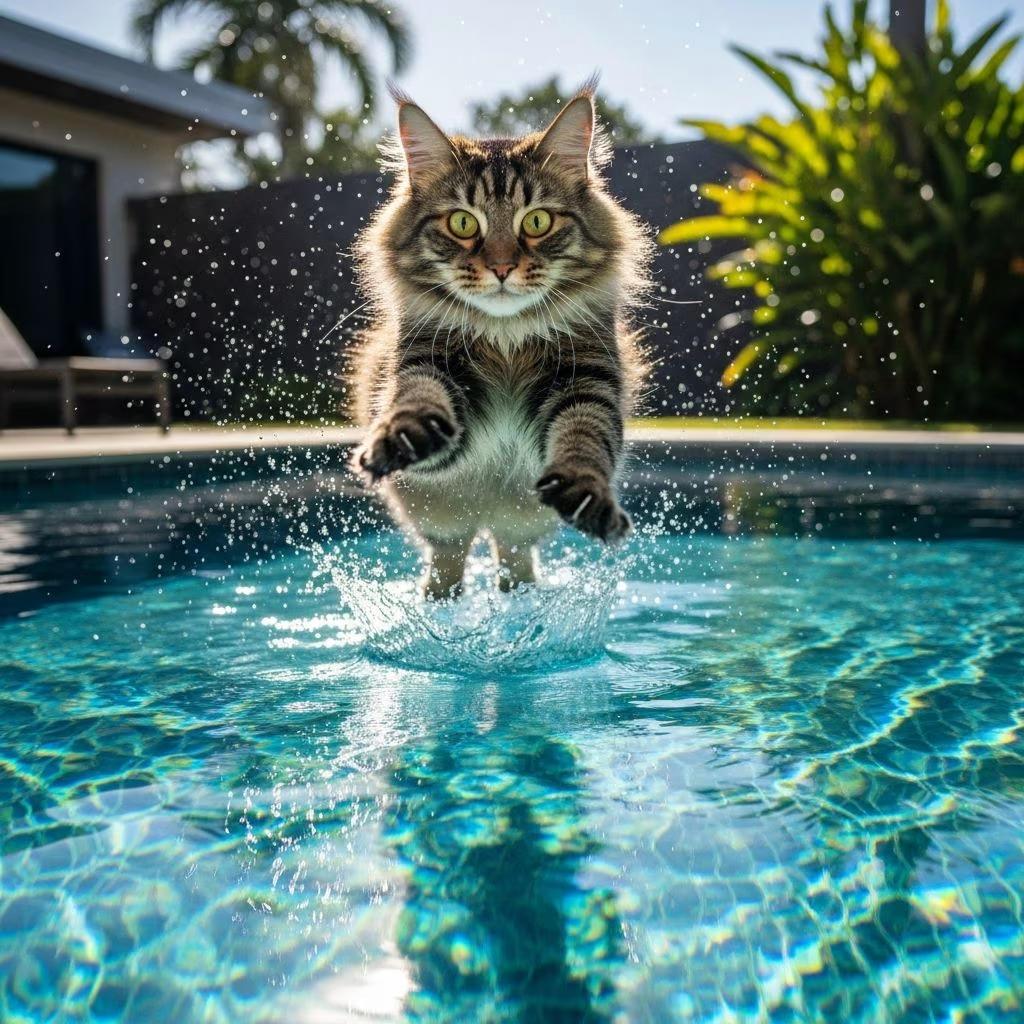
While most domestic cats shy away from water, some felines display a surprising affinity for it, splashing in baths, chasing faucets, or even swimming. This behavior challenges the common stereotype and stems from a mix of genetics, breed traits, early experiences, and individual personalities. Understanding why your cat likes water can enhance your bond and ensure safe play.
Is It Normal for Cats to Like Water?
Yes, it’s perfectly normal for some cats to enjoy water, though uncommon. Approximately 90 percent of cats dislike water due to their desert ancestry and discomfort with wet fur, but the remaining 10 percent embrace it out of curiosity or adaptation. Factors like breed predispositions and positive early exposure play key roles. Bold, adventurous cats are more likely to explore water, while cautious ones avoid it.
Cat Breeds That Love Water
Certain breeds have evolved water-resistant coats or temperaments suited to aquatic play, making them more likely to enjoy swimming.
- Turkish Van: Known as the ‘swimming cat,’ this breed has a semi-water-repellent coat that dries quickly. Originating from Lake Van in Turkey, they naturally swim to cool off and hunt fish.
- Turkish Angora: Playful and energetic, these cats often paw at water or join baths, thanks to their silky, water-tolerant fur.
- Bengal: With wild Asian leopard cat ancestry, Bengals are curious thrill-seekers who love splashing in puddles or pools.
- American Shorthair: Hardy and adaptable, some individuals show water interest due to their sturdy build.
- Maine Coon: Despite their large size, these gentle giants may dip paws in water, drawn by curiosity rather than full swims.
These breeds highlight how selective breeding and regional adaptations influence water affinity. Long-haired breeds like Persians often avoid water due to slow-drying fur, contrasting water-loving types.
Evolutionary Reasons Why Some Cats Like Water
Domestic cats descend from African wildcats in arid environments, where swimming offered no survival advantage, leading to widespread aversion. However, big cats like tigers and jaguars from humid regions swim proficiently to hunt, cool down, or traverse rivers—their muscular builds and oily coats aiding buoyancy.
Some domestic cats retain exploratory instincts from feline ancestors. Curiosity drives pawing at moving water, mimicking hunting behaviors. Indoor cats may show heightened curiosity to compensate for limited stimuli. Unlike dogs bred for water retrieval, cats’ self-grooming via saliva evaporation suffices for cooling, reducing water necessity—but exceptions persist.
Reasons Your Cat Might Like Water
Beyond evolution, several factors explain individual water love:
- Curiosity and Play: Running water fascinates cats visually and auditorily, triggering investigative play. Faucets, fountains, or dripping taps mimic prey movement.
- Temperature Regulation: In hot weather, water cools overheated cats. Wet fur, though uncomfortable for most, refreshes adventurous ones.
- Sensory Appeal: Fresh, aerated water from taps tastes better than stagnant bowls, drawing cats to drink and play.
- Personality Traits: Bold, extroverted cats explore water fearlessly, while timid ones retreat. Research identifies exploratory behavior as a key temperament dimension.
- Early Socialization: Kittens bathed positively or exposed gently grow tolerant or affectionate toward water.
| Factor | Why It Attracts Cats | Example |
|---|---|---|
| Curiosity | Moving water stimulates hunting instincts | Pawing at faucets |
| Breed | Water-repellent fur reduces discomfort | Turkish Van swimming |
| Socialization | Positive early experiences build comfort | Kittens in baths |
| Temperature | Cools in heat | Splashing in summer |
Why Do Most Cats Hate Water?
To contextualize exceptions, most cats avoid water for practical reasons. Wet fur becomes heavy, impairing agility and inducing vulnerability—a threat in the wild. It also loses insulation, causing chills, especially in dense-coated breeds. Sensory overload from water’s feel and sound heightens stress, and loss of paw traction erodes control-loving cats’ security.
Cats’ raspy tongues enable meticulous self-grooming, negating bath needs except for medical reasons. Desert heritage reinforces aversion, as swimming wasn’t survival-essential.
How to Safely Encourage Your Cat’s Love of Water
If your cat shows interest, nurture it safely:
- Start slow with shallow, lukewarm water in a sink or tub. Let them approach voluntarily.
- Use toys like floating balls to gamify splashing.
- Supervise pool or outdoor water play to prevent drowning—cats can swim but tire quickly.
- Provide fountains for drinking and paw play, improving hydration.
- Avoid forcing; respect boundaries to prevent aversion.
For baths when needed (e.g., fleas, wounds), use cat-safe shampoo and towels ready. Consult vets for skin issues.
Health Benefits of Cats Playing in Water
Water play offers enrichment: mental stimulation via curiosity, physical exercise through paddling, and stress relief from novel textures. It aids cooling in heatwaves and can desensitize grooming-phobic cats. Supervised swimming builds confidence and muscle tone, akin to hydrotherapy for seniors or obese cats.
Hydration boosts via interactive bowls. However, chlorine or bacteria risks necessitate clean sources.
Potential Risks and Precautions
Water love isn’t risk-free:
- Drowning: Cats swim instinctively but exhaust in deep water without escape routes.
- Chemicals: Pool chemicals irritate skin/eyes; rinse post-play.
- Chills: Dry thoroughly to avoid hypothermia.
- Infections: Stagnant water harbors bacteria—use filtered sources.
Monitor for distress; never leave unattended near water.
Frequently Asked Questions (FAQs)
Can all cats swim?
Most cats can swim instinctively with a doggy paddle but dislike it due to wet fur discomfort. Breeds like Turkish Vans excel naturally.
Why does my cat drink from the faucet but avoid baths?
Faucet water is fresh and oxygenated, appealing to taste and curiosity, while baths feel threatening due to immersion and loss of control.
Is it safe to let my cat swim in a pool?
Yes, with supervision, shallow access, and rinsing to remove chlorine. Limit time to prevent fatigue.
How can I train my cat to like water?
Use positive reinforcement: offer treats near shallow water, gradually increase exposure. Kittens adapt best.
Do water-loving cats need more grooming?
Not necessarily; their play often self-cleans, but brush post-wet to mat-prevent. Monitor coat health.
Conclusion
Your cat’s water affinity is a delightful quirk blending instinct, breed, and personality. Celebrate it safely to enrich their life while respecting feline nature.
References
- Why Do Cats Hate Water? — Boulder Veterinary Hospital. 2023-05-15. https://bouldervet.com/?p=14399
- Why do some cats like water? — Companion Animals New Zealand. 2024-02-10. https://www.companionanimals.nz/articles/why-do-some-cats-like-water
- Why do cats hate water? A deep dive into feline fears and wild roots — Big Cat Rescue. 2023-08-22. https://bigcatrescue.org/conservation-news/why-do-cats-hate-water-a-deep-dive-into-feline-fears-and-wild-roots
- Are There Actually Cats That Like Water? — PetMD. 2024-11-05. https://www.petmd.com/cat/behavior/are-there-actually-cats-water
- Can Cats Swim? — Advanced Pet Care of Clear Lake. 2023-07-12. https://advancedpetcareofclearlake.com/blog/can-cats-swim/
- Can Cats Swim? Facts & Theories That Might Surprise You — My Lovely Feline. 2024-03-18. https://mylovelyfeline.com/blogs/content/can-cats-swim-facts-theories-that-might-surprise-you



