

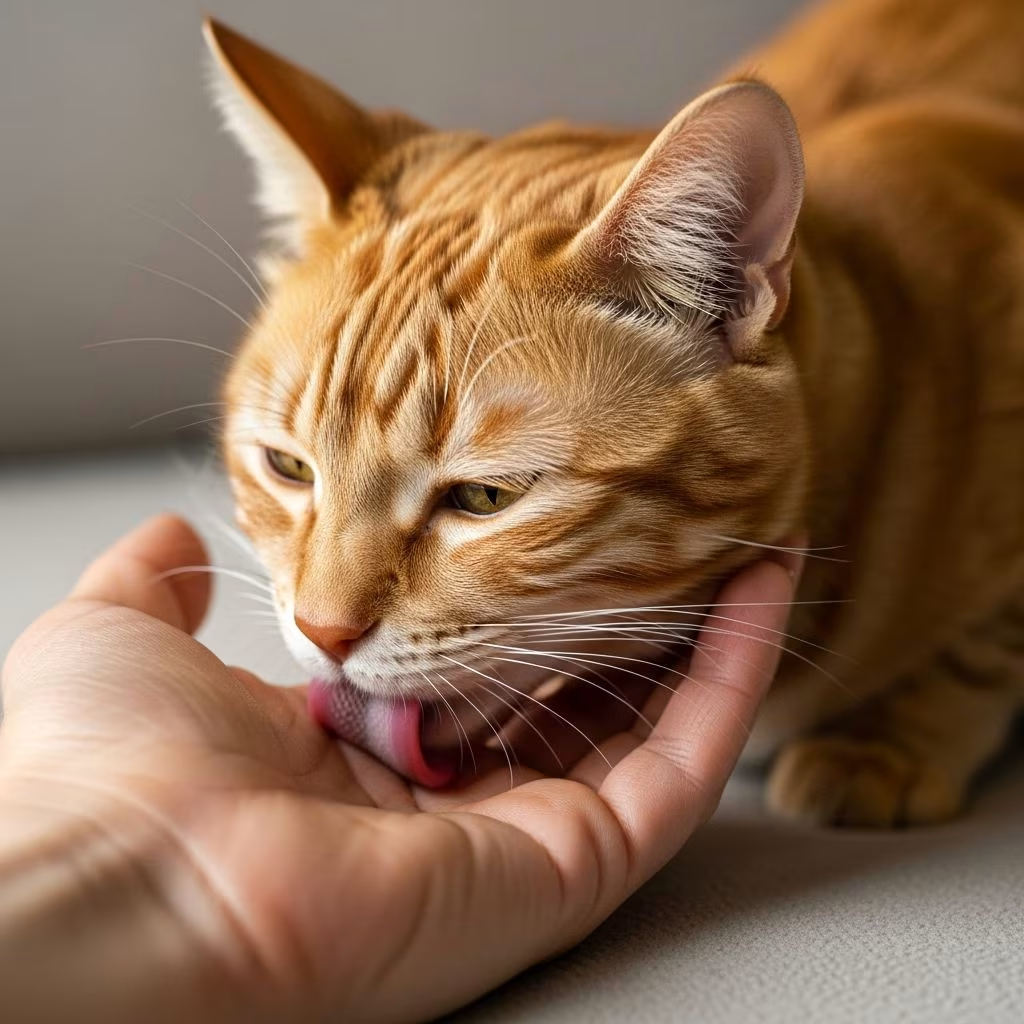
Your cat’s rough tongue gliding across your skin can feel like sandpaper affection. Far from thinking you need a bath or taste like tuna, cats lick humans primarily to bond, share scents, show love, or self-soothe. This allogrooming behaviour mirrors how felines interact in their social groups, strengthening ties and marking family members.
Understanding these motivations helps you respond appropriately, fostering a deeper connection while spotting potential issues like stress or health concerns. This guide covers all key reasons, backed by veterinary and behavioural insights.
4 Main Reasons Why Cats Lick Their Owners
Cats lick for multifaceted reasons rooted in instinct, emotion, and environment. Here’s a breakdown of the most common explanations.
1. Bonding and Allogrooming
Cats are meticulous self-groomers, using their barbed tongues to clean fur and remove debris. When they extend this to others—a behaviour called **allogrooming**—it’s a profound sign of trust and inclusion in their social circle. Mother cats groom kittens to nurture them, and bonded adults reciprocate to reinforce relationships.
By licking you, your cat treats you as family, nurturing your bond much like they would with another feline. This affiliative behaviour releases endorphins, creating feel-good moments for both of you. Studies on feline social dynamics confirm allogrooming as a key affiliative action, observed in both wild and domestic cats.
- Key signs: Gentle, relaxed licking during cuddle sessions.
- How to encourage: Respond with soft petting in preferred spots like cheeks or chin.
2. Sharing Scent and Marking Territory
Cats have scent glands in their mouths, paws, and face. Licking transfers saliva containing unique pheromones, mingling scents to create a unified “group smell”. This identifies you as safe and part of the colony, detectable via a quick sniff.
In multi-cat homes, this prevents conflicts by signalling familiarity. For solo cats, it’s a way to claim you affectionately, overlapping your human scent with theirs. Veterinary behaviourists note this as a primary communication tool, especially after absences or new smells on your clothes.
- Context clues: Licking after you return home or pet another animal.
- Benefit: Enhances security, reducing territorial stress.
3. It Feels Good and Releases Endorphins
Licking stimulates endorphin release in cats’ brains, providing a natural high akin to a relaxing massage. The rhythmic motion is inherently pleasurable, explaining why cats might lick anything from blankets to you when content.
This self-reinforcing loop can turn you into a preferred target, especially if your skin’s texture or taste appeals. Young cats, remembering maternal grooming, may continue this comforting ritual lifelong.
| Reason | Endorphin Effect | Human Parallel |
|---|---|---|
| Licking Pleasure | Natural high | Like chewing gum for stress relief |
| Social Grooming | Bond strengthening | Hugs or hand-holding |
4. Anxiety, Stress, or Displacement Behaviour
Not all licks are purely affectionate. Excessive or sudden licking can signal **stress or anxiety**, serving as a displacement activity to self-calm. Triggers include loud noises, new pets, visitors, or changes in routine.
Cats may redirect self-grooming urges onto you when no feline companion is available. If paired with hiding, aggression, or over-grooming leading to bald patches, consult a vet to rule out medical issues like nausea, pain, or hyperesthesia.
- Warning signs: Intense, repetitive licking; accompanies growling or fleeing.
- Solutions: Pheromone diffusers, vet check for anxiety meds if chronic.
Other Common Reasons Cats Lick Humans
Attention-Seeking
Cats are quick learners. If licking prompts pets, treats, or play, they’ll repeat it for attention. This operant conditioning makes you a reward dispenser. Ignore gently to discourage if unwanted, or engage positively to reinforce.
Taste Appeal: Salt, Sweat, and Products
Your skin’s salt from sweat, or residues from lotions/shampoos, can taste intriguing. Avoid letting cats lick post-product application—ingredients like essential oils may be toxic. Opt for pet-safe alternatives.
Kitten Comforting Instinct
Juvenile cats mimic mum’s soothing licks, seeking or providing comfort. Many outgrow it, but some retain as adults.
Why Does My Cat Lick Me Then Bite Me?
This “love bite” sequence confuses many owners. Licking starts affectionately, but transitions to nipping due to **overstimulation**, where pleasant sensations overload into irritation.
Cats have a petting threshold—watch for tail twitches, ear flattening, or skin rippling. Stop immediately and let them decompress. Other causes: play aggression (kittens practicing hunts) or stress.
- Recognize overstimulation: Pupil dilation, vocalizing, swatting.
- Prevent: Short sessions (3-5 mins), pet base of tail or cheeks only.
Vet evaluation rules out pain-related biting.
Is Excessive Licking a Problem? When to See a Vet
Occasional licks are normal, but **excessive licking** (hours daily, raw skin) signals issues:
- Medical: Allergies, pain, nausea, neurological conditions.
- Behavioural: Compulsive disorder from untreated anxiety.
Sudden onset warrants a vet visit for bloodwork or dermatology checks. Track frequency, triggers, and duration in a journal.
How Should You Respond When Your Cat Licks You?
Embrace it as a compliment! Gently redirect if unwanted:
- Say a calm “no” and offer a toy.
- Provide alternatives like grooming brushes.
- Enrich environment: scratching posts, puzzles reduce boredom licks.
For stress licking, create safe spaces and consistent routines. Positive reinforcement builds trust without encouraging excess.
Frequently Asked Questions (FAQs)
Why does my cat lick my face specifically?
Face licking targets scent glands, intensifying bonding and marking. It’s intimate, like a feline kiss, but check for overdoing it.
Why does my cat lick me more at night?
Nighttime quiet amplifies bonding urges or anxiety. Ensure daytime play exhausts energy.
Should I stop my cat from licking me?
Not unless excessive or post-products. It’s healthy affection; hygiene concerns are minimal if you wash.
Do all cats lick their owners?
Most do, but shy or feral backgrounds may limit it. Patience builds confidence.
Why does my cat lick plastic or objects too?
Pica from stress, diet gaps, or curiosity. Vet check for deficiencies.
Enhancing Your Bond Beyond Licking
Respond to licks with mutual grooming: use a soft brush mimicking their tongue. Interactive play, puzzle feeders, and quiet lap time deepen ties. Observe body language—relaxed eyes, slow blinks signal contentment.
Understanding licking demystifies cat communication, turning puzzlement into partnership. Your cat’s tongue is a love language—listen closely.
References
- Why does my cat lick me? | Blog – Cats Protection — Cats Protection. 2023-05-15. https://www.cats.org.uk/cats-blog/why-does-my-cat-lick-me
- What It Means When a Cat Licks You — Broomfield Veterinary Hospital. 2024-02-20. https://broomfieldvet.com/blog/when-a-cat-licks-you/
- Why Does My Cat Lick Me? 7 Common Reasons — PetMD. 2025-01-10. https://www.petmd.com/cat/behavior/why-does-my-cat-lick-me
- Why Your Cat Licks You Then Bites You — Arvada Vet Hospital. 2024-08-05. https://arvadavethospital.com/blog/why-your-cat-licks-you-then-bites-you/



