

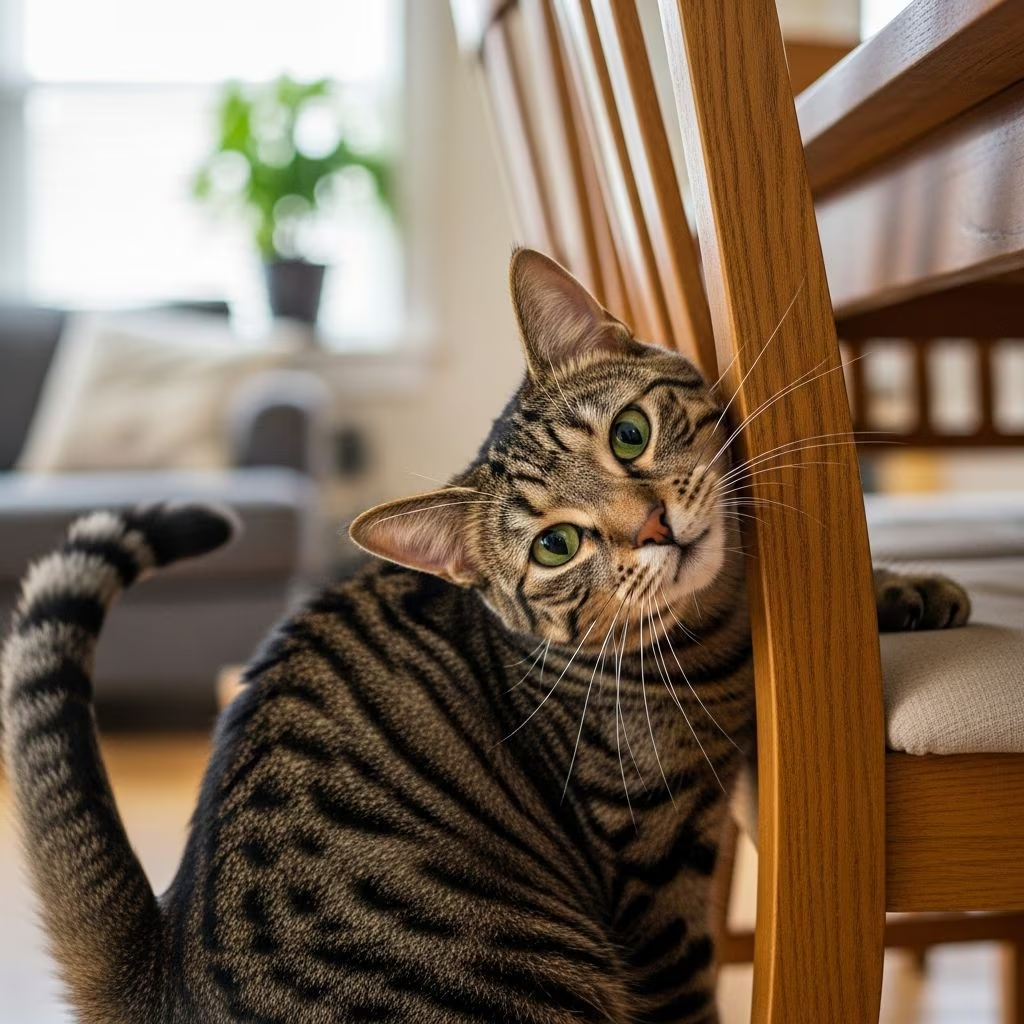
Cats communicate in fascinating ways, and one of the most common behaviors cat owners notice is excessive meowing combined with rubbing against legs, furniture, or walls. This dual action—vocalizing with meows while physically rubbing—serves multiple purposes rooted in feline instincts. Whether your cat is head-butting your shins before dinner or weaving figure-eights around your ankles with chirps and purrs, these actions reveal a lot about their needs, emotions, and environment.
Understanding why cats exhibit this behavior helps strengthen the bond between you and your pet. In most cases, it’s a positive sign of trust and contentment, but sometimes it could indicate hunger, stress, or health concerns. This article breaks down the six primary reasons for your cat’s meowing and rubbing, drawing from veterinary insights and behavioral studies. We’ll also cover when to consult a vet and tips to respond appropriately.
The 6 Reasons Why Your Cat Keeps Meowing and Rubbing Against Everything
Cats have evolved sophisticated communication methods, primarily through scent, body language, and vocalizations. Meowing is largely reserved for humans—cats rarely meow at each other after kittenhood—while rubbing deposits pheromones from specialized glands. Here’s a detailed look at the top reasons.
1. Marking Their Territory
Cats are territorial creatures by nature. When your cat rubs its face, cheeks, or body against furniture, walls, or you, it’s depositing scent from glands located on its cheeks, forehead, chin, and tail base. This creates a familiar “colony scent” that makes the environment feel safe and secure.
Meowing often accompanies this to announce their presence. In multi-cat homes or areas with intruders (like neighborhood strays), rubbing intensifies to reinforce boundaries. If your cat suddenly increases this behavior, it might sense a threat, such as a new pet or visitor.
- Glands involved: Cheeks (for facial rubbing or “bunting”), tail base (for side-swiping).
- Signs: Arching back, slow blinks, purring while rubbing.
- Tip: Provide vertical spaces like cat trees to expand their territory without conflict.
This instinct traces back to wild ancestors who marked trails to avoid disputes. Domestic cats adapt this to claim their home.
2. Claiming Ownership Over Something
Closely related to territory marking, rubbing asserts ownership over prized items or people. Your cat might rub against your legs to “claim” you as part of their family, mixing your scent with theirs for a communal group odor.
Watch for this on favorite spots: the sunny windowsill, your favorite chair, or even your shoes. Meowing adds a vocal claim, especially if another pet approaches. This behavior strengthens social bonds and deters rivals.
| Object/Person | Common Rubbing Style | Meowing Intensity |
|---|---|---|
| Your legs | Full body weave | High (greeting + claim) |
| Couch spot | Face and flank rub | Medium (solo marking) |
| Other pets | Tail rub + head bump | Low (subtle assertion) |
In feral colonies, this prevents fights by clearly signaling “mine”. Neutered cats still do it, proving it’s not just reproductive.
3. Releasing Pheromones
Pheromones are chemical signals cats release via rubbing to communicate reproductive status, familiarity, or readiness to mate. Facial glands produce Friendly Facial Pheromones (F3), which calm and bond.
Unspayed females in heat meow loudly (yowling) and rub excessively to attract toms, often with urine spraying. Males do the same, patrolling with chin rubs. Spaying/neutering reduces this by 90%, per veterinary data. Meowing here is urgent and drawn-out, unlike affectionate chirps.
- Heat signs: Increased vocalization, rolling, tail flagging.
- Solution: Early sterilization prevents unwanted litters and behaviors.
- Bonus: Synthetic pheromone diffusers mimic these for stress relief.
4. Grabbing Your Attention
Cats are masters of manipulation, using meows and rubs to demand food, play, or pets. This learned behavior escalates if rewarded—pet them once, and they’ll repeat.
Pre-meal rituals are classic: rubbing your calves while meowing insistently. Vocal cats often have chatty owners, as they mimic human speech patterns. Mornings amplify this, associating your rising with breakfast.
Pro Tip: Delay response slightly to avoid reinforcing; use puzzle feeders for mental engagement.
5. Showing Affection
The sweetest reason: pure love! Bunting (head-rubbing) signifies trust, equivalent to a hug. Combined with trills or meows, it’s your cat saying, “You’re family.” They slow-blink, purr, and knead too.
Affectionate breeds like Ragdolls amplify this. In strays, initial rubbing means they’ve chosen you as safe. Reciprocate with gentle pets on cheeks/tail base to exchange scents.
6. Saying Hello!
A simple greeting! After absence, cats rub and meow to reconnect, linking your scent to security. Tail-up rubs mimic wild greetings.
Affectionate cats sleep on you, reinforcing bonds. This companionship evolved from solitary hunters to social domestics.
Is It Always Positive? When to Worry
Mostly benign, but excessive meowing + rubbing can signal issues:
- Hunger/Thirst: Check bowls; senior cats meow more due to cognitive decline.
- Stress: New home/pets trigger anxiety; use Feliway diffusers.
- Health: Hyperthyroidism, kidney disease, pain cause vocalization. Sudden changes warrant vet visit.
- Allergies/Fleas: Aggressive rubbing indicates itchiness.
Monitor: If paired with hiding, aggression, or litter avoidance, seek professional help.
How to Respond to Your Cat’s Meowing and Rubbing
Encourage positives:
- Pet gland areas during rubs.
- Play daily to curb attention-seeking.
- Maintain routine for security.
- Use interactive toys over free-feeding.
Avoid punishment; it increases stress.
In Summary
Your cat’s meowing and rubbing blend instinct with learned communication, mostly signaling joy, ownership, and love. Chat back—they thrive on interaction! If concerning, rule out medical causes first.
Frequently Asked Questions (FAQs)
Why does my cat meow and rub against me in the morning?
Typically hunger or greeting; they associate your wake-up with food.
What if my cat rubs too aggressively?
Could be overexcitement, allergies, or infection—check ears/skin.
Do all cats do this?
Most, but shy cats rub less. Encourage with patience.
Why does my stray cat rub on me?
Trust and friend-seeking; you’re safe.
Does neutering stop rubbing?
Reduces mating rubs, not affection/territory ones.
References
- Why Does My Cat Keep Meowing and Rubbing Against Everything? — Catster. 2023. https://www.catster.com/cat-behavior/why-does-my-cat-keep-meowing-and-rubbing-against-everything/
- Why Do Cats Rub Against You? 5 Hidden Reasons — LadyNPet. 2024. https://ladynpet.com/us/blog/why-do-cats-rub-against-you/
- Why is My Cat Meowing so Much? — West Loop Veterinary Care. 2023-10-15. https://westloopvet.com/blog/why-is-my-cat-meowing-so-much/
- Meowing and Yowling — ASPCA. 2024. https://www.aspca.org/pet-care/cat-care/common-cat-behavior-issues/meowing-and-yowling
- Decoding Cat Behavior — Redbarn Pet Products. 2023. https://www.redbarn.com/blogs/blog/decoding-cat-behavior



