

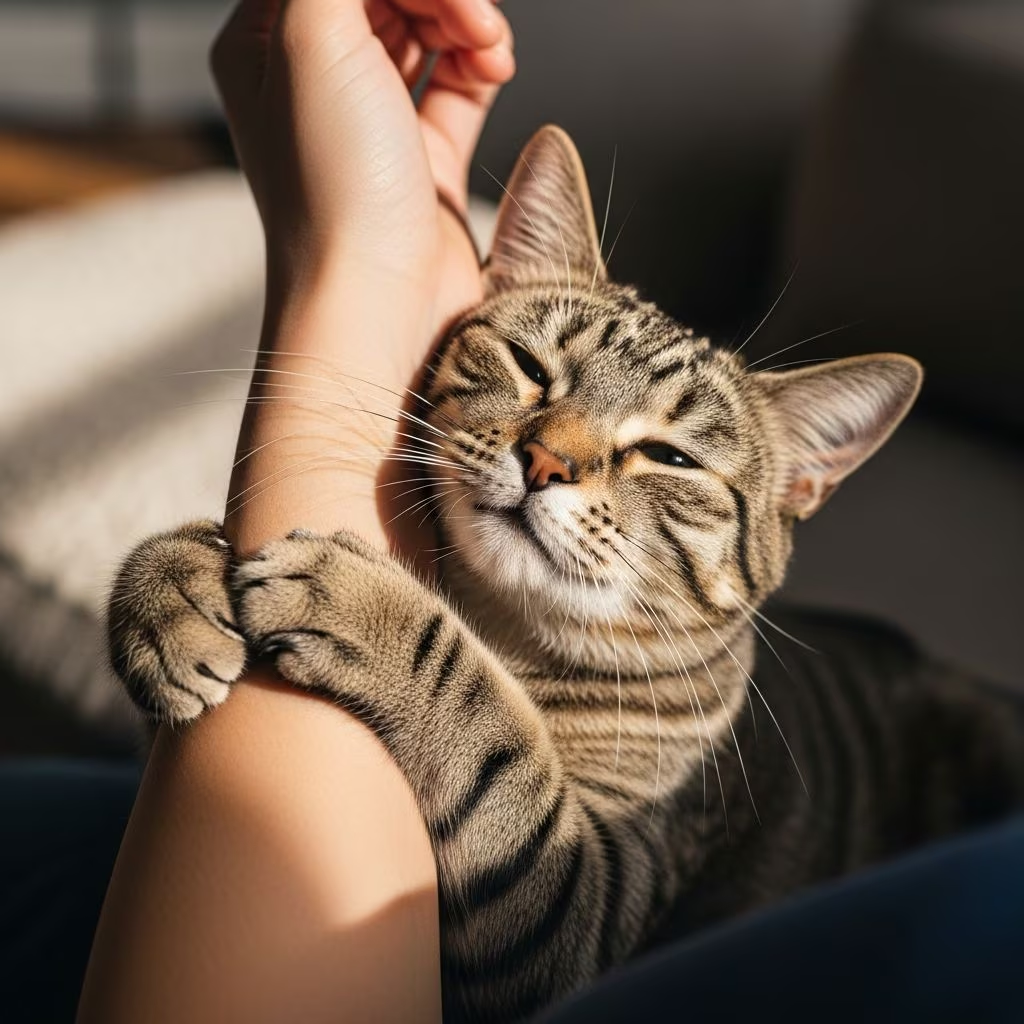
Your cat suddenly wraps its paws around your arm, pulling it close like a treasured toy. Is it a sign of deep affection, an invitation to play, or something else entirely? This endearing yet puzzling behavior is common among feline friends and can leave owners wondering about their cat’s intentions. Understanding why cats hug arms provides insight into their instincts, emotions, and communication style, helping you foster a stronger, safer bond.
Cats communicate through body language, vocalizations, and physical interactions rather than words. Arm-hugging often mimics natural hunting or social behaviors observed in wild and domestic cats alike. While it feels like a hug to us, it may represent play, affection, territorial marking, or a boundary signal for your cat. By observing context, intensity, and accompanying cues, you can decipher the message and respond effectively.
Understanding the Cat ‘Hug’: What It Looks Like
The classic cat arm hug involves your feline grabbing your arm or hand with both front paws, often rolling onto its side or back while holding on tightly. This may escalate to gentle nibbles, licks, or ‘bunny kicks’ with the hind legs—rapid, playful thrusting motions reminiscent of subduing prey. These actions stem from kittens’ play-fighting with littermates, where hugging and kicking hones hunting skills without real harm.
Not all hugs are equal. A soft embrace with purring and kneading suggests contentment, while stiff body posture, twitching tail, or escalating bites indicate discomfort. Younger cats display this more frequently as they practice instincts, but adults retain the behavior during high-energy moments or overstimulation.
Reason 1: Playful Hunting Instincts in Action
One of the most common explanations is **play**. Cats are obligate carnivores wired for hunting, and play replicates this drive. When your cat hugs your arm, it’s treating it like prey—grabbing, biting, and kicking to ‘subdue’ it. This ‘bunny kick’ technique is highly effective in nature: front paws immobilize, hind legs deliver powerful blows.
Hyperactive bursts, or ‘zoomies,’ often trigger this. Your cat may scurry with dilated pupils, pounce suddenly, and release your arm only to attack a toy next. Kittens and young adults are prime culprits, using humans as playmates since we resemble oversized littermates. Encouraging this with toys redirects energy safely, preventing accidental scratches.
- Signs of play: Loose body, playful eyes, alternating with toy chases.
- How to respond: Provide interactive toys like wand teasers or kickers. End sessions before fatigue sets in to avoid overstimulation.
Reason 2: Affection and Bonding Through Grooming
Cats show love subtly. Arm-hugging paired with licking or nibbling mimics **allogrooming**, where cats mutually groom to strengthen social bonds. By ‘hugging’ and gently biting, your cat includes you in its family, marking you with scent glands on paws and cheeks as ‘safe’ and ‘mine’.
This ‘love bite’ is lighter than aggressive chomps—no puncture, just a nip. Purring, head-butts (bunting), and slow blinks often accompany it. Indoor cats, especially solos, lavish this on owners as a sign of trust. Reciprocate by offering a soft brush or your hand for kneading, but watch for shifts to irritation.
Reason 3: Overstimulation and Petting Aggression
Not every hug is friendly. **Overstimulation aggression** occurs when petting exceeds a cat’s tolerance. What starts as enjoyable stroking builds to discomfort, signaled by subtle cues you might miss. Your cat hugs your arm to trap the ‘offending’ hand, then bites or kicks to say, “Enough!”
Common triggers: Belly rubs, full-body pets, or prolonged sessions. Cats have sensitive skin; overstimulation floods their senses. Historical factors like poor socialization amplify this—kittens without littermates learn bite inhibition poorly.
- Warning signs:
- Twitching/rigid tail
- Flattened ears or dilated pupils
- Stiffening or skin rippling
- Low growl or freezing
- Quick head turns toward your hand
Respect these by stopping immediately, freezing your hand, then withdrawing slowly. Short, frequent pets build tolerance over time.
Reason 4: Warning You to Back Off
Sometimes, the hug-bite combo is a **final warning**. If ignored cues (tail lash, ear flicks) precede it, your cat escalates to physical enforcement. Petting the wrong spot—like the belly or base of tail—or at inopportune times (mealtime, nap) prompts this. It’s not outright aggression but a firm “Stop that!”
Unlike play, the cat releases quickly, glares, or grooms itself post-incident. Medical pain (e.g., arthritis) or anxiety can lower thresholds. Consult a vet if sudden or intense.
Risks of Arm-Hugging and Biting Behaviors
While usually harmless, rough play risks scratches or bites piercing skin. Cat mouths harbor bacteria like Pasteurella multocida, causing rapid infections—swelling, fever within hours. Deep punctures demand immediate medical care: clean, antibiotics often needed.
Prevent escalation with toys, play schedules, and body language literacy. Neutered/spayed cats bite less aggressively.
How to Manage and Redirect the Behavior
| Situation | Signs | Response Strategy |
|---|---|---|
| Play | Zoomies, loose energy | Interactive toys, 10-15 min sessions 2x/day |
| Affection | Purring, licking | Allow briefly, offer brush |
| Overstimulation | Tail twitch, stiffen | Stop petting, walk away calmly |
| Warning | Glare, quick release | Observe triggers, limit offending pets |
Enrich environment: scratching posts, window perches, puzzle feeders reduce boredom-driven hugs. Positive reinforcement—treats for toy play—works better than punishment, which erodes trust.
Body Language Guide: Reading Your Cat’s Signals
Mastering feline cues prevents misunderstandings:
- Relaxed: Slow blinks, upright tail, exposed belly (cautiously).
- Excited/Playful: Dilated pupils, crouch, wiggle butt.
- Irritated: Pinned ears, thrashing tail, hissing.
- Overstimulated: Rippling skin, freezing, paw lifts.
Practice ‘observation pauses’ during interactions. Apps or books on cat behavior aid learning.
Frequently Asked Questions (FAQs)
Why does my cat hug my arm and bite gently?
This is often a love bite or play—affectionate nibbles without breaking skin. Redirect to toys if it escalates.
Is arm-hugging a sign of aggression?
Rarely. True aggression involves hissing, flattened body. Most hugs signal play or overstimulation, not malice.
How do I stop my cat from bunny-kicking my arm?
Withdraw calmly, offer alternatives like kick toys. Scheduled play drains energy preemptively.
Should I punish my cat for biting during hugs?
No—punishment confuses. Ignore unwanted behavior, reward good alternatives.
Does this behavior mean my cat is unhappy?
Not necessarily. It reflects instincts. Ensure ample play, enrichment, vet checks for underlying issues.
Building a Playful, Loving Relationship
Arm-hugging reveals your cat’s trust and vitality. By decoding motives—playful practice, loving grooming, or boundary pleas—you respond with empathy. Consistent management turns potential frustration into joyful interaction. Observe daily, adapt routines, and enjoy the unique ways your cat says, “You’re my person.”
References
- Why Does My Cat Hug My Arm and Bite Me? — Kitty Clysm. 2023. https://kittyclysm.com/cat-hugs-arm-bites/
- Why Does My Cat Hug My Arm And Bite Me — Happy Cats Home (Veterinarian insights). 2024. https://happycatshome.com/blogs/cat-behavior/why-does-my-cat-hug-my-arm-and-bite-me
- Petting-Induced or Overstimulation Aggression in Cats — Humane Society of Huron Valley (HSHV). 2023. https://www.hshv.org/petting-induced-or-overstimulation-aggression-in-cats/
- Why Does My Cat Hug My Arm? Love, Play, or Aggression? — SoveLivee Pet Care. 2024. https://sovelivee.com/blogs/pet-care/why-does-my-cat-hug-my-arm



