

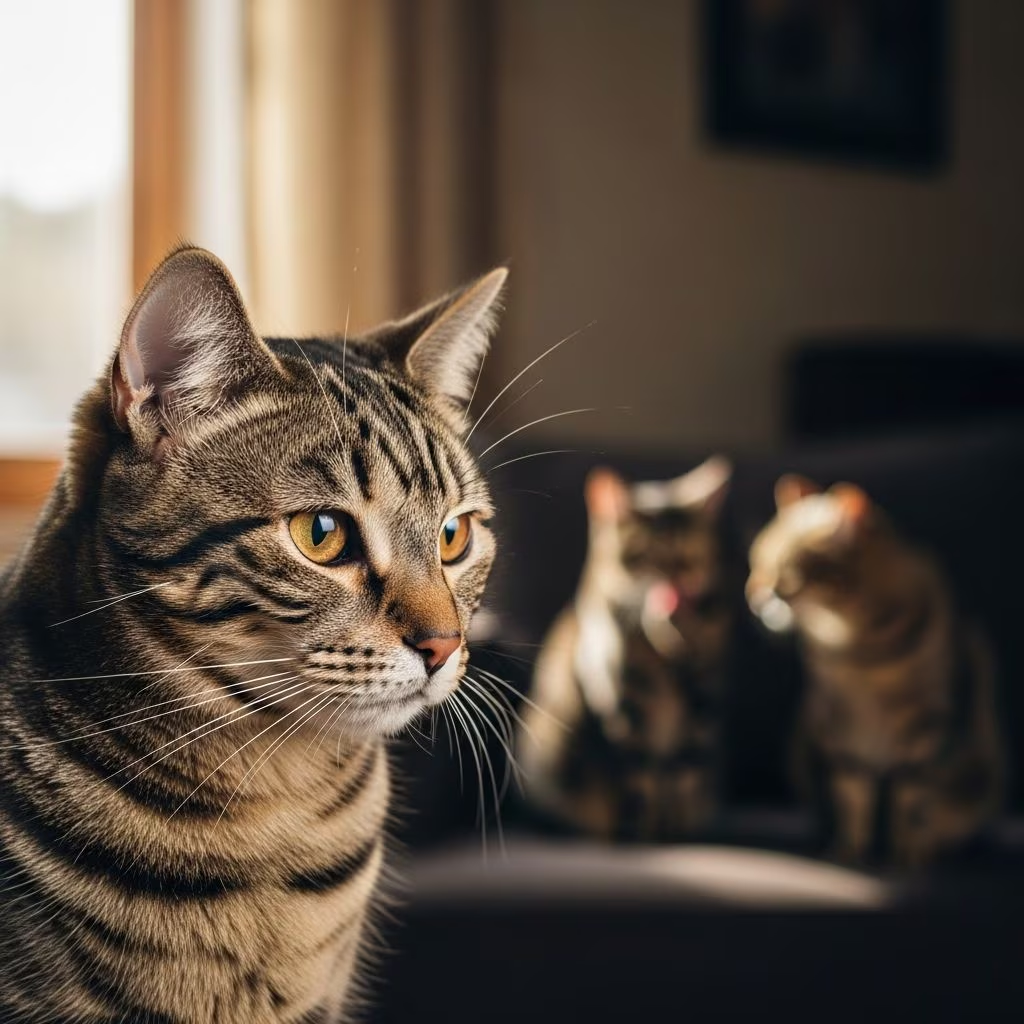
Cats are often portrayed as solitary creatures, but many households feature multiple felines living together peacefully. However, when aggression arises between cats, it can turn your home into a battleground. Understanding the root causes—such as **territorial aggression**, **fear-based aggression**, and **incompatible personalities**—is key to resolving conflicts. This comprehensive guide explores why cats fight, how to recognize signs, and practical steps to foster harmony in multi-cat homes.
Understanding Cat Aggression: Common Causes
Aggression between household cats rarely happens without reason. It often stems from instinctual behaviors amplified by stress, change, or personality clashes. Leading triggers include territorial disputes, fear responses, redirected frustration, and even play that escalates. Veterinary behaviorists emphasize ruling out medical issues first, as pain or illness can heighten irritability.
Cats communicate through subtle cues like stares, tail flicks, and postures. What owners see as “sudden hatred” is usually a gradual escalation from ignored warnings. Early intervention prevents injuries and builds positive associations.
Territorial Aggression in Cats
**Territorial aggression** occurs when a cat defends its perceived space from intruders, including familiar housemates. Indoor cats treat rooms, furniture, or pathways as property, especially after social maturity around 2-3 years old. This is more common in unneutered males but affects all genders.
Signs of territorial aggression:
- Staring, growling, or lunging to block access (e.g., sprawling in doorways)
- Stalking or chasing others away from “their” spots
- Upright posture with forward ears during defense
- Marking with urine spraying or scratching
Escalation happens if the targeted cat flees, triggering chase instinct, or if the aggressor is impulsive. A calm resident cat may de-escalate by retreating, but bold personalities clash. Neighborhood cats visible outside can spark indoor fights via redirected aggression.
Fear-Based Aggression: When Fear Turns to Fight
**Fear-based aggression** arises from perceived threats, where a cat’s freeze-flee-fight response activates. Innately timid cats may lash out at friendly approaches, mistaking them for danger. Initial avoidance (low posture, flattened ears) gives way to hissing, swatting, or lunging if cornered.
Common fear triggers include new cats, loud noises, or changes like moving furniture. Pupil dilation, piloerection (fur standing up), and urine spraying signal high stress. Chasing reinforces the cycle: the fearful cat runs, exciting the pursuer.
Why it escalates: Social cats pursue retreating ones, heightening fear and aggression in a vicious loop. Early socialization and desexing reduce risks.
Other Types of Aggression Between Cats
Beyond territory and fear, several forms contribute to cat conflicts:
- Redirected aggression: Frustration from unreachable stimuli (e.g., outdoor cats seen through windows) vents on housemates. Odors on owners or high-pitched sounds trigger it.
- Male-to-male aggression: Intact males challenge for dominance, using howls, flattened ears, and claws. Neutering curbs this.
- Play aggression: Kittens and young cats pounce roughly; older cats tire of it, leading to real fights. Peaks mornings/evenings.
- Status-related or resource guarding: Fights over food, litter, or attention.
In multi-cat homes, one cat may tolerate some but target others based on past experiences.
Signs Your Cats Are Fighting (Not Playing)
Distinguishing play from aggression prevents mishandling. Play is mutual, relaxed, and rotational; fights are intense and one-sided.
| Play | Aggression |
|---|---|
| Loose body, retracted claws, taking turns | Rigid posture, extended claws, vocalizing (hiss/growl) |
| No ears back, tail up or swishing playfully | Ears flat/sideways, tail thrashing, fur raised |
| Short bursts, quick recovery | Prolonged chases, hiding after, injuries |
Monitor for bites drawing blood or fur loss—these demand separation.
Why Did My Cats Suddenly Start Fighting?
Sudden fights often follow triggers like:
- New pet, baby, or household changes
- Illness recovery or vet visits (scents alter)
- Maturity: Kittens hitting adolescence
- Visible outdoor threats
Gradual buildup from subtle threats goes unnoticed until explosion. Vet checks rule out hyperthyroidism or arthritis.
Steps to Stop Cat Fights and Restore Peace
Immediate action: Separate fighting cats safely to prevent injury. Confine aggressor in a quiet room with essentials; block door gaps.
- Consult professionals: Vet for health issues, then behaviorist.
- Provide resources: One litter box per cat +1, separate food/water stations, vertical spaces.
- Enrich environment: Toys, scratching posts, window perches for natural behaviors.
- Desex if needed: Reduces hormone-driven aggression.
How to Reintroduce Cats After Fighting
Reintroduction mimics first meetings: slow and scent-focused.
- Separate completely (days/weeks).
- Swap bedding for scent familiarity.
- Feed on opposite sides of closed doors.
- Visual access via baby gate; positive treats.
- Supervised meetings; interrupt tension early.
Progress varies—some reconcile in weeks, others need permanent management. Pheromone diffusers (Feliway) aid calming.
Preventing Aggression in Multi-Cat Homes
Proactive strategies ensure harmony:
- Socialize kittens early; match personalities.
- Introduce new cats gradually over weeks.
- Maintain routines; avoid favoritism.
- Multiple elevated perches/trees reduce tension.
- Regular play mimics hunting, burns energy.
Neutering before maturity prevents many issues.
Frequently Asked Questions (FAQs)
Q: Can cats that fight ever get along?
A: Yes, with proper separation, reintroduction, and management, many do. Some need lifelong separate spaces.
Q: Is it normal for my cats to fight sometimes?
A: Occasional spats are common, but frequent fights indicate issues like territory or fear.
Q: Should I punish my aggressive cat?
A: No—punishment increases fear. Use positive reinforcement.
Q: How long does reintroduction take?
A: 1-4 weeks typically; monitor body language.
Q: What if one cat is bullying the other?
A: Separate, enrich for both, consult experts.
References
- Cat Behavior Problems: Aggression in Cats – Fear and Territorial to Other Household Cats — VCA Animal Hospitals. 2023. https://vcahospitals.com/know-your-pet/cat-behavior-problems–aggression-in-cats-fear-and-territorial-to-other-household-cats
- My cat is being aggressive towards my other cat, what should I do? — RSPCA Knowledgebase. 2024. https://kb.rspca.org.au/categories/companion-animals/cats/behaviour/my-cat-is-being-aggressive-towards-my-other-cat-what-should-i-do
- Aggression Between Family Cats and Feline Social Behavior — PAWS. 2023. https://www.paws.org/resources/aggression/
- Aggression in Cats — ASPCA. 2024. https://www.aspca.org/pet-care/cat-care/common-cat-behavior-issues/aggression-cats
- Aggression During Play with Other Cats — Maddie’s Fund. 2022. https://www.maddiesfund.org/cat-aggression-during-play-with-other-cats.htm
- Cat Aggression Toward Other Cats: Causes and Prevention — Best Friends Animal Society. 2024. https://bestfriends.org/pet-care-resources/cat-aggression-toward-other-cats-causes-and-prevention



