

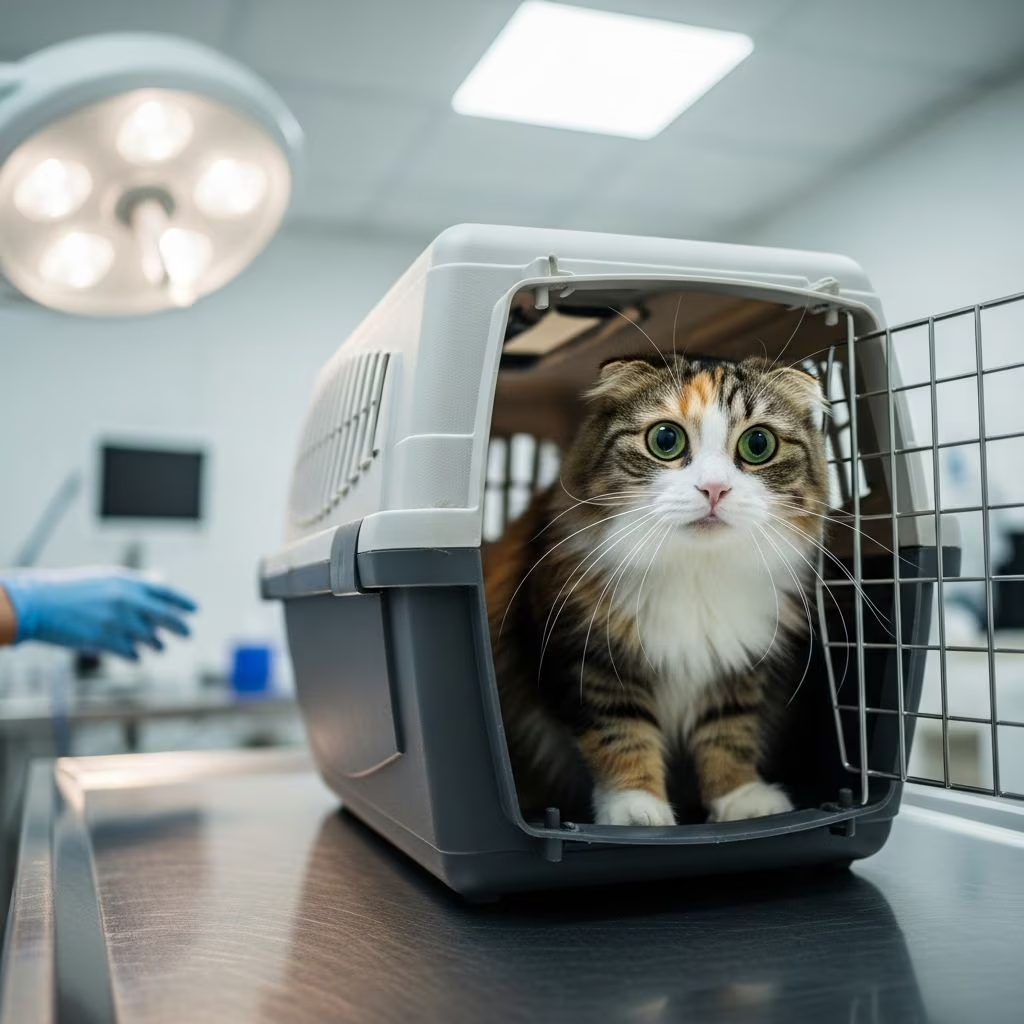
Cats often dread veterinary visits due to heightened stress from unfamiliar environments, handling, and procedures, leading to aggression or anxiety that mirrors home behaviors. Veterinary stress activates physiological responses like lower urinary tract issues and compromises immunity, making regular care challenging yet essential.
Table of Contents
- Signs Your Cat is Stressed at the Vet
- Top Reasons Cats Hate the Vet
- How to Get Your Cat in a Carrier Without a Fight
- The Car Ride from Hell: Reducing Travel Stress
- Why Handling and Exams Cause Fear
- Creating Positive Vet Experiences
- Medications and Supplements for Anxious Cats
- When Vet Dread Indicates Bigger Issues
- Frequently Asked Questions (FAQs)
Signs Your Cat is Stressed at the Vet
Recognizing stress in cats during vet visits is crucial, as they mask illness instinctively but show clear behavioral cues under duress. Stressed cats may freeze in a crouched position with an arched back, lowered head, tail tucked, and ears rotated sideways or back. Dilated pupils, nose-licking, drooling, hissing, or growling signal escalating distress, potentially leading to aggression if ignored.
At clinics, aggression like growling, hissing, scratching, or biting correlates with home anxiety and aggression, affecting 90% of cats visiting recently. Freezing or hiding in carriers, trembling, piloerection, or feigned sleep indicate fear; veterinary teams must heed these to avoid injury and ensure care.
- Body language: Crouched posture, flattened ears, swishing tail.
- Facial cues: Wide eyes, whiskers forward, excessive blinking.
- Vocalizations: Hissing, spitting, shrieking meows.
- Physiological: Piloerection, drooling, urination/defecation from stress.
These signs compromise diagnostics, mimicking conditions like hypertension (‘white-coat effect’), underscoring the need for fear-free protocols.
Top Reasons Cats Hate the Vet
Vets trigger fear because they disrupt a cat’s territorial instincts; unfamiliar smells, sounds, and people evoke survival threats. Domestic cats, descendants of solitary hunters, hide vulnerabilities, making clinic chaos—other animals, bright lights, restraint—intolerable.
Prolonged stress harms health: immunity drops, exacerbating cystitis or comorbidities; aggressive cats get suboptimal care, risking undiagnosed issues. Nearly 90% of U.S. cats visited vets recently, yet most experience distress, worsened by COVID-era disruptions.
| Reason | Impact | Source |
|---|---|---|
| Unfamiliar environment | Triggers flight/fight response | |
| Restraint/handling | Loss of control, pain association | |
| Sights/sounds/smells | Territorial invasion | |
| Past trauma | Conditioned fear |
Multi-cat homes amplify stress if carriers mix scents; owners’ anxiety transfers too.
How to Get Your Cat in a Carrier Without a Fight
Carriers evoke dread; condition yours as a safe haven weeks ahead. Place it open in a quiet room with treats, toys, bedding—make it positive. Use pheromone sprays like Feliway inside; feed meals nearby, progressing to inside feeding.
- Choose right carrier: Top-loading for easy access, soft-sided for comfort.
- Location: Low-traffic, familiar spot.
- Timing: Non-mealtime, calm periods; towel over for security.
- Technique: Scoop gently from behind, scruff lightly if needed—never chase.
Fe-BARQ data shows aggressive clinic cats resist home handling too; early socialization prevents this. Practice short confinements building to longer ones.
The Car Ride from Hell: Reducing Travel Stress
Car rides mean motion sickness, confinement, and vet association—cats salivate, vocalize excessively. Cover carrier fully, secure in footwell away from AC vents; drive smoothly, avoid stops if possible.
Play calming music or pheromones; short familiarization drives to positive spots first. Most cats stress here, but premedication helps 33% of aggressive cases—yet 67% miss it. Acclimate via daily short trips.
- Cover carrier with breathable blanket.
- Use pheromone diffusers/collar.
- Secure carrier horizontally.
- Quiet engine if possible; no talking to cat.
Why Handling and Exams Cause Fear
Restraint feels like predation; cats stiffen, pupils dilate, lash out. Vets untrained in behavior (common issue) force interactions, worsening fear. Slow blinks, minimal restraint, towel wraps mimic maternal holds.
Exams trigger pain recall; start with pets in laps, progress gently. Aggression links to home issues—prioritize behavior histories.
Creating Positive Vet Experiences
Fear-Free guidelines: cat-only hours, warm blankets, elevated perches. Brief visits, play/ treats post-exam reinforce positivity. Owners: Schedule mornings, fast mornings for easy exams.
Behavior assessments every visit detect issues early. Positive loops reduce future stress, improving compliance.
Medications and Supplements for Anxious Cats
Anxiolytics like gabapentin pre-visit calm without full sedation; 33% of stressed cats get them, but owners are open. Supplements (Zylkene, Composure) or CBD (vet-approved) aid mild cases. Consult for dosing; combos with pheromones excel.
Prioritize for clinic-aggressive cats, as stress lingers.
When Vet Dread Indicates Bigger Issues
Extreme fear signals pain, hyperthyroidism, or cognitive decline in seniors. Sudden aggression? Rule out medical first. Behaviorists for chronic cases; euthanasia risk if unaddressed.
Monitor: Housesoiling, appetite loss with vet phobia warrants consult.
Frequently Asked Questions (FAQs)
Why is my cat aggressive at the vet but not at home?
Clinic aggression correlates with home anxiety; stress amplifies baseline fears, per Fe-BARQ studies.
How can I make my cat love its carrier?
Daily positive associations: treats, play inside; graduate to short trips.
Should I medicate my cat for vet visits?
Yes, discuss anxiolytics with vets—effective for most stressed cats.
What if my cat pees in the carrier?
Stress cystitis; absorbent pads, clean immediately, pheromones help.
Are cat-only vet hours worth it?
Absolutely—reduces triggers, per guidelines.
References
- Cat Aggression: Clinic vs. Home Behaviors in USA — Journal of Feline Medicine and Surgery. 2024. https://journals.sagepub.com/doi/10.1177/1098612X231214907
- Behavioral awareness in the feline consultation — PubMed Central. 2024. https://pmc.ncbi.nlm.nih.gov/articles/PMC11395291/
- Feline Behavior Guidelines — American Association of Feline Practitioners (catvets.com). 2024. https://catvets.com/wp-content/uploads/2024/01/FelineBehaviorGLS.pdf
- Behavior Problems in Cats — Merck Veterinary Manual. 2024. https://www.merckvetmanual.com/cat-owners/behavior-of-cats/behavior-problems-in-cats
- Understanding Cat Behavior: When to Consult Your Vet — PCVH Vet. 2024. https://pcvh.vet/when-to-consult-your-vet-about-behavioral-changes/



