

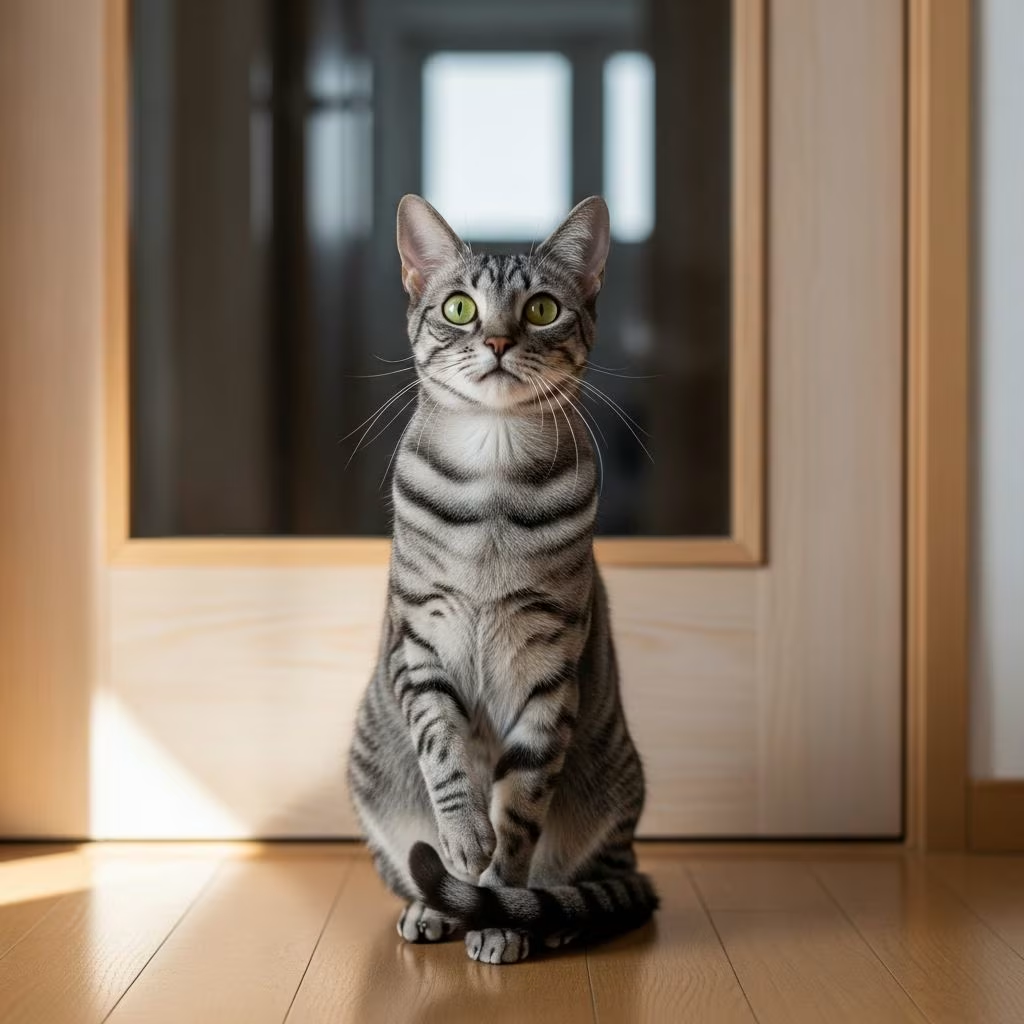
Cats often position themselves outside closed doors, seemingly “guarding” them while you are inside rooms like the bathroom or bedroom. This behavior stems from instinctual drives, social bonds, and environmental awareness, making it a common yet intriguing feline trait.
The 6 Vet-Reviewed Reasons Why Your Cat Guards Your Door
Veterinarians and feline behavior experts identify six primary reasons for door-guarding in cats. These insights, drawn from observational studies and owner reports, reveal how cats perceive their home as territory and their humans as part of their social group. Understanding these motivations can help you respond appropriately, reducing frustration for both you and your cat.
1. Your Cat Wants Your Attention
The most frequent cause is a bid for interaction. Cats meow, paw at doors, or vocalize loudly to signal hunger, playtime, or affection needs. Routine-sensitive felines anticipate feeding or petting at specific times, turning door-guarding into a predictable attention ritual.
In multi-cat homes, this escalates if resources like food bowls are behind doors. One cat may block access to prevent others from reaching desired spots, mimicking wild colony dynamics where dominant individuals control provisions. If your cat follows this pattern, try scheduled play sessions or puzzle feeders to fulfill needs proactively.
2. Your Cat Is Curious
Inquisitive by nature, cats investigate closed doors to explore unknown areas. This survival trait from their wild ancestors helps differentiate safe from unsafe spaces, especially in new environments. A lingering cat outside a door is often mapping its territory, using scents and sounds to build confidence.
Newly adopted cats exhibit this most prominently, gradually acclimating to each room. Encourage exploration by briefly opening doors during low-stress times, allowing supervised entry to satisfy curiosity without reinforcing guarding.
3. It’s a Habit
Repetition turns temporary behaviors into routines. If a cat waits by a door and receives attention or entry repeatedly, it becomes ingrained. Bathroom visits or bedtime routines often trigger this, as cats anticipate your movements with clockwork precision.
Cats thrive on predictability; positioning themselves early reinforces mastery over their environment. Break the cycle gently by ignoring the behavior initially, then rewarding calm distance with treats or toys. Consistency is key to reshaping habits without stress.
4. Your Cat Is Protecting You
Despite their independent image, cats form protective groups. Door-guarding signals vigilance against perceived threats, using vocalizations to alert you. In group settings, cats cooperate to safeguard members, viewing humans as colony mates.
This is common during vulnerable moments like showering or sleeping. The cat monitors entries/exits, ensuring safety. Amplified bathroom sounds heighten interest, blending protection with curiosity. Reassure with calm tones; most cases are benign affection.
5. Your Cat Is Extremely Attached to You
Strong emotional bonds drive “velcro cats” to shadow owners. Separation anxiety prompts door-guarding to maintain proximity, reducing stress via voice or scent detection. Research shows cats exhibit attachment styles akin to dogs, prioritizing key humans.
Highly invested owner-cat pairs foster this security. Provide nearby cozy spots or pheromone diffusers to ease mild anxiety, preserving the bond without constant access.
6. Your Cat Is Territorial
Territorial instincts peak with changes like new pets or intruders. Cats block doors to resources or you, preventing rivals from accessing food, litter, or favored humans. Neighbor cats via flaps amplify this, causing defensive postures.
Aggressive signs like hissing warrant monitoring for escalation. Gradual introductions and multi-station resources mitigate conflicts in multi-pet homes.
Reader’s Stories: Real-Life Door-Guarding Experiences
- Sarah’s Siamese Sentinel: “My Siamese, Luna, guards the bathroom every morning. She yowls until I let her in—turns out she’s hungry and associates my routine with breakfast!”
- Mike’s Multi-Cat Mayhem: “With three cats, my tabby blocks my bedroom to keep the kittens out. Extra litter boxes fixed it.”
- Emma’s Protective Persian: “My senior Persian waits by the bedroom door at night. Vet says it’s sweet protectiveness; we added a bedside bed.”
When Door-Guarding Becomes a Problem
Benign in moderation, guarding turns problematic with aggression (growling, swatting) or interference disrupting sleep/work. Persistent scratching signals unmet needs or anxiety. Stressors like household changes exacerbate it.
Consult a vet to rule out medical issues like hyperthyroidism, which boosts activity. Behaviorists recommend environmental enrichment: vertical spaces, toys, and routines.
How to Stop Your Cat from Guarding the Door
Redirect effectively with these vet-approved strategies:
- Ignore and Reward: Don’t acknowledge guarding; praise/reward when cat retreats voluntarily.
- Enrich Environment: Add scratching posts, window perches, and interactive toys for stimulation.
- Scheduled Interactions: Feed/play on fixed timetables to preempt demands.
- Alternative Access: Install baby gates or nearby beds for closeness without door focus.
- Pheromone Aids: Use Feliway diffusers to calm territorial tensions.
- Professional Help: For aggression, seek certified behaviorists.
| Breed | Tendency | Reason |
|---|---|---|
| Maine Coon | High | Sociable, loyal attachments |
| Siamese | Very High | Vocal, dislikes solitude |
| Persian | Low-Moderate | Independent nature |
| Domestic Shorthair | Variable | Individual temperament |
Breed influences tendencies, but personality, socialization, and experiences matter more.
Frequently Asked Questions (FAQs)
Why does my cat guard the bathroom door?
Cats seek proximity, amplified by sounds on hard floors. It blends curiosity and protection.
Is door-guarding a sign of separation anxiety?
Possibly in velcro cats; monitor for distress. Enrichment helps mild cases.
What if my cat scratches the door?
Provide alternatives like posts; ignore to extinguish behavior.
Do all cats guard doors?
No, but common in attached or territorial ones. Kittens learn from adults.
Should I let my cat in every time?
No; reinforces habit. Teach boundaries with positive redirection.
References
- The 6 Vet-Reviewed Reasons Why Your Cat Guards Your Door — Catster. 2023. https://www.catster.com/cat-behavior/why-does-my-cat-guard-my-door/
- Why Does My Cat Guard My Door? Explained — Cat Lovers (Alibaba). 2024. https://catlovers.alibaba.com/question/why-does-my-cat-guard-my-door
- Why Do Cats Block Doorways and Stairs — OwnPets. 2024. https://ownpets.com/blogs/learn/why-do-cats-block-doorways-and-stairs
- Why Kitty Guards Your Door — Cat Tales (Columbian). 2024-04-14. https://blogs.columbian.com/cat-tales/2024/04/14/why-kitty-guards-your-door/
- The 6 Common Reasons Why Your Cat Guards Your Door — YouTube (Video Transcript). 2023. https://www.youtube.com/watch?v=jcA3-KCWsWc
- Why Does My Cat Guard Me When I Go to the Bathroom? — Cats.com. 2024. https://cats.com/why-does-my-cat-guard-me-when-i-go-to-the-bathroom



