

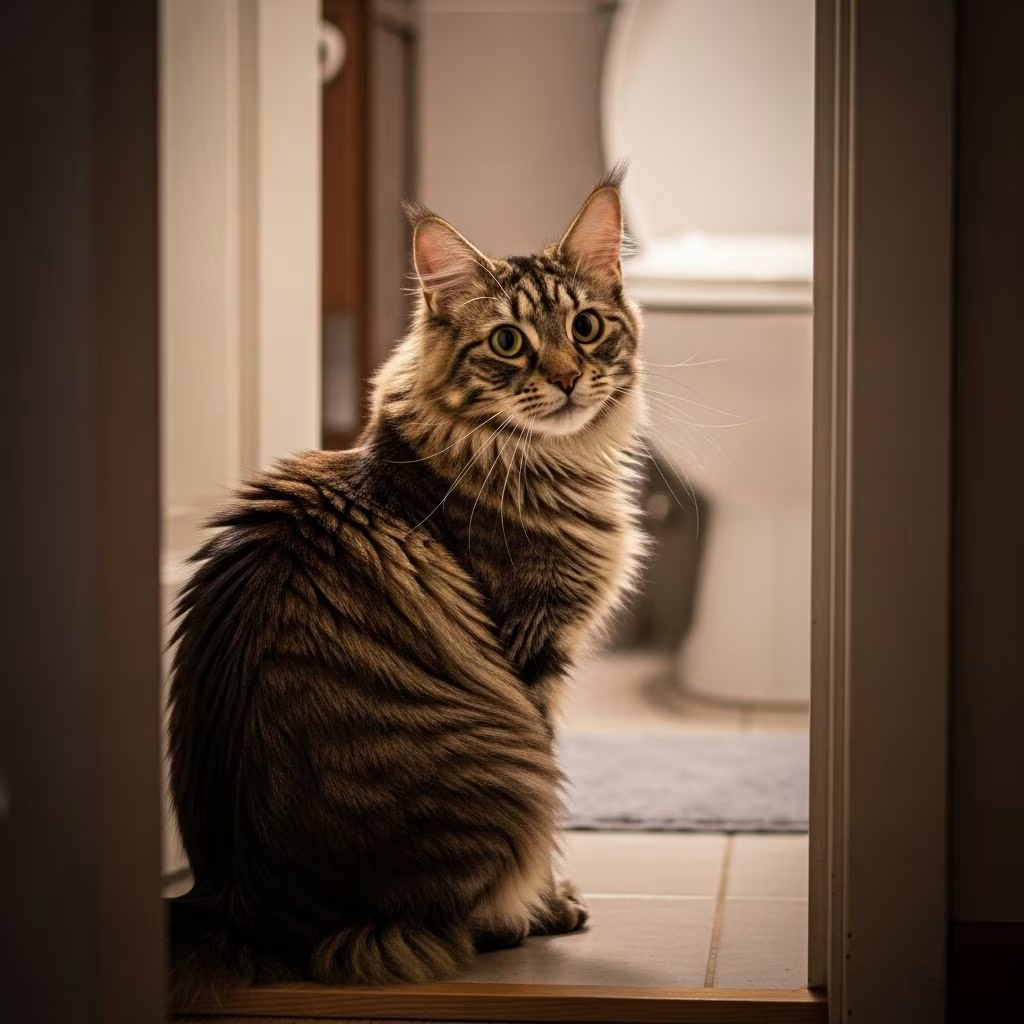
Your cat positioning itself like a sentinel outside the bathroom door isn’t just quirky—it’s rooted in deep-seated instincts. Cats guard their owners during private moments like peeing due to territorial protection, strong social bonds, curiosity about enclosed spaces, and a sense of security derived from proximity to their favorite human.
Is It Normal for Cats to Guard You in the Bathroom?
Absolutely, this behavior is common and typically harmless. Many cat owners report their felines following them to the bathroom and sitting guard, a sign of trust and attachment rather than intrusion. Cats view the bathroom as a vulnerable enclosure, prompting them to watch over you. Unlike dogs, cats express protection subtly through vigilance rather than confrontation.
Studies on feline attachment show cats form secure bonds with owners, seeking proximity during perceived vulnerable times, much like nursing kittens stay near their mother. If your cat meows, paws at the door, or waits patiently, it’s affirming you’re part of its core territory.
Reasons Why Cats Guard Their Owners in the Bathroom
Cats exhibit this guarding for multifaceted reasons, blending survival instincts with domesticated affection. Here’s a breakdown:
- Territorial Instincts: Cats are wired to defend their domain. The bathroom door becomes a boundary point; by guarding it, your cat claims you and the space as ‘theirs,’ warding off imaginary intruders. This echoes wild cats patrolling den entrances.
- Curiosity and Exploration: Doors fascinate cats as gateways to mystery. The sounds of running water or your routines pique their interest, drawing them to monitor and perhaps slip in for a peek.
- Social Bonding and Affection: Cats bond deeply with owners, viewing you as family. Guarding ensures they stay close to their primary resource for food, play, and comfort. It’s a sign you’re their ‘favorite person’.
- Safety and Protection: Cats may perceive vulnerability in isolation. They position nearby to alert you to threats or protect from perceived dangers, vocalizing if needed.
- Hunting and Vigilance: Innate predators, cats stay alert. Bathroom time offers a quiet vigil spot to scan for ‘prey’ like insects while keeping tabs on you.
Triggers like multi-cat homes, visitors, or changes (new baby, moves) amplify this, as cats feel possessive when resources feel threatened.
Signs Your Cat Is Guarding You Protectively
Recognize protective guarding versus mere curiosity by these behaviors:
- Follows you everywhere, especially to private areas.
- Sits or lies directly in front of the door.
- Vocalizes (meows insistently) or paws to ‘check in.’
- Bushes tail or arches back at strangers approaching you.
- Sleeps pressed against you or nearby for security.
Overprotectiveness shows as aggression toward guests or family, puffed fur, hissing, or blocking access—signals to intervene.
| Normal Guarding | Overprotective Signs |
|---|---|
| Calm waiting, quick return to play | Aggression, prolonged stress (hiding, dilated pupils) |
| Follows routinely | Attacks visitors, excessive neediness |
| Relaxed body language | Tail thrashing, growling |
When Guarding Behavior Becomes a Problem
While endearing, excessive guarding disrupts routines or signals issues. Red flags include:
- Aggression toward household members or pets.
- Stress signs: excessive meowing, hiding post-incident.
- Sudden onset, possibly medical (hyperthyroidism, pain).
- Interference with privacy, causing owner frustration.
In multi-pet homes, it sparks territorial fights; with guests, possessive hissing emerges. Consult a vet to rule out health issues before behaviorists.
How to Manage and Redirect Cat Guarding Behavior
Balance instincts with harmony using these strategies:
- Enrich Environment: Provide tall cat trees, window perches for independent territory patrols.
- Positive Reinforcement: Reward calm behavior away from door with treats, ignore demanding meows.
- Interactive Play: Daily sessions with toys mimic hunting, reducing vigilance needs.
- Safe Spaces: Create cozy beds in other rooms to lure them away.
- Desensitization: Gradually close door briefly, rewarding quiet waits; extend time.
- Pheromone Diffusers: Feliway calms territorial anxiety.
For aggression, distract with toys pre-escalation and consult pros. Patience yields confident cats less prone to overguarding.
Do Cats Actually Protect Their Owners?
Yes, cats protect via warnings over fights. They follow, vocalize threats, or deter via presence, relying on bonds for security. Unlike dogs, they avoid confrontation but fiercely defend territory—including you.
Research confirms attachment: cats distress in owner absence, seek comfort, proving emotional reliance.
FAQs
Why does my cat follow me to the bathroom and guard the door?
It’s territorial instinct, bonding, and curiosity—ensuring you’re safe in a vulnerable spot.
Is my cat being possessive or protective?
Often both; possessiveness guards resources (you), protectiveness wards threats. Normal unless aggressive.
How do I stop my cat from guarding the bathroom door?
Redirect with play, enrichment, positive reinforcement; ignore demands.
Do all cats guard their owners?
No, but many do, especially bonded ones. Shyer cats may not.
Is cat guarding a sign of anxiety?
Can be if excessive; rule out medical issues first.
Understanding the Bond: Why This Matters
This behavior underscores cats’ surprising devotion. Far from aloof, they integrate owners into their world, guarding as family. Embrace it while gently shaping boundaries for mutual comfort.
Expand on instincts: Wild ancestors guarded dens similarly, evolving into modern habits. Domestication hasn’t erased this; your home is their savanna.
For multi-cat homes, resource allocation prevents rivalry—separate feeding, litter aids. New kittens learn from adults, normalizing behavior.
Seasonal changes (less daylight) heighten vigilance; counter with routines.
References
- The Gatekeepers: Understanding Why Cats Guard Doors and How to Manage Their Behavior — Meowingtons. 2023. https://www.meowingtons.com/blogs/lolcats/the-gatekeepers-understanding-why-cats-guard-doors-and-how-to-manage-their-behavior
- Are Cats Possessive of Their Owners? — Cats.com. 2024. https://cats.com/are-cats-possessive-of-their-owners
- Do Cats Protect Their Owners? Vet-Verified Facts & Signs — Catster (Veterinarian reviewed). 2024. https://www.catster.com/cat-behavior/do-cats-protect-their-owners/
- Feline Behavior Problems: Aggression — Cornell University College of Veterinary Medicine. 2023-10-15. https://www.vet.cornell.edu/departments-centers-and-institutes/cornell-feline-health-center/health-information/feline-health-topics/feline-behavior-problems-aggression



