

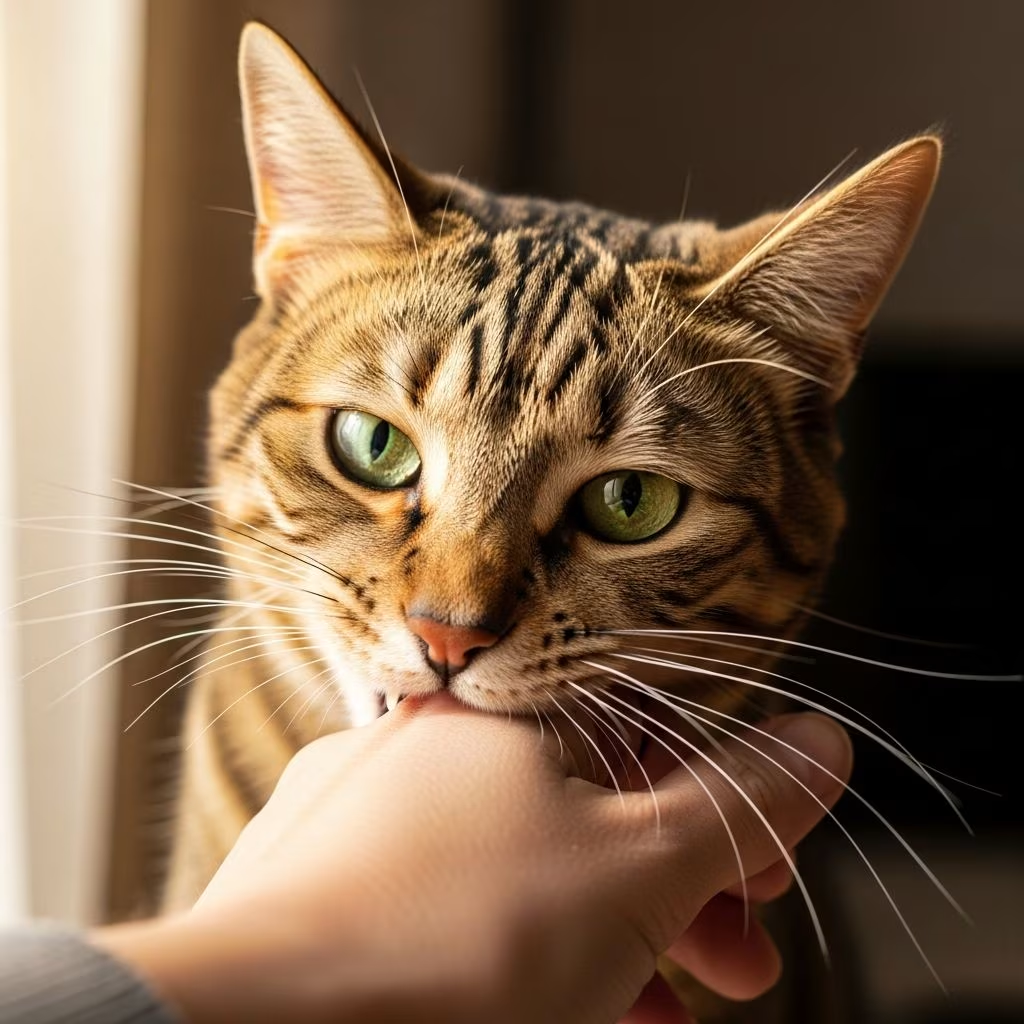
Your cat grabs your hand, holds it tight with their paws, and suddenly sinks their teeth in. It’s a startling and sometimes painful experience that leaves many cat owners confused and frustrated. This behavior, often called “love bites,” “grab-and-bite,” or petting-induced aggression, is surprisingly common in felines. Understanding the root causes is essential for preventing it and fostering a harmonious relationship with your pet.
Cats are descendants of wild predators, and much of their behavior stems from instinctual drives. Whether it’s mimicking a hunt, reacting to overstimulation, or expressing discomfort, these actions aren’t meant to harm but can if not addressed. This article explores the five primary reasons—hunting instinct, accidental pain, playfulness, redirected aggression, and energy bursts—drawing from veterinary insights and behavioral experts. We’ll also provide practical strategies to discourage the behavior while keeping your cat happy and engaged.
The 5 Reasons Why Your Cat Grabs Your Hand and Bites You
Cat behavior experts identify five key triggers for this grabbing and biting action. Recognizing the context—such as during petting, play, or sudden movements—helps pinpoint the cause and guide your response.
1. It’s Their Natural Hunting Instinct
Cats are obligate carnivores and born hunters. Even well-fed domestic cats retain the drive to stalk, pounce, grab, and bite prey. When your hand dangles or moves unpredictably, it resembles a mouse or bird, triggering their predatory sequence.
This instinct is hardwired from kittenhood. Kittens learn to hunt by playing with littermates, practicing bites that inhibit force (bite inhibition). Without proper toys or socialization, they may redirect this onto human hands or feet. The grab with front paws followed by a neck bite mimics how wild cats subdue rodents—holding with claws and delivering a fatal chomp.
Signs it’s hunting: Dilated pupils, low crouch, intense focus, twitching tail, and repeated pouncing. This often happens during interactive play or when hands are visible under blankets.
- Your moving fingers or wrist look like fleeing prey.
- Kittens from single-pet households lack playmates to learn boundaries.
- Boredom amplifies the need to “hunt” household objects or limbs.
To manage: Never use hands as toys. Provide species-appropriate alternatives like wand toys, laser pointers, or kicker pillows that allow safe “bunny kicking.” Schedule 15-20 minute play sessions twice daily to satisfy the instinct.
2. You Accidentally Hurt or Overstimulated Them
Petting-induced or overstimulation aggression is one of the top culprits. Cats enjoy affection but have sensitive thresholds. Prolonged stroking, especially on the belly, tail base, or paws, can shift from pleasant to irritating, prompting a grab and bite as a “stop” signal.
Body language warns before the bite: tail flicking, skin rippling, ears flattening, low growls, pupil dilation, or freezing. Ignoring these cues leads to escalation. Poor early socialization—kittens not handled gently or separated too young—lowers their tolerance.
Accidental pain plays a role too. Stepping on a tail, squeezing too hard, or petting sore spots (from arthritis or wounds) triggers defensive lashing out. Medical issues like dental pain or hyperthyroidism can heighten sensitivity, so a vet check is wise if sudden.
| Sign | Description |
|---|---|
| Tail Twitching | Rapid side-to-side or thrashing indicates rising irritation. |
| Ear Position | Flattened or rotating backward signals discomfort. |
| Body Stiffening | Muscles tense; cat may lean away from touch. |
| Pupil Dilation | Wide eyes even in bright light show arousal. |
| Skin Rippling | Shoulders or back twitch like dodging fleas. |
Solutions: Pet in preferred spots (cheeks, chin) for short bursts. Watch for cues and stop at the first sign—let them walk away. Use a timer for sessions. If pain-related, consult a vet for exams.
3. They Are Playing (But Too Roughly)
Play biting stems from the same hunting roots but occurs in a fun context. Energetic cats grab hands during wrestling games, especially young ones under 2 years. This “hug-and-bite”—clutching with forepaws and bunny-kicking hind legs—replicates capturing larger prey like rabbits.
Encouraging hand play as kittens reinforces it; sharp adult teeth make it hazardous. Bored indoor cats amplify this, seeking stimulation.
- Occurs during high-energy times like dawn/dusk (crepuscular periods).
- Bites are gentler than aggressive ones but still draw blood.
- Often follows chasing shadows or toys.
Redirect immediately: Toss a toy away from your body. Freeze movement if grabbed—wriggling excites them more. End play if they persist, leaving the room briefly (time-out). Rotate toys for novelty and use puzzle feeders for mental play.
4. Redirected Aggression
Stressed cats can’t always confront the source (e.g., outdoor intruder, another pet), so they redirect onto you. Frustration builds, and your hand becomes the outlet.
Triggers include seeing rival cats through windows, loud noises, vet visits, or household changes. Signs: Hissing, swatting, dilated pupils, pacing. This differs from fear biting as it’s proactive aggression.
Intervene by identifying stressors—block window views with sheer curtains, use pheromone diffusers like Feliway. Separate multi-cat homes if tensions rise. Vet rule-out medical causes like pain.
5. Sudden Burst of Energy (Zoomies)
Cats experience hyper bursts, especially after naps or meals. Pent-up energy leads to frantic grabbing and nipping as they “attack” anything moving.
Common in kittens/teens or under-exercised adults. Insufficient playtime or diet mismatches exacerbate it.
- Racing around before targeting hands.
- Followed by collapse into sleep.
- Worse in evenings without routines.
Channel it: Increase interactive play, vertical spaces (cat trees), and window perches. Evening hunts tire them out.
How to Stop Your Cat from Grabbing and Biting Your Hand
Consistency is key. Combine redirection, environmental enrichment, and positive reinforcement:
- Never punish: Yelling or hitting increases fear/aggression.
- Redirect to toys: Keep several handy; praise toy use.
- Play daily: Mimic prey chase/pounce/kill sequence.
- Read body language: Stop petting at early cues.
- Enrich environment: Scratching posts, tunnels, foraging toys.
- Vet visit: Rule out pain/illness.
- Time-outs: Walk away calmly for 1-2 minutes.
For persistent cases, consult a certified animal behaviorist. Multi-cat dynamics may need professional mediation.
When to See a Vet for Cat Biting Behavior
Benign causes dominate, but sudden/increasing bites warrant checks. Red flags:
- Accompanied by litterbox issues, hiding, appetite loss.
- Hissing/growling outside play.
- Limping or sensitivity to touch.
- Age over 7 (thyroid, arthritis).
Vets may recommend bloodwork, dental exams, or meds for anxiety.
Frequently Asked Questions (FAQs)
Q: Why does my cat grab my arm and bite while purring?
A: This is often overstimulation during petting. Purring indicates initial enjoyment, but cues like tail thrashing signal ‘enough.’ Stop and redirect.
Q: Is it normal for kittens to grab and bite hands?
A: Yes, but discourage hand play. Use toys to teach bite inhibition; it fades with proper training.
Q: How do I play with my cat without getting bitten?
A: Use wand toys or da birds at distance. End sessions before exhaustion to avoid frustration.
Q: Why does my cat only bite one person?
A: That person may fidget more, play roughly, or smell like outside cats, triggering hunting or stress.
Q: Can spaying/neutering stop biting?
A: It reduces hormone-driven aggression but not play/overstimulation. Combine with behavior mods.
References
- Why Does My Cat Grab My Hand and Bite Me? 5 Vet-Reviewed Reasons — Catster. 2023. https://www.catster.com/cat-behavior/why-does-my-cat-grab-my-hand-and-bite-me/
- Petting-Induced or Overstimulation Aggression in Cats — Humane Society of Huron Valley (HSHV). 2023-10-15. https://www.hshv.org/petting-induced-or-overstimulation-aggression-in-cats/
- Ask a Vet: Why is my cat trying to bite my hand? — MRFRS. 2024. https://mrfrs.org/ask-a-vet-why-is-my-cat-trying-to-bite-my-hand/
- Why does my cat bite me? — Cats Protection. 2023-05-20. https://www.cats.org.uk/cats-blog/why-does-my-cat-bite-me
- Aggression in Cats — ASPCA. 2024. https://www.aspca.org/pet-care/cat-care/common-cat-behavior-issues/aggression-cats
- How to Stop Kitten Biting — Purina. 2023. https://www.purina.com/articles/cat/kitten/behavior/how-to-stop-kitten-biting



