

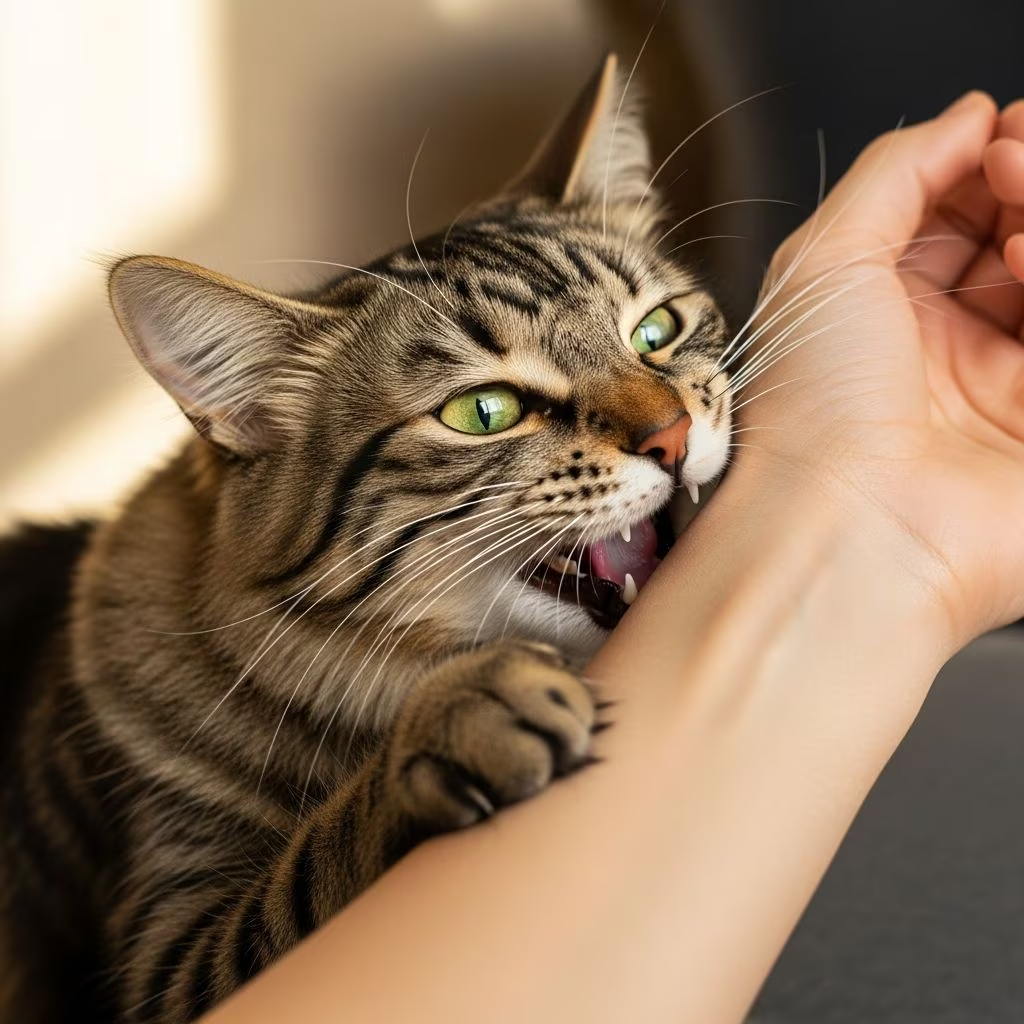
Why Does My Cat Grab & Bite My Arm? Understanding Feline Behavior
If your beloved feline friend suddenly lunges at your arm with teeth bared, you’re not alone in wondering what prompted this unexpected attack. Cat biting is one of the most common behavioral issues pet owners encounter, yet the reasons behind it are often misunderstood. Whether your cat is gently nipping your arm or delivering more aggressive bites, understanding the underlying motivations is crucial for building a stronger relationship with your pet and ensuring both your safety and theirs.
Cats communicate differently than humans, and what appears to be unprovoked aggression often stems from legitimate needs or discomfort. By learning to recognize the signs and understanding the six primary reasons cats bite, you can better manage your cat’s behavior and create a more harmonious household.
The 6 Reasons Why Your Cat Grabs and Bites You
1. Something Hurts: Pain-Related Biting
One of the most overlooked reasons cats bite their owners is pain. Your cat may suddenly bite your arm because you’ve touched a sensitive or painful area on their body. Most cats naturally dislike having their bellies or the base of their tail scratched and petted because these areas are inherently more sensitive to touch.
However, the issue may extend beyond typical sensitivity. Your cat could have a hidden injury that you accidentally touched, such as an abscess, wound, or underlying health condition. Additionally, cats can develop a mysterious condition called feline hyperesthesia syndrome (FHS), sometimes referred to as “twitchy cat disease.” One of the primary signs of FHS is heightened sensitivity to petting and touch in certain areas of the body.
What to do:
- Avoid petting your cat on the belly and tail, as these are naturally sensitive zones
- If you suspect a hidden injury or FHS, schedule an evaluation with your veterinarian
- Watch for additional signs of FHS including twitching, hyperactivity, excessive vocalizing, and licking or chewing at the body
- Be gentle when handling your cat and pay attention to which areas trigger negative responses
2. Trying to Play: Hunting Instincts at Work
Another primary reason your cat may bite your arm is that they’re feeling playful and attempting to use you as a toy. If you’ve watched two cats play together, you’ll notice that biting and bunny-kicking are completely normal parts of their interaction. Your cat may nip you to draw you into a game, viewing the engagement as an exciting opportunity.
Play behavior in cats is fundamentally tied to their hunting and stalking instincts. In the wild, kittens learn to hunt by practicing with their littermates, developing skills they’ll need to survive. Indoor cats retain these instincts, and your moving hands or arms can become tempting targets that trigger their predatory response. While this behavior is entirely natural, it can be painful when your arm becomes the “prey” in your cat’s eyes.
When cats do this, they are misdirecting their hunting behavior. A classic example is when your cat hugs your arm or leg and bites you simultaneously—this is a natural cat hunting move. When cats catch large prey, they grasp it with their front legs, deliver a bite, and then “bunny kick” with their back legs to subdue it.
How to manage play biting:
- Redirect play energy using appropriate cat toys such as feather wands or interactive puzzles
- Use kicker toys that allow your cat to satisfy their bunny-kicking instinct safely
- Engage in regular play sessions to tire out your cat and reduce excess energy
- Never use your hands and feet as toys during playtime
- Stop play immediately if your cat bites too hard to discourage the behavior
3. Redirected Aggression: When Your Cat Can’t Reach Their Real Target
Sometimes, your cat bites your arm not because of anything you did, but because they can’t sink their teeth into their actual target. Redirected aggression occurs when a cat becomes upset by something they cannot access, such as a stray cat outside the window. Because they can’t pursue the source of their stress, they attack the nearest available target—which might be your arm.
Common triggers for redirected aggression include loud noises, unfamiliar people, or a housemate they don’t get along with. The cat’s frustration builds until they explode in aggressive behavior directed at whoever happens to be nearby. Understanding that this bite isn’t personal is important; your cat isn’t angry at you but rather at a situation they feel they cannot control.
Prevention strategies:
- Minimize exposure to external stressors when possible
- Close windows or blinds if your cat becomes agitated watching outdoor animals
- Create a calm environment during times of stress
- Use window treatments to reduce visual triggers from outside
- If your cat shows redirected aggression, give them space to calm down rather than engaging
4. Grooming: Affection Through Nibbling
Cats can lick and bite their owner’s arm as part of grooming behavior. While you might not consider your arm dirty, grooming serves multiple purposes in feline communication. Cats use grooming to keep clean, socialize with each other, and establish social bonds. When your cat grooms you, they’re often expressing trust and affection, treating you as part of their family unit.
These gentle grooming nibbles are typically not aggressive and reflect a positive social behavior. However, even though you may appreciate the gesture of being “groomed” by your cat, it’s important to discourage this behavior to prevent transmitting bacteria or diseases from their mouth. This precaution is especially important for children, pregnant people, elderly individuals, and anyone with a compromised immune system.
Managing grooming-related biting:
- Gently redirect your cat when they attempt to groom your arm
- Offer an alternative, such as petting or a toy, to satisfy their grooming impulse
- Wash any areas your cat has licked to minimize bacterial transmission
- Understand that this behavior stems from affection, not aggression
5. Tired of Attention: Setting Boundaries
Often, a cat will bite an arm or hand suddenly because they are tired of attention and petting. While this may seem like an overreaction or an unprovoked attack, cats generally provide warning signs before escalating to their teeth. The problem is that most owners don’t recognize these signals and continue petting their kitty, gradually increasing their cat’s frustration until biting becomes necessary.
When cats reach their threshold for physical interaction, they enter a state sometimes called “petting-induced aggression.” The sensation that was once pleasurable becomes overwhelming, and your cat communicates their discomfort the only way they know how—with a bite. Fortunately, because this biting almost always causes humans to stop petting them immediately, the behavior becomes self-reinforcing, and cats learn that biting is an effective communication tool.
Early warning signs your cat wants you to stop:
- Flattened ears pinned back against the head
- A crouched or tense body posture
- A twitching or swishing tail
- Skin rippling across the back
- Dilated pupils or direct staring
- Sudden stillness or tensing
Best practices:
- Pay close attention to these early warning signs and leave your cat alone before they escalate
- Keep petting sessions short and observe your cat’s body language throughout
- Respect your cat’s boundaries and allow them to control the duration of physical affection
- Learn your individual cat’s tolerance level, as it varies significantly between cats
6. Never Learned Biting is Wrong: Socialization Issues
Adult cats may bite their owners’ arms because they never learned the behavior was wrong when they were younger. Kittens generally learn bite inhibition—understanding how hard is too hard—as they socialize and play with their mother and littermates. During this critical learning period, mother cats and siblings provide immediate feedback when a kitten bites too hard, teaching them to control the intensity of their bite.
Baby cats who leave their mother too early or who are bottle-fed miss out on this vital lesson and may grow up to be habitual biters. Additionally, kittens who were encouraged to play with fingers and toes during their impressionable socialization period (two to seven weeks of age) learn to see human hands and feet as toys. As they mature and their teeth and claws become sharper, this “cute” kitten behavior transforms into something much more painful.
This type of biting is usually relatively gentle compared to other forms of aggression but can still be painful and leave wounds. The challenge with adult cats displaying this behavior is that the habit is deeply ingrained, making correction more difficult than prevention would have been.
How to address learned biting:
- Never encourage kittens to bite or pounce on your hands and feet
- Use toys and objects instead of body parts during play
- Redirect aggressive play toward appropriate cat toys immediately
- Be consistent with all family members to prevent confusion
- Consider consulting a cat behaviorist for persistent issues
Understanding Overstimulation and Stress-Related Biting
Beyond the six primary reasons, it’s important to understand how overstimulation and stress contribute to biting behavior. Cats are sensitive creatures who can become overwhelmed by prolonged interaction. When a cat becomes overstimulated during play or petting, they may bite as a way to communicate that they need a break.
Stress from environmental changes, new pets, household disruptions, or unfamiliar visitors can also lower a cat’s tolerance for interaction and increase defensive nipping. Creating a comfortable, quiet space where your cat can retreat helps reduce stress-related biting. By recognizing that stress lowers your cat’s threshold for tolerating touch and interaction, you can better manage situations that might provoke a bite.
Recognizing Fear-Based and Defensive Biting
If your cat bites suddenly and hard, you may be witnessing defensive behavior. Cats that feel threatened or cornered may lash out as a form of self-protection. Fear triggers include loud noises, unfamiliar people, or handling in ways your cat dislikes. Additionally, cats with a history of rough handling or negative experiences may resort to biting more quickly than others, as their trust has been compromised.
Understanding your cat’s background and past experiences helps explain why they might react more defensively than other cats. Building trust through gentle handling and respecting their boundaries is essential for cats with a troubled history.
Love Bites: When Biting Shows Affection
Not all bites are aggressive. Cats sometimes give gentle “love bites,” which are different from aggressive biting. These nips may occur when your cat is particularly affectionate or seeking attention. Cats may lightly bite your hand or arm as a quirky way of showing trust and affection, and these nips are not intended to cause pain. Instead, they serve as part of bonding behavior and communication.
Understanding the context and your cat’s body language helps distinguish between love bites and warning bites. A cat giving love bites typically has relaxed body language, purring, and soft eyes, whereas a cat delivering warning or aggressive bites shows tension, flattened ears, and dilated pupils.
Comparison of Cat Biting Types
| Type of Bite | Body Language | Intensity | Motivation |
|---|---|---|---|
| Play Biting | Relaxed, playful pouncing | Moderate to hard | Hunting and play instincts |
| Love Bites | Soft eyes, purring, relaxed | Gentle | Affection and bonding |
| Warning Bites | Flattened ears, twitching tail, tense | Moderate | Setting boundaries |
| Defensive Bites | Crouched, wide eyes, hissing | Very hard | Fear or self-protection |
| Pain-Related Bites | Sudden, tense reaction | Moderate to hard | Responding to discomfort |
Frequently Asked Questions (FAQs)
Q: Is it normal for cats to bite their owners?
A: Yes, biting is a normal feline behavior that can stem from play, communication, or discomfort. The key is understanding the context and addressing the underlying cause.
Q: How can I tell if my cat is biting in play versus aggression?
A: Playful bites usually occur during active play with relaxed body language, while aggressive bites are accompanied by flattened ears, a crouched posture, and a swishing tail. Context matters—aggressive bites often happen without provocation.
Q: What should I do immediately after my cat bites me?
A: Stay calm, wash the wound with soap and water, and monitor for signs of infection. Avoid punishing your cat, as this can increase fear and aggression. Instead, address the underlying cause of the bite.
Q: Can I train my adult cat to stop biting?
A: Yes, with patience and consistency. Redirect biting to appropriate toys, reward non-aggressive behavior, and respect your cat’s boundaries. For severe cases, consult a cat behaviorist.
Q: Why does my cat bite me more than other family members?
A: This could be because that person interacts with the cat more frequently, has previously encouraged play-biting with their hands, or reacts more dramatically when bitten, which can excite the cat further. Fidgety movements and hand gestures may also provoke more biting.
Q: Should I be worried if my cat suddenly starts biting when they didn’t before?
A: Sudden behavior changes warrant a veterinary evaluation to rule out pain, illness, or stress-related issues. A vet can determine if medical conditions like feline hyperesthesia syndrome are responsible.
Q: How do I prevent kitten biting before it becomes a problem?
A: Never play with your hands or feet, always use toys instead, redirect aggressive play immediately, and ensure your kitten has adequate socialization with littermates or other kittens to learn proper bite inhibition.
Q: Is it safe to let my cat groom my arm?
A: While grooming indicates affection, it’s best to discourage it to prevent bacterial transmission. This is especially important for children, pregnant individuals, and those with compromised immune systems.
References
- Why Does My Cat Grab & Bite My Arm? 6 Vet-Reviewed Reasons — Catster. Retrieved January 14, 2026. https://www.catster.com/cat-behavior/why-does-my-cat-grab-and-bite-my-arm/
- Why does my cat bite me? — Cats Protection. https://www.cats.org.uk/cats-blog/why-does-my-cat-bite-me
- Cat Love Bites: Why They Happen and How To Respond — PetMD. https://www.petmd.com/cat/behavior/cat-love-bites
- Aggression in Cats — ASPCA Pet Care. https://www.aspca.org/pet-care/cat-care/common-cat-behavior-issues/aggression-cats
- How to Stop Your Cat Biting — Purina. https://www.purina.com/articles/cat/behavior/training/stop-cats-biting



