

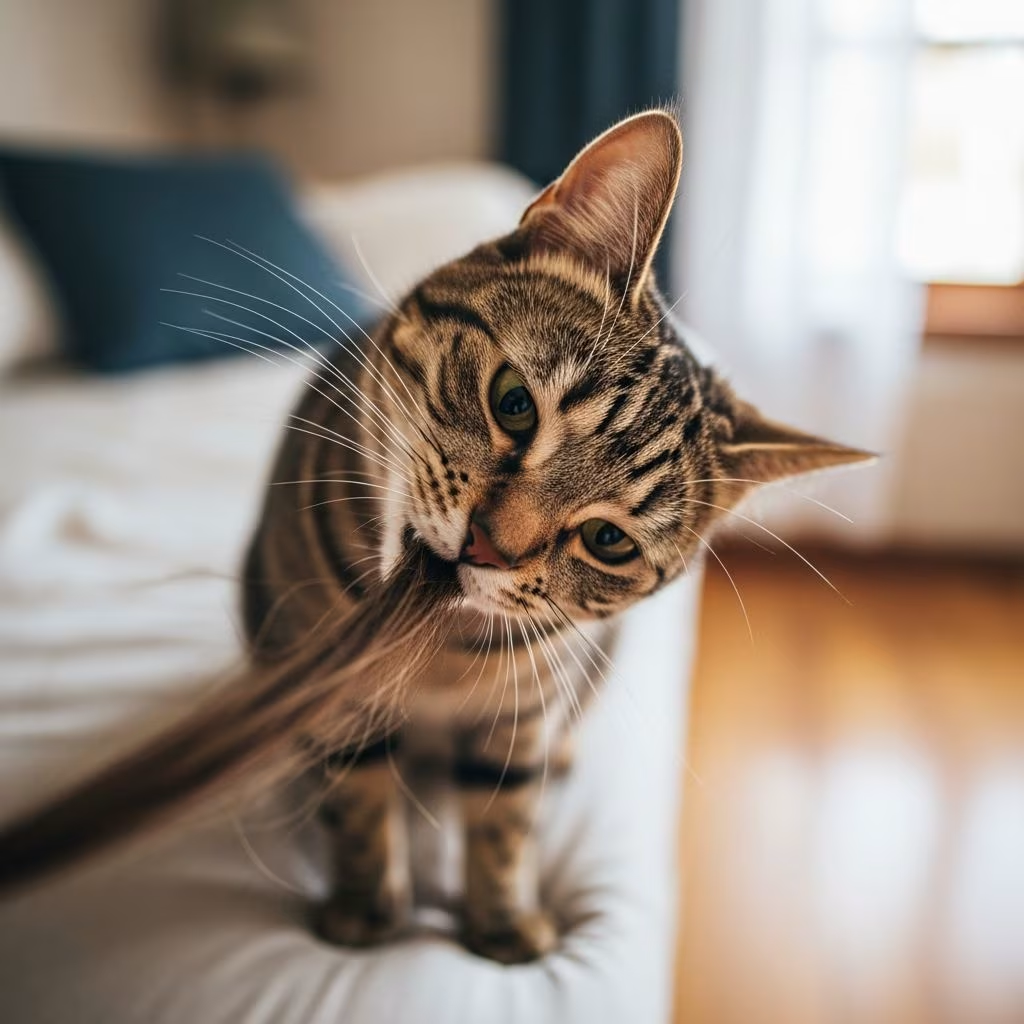
Your cat nibbling on your hair might seem odd, but it’s a common feline behavior rooted in instinct, affection, or underlying issues. Cats treat humans as family through allogrooming—mutual grooming to bond socially—or may chew hair due to stress, play, nutritional needs, or scent attraction from shampoos. While occasional licking is harmless, excessive eating can signal pica or lead to health risks like hairballs and blockages.
Understanding these motivations helps you respond appropriately, whether by enriching their environment or consulting a vet. This guide covers all possible causes, risks, and solutions based on veterinary insights and behavioral studies.
What Is Allogrooming and Why Do Cats Do It to Humans?
Allogrooming is a natural social behavior where cats lick or chew each other’s fur to strengthen bonds within their colony, distributing scents and showing affection. Domestic cats extend this to humans, viewing you as a large, messy family member needing grooming.
Your head is prime territory: it emits body heat, carries concentrated sebum oils with your unique scent, and may smell appealing from shampoos with mint, fruit, or herbal notes that mimic pheromones. Kittens especially target heads during nursing, associating them with comfort.
- Affectionate bonding: Licking reinforces ‘you’re mine,’ marking you with their scent glands.
- Heat seeking: Scalps radiate warmth, drawing cats like a cozy pillow.
- Scent curiosity: Products like olive oil or menthol intrigue their sensitive noses.
This behavior peaks in young cats but can persist lifelong, evolving from play to habit.
Attention-Seeking: When Your Hair Becomes a Toy
Cats are masters at manipulation. Chewing your hair guarantees your focus—far more effectively than meowing for some. Like a toddler’s tantrum, it rewards them with interaction, perpetuating the cycle.
Signs it’s attention-driven:
- Occurs when you’re busy (e.g., on phone or sleeping).
- Stops if ignored, resumes when you react.
- Accompanied by rubbing or playful pouncing.
To curb it, ignore completely during episodes and redirect with toys or play sessions. Reward calm behavior with pets to reshape habits.
Stress and Anxiety: Hair as a Self-Soothing Outlet
Indoor cats face limited outlets for natural instincts like hunting, making them prone to stress from routine changes, new pets, moves, or boredom. Excessive grooming, including your hair, releases endorphins for calming, akin to nail-biting in humans.
Early weaning exacerbates this: Kittens separated too soon develop oral fixations, suckling soft items like hair for missed comfort. Environmental shifts spike cortisol, prompting overgrooming as deflection.
Common stress triggers:
| Trigger | Examples | Signs Beyond Hair Chewing |
|---|---|---|
| Environmental Changes | New home, furniture rearrangement | Hiding, aggression, urinary issues |
| Social Stress | New pets, visitors | Overgrooming own fur, vocalizing |
| Boredom | Reduced playtime | Lethargy, destructive scratching |
Mitigate with pheromone diffusers, vertical spaces, puzzle feeders, and consistent routines.
Pica and Nutritional Deficiencies: When It’s a Health Red Flag
Pica involves compulsive eating of non-foods like hair, often from nutritional gaps (e.g., anemia, fiber lack) or conditions like hyperthyroidism. Unlike grooming, pica targets floor hair, fabrics, or plants, indicating deeper issues.
- Nutrient shortfalls: Diets lacking taurine or iron drive cravings.
- Medical causes: Neurological disorders, parasites, or anxiety amplify urges.
- Early habits: Kittens weaned abruptly fixate on textures.
If accompanied by weight loss, vomiting, or odd appetites, see a vet for bloodwork and diet tweaks.
Is Eating Human Hair Dangerous for Cats?
Human hair is non-toxic but indigestible—high in keratin, sulfur, and lipids cats can’t process. Occasional ingestion passes via feces or vomiting, but chronic chewing forms massive hairballs.
Risks escalate:
- Gastric irritation: Nausea, frequent vomiting.
- Intestinal blockage: Life-threatening obstruction requiring surgery.
- Larger hairballs: Unlike fur, human strands are longer, tangling severely.
Monitor stool and vomit; if hair persists or cat strains, seek urgent care.
How to Stop Your Cat from Eating Your Hair
Management combines deterrence, enrichment, and vet checks. Start with observation to pinpoint cause.
Immediate Deterrents
- Tie hair up or wear hats during high-risk times (bedtime).
- Use bitter sprays (pet-safe citrus/menthol) on strands.
- Switch shampoos to unscented or cat-repellent formulas.
Enrichment Strategies
- Play therapy: Daily 15-20 min sessions with wand toys mimic hunting.
- Alternatives: Provide chew toys, grooming brushes, or fleece blankets.
- Diet upgrade: High-quality food with added fiber; vet-approved supplements.
Long-Term Solutions
Consult vets for stress (anti-anxiety meds if severe) or pica (tests/diet changes). Feliway diffusers reduce anxiety effectively. Track progress in a journal.
Frequently Asked Questions (FAQs)
Is it normal for my cat to eat my hair?
Yes, occasional allogrooming is normal and affectionate. Excessive or compulsive eating warrants vet attention for pica or stress.
Why does my cat only eat my hair and not others’?
Your scent, shampoo, or bond makes it appealing. They see you as family.
Can hair eating cause hairballs in cats?
Absolutely—human hair creates larger, riskier hairballs than fur, potentially blocking intestines.
How do I know if it’s stress-related?
Look for recent changes, increased self-grooming, hiding, or vocalization alongside hair chewing.
When should I see a vet?
If eating non-foods, vomiting frequently, losing weight, or behavior persists despite interventions.
Preventing Pica and Promoting Healthy Habits
Proactive steps ensure well-being. Offer varied textures: cat grass, lick mats. Annual vet exams catch deficiencies early. Multi-cat homes need separate resources to minimize competition.
Expand on allogrooming benefits: It reduces tension, but balance with independence training. Studies show enriched environments cut stress behaviors by 50%.
For persistent cases, behaviorists use positive reinforcement. Patience is key—habits form over weeks, resolve similarly.
References
- Why Your Cat Chews Your Hair (Should You Worry?) — Cat Cognition (YouTube). 2025-06-18. https://www.youtube.com/watch?v=OpqxKwAZjIY
- Why Do Cats Eat Human Hair? — Cats.com. Accessed 2026. https://cats.com/why-do-cats-eat-human-hair
- Why does my cat eat my hair? — Vet Help Direct. 2023-10-07. https://vethelpdirect.com/vetblog/2023/10/07/why-does-my-cat-eat-my-hair/
- Why Do Cats Lick, Chew or Eat Human Hair? — TheCatSite. Accessed 2026. https://thecatsite.com/c/cat-eat-and-chew-hair/
- Why Does My Cat Bite My Hair? Love, Play, or Danger? — Lady N Pet. Accessed 2026. https://ladynpet.com/us/blog/why-does-my-cat-bite-my-hair/



