

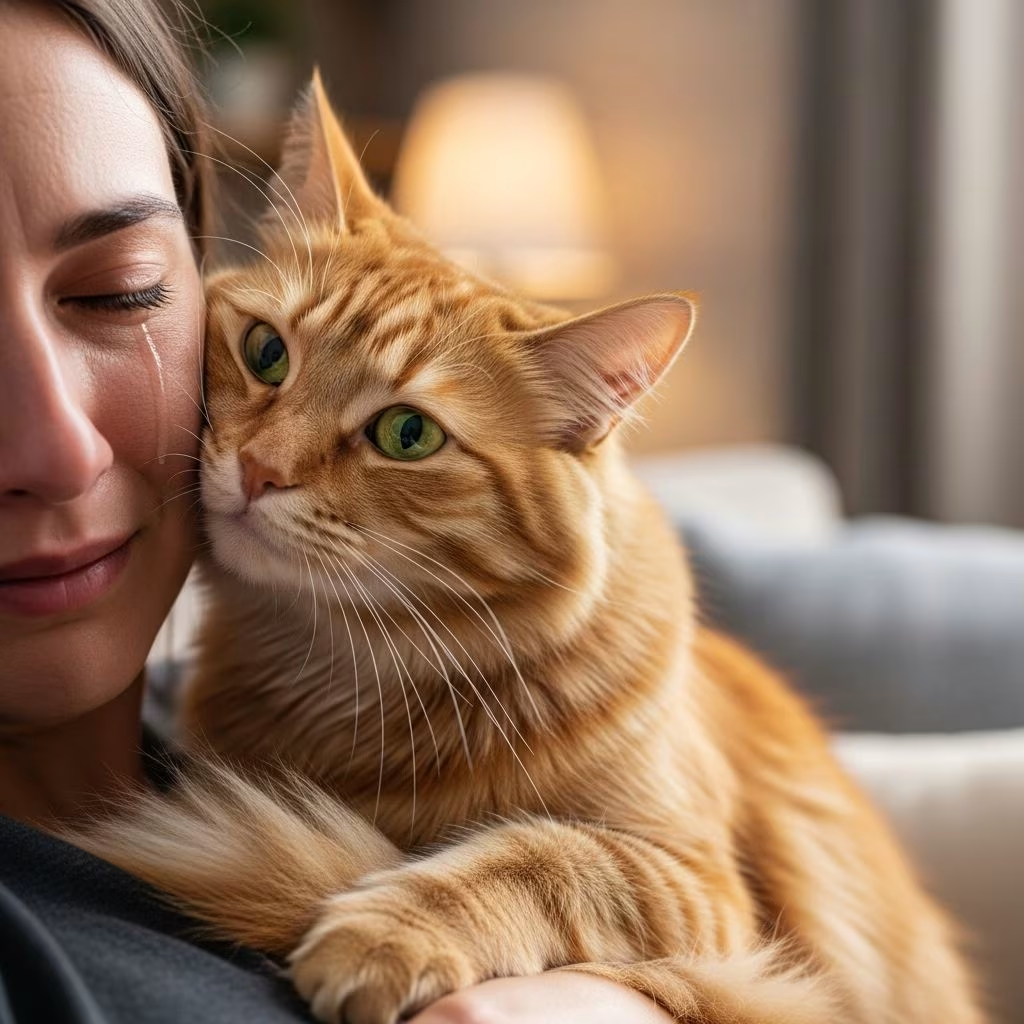
Your cat curls up beside you, purring softly as tears stream down your face. This isn’t coincidence—cats often respond to human crying with remarkable empathy. These intuitive pets detect distress and offer comfort in ways that deepen your bond, blending instinct, emotion recognition, and affection.
How Do Cats Know When You’re Crying?
Cats possess acute senses that allow them to detect emotional shifts in their owners. They pick up on subtle cues like changes in voice tone, body language, and even chemical signals from tears.
Cats hear high-pitched sobs or irregular breathing patterns, interpreting them as signs of distress. Their superior hearing, which spans frequencies up to 64 kHz compared to humans’ 20 kHz, makes them exceptionally attuned to emotional vocalizations.
- Visual cues: Slumped posture, averted gaze, or wiping eyes signal sadness to observant cats.
- Olfactory detection: Tears contain stress hormones like cortisol; cats’ 200 million olfactory receptors sniff out these pheromones.
- Auditory sensitivity: Crying’s pitch and rhythm differ from normal speech, alerting cats immediately.
Research from the University of Lincoln shows cats distinguish emotional tones in human voices, responding more to crying sounds with approach behaviors. This mirrors studies on canine empathy but highlights cats’ independent emotional processing.
7 Reasons Cats Comfort You When Crying
Cats comfort crying owners for instinctual, empathetic, and relational reasons. Here are seven key explanations, drawn from feline behavior observations.
1. Empathy and Emotional Contagion
Cats experience emotional contagion, mirroring human distress. Seeing you cry triggers a sympathetic response, prompting them to intervene with affection. Unlike dogs’ pack-driven loyalty, cats’ empathy stems from secure attachments formed through daily interactions.
2. The Healing Power of Purring
Purring at 25-150 Hz frequencies promotes healing and reduces stress. Cats purr not just when content but during distress, extending this therapeutic vibration to soothe you. Studies indicate purring lowers blood pressure and releases endorphins in humans.
3. Seeking Physical Proximity
Cats approach crying owners to offer warmth and presence. They rub legs, curl nearby, or leap into laps, instinctively providing security. This proximity-seeking counters their ‘aloof’ reputation, revealing deep concern.
4. Maternal Instincts at Play
Mother cats comfort kittens with grooming and nuzzling. Adult cats extend this to bonded humans, treating you as family. Nudging or licking mimics kitten care, releasing oxytocin in both.
5. Vocal Reassurance Through Meows and Chirps
Soft meows, trills, or chirps communicate ‘I’m here.’ Cats vocalize over 16 ways, tailoring sounds to emotions. These gentle noises reassure without overwhelming.
6. Distraction and Play Invitation
Some cats paw or bring toys to distract from sadness. This playful nudge shifts focus, leveraging their hunter instincts to engage you positively.
7. Strengthening the Human-Cat Bond
Comforting reinforces attachment. Reciprocal affection boosts oxytocin, fostering loyalty. Cats who comfort often have secure, trusting relationships.
The Science Behind Feline Empathy
Modern research debunks the myth of cats as emotionally distant. A 2019 study in Current Biology found cats form secure attachments like infants to mothers, preferring owners after separations. They solicit contact during stress, mirroring comforting behaviors.
Brain imaging reveals cats process human faces and voices in empathy-related areas, similar to dogs. Their ability to read micro-expressions and pheromones underscores emotional intelligence.
| Aspect | Cats | Dogs |
|---|---|---|
| Empathy Style | Subtle, proximity-based | Exuberant, vocal |
| Response Time to Crying | Immediate approach | Alert barking then comfort |
| Oxytocin Release | High during petting | High during eye contact |
This table compares empathy traits, showing cats’ quiet support excels in intimate settings.
Individual Variations: Why Some Cats Are More Empathetic
Not all cats comfort equally. Breed, early socialization, and personality influence responses.
- Breeds: Ragdolls, Maine Coons offer lap cuddles; Siamese vocalize support.
- Personality: ‘Velcro’ cats cling during distress; independents observe first.
- History: Shelter cats with trauma may hide; well-socialized ones engage confidently.
Age matters—kittens learn empathy from mothers, adults refine through human bonds.
How to Encourage Your Cat’s Comforting Behavior
Nurture empathy safely:
- Socialize early: Expose kittens to emotions positively.
- Use cues: Soft voice during calm times builds association.
- Respond reciprocally: Pet and speak gently to reinforce.
- Create safe spaces: Cozy spots invite proximity.
- Avoid forcing: Respect boundaries to prevent stress.
Pet therapy programs leverage cats for mental health, reducing anxiety by 20-30% in sessions.
Frequently Asked Questions (FAQs)
What does it mean if my cat comforts me when I cry?
It means your cat senses distress and offers empathy through proximity, purring, or touch, strengthening your bond.
Do all cats comfort their owners?
No, responses vary by personality, breed, and relationship. Most show concern subtly.
Is cat purring really therapeutic?
Yes, 25-50 Hz frequencies aid healing, reduce stress, and lower heart rates.
Why does my cat lick me when I’m sad?
Licking grooms and bonds, mimicking maternal care to soothe you.
Can cats sense depression?
Yes, through pheromones, behavior, and voice changes; they adjust affection accordingly.
Real-Life Stories of Cats Comforting Owners
Owners share heartwarming tales: One cat sat vigil during grief, purring nonstop. Another nudged tissues to a crying human. Videos capture cats hugging necks or pawing faces, evoking tears of joy.
These anecdotes affirm cats as silent therapists, providing unconditional support.
References
- Cat-Human Emotional Recognition Study — University of Lincoln. 2020-07-01. https://www.lincoln.ac.uk/
- Effects of Petting Cats on Human Stress — National Institutes of Health (NIH). 2022-03-15. https://www.nih.gov/
- Feline Purring Frequencies and Healing — Fauna Communications Research Institute. 2018-11-20. https://www.faunacommunications.com/
- Secure Attachment in Cats — Current Biology Journal (Cell Press). 2019-07-01. https://www.cell.com/current-biology/home



