

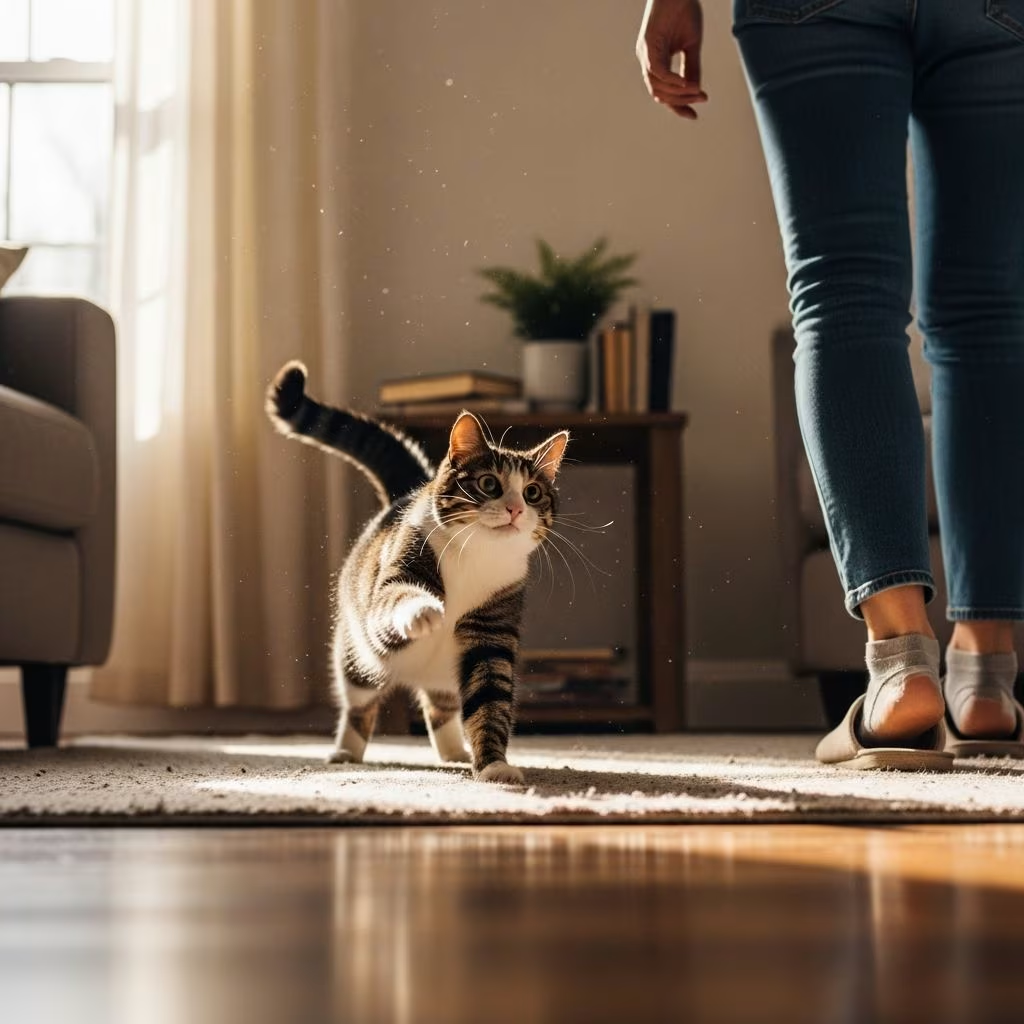
Your cat suddenly darts out from behind the couch, eyes wide and tail twitching, launching itself at your ankles as you walk by. This chasing behavior can be startling, even alarming, but it’s incredibly common among felines. Cats are wired as predators, and when they chase you, it’s often a manifestation of their innate instincts rather than malice. Understanding the motivations behind this action—ranging from playful hunting simulations to signs of unmet needs—can help you redirect it appropriately and strengthen your bond.
In this comprehensive guide, we’ll break down the primary reasons cats engage in this behavior, how to recognize the signs, and actionable strategies to manage it. Whether your cat is a kitten full of energy or an adult seeking stimulation, these insights will empower you to create a more peaceful household.
Reasons Why Your Cat Chases You
Cats chase for several instinct-driven and environmental reasons. Recognizing the trigger is the first step to addressing it effectively.
1. Natural Hunting Instincts
Cats are obligate carnivores and born hunters, with predatory behaviors deeply embedded in their DNA. Even well-fed domestic cats retain the urge to stalk, pounce, and ‘capture’ prey. Your moving feet or legs mimic small rodents or insects, triggering this sequence: silent stalking, butt-wiggling anticipation, and a sudden leap.
According to veterinary behaviorist Dr. Sharon Crowell-Davis from the University of Georgia College of Veterinary Medicine, cats confined indoors without adequate outlets often redirect this energy toward humans, treating legs as surrogate mice. Signs include dilated pupils, low-crouched stalking, and a twitching tail—classic pre-pounce indicators. The ASPCA notes that predatory play involves acute vision and sensitivity to movement, making quick human steps irresistible.
This isn’t aggression but practice for survival skills honed over thousands of years. Kittens learn it from their mother during weaning, and adults maintain it for mental sharpness.
2. Boredom and Lack of Stimulation
A bored cat is a chasing cat. Indoor life lacks the variety of wild environments, leading felines to invent games—with you as the star. If your cat follows, stalks, or chases without fully attacking, it’s likely seeking fun and social attachment.
Dr. Crowell-Davis emphasizes that cats need physical and mental activity. Without it, they ‘discover the game of chasing the human,’ jumping on legs to ‘kill’ imagined prey. Dezi & Roo highlights that constant chasing signals a need for attention, as cats communicate boredom through action when meowing fails. Provide wand toys, laser pointers, or puzzle feeders to channel this energy constructively.
3. Play Aggression
Play aggression is the most common type directed at owners, blending predatory and social play. Cats stalk, chase, and ambush, using paws and teeth lightly—but it can escalate if not redirected. The ASPCA differentiates it from true aggression: it’s motivated by fun, not conflict.
Young cats, especially, exhibit this during peak play times like dawn and dusk. If your cat stops short without biting hard, it’s inhibited hunting behavior—a healthy sign of attachment. However, wounds from rough play warrant intervention to prevent injury.
4. Stress or Redirected Aggression
Chasing can signal stress from new pets, people, environments, or pain. Triggers include seeing outdoor cats, loud noises, or illness, leading to redirected frustration toward you.
Maddie’s Fund warns that fear-induced chases show dilated pupils, flattened ears, and hissing—distinguishing it from play. Stressed cats may hide or over-groom post-chase. Rule out medical issues first, as pain amplifies reactivity.
5. Attention-Seeking
Some cats chase simply to engage you. Vocal meowers might switch to physical pursuits if ignored. This social behavior indicates your cat views you as family but needs more interaction.
6. Kitten-Specific Behaviors
Kittens chase more due to teething, energy bursts, and learning boundaries. It’s developmental, fading with age if properly socialized.
7. Territorial or Fear-Based Chasing
Multi-cat homes see territorial chases over space. Fearful cats flee or lash out when cornered.
How to Tell If It’s Play or Aggression
Differentiating is crucial:
- Play: Loose body, forward ears, no vocalizing, relaxed after.
- Aggression: Puffed fur, pinned ears, growling, intense bites.
Psychology Today notes chasing in play involves mutual pursuit, while fights have stiff postures.
How to Stop Your Cat from Chasing You
Redirect, don’t punish—positive reinforcement works best.
Provide Appropriate Outlets
- Wand toys, balls, tunnels for hunting simulation.
- Puzzle toys and climbers for mental stimulation.
- DIY: Elastic with dangling fabric.
Daily Play Sessions
15-20 minutes twice daily mimics hunting cycles. End with feeding to fulfill the ‘kill’ instinct.
Ignore Unwanted Chasing
Freeze movement; walk away. Reward calm behavior with treats.
Environmental Enrichment
| Enrichment Type | Examples | Benefits |
|---|---|---|
| Vertical Space | Cat trees, shelves | Reduces territorial stress |
| Interactive Toys | Laser, feather wands | Satisfies hunting drive |
| Hiding Spots | Boxes, tunnels | Alleviates anxiety |
| Scratching Posts | Sisal posts | Prevents furniture damage |
Training Techniques
Use clicker training: Click and treat for ignoring feet. Teach ‘leave it’ with toys.
Multi-Cat Homes
Slow introductions, separate resources. Cats Protection advises pheromone diffusers for tension.
When to See a Vet or Behaviorist
Sudden changes, wounds, or signs of pain warrant a check-up. Chronic aggression may need medication or professional help.
Frequently Asked Questions (FAQs)
Is it normal for my cat to chase me?
Yes, it’s a natural extension of predatory play, especially in active cats.
Why does my cat chase me at night?
Crepuscular instincts peak then; increase evening play.
How do I stop kitten chasing?
Redirect to toys, play daily, and provide chew alternatives for teething.
Does neutering stop chasing?
It reduces some aggression but not play instincts.
What if my cat chases and bites hard?
Rule out stress/pain; consult a vet. Use timeouts.
By addressing the root causes—instincts, boredom, stress—you can transform chasing from a nuisance to a sign of a thriving cat. Consistent enrichment fosters a deeper bond and scratches-free legs.
References
- 3 Reasons Why Your Cat is Chasing You — Dezi & Roo. 2023. https://deziroo.com/blogs/pawsitive-connections/3-reaons-why-your-cat-is-chasing-you
- Aggression in Cats — ASPCA. 2024-01-15. https://www.aspca.org/pet-care/cat-care/common-cat-behavior-issues/aggression-cats
- Aggression when Chased by a Cat — Maddie’s Fund. 2023. https://www.maddiesfund.org/cat-aggression-when-chased-by-a-cat.htm
- Why Does My Cat Chase Me? — Vetstreet. 2022-06-01. https://www.vetstreet.com/our-pet-experts/why-does-my-cat-chase-me
- Are Cats Playing, Fighting, or Unsure? — Psychology Today. 2023-02-14. https://www.psychologytoday.com/us/blog/animal-emotions/202302/are-cats-playing-fighting-or-unsure
- Cats and Fighting — Cats Protection. 2024. https://www.cats.org.uk/help-and-advice/cat-behaviour/cats-and-fighting



