

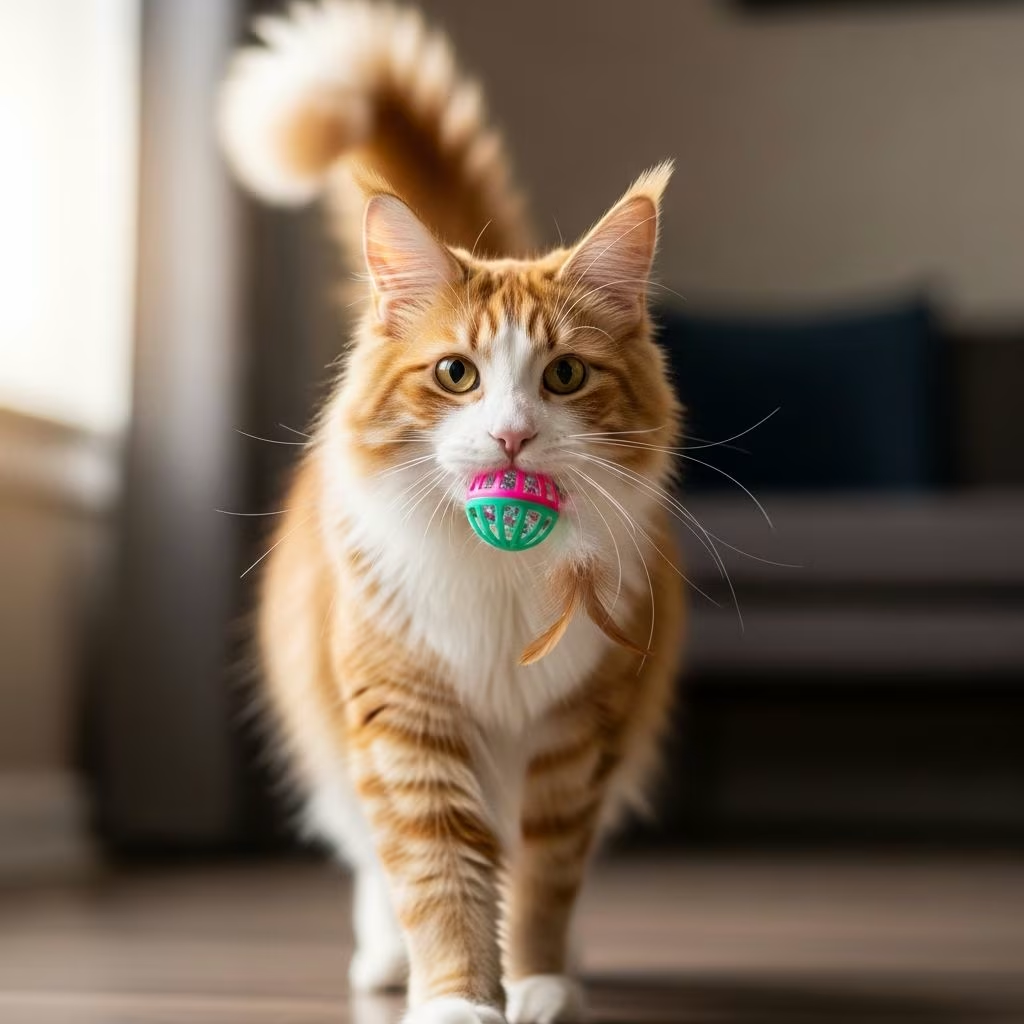
Observing your cat parading around the house with a toy clamped firmly in its mouth while emitting loud meows can be both amusing and perplexing. This behavior, common among domestic cats, stems from deeply rooted instincts and social cues that reveal much about your pet’s inner world. Whether it’s a small mouse toy, a fuzzy ball, or a stuffed animal, this action often signals excitement, a need for interaction, or an expression of natural feline drives. Understanding these motivations not only strengthens the human-cat bond but also helps address any underlying needs, such as playtime or comfort. In this comprehensive guide, we’ll delve into the primary reasons behind this quirky habit, drawing from feline behavioral patterns observed in households worldwide.
It’s All About Hunting Instincts
Cats are obligate carnivores with a heritage as skilled predators, and carrying a toy while meowing mimics the triumphant declaration of a successful hunt. In the wild, a cat would vocalize to announce a kill to its pride or territory mates, warding off competitors or sharing the bounty. Domestic cats retain this trait, treating toys as surrogate prey. When your cat yowls with a toy in mouth, especially at dawn or dusk—prime hunting times—it’s reenacting this primal ritual, announcing their ‘trophy’ to you, their human companion.
This behavior intensifies in environments where cats feel secure enough to express their wild side. For instance, a cat might sneak through the house, toy in mouth, emitting muffled meows as if stealthily transporting a catch. Owners often report finding toys hidden in slippers or shoes, simulating caching prey for later consumption. Regular play sessions that simulate hunting—using wand toys or laser pointers—can channel this energy, reducing nighttime yowling.
- Key signs of hunting simulation: Erratic stalking, pouncing on toys, and vocalizing only during ‘carry’ phase.
- Benefits: Satisfies physical exercise needs and prevents boredom-related issues like furniture scratching.
Maternal Instincts at Play
Female cats, and surprisingly even males, may exhibit motherly behaviors by treating toys as kittens. A mother cat carries her young by the scruff, sometimes vocalizing to soothe or relocate them to safety. Domestic cats, particularly those spayed or without litters, transfer this instinct to plush toys, meowing as if instructing imaginary offspring on hunting or moving them to a ‘safe spot’ like your bed.
This is especially prevalent in cats weaned early or those with limited social interaction during kittenhood. They bond deeply with soft toys, grooming them or protectively carrying them around while chirping or yowling. One owner described their cat relocating a stuffed bear to the bedroom nightly, mimicking kitten transport. Male cats can display this too, showing protective vocalization not limited by gender.
- Common in: Females post-spay, early-weaned cats, or those in single-pet homes.
- How to respond: Provide quiet spaces for ‘nesting’ toys to fulfill the instinct without disruption.
Seeking Attention and Playtime
One of the most straightforward explanations is your cat’s bid for interaction. Cats are social creatures that communicate vocally primarily with humans, not fellow cats. Dropping a toy at your feet amid meows is an invitation: ‘Join the hunt!’ or ‘Notice my prowess!’ This escalates in multi-pet homes where individual attention feels scarce, or after environment changes like a move, prompting more vocal toy-carrying to reclaim focus.
Interactive play strengthens bonds, supports mental health, and curbs excessive meowing. Cats showing spontaneous energy bursts, focused gazes, or stalking postures while vocalizing with toys crave engagement. In households with multiple cats, dedicated one-on-one sessions prevent competition.
| Behavior Cue | Meaning | Best Response |
|---|---|---|
| Drops toy and meows | Play invitation | Wand toy or chase game (10-15 mins) |
| Carries toy to you | Attention-seeking | Praise and short play burst |
| Yowls at night | Energy overflow | Evening play routine |
Comfort and Self-Soothing
For some cats, particularly those separated from littermates young, toys serve as security blankets. Meowing while carrying them provides emotional comfort, akin to a bedtime ritual. This self-soothing peaks at night, with cats snuggling toys or vocalizing softly for reassurance. Former strays or cats in new homes may do this more, using toys to cope with unsettled feelings.
Recognizing this helps tailor environments: soft bedding with favorite toys can reduce nighttime disturbances. Unlike distress cries, these meows sound content or rhythmic, melting hearts as cats nestle in.
- Triggers: Loneliness, early weaning, environmental stress.
- Solutions: Consistent routines, pheromone diffusers, puzzle feeders for mental calm.
When to Be Concerned
While usually benign, persistent toy-meowing with other signs warrants a vet check. Excessive vocalization paired with appetite loss, hiding, or litter box issues could indicate stress, pain, or hyperthyroidism—common in senior cats. Sudden onset in older cats (e.g., 11-12 years) after life changes might signal cognitive shifts or health concerns. Track patterns: If yowling mimics pre-vomiting sounds but always involves a toy, it’s likely behavioral; otherwise, consult a vet.
Environmental tweaks like more play, separate spaces for multi-cat homes, or noise-quiet toys help. Never punish vocalizing—it heightens anxiety.
How to Encourage Positive Behaviors
Channel instincts constructively:
- Daily play: 15-20 minutes twice daily with interactive toys.
- Toy rotation: Introduce variety to maintain interest.
- Safe spaces: Allow ‘kitten’ relocation spots.
- Training: Reward quiet toy play with treats.
These steps enhance well-being, reducing unwanted yowling while deepening your bond.
Frequently Asked Questions (FAQs)
Q: What does it mean when a cat brings you a toy and meows?
A: It typically means they’re inviting you to play or seeking attention, treating you as a hunting partner.
Q: Can male cats show motherly behavior with toys?
A: Yes, males can exhibit protective carrying and vocalizing, not exclusive to females.
Q: Why does my cat do this more at night?
A: Nighttime aligns with crepuscular instincts; it could be hunting play, self-soothing, or energy release.
Q: Is this behavior normal in older cats?
A: Yes, but monitor for health issues if sudden or accompanied by other symptoms; play helps seniors too.
Q: How can I stop excessive toy-meowing?
A: Increase playtime, provide solo toys, ensure routine; vet check if persistent.
References
- Why Cats Meow With Toy in Mouth: 4 Reasons — Cat TV Games. 2023. https://www.cattvgames.com/the-4-reasons-behind-your-cat-meowing-with-toy-in-mouth/
- Why Your Cat is Carrying Toys and Meowing — YouTube (Video Transcript). 2023. https://www.youtube.com/watch?v=O80g61okmpM
- Why Does My Cat Carry a Toy Around & Meow? — Kitty Help Desk. 2024. https://www.kittyhelpdesk.com/help-desk/why-does-my-cat-carry-a-toy-and-meow
- Cat Meowing While Carrying a Toy — Oh My Dog Blog. 2018-08-21. https://ohmydogblog.com/2018/08/cat-meowing-while-carrying-a-toy/
- Why Is My Cat Meowing With a Toy in Her Mouth? — UAH Pet. 2024. https://www.uahpet.com/blogs/post/why-is-my-cat-meowing-with-a-toy-in-her-mouth



