

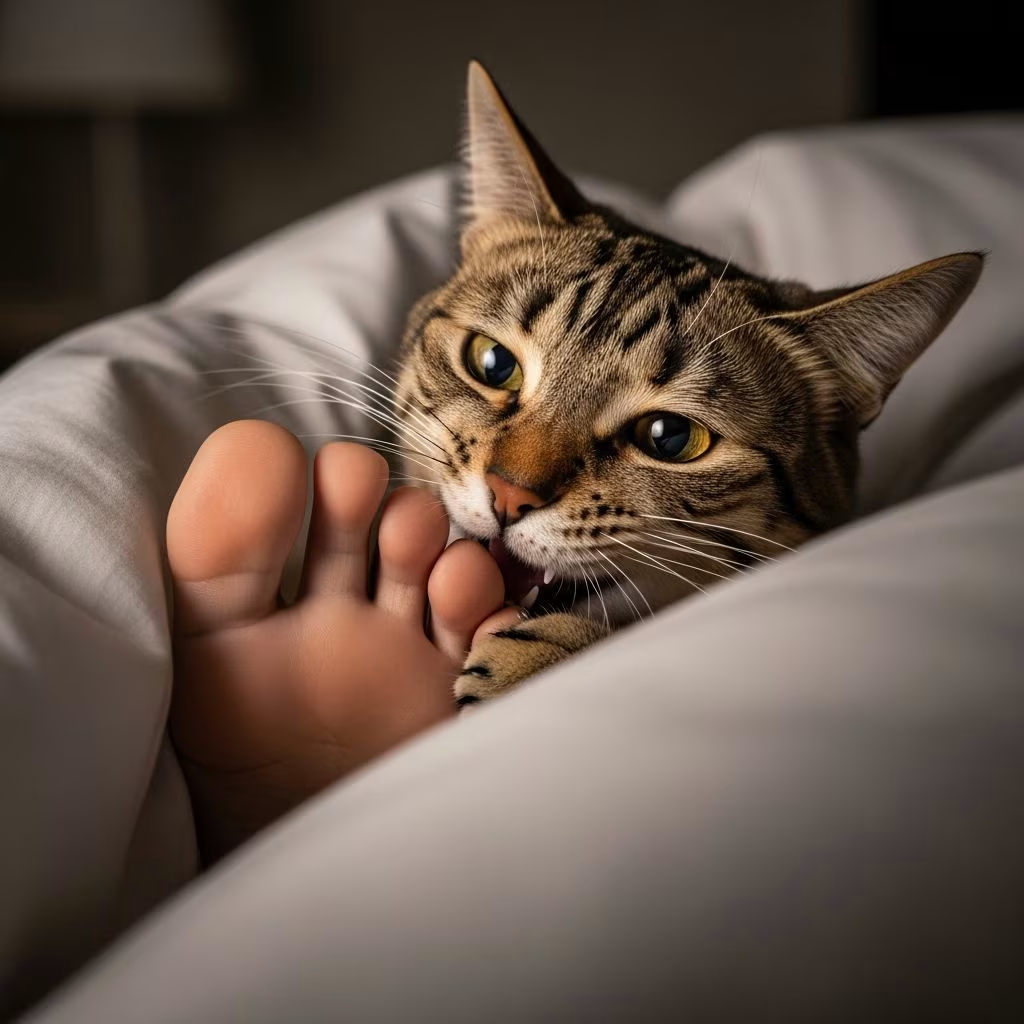
Waking up to unexpected bites from your cat can be startling and painful, disrupting your sleep and raising concerns about their behavior. Cats bite their owners while sleeping for several reasons, often tied to their natural instincts, needs, or environmental triggers. Understanding these motivations is key to addressing the issue effectively and restoring peaceful nights for both you and your feline companion.
The 5 Reasons Why Your Cat Bites You While You Sleep
Cats are complex creatures with behaviors rooted in their wild ancestry. Nighttime biting isn’t usually malicious but stems from instinctual responses. Below, we explore the five primary reasons, supported by veterinary insights and behavioral studies, to help you decode your cat’s actions.
1. Display of Aggression
Aggression in cats can manifest as bites, especially during sleep when you’re vulnerable. While mild nips might seem harmless, deep, bloody bites accompanied by hissing or growling signal true aggression. Research from veterinary sources indicates cats are inherently aggressive animals, capable of unprovoked bites triggered by factors like rough play, illness, or threats from other pets.
Why target you at night? Moving body parts, such as feet twitching under blankets, mimic prey or enemies, prompting a predatory attack response. This instinctual hunting behavior activates even in domestic settings. If your cat fixates on feet or toes, it’s likely interpreting subtle movements as threats or hunting opportunities.
Addressing aggression requires ruling out medical issues first. Collaborate with a veterinarian or certified behaviorist to assess for pain, hyperesthesia syndrome—a neurological condition causing skin sensitivity and sudden attacks—or inter-cat tensions. Early intervention prevents escalation, ensuring safety for all household members.
2. Demanding Play
Cats are crepuscular, most active at dawn and dusk, which clashes with human sleep schedules. A bored cat may bite to solicit play, especially if daytime interaction is limited. Look for signs like restlessness, pouncing, or leading you to toys—these indicate a need for engagement rather than hostility.
Nighttime energy surges lead to “stir-crazy” cats disrupting sleep with bites. Veterinary experts note that insufficient stimulation builds frustration, resulting in playful aggression. Feet or hands moving under covers become irresistible targets, simulating prey.
This behavior often pairs with other cues: dilated pupils, twitching tail, or vocalizing. Ignoring these warnings risks escalation to harder bites. Play-demanding cats thrive on routine interactive sessions to channel their energy appropriately.
3. To Alert You About Something
Your cat might bite as an urgent alert to potential dangers or discomforts. Sensitive to environmental changes, they detect issues like intruders, unfamiliar scents, or household noises before you do. A bite serves as a wake-up call, urging you to investigate.
Redirected aggression occurs when external stimuli—like a stray cat outside or loud sounds—frustrate your pet, displacing onto the nearest target: you. Tail thumping or twitching signals building tension; intervening early prevents bites.
Health-related alerts are common too. Cats in pain from arthritis, dental issues, or hyperesthesia may bite defensively when touched or approached during sleep. Sudden behavior changes warrant a vet visit to exclude underlying conditions.
4. They Want to Get Fed
Hunger drives many nighttime bites, particularly gentle nips to the face or nose for accessibility while you sleep. Well-fed cats rarely exhibit this; a starving kitty politely (or insistently) requests breakfast. Distinguish hunger bites—soft and repetitive—from aggressive ones, which are painful and forceful.
Crepuscular rhythms amplify hunger around dawn. Automatic feeders mitigate this by dispensing food on schedule, preventing wake-up calls. Ensure diets meet nutritional needs; obese or underfed cats are prone to demands.
5. Overstimulation or Affection Gone Awry
Petting-induced aggression, or overstimulation, leads to bites when sensory limits are exceeded. Cats have a “touch threshold,” often around the belly or base of the tail. During sleep, accidental contact triggers defensive snaps.
Affectionate “love bites” start as grooming but turn sharp if overdone. Nose or face biting signals a wake-up for cuddles or play, not malice. Monitor body language: ear flattening, skin rippling, or swishing tail precedes bites.
How to Stop Your Cat From Biting You While You Sleep
Preventing bites involves proactive strategies addressing root causes. Consistency is crucial; cats learn quickly from reinforced boundaries. Here’s a comprehensive guide with vet-recommended steps.
1. Spend Quality Time With Your Cat
Despite their independent image, cats crave interaction. Dedicate 15-30 minutes daily to play, cuddling, and petting. Use interactive toys like feather wands to simulate hunting, tiring them mentally and physically.
Evening sessions mimic natural activity peaks, promoting sleep alignment. Reward calm behavior with treats or affection to reinforce positive associations.
2. Feed Them Before Going to Bed
A full belly induces sleepiness. Offer a meal 1-2 hours before bed, favoring protein-rich wet food for satiety. Automatic feeders dispense midnight snacks, reducing hunger wakes.
- Program for 10-11 PM and 4-5 AM portions.
- Choose puzzle feeders to extend engagement.
- Monitor weight to avoid overfeeding.
This routine syncs with crepuscular patterns, minimizing disruptions.
3. Make Your Cat Exercise in the Evening to Wear Them Out
High-energy play before bed exhausts cats, curbing nighttime antics. Aim for 20-30 minutes of chasing, leaping, and pouncing.
| Activity | Duration | Benefits |
|---|---|---|
| Laser pointer chases | 10 mins | Cardio, mental stimulation |
| Feather wand battles | 15 mins | Hunting instinct satisfaction |
| Tunnel runs | 5 mins | Exploration, agility |
End with a cooldown meal for drowsiness.
4. Discourage Biting Early and Consistently
Train kittens young: provide chew toys, rewarding use. For adults, redirect bites to appropriate outlets. Never punish physically—timeout by withdrawing attention works better, as cats associate it with displeasure.
Set rules: no biting hands or skin during play. Use toys exclusively. Consistency prevents reinforcement of bad habits.
5. Leave Your Cat in a Separate Room
Close the bedroom door, creating a cat-free zone. Provide a cozy alternative with bed, litter, and toys. Cats are territorial; excluding them reclaims your space.
Gradual habituation eases transition. Use pheromone diffusers for calm. This prevents access-driven bites entirely.
Additional Tips: Environmental Enrichment and Vet Checks
Enrich the environment with scratching posts, perches, and window views to combat boredom. Feline appeasing pheromones reduce stress. Rule out pain via annual vet exams—sudden bites often signal health issues.
Frequently Asked Questions (FAQs)
Q: Is it normal for my cat to bite me while I sleep?
A: Yes, it’s common due to crepuscular nature, play needs, or instincts, but persistent or severe bites require professional evaluation.
Q: Why does my cat bite my nose or feet specifically?
A: Nose is accessible for alerts/affection; feet mimic prey movement, triggering hunts. Redirect with toys.
Q: Should I punish my cat for biting at night?
A: No—punishment increases fear. Withdraw attention and redirect to positive behaviors instead.
Q: How long does it take to stop nighttime biting?
A: 1-4 weeks with consistent routines; consult experts if no improvement in two weeks.
Q: Could medical issues cause sleep biting?
A: Absolutely—pain, hyperesthesia, or dental problems. Vet check first for new behaviors.
References
- Why Does My Cat Bite Me When I Sleep? Vet-Verified Reasons — Catster. 2023. https://www.catster.com/cat-behavior/why-does-my-cat-bite-me-when-i-sleep/
- Hyperesthesia Syndrome — Cornell University College of Veterinary Medicine. 2024-01-15. https://www.vet.cornell.edu/departments-centers-and-institutes/cornell-feline-health-center/health-information/feline-health-topics/hyperesthesia-syndrome
- How to Stop Your Cat From Biting — Chewy Education (Veterinarian reviewed). 2024. https://www.chewy.com/education/cat/training-and-behavior/how-to-stop-cat-from-biting
- Petting-Induced or Overstimulation Aggression in Cats — Humane Society of Huron Valley (.org). 2023-05-10. https://www.hshv.org/petting-induced-or-overstimulation-aggression-in-cats/



