

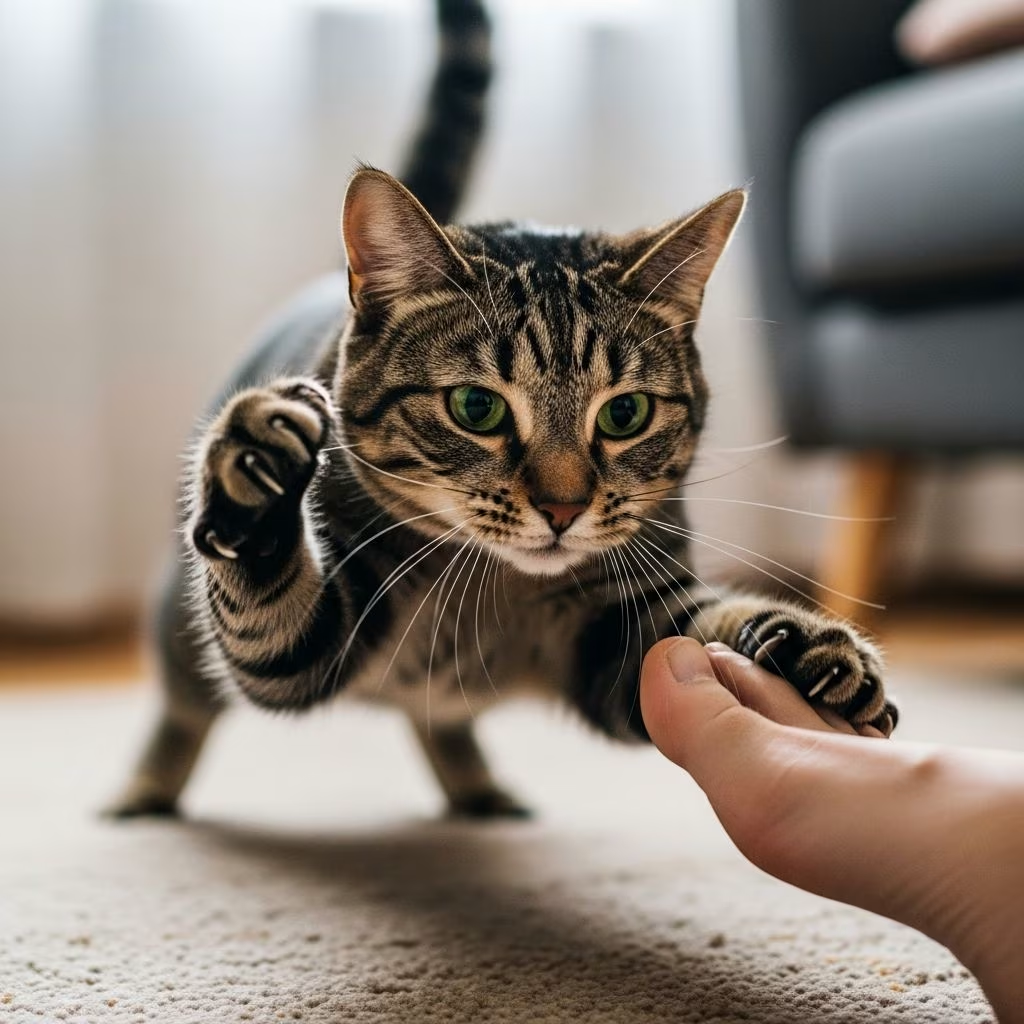
Your cat suddenly lunges at your ankles as you walk by, or pounces on your toes wiggling under the blanket. These foot attacks can be startling, painful, and frustrating, but they’re rarely malicious. Most often, this behavior stems from your cat’s natural predatory instincts, where moving feet mimic small prey like mice or birds.
Understanding the root causes—ranging from playfulness and boredom to overstimulation or even medical issues—allows you to address it effectively without punishment, which can worsen aggression. This guide explores every reason cats target feet, when to worry, and proven ways to redirect their energy into appropriate outlets.
It’s All About Instinct: The Predatory Drive
Cats are obligate carnivores evolved as solitary hunters, relying on stealthy pounces to catch small prey. Domestic cats retain this hardwired instinct, making any quick, erratic movement—like your feet shuffling across the floor—a prime trigger.
- Perfect Prey Size and Shape: Human feet and ankles are ideally sized (about 8-12 inches long) to simulate rodents or birds, their natural quarry. Fuzzy socks or slippers amplify the resemblance to furred animals.
- Movement Triggers: Walking strides mimic fleeing prey. Under blankets, rustling fabric sounds like scurrying rodents, turning bedtime into a ‘blanket monster’ hunt.
- Ambush Style: Cats often hide behind furniture, then dash out—classic predatory tactic, not dominance or fear.
Kittens exhibit this most intensely during play development, practicing vital hunting skills. Adults may retain it if understimulated.
Play Aggression and Boredom
Many foot attacks are simply exuberant play. Indoor cats lack outlets for their daily 12-16 hours of hunting ‘need,’ leading to human feet as substitutes.
- Energy Overload: Evening ‘zoomies’ channel into ankle ambushes when toys aren’t available.
- Attention-Seeking: If reacting (yelling, chasing) rewards the behavior, cats learn it’s an effective ‘conversation starter.’
- Boredom Indicator: Solitary cats create fun; enrich environments with puzzle feeders and climbers to prevent it.
This differs from true aggression: play bites are gentle, no dominance posturing, and cats solicit more interaction afterward.
Overstimulation and Petting Aggression
Cats have sensitive skin; prolonged petting can shift from pleasure to irritation, signaled by tail thrashing, ear flattening, or skin rippling.
Feet become targets if you’re moving during this ‘leave me alone’ phase. Kittens poorly socialized with littermates miss bite-inhibition learning, escalating to harder nips.
- Watch for early signs: Dilated pupils, vocalizing, freezing.
- Sudden attacks post-petting? Stop immediately and redirect.
When You Walk By or Away
Retreating feet scream ‘prey escape!’ triggering chase. This peaks in young cats or those with unmet needs.
Bare feet post-shower tempt due to vulnerability, novel scents, or water fascination—cats may nip to investigate or scent-mark.
Affectionate Nips or Love Bites
Gentle toe nibbles or licking can be allogrooming (mutual grooming) or kneading affection. Rougher versions blend with play.
If relaxed body language accompanies, it’s likely bonding, not hunting.
Stress, Fear, or Redirected Aggression
Environmental changes (new pets, moves) heighten anxiety, displacing onto convenient feet.
- Fear-Based: Crouching, hissing precede bites.
- Redirected: Frustrated by untouchable sights (birds outside), cat lashes at passing feet.
Medical Causes: Rule These Out First
Sudden onset aggression signals health issues. Hyperthyroidism boosts energy/aggression; pain from arthritis makes feet ‘intruders’.
| Condition | Symptoms | Why Feet Targeted? |
|---|---|---|
| Hyperthyroidism | Weight loss, hyperactivity | Increased territoriality |
| Pain (e.g., abscess) | Limping, hiding | Defensive response |
| Neurological | Seizures, disorientation | Confused aggression |
Consult a vet for bloodwork if behavior changes abruptly.
How to Stop Cat Foot Attacks: 8 Proven Strategies
Never punish—fear escalates aggression. Instead, prevent triggers and provide alternatives.
- Ignore and Freeze: No reaction starves the behavior. Stand still until cat loses interest.
- Interactive Toys: Wand toys, laser pointers for 15-min daily sessions mimic hunt without using you.
- Enrichment: Cat trees, window perches, food puzzles burn energy.
- Yell ‘No’: Sharp, high-pitched to mimic kitten hisses, then withdraw attention.
- Scheduled Play: Tire them out before bed; end with feeding to ‘complete hunt’.
- Socks/Safety: Thick socks deter while training.
- Socialization: Early handling reduces poor boundaries.
- Professional Help: Persistent cases need behaviorist.
Consistency from all household members is key; results take weeks.
Is It Normal? When to See a Vet or Behaviorist
Occasional play pounces: normal. Daily, painful bites with growling/hiding: investigate.
- Sudden changes post-7 years? Medical screen.
- Multi-cat home? Rule out inter-cat tension.
Frequently Asked Questions (FAQs)
Why does my cat attack my feet under the blanket?
Rustling movement mimics scurrying prey, irresistibly triggering hunt instincts.
Why does my cat bite my feet when I walk?
Striding ankles look like fleeing rodents; it’s predatory play, especially if bored.
Is foot biting a sign of aggression?
Rarely true aggression; usually play or instinct. True aggression shows fear/dominance signs.
How do I train my cat to stop attacking feet?
Redirect to toys, ignore attacks, enrich environment. Consistency yields results.
Why does my cat only bite my feet after a shower?
Fresh scents mask yours; they re-mark or investigate water droplets.
Will my kitten outgrow foot attacks?
Often yes, with proper play outlets; provide alternatives early.
Word count: 1678 (excluding HTML tags, metadata, references).
References
- Why Does My Cat Attack My Feet? — Hill’s Pet Nutrition. 2023-05-15. https://www.hillspet.com/cat-care/behavior-appearance/why-do-cats-attack-feet
- Why Does My Cat Bite My Feet, Toes, and Ankles? — Lady N Pet. 2024-02-10. https://ladynpet.com/us/blog/why-does-my-cat-bite-my-feet/
- Why Is My Cat Biting at My Feet? — Bayshore Veterinary Hospital. 2023-11-20. https://bayshore-vet.com/blog/cat-biting-my-feet-holmdel-nj/
- Why Does My Cat Attack My Feet? — Cats.com. 2024-08-05. https://cats.com/why-does-my-cat-attack-my-feet
- Why Does My Cat Attack My Feet? Understanding Feline Behavior — HolistaPet. 2024-01-12. https://www.holistapet.com/blogs/cat-care/why-does-my-cat-attack-my-feet
- Aggression in Cats — ASPCA. 2023-07-18. https://www.aspca.org/pet-care/cat-care/common-cat-behavior-issues/aggression-cats



