

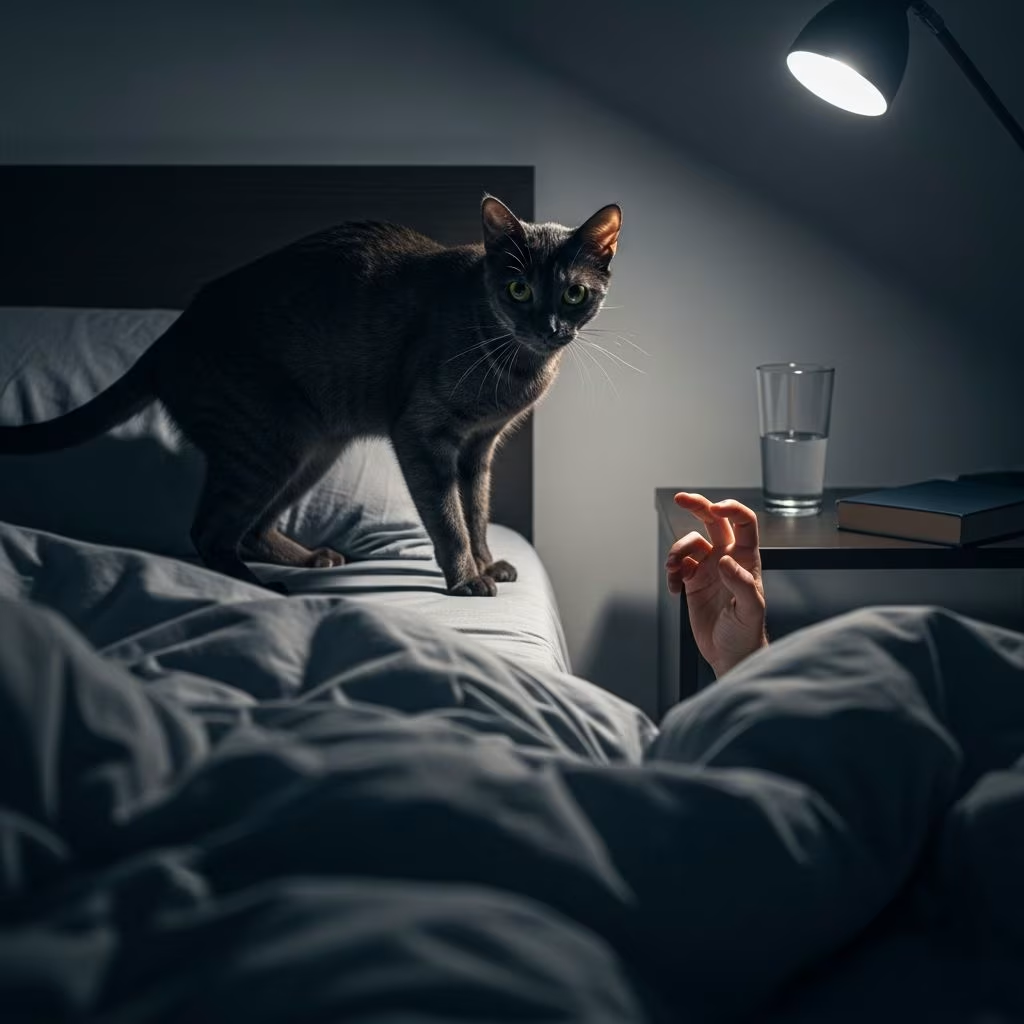
Your cat’s sudden nighttime attacks, often involving pouncing, biting, or scratching, stem primarily from their natural crepuscular hunting instincts, where small movements like toes under blankets trigger predatory responses, especially during dawn and dusk when cats are most active. These behaviors are not malice but instinctual drives amplified by pent-up energy from daytime naps or lack of stimulation, leading to what feels like unprovoked ambushes on sleeping owners.
Understanding this requires recognizing cats as obligate carnivores evolved for crepuscular activity—active at twilight rather than fully nocturnal—making evenings and early mornings prime times for hunting simulations on household members. Common scenarios include feet wiggling under sheets mimicking prey or prior playful wrestling reinforcing the habit, turning innocent sleep into a battleground. While frustrating, these attacks rarely indicate true aggression; instead, they signal unmet needs for physical and mental outlets.
This comprehensive guide mirrors expert analyses, breaking down causes, immediate interventions, long-term prevention, and when to seek veterinary help, ensuring you reclaim restful nights without harming your feline bond.
Understanding Your Cat’s Natural Instincts
Cats are **crepuscular** animals, meaning they are most active during low-light periods like dawn and dusk, a trait inherited from wild ancestors who hunted small rodents under cover of twilight to avoid larger predators. In domestic settings, this translates to heightened alertness at night: your subtle shifts in bed register as fleeing prey, prompting instinctive pounces, bites, or ‘bunny kicks’ as the cat simulates capturing and subduing a mouse.
Key triggers include:
- Moving body parts under covers: Toes or elbows create motion without scent or visual cues of ‘owner,’ inviting ambush.
- Pent-up energy: Cats sleep 12-16 hours daily, often napping through human activity, awakening energized for ‘hunts’ when you retire.
- Learned play: Kittenhood games like chasing feet under blankets teach that human limbs are toys, a habit persisting into adulthood.
- Boredom or under-stimulation: Indoor cats without daytime engagement build frustration, exploding into zoomies or attacks.
Stress from twilight light changes can exacerbate this, heightening sensitivity to sounds and smells, turning minor irritants into aggression triggers. Unlike dogs, cats rarely act out of spite; it’s biology demanding outlets.
Medical Reasons Your Cat Might Attack at Night
While instincts dominate, rule out health issues mimicking behavioral attacks. **Hyperthyroidism**, common in senior cats, boosts metabolism, causing restlessness and aggression, especially nocturnally. **Feline Hyperesthesia Syndrome (FHS)** involves skin rippling, frantic running, and tail-chasing, often worsening at night due to heightened nerve sensitivity. Fleas or allergies provoke itch-induced irritability, with cats attacking perceived threats like your feet.
Other culprits:
- Pain or injury: Arthritis or abscesses make cats defensive, lashing out at touch.
- Neurological issues: Epilepsy or toxoplasmosis can cause episodic aggression.
- Hunger cycles: Dawn raiding instincts unmet by timed feeding lead to wake-up pounces.
Consult a vet for bloodwork if attacks are sudden, one-sided, or paired with symptoms like weight loss, vocalizing, or grooming changes. Early detection prevents escalation.
How to Stop Nighttime Cat Attacks: Immediate Strategies
Intervene without punishment, which breeds fear-aggression. The goal: interrupt, redirect, disengage.
Using a Water Spray Correctly
A quick water spritz acts as a startling interrupter, not discipline.
- Prepare: Use a clean, chemical-free spray bottle filled with room-temperature water, placed bedside.
- Execute: At first pounce, mist once toward the shoulder or beside—not face—while saying a firm ‘No!’ or clapping.
- Follow-up: Ignore completely; no petting, talking, or eye contact. Resume sleep.
- Consistency: Repeat nightly; pair with pre-bed play for best results.
Avoid if your cat shows fear (hiding, dilated pupils); switch to tossing a toy.
Redirection Techniques
Toss a soft toy away from bed instantly upon approach, mimicking prey flight without rewarding attack. Never wrestle—hands become targets.
Long-Term Solutions for Peaceful Nights
Build routines syncing your cat’s rhythm to yours.
Establish a Bedtime Routine
1-2 hours pre-bed: 10-15 minutes vigorous wand-toy play to exhaustion, followed by a small meal simulating ‘hunt-eat-sleep’ cycle.
- Play tips: Use feather wands, laser pointers (end with capture), avoiding strings/yarn.
- Meal: Puzzle feeder or kibble to prolong satisfaction.
Environmental Enrichment
Provide outlets reducing human targeting.
| Enrichment Type | Benefits | Examples |
|---|---|---|
| Puzzle Feeders | Simulates hunting, cuts dawn hunger | Doc & Phoebe feeders, treat balls |
| Kicker Toys | Safe biting/kicking outlet | Catnip/silvervine-stuffed |
| Climbing Stations | Burns energy independently | Cat trees, window perches |
| Timed Feeders | Distracts at wake-up time | Automatic early AM dispensers |
Diffuse Feliway pheromones to lower stress. Close bedroom door, creating a ‘night station’ outside with bed, litter, water, toys.
Daytime Adjustments
Prevent naps: Interactive play mid-day, multiple small meals to desynchronize sleep. Ignore vocalizing/scratching; reward quiet with attention.
Top Products to Curb Nighttime Pouncing
- Feather Wand Toy: Essential for 10-15 min pre-bed hunts.
- Indoor Hunting Feeder: Mimics prey pursuit.
- Automatic Feeder: Scheduled meals prevent begging.
- Feliway Diffuser: Calms arousal.
- Catnip Kicker: Redirects aggression.
Frequently Asked Questions (FAQs)
Why does my cat attack me at night but not during the day?
Crepuscular peaks align with bedtime; daytime energy dissipates via naps or activity.
How do I stop my cat from pouncing on me at night?
Combine interrupters, play routines, enrichment, and exclusion.
Is it safe to use water spray on my cat?
Yes, sparingly as interrupter—not punishment—aimed safely.
Why does my cat go crazy at night?
Pent-up energy, instincts, or unmet needs; address with stimulation.
When should I see a vet for cat aggression?
If sudden, with health signs, or unresponsive to behavior mods.
Training Consistency: The Key to Success
Apply rules uniformly; mixed signals (day play, night scolding) confuse. Patience yields results in 1-4 weeks. Track progress: fewer incidents signal efficacy.
By addressing instincts, health, and environment holistically, nighttime harmony is achievable, strengthening your bond.
References
- Why Does My Cat Attack Me at Night? Tips to Stop Nighttime Pouncing — Petful. 2023. https://www.petful.com/behaviors/why-does-my-cat-attack-me-at-night/
- Cat Aggression: Fighting, Biting, and Attacking — PetMD. 2024-10-15. https://www.petmd.com/cat/behavior/cat-aggression-fighting-biting-and-attacking
- Why Your Cat Goes Crazy At Night — PetCareRx. 2023. https://www.petcarerx.com/article/why-your-cat-goes-crazy-at-night/2938
- Cat Behavior Problems – Nocturnal Activity — VCA Animal Hospitals. 2024. https://vcahospitals.com/know-your-pet/cat-behavior-problems—nocturnal-activity
- Aggression in Cats — ASPCA. 2023-05-01. https://www.aspca.org/pet-care/cat-care/common-cat-behavior-issues/aggression-cats



