

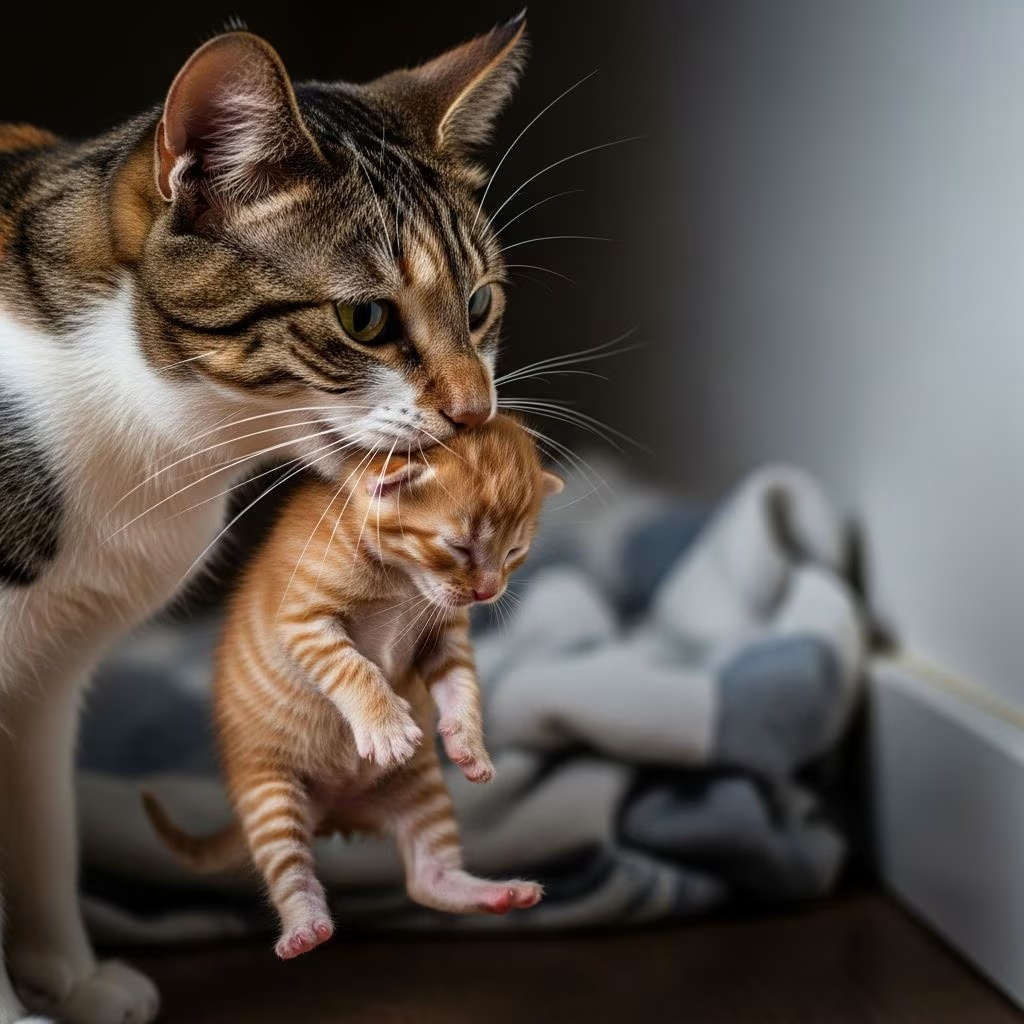
Mother cats exhibit fascinating behaviors driven by deep instincts to protect their vulnerable newborns. One puzzling action is when a queen selectively moves just one kitten away from the rest of the litter. This isn’t random; it often signals her assessment of specific risks or needs for that individual kitten. Understanding this helps cat owners intervene appropriately without disrupting natural bonding.
Understanding Mother Cat Instincts
Cats are solitary hunters by nature, and motherhood amplifies their protective drive. After birth, queens choose a nesting spot they deem safe, warm, and secluded. However, instincts prompt relocation if conditions change. Moving the entire litter is common, but isolating one kitten raises questions. This behavior stems from her heightened senses detecting subtle threats or issues invisible to humans.
Queens carry kittens by the scruff, a gentle grip on loose neck skin that doesn’t harm them. This method, learned from their own mothers, ensures safe transport. Selective moving suggests targeted concern rather than wholesale nest abandonment.
Reason 1: Perceived Health Issues in the Kitten
The most common reason a mother cat moves only one kitten is if she senses illness or weakness. Feline mothers have acute instincts; they may detect infections, congenital defects, or failure to thrive early. By separating the affected kitten, she prevents disease spread to healthy siblings, prioritizing litter survival.
- Symptoms to watch: Lethargy, poor nursing, diarrhea, or unusual cries.
- Maternal rejection risk: In wild or stressed conditions, weak kittens may be fully rejected to conserve energy.
If the kitten appears healthy to you but is moved repeatedly, monitor weight gain and nursing. A queen might isolate it for extra attention or to avoid competition from stronger littermates.
Reason 2: Protecting from Imagined or Real Threats
Mother cats perceive dangers humans overlook, like unfamiliar scents, sounds, or household pets. She might move one kitten to a ‘safer’ spot if she senses a threat near the nest, using it as a scout or prioritizing the most vulnerable.
- Dogs or other pets sniffing too closely can trigger relocation.
- Human handling or loud noises heighten her stress, prompting partial moves.
In feral scenarios, predators like foxes prompt such actions. Indoors, it’s often ‘imagined’ threats from her perspective.
Reason 3: Environmental Discomfort or Nest Optimization
Queens are fastidious; discomfort in the nest—cold drafts, heat, dirt, or noise—leads to adjustments. She might relocate one kitten to test a better spot before moving all, optimizing for temperature, cleanliness, or privacy.
| Issue | Why She Moves One Kitten | Solution |
|---|---|---|
| Cold/Heat | Seeks warmer/cooler microclimate | Provide heated pad or shaded area |
| Dirt/Wetness | Avoids soiled bedding | Clean nest daily with unscented linens |
| Noise/Lack of Privacy | Escapes disturbances | Quiet, dark room away from traffic |
Proximity to food sources also factors in; feral moms move kittens nearer to reliable feeding spots.
Reason 4: Kitten Aggression or Competition
In larger litters, stronger kittens may bully weaker ones during nursing, pushing them aside. The queen intervenes by relocating the victim to ensure fair milk access, preventing starvation.
Space constraints in tight nests exacerbate this as kittens grow, forcing separation.
Reason 5: Stress or Maternal Anxiety
New mothers, especially first-timers, experience anxiety. Moving one kitten relieves perceived overcrowding or allows her brief respite. Videos show queens testing new beds by transporting single kittens first.
What Should You Do If Mother Cat Moves One Kitten?
Resist the urge to reunite them immediately; this stresses the queen, risking full abandonment. Instead:
- Observe quietly: Note frequency, kitten condition, and nest location from afar.
- Improve environment: Offer multiple cozy nests with soft, clean blankets in a quiet room.
- Check kitten health: Weigh daily; under 4 oz/day gain signals issues.
- Minimize interference: Limit handling to 5-10 min sessions.
If the moved kitten cries excessively or weakens, consult a vet. Provide kitten milk replacer if needed, but prioritize queen nursing.
When to Worry: Signs of Real Problems
- Mother ignores or attacks the separated kitten.
- Kitten shows dehydration (sunken eyes, dry gums).
- Litter neglects feeding for 4+ hours.
- Queen appears ill (fever, discharge).
Emergency vet visit if any persist. Fading kitten syndrome kills quickly in newborns.
Preventing Unnecessary Moves
Create an ideal queen suite: large box, high sides, private space, 85-90°F warmth. KMR on hand, litter nearby. Socialize gently post-weaning.
Frequently Asked Questions (FAQs)
Why does a mother cat separate one kitten from the rest?
She may sense health issues, protect from threats, or optimize the nest environment for that kitten specifically.
What if she keeps moving the same kitten repeatedly?
Inspect for illness or discomfort; vet check recommended. Improve nesting options.
Is the mother rejecting the moved kitten?
Not necessarily; selective moving often protects rather than rejects. Monitor nursing.
How far do mother cats typically move kittens?
Usually short distances within their territory, like across a room or yard.
Do feral mother cats move kittens more often?
Yes, due to predators, weather, and urban disturbances.
Should I intervene if she moves one kitten outside?
Provide safe indoor alternatives first; trap-neuter-return programs help ferals.
Conclusion: Trust but Verify Maternal Instincts
While selective kitten-moving alarms owners, it’s usually instinctual wisdom. Patient observation and environmental tweaks resolve most cases. When in doubt, professional veterinary guidance ensures the litter thrives. By respecting her instincts, you support successful feline motherhood.
References
- Why would my mama cat keep moving just one of her kittens — Dial A Vet. 2023. https://www.dialavet.com/vet-answers/mama-cat-moving-one-kitten-130828
- Six reasons why mama cats move their kittens — Tel-Aviv’s Feral Cats Blog. 2023-01-13. https://telavivsferalcats.home.blog/2023/01/13/six-reasons-why-mama-cats-move-their-kittens/
- Mother Cat Moves her Day Old Kittens! Why? – YouTube — YouTube Video Transcript. Accessed 2026. https://www.youtube.com/watch?v=M1jP9KQwXjg
- FINDING MOTHERLESS KITTENS – Contra Costa County Guidelines — Contra Costa County Health Services. 2018. https://www.contracosta.ca.gov/DocumentCenter/View/41245/FINDING-MOTHERLESS-KITTENS



