

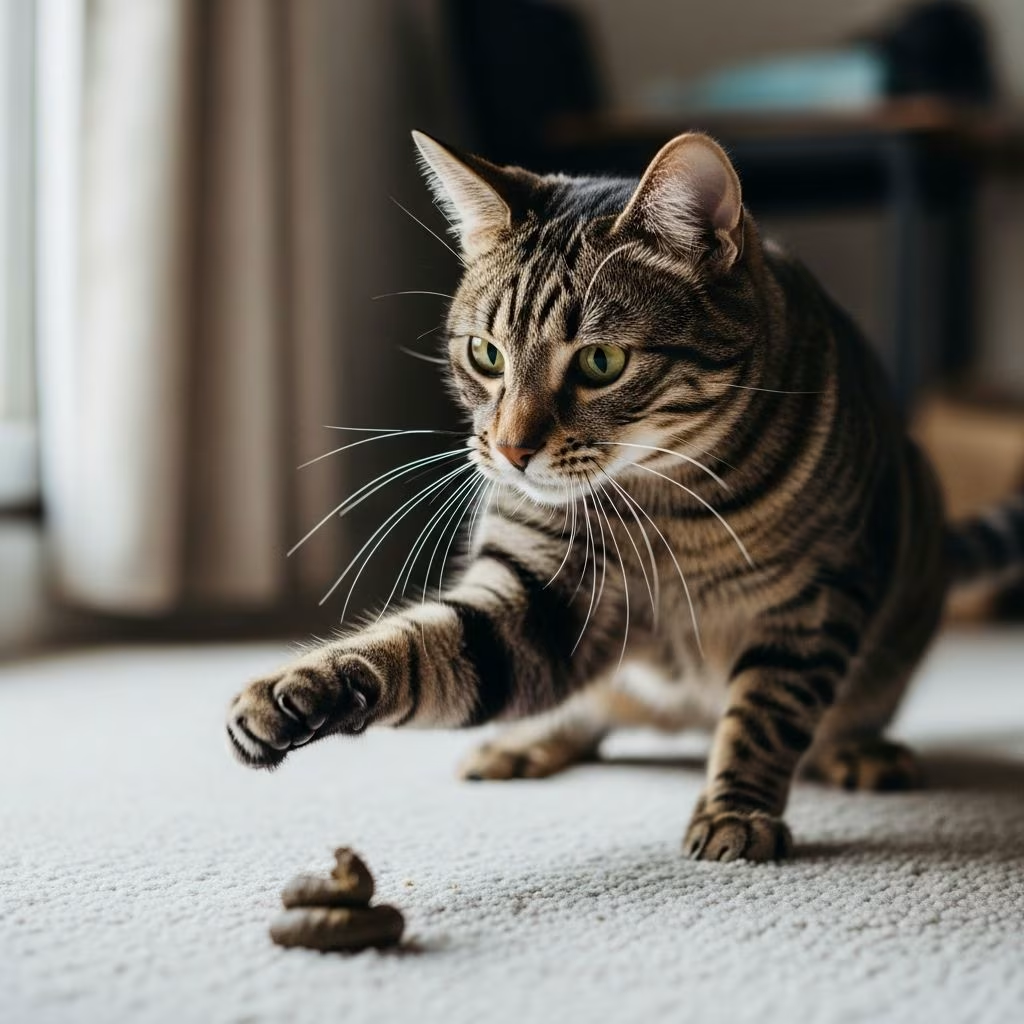
Typically, cats are meticulous about cleanliness, grooming themselves rigorously and maintaining strict standards for their litter trays. Yet, some develop peculiar habits like playing with their own poop, which can bewilder and frustrate owners. This behavior, more prevalent in kittens but occasionally seen in adults, often stems from **instincts**, **boredom**, or **litter box dissatisfaction**. Understanding these triggers is key to resolution.
In this comprehensive guide, we delve into six primary reasons cats engage in this odd conduct, backed by veterinary insights. We’ll cover everything from playful kitten exploration to adult stress signals, offering actionable steps to curb it. By optimizing your cat’s environment, you can restore tidiness and enhance their well-being.
1. They’re a Kitten Learning Litter Box Etiquette
Kittens are notorious for poop play as they master litter box protocols. Lacking coordination, they might stand in their feces, track it out, or bat it like a toy while practicing burial. This stems from immature instincts; mother cats teach burial to mask scents from predators, but young kittens experiment first.
Observe a litter of kittens: they’ll paw, sniff, and fling stool before perfecting coverage. Accidental smearing occurs when they sit in it or carry clumps on fur. Patience is crucial—scolding confuses them, as they can’t link punishment to past actions.
- Signs it’s kitten-related: Behavior peaks around 8-12 weeks; improves with age.
- Solutions: Reinforce training with praise for proper use. Use shallow litter boxes for easy access. Clean accidents promptly without reprimand.
By 4-6 months, most kittens outgrow this with consistent guidance. If persistence lingers, check for other issues below.
2. Boredom and Insufficient Stimulation
Adult cats turning poop into playthings often signal **boredom**. Indoor felines, deprived of hunting outlets, improvise with available ‘prey.’ Poop’s soft texture and movement mimic rodents, triggering predatory drives.
Lack of toys, play sessions, or companions exacerbates this. Cats need 15-30 minutes daily of interactive play to burn energy and satisfy curiosity. Without it, they seek novelty in the litter box.
Quick fixes:
- Introduce puzzle feeders, feather wands, and laser pointers.
- Rotate toys weekly to maintain interest.
- Set up vertical spaces like cat trees for exploration.
Studies from feline behaviorists note enriched environments reduce anomalous play by 70%. Engage post-meal when hunting instincts peak for best results.
3. Litter Box is Too Dirty or Unappealing
Cats abhor filth; a soiled box prompts them to excavate or remove waste manually. Daily scooping is non-negotiable—clumps signal contamination, driving avoidance or ‘self-cleaning’ antics.
Inadequate litter depth (less than 2-3 inches) frustrates burial efforts, leading to frantic digging and poop displacement. Scented litters or harsh textures repel fastidious cats, turning the box into a play zone.
| Problem | Symptoms | Solution |
|---|---|---|
| Dirty Box | Excessive digging, poop tracking | Scoop 1-2x daily; full clean weekly |
| Low Litter | Scratching sides, failed burial | Maintain 3-inch depth |
| Wrong Litter | Avoidance, pawing out waste | Switch to unscented clumping clay |
Rule of thumb: one box per cat plus one extra. Location matters—quiet, accessible spots prevent stress-induced mishaps.
4. Litter Box Size or Design Issues
An undersized or awkwardly shaped box cramps cats, especially large breeds. Unable to turn fully, they scratch walls or fling poop outside. High-sided boxes hinder seniors or arthritic cats, prompting escape attempts with waste in tow.
Ideal dimensions: 1.5x cat’s length. Open-top designs outperform covered ones for most, reducing claustrophobia.
- Upgrade tips: Measure your cat; opt for extra-large pans.
- Test multiple setups; transition gradually mixing old/new litter.
Post-change, monitor usage—improved comfort cuts play behavior swiftly.
5. Medical or Health Concerns
Unusual poop fascination warrants a vet check. **Gastrointestinal woes** (diarrhea, parasites) alter stool texture, making it ‘toy-like.’ Cognitive dysfunction in seniors mimics play but signals neurological decline.
Stress from household changes (new pets, moves) triggers anxiety elimination, where poop play asserts territory. Painful conditions like constipation force awkward postures, scattering waste.
Red flags:
- Sudden onset in adults.
- Accompanied by lethargy, appetite loss, or vocalizing.
- Blood/mucus in stool.
Early intervention prevents escalation; vets may recommend deworming, diet tweaks, or anxiety aids.
6. They Like the Smell or Texture
Counterintuitive but true: cats relish poop’s aroma. Detecting proteins or fats, they investigate via sniffing or pawing—not unlike savoring a meal’s scent.
Texture appeals too; soft, warm feces roll enticingly, especially for texture-oriented cats. Discourage escalation—sniffing’s harmless, rolling isn’t.
Deterrents: Enzyme cleaners erase scents; high-quality diets firm stools, reducing allure.
How to Stop Your Cat Playing With Poop: Action Plan
Addressing this requires a multi-pronged approach:
- Optimize litter setup: Clean daily, ample litter, spacious box.
- Enrich environment: Toys, playtime, perches.
- Vet visit: Rule out health issues.
- Train positively: Reward box use; ignore/redirect play.
- Diet check: Balanced nutrition minimizes appealing scents.
Consistency yields results in 1-2 weeks. Track progress with a journal.
Frequently Asked Questions (FAQs)
Is it normal for adult cats to play with poop?
Occasional curiosity yes, habitual no—signals boredom, box issues, or health.
Why do kittens play with poop more?
They’re learning burial; lack precision leads to fun mishaps.
Can diet affect this behavior?
Yes—poor digestion creates intriguing textures/smells.
What if cleaning doesn’t help?
Consult vet for parasites, stress, or cognitive checks.
Should I punish my cat?
No—causes fear, worsens issues. Use positive reinforcement.
References
- Why Cats Scratch, Dig, & Play in their Litter Box — Purina US. 2023-05-15. https://www.purina.com/articles/cat/behavior/litter/cat-playing-in-litter-box
- Why Does My Cat Take Poop Out of the Litter Box and Play with It — UAH Pet. 2024-02-10. https://www.uahpet.com/blogs/post/why-does-my-cat-take-poop-out-of-the-litter-box-and-play-with-it
- Why Does My Cat Play in the Litter Box? — Kinship. 2024-08-20. https://www.kinship.com/cat-behavior/why-does-my-cat-play-in-the-litter-box
- Why Does My Cat Play With Poop? 6 Possible Vet-Reviewed Reasons — Catster. 2024-11-05. https://www.catster.com/cat-behavior/why-does-cat-play-with-poop/
- Why Cats Play with Poop — Furry Friends WA. 2025-10-12. https://www.furryfriendswa.org/cat-tales/play-with-poop-10-12-25
- Feline Behavior Problems: House Soiling — Cornell University College of Veterinary Medicine. 2023-01-15. https://www.vet.cornell.edu/departments-centers-and-institutes/cornell-feline-health-center/health-information/feline-health-topics/feline-behavior-problems-house-soiling
- Cat Behavior Problems – House Soiling — VCA Animal Hospitals. 2024-03-22. https://vcahospitals.com/know-your-pet/cat-behavior-problems-house-soiling



