

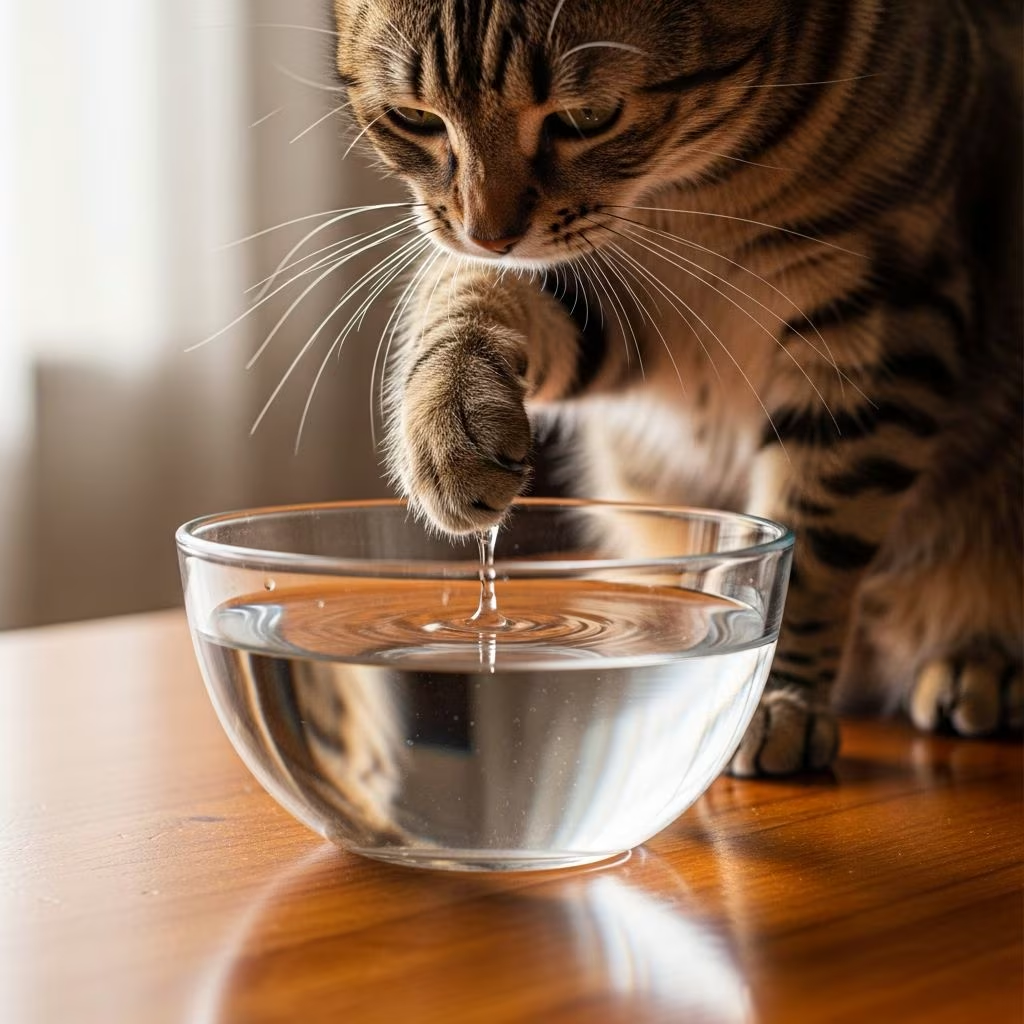
Cats often exhibit quirky behaviors that puzzle their owners, such as pawing at their water bowl. This action, which can lead to spills and wet floors, stems from a variety of instinctual, sensory, psychological, or health-related causes. Understanding these reasons helps cat owners address the issue effectively, promoting better hydration and reducing household messes. From mimicking natural water sources to signaling potential medical problems, this behavior reveals much about your feline friend’s needs and instincts.
In the wild, cats evolved as hunters who avoided stagnant water due to contamination risks, preferring fresh, flowing streams. Domestic cats retain these traits, sometimes pawing to simulate movement or test safety. Modern bowls often don’t align with these preferences, exacerbating the behavior. Veterinary experts note that while usually benign, persistent pawing warrants observation for underlying issues like stress or illness. This article breaks down the eight primary reasons, supported by behavioral insights and practical solutions.
The 8 Likely Reasons Why a Cat Paws at the Water Bowl
1. She Wants to Mimic Flowing Water
Cats instinctively prefer running water over still sources, a trait inherited from their wild ancestors who associated motionless water with stagnation and bacteria. Pawing agitates the water, creating ripples that mimic a stream, making it more appealing. Many owners report cats drinking eagerly from faucets or preferring pet fountains for this reason.
To address this, consider a cat water fountain that circulates water continuously. These devices satisfy the preference for fresh, oxygenated water while keeping bowls cleaner. Studies on feline hydration show cats drink up to 50% more from fountains, reducing dehydration risks, especially in older cats or those with kidney issues.
2. She Has Whisker Fatigue
Whiskers, or vibrissae, are highly sensitive tactile organs packed with nerve endings, aiding navigation, hunting, and spatial awareness. Deep or narrow bowls press whiskers against sides, causing whisker fatigue—sensory overload leading to discomfort or aversion. Instead of dipping their head, cats paw water onto their less-sensitive paws to drink.
Solution: Switch to wide, shallow ceramic, glass, or stainless steel bowls. Elevated stands help too, reducing neck strain. Avoid plastic bowls, which retain bacteria and odors. Veterinary behaviorists recommend monitoring for signs like reduced drinking; chronic fatigue can lead to insufficient intake.
3. She Is Stressed and/or Anxious
Stress manifests in repetitive actions like pawing, often alongside excessive grooming, hiding, aggression, or litter box issues. Changes like new pets, moves, or loud noises trigger anxiety, prompting displacement behaviors around resources like water bowls.
Signs include dilated pupils, tail flicking, vocalizing, or rapid breathing. Management involves environmental enrichment: pheromone diffusers (e.g., Feliway), vertical spaces, and consistent routines. If severe, consult a vet for anti-anxiety meds or behavioral therapy. Multiple water stations reduce competition in multi-pet homes.
4. She Is Struggling With OCD
Obsessive-compulsive disorder in cats involves compulsive, repetitive acts without purpose, such as intense water pawing. Unlike normal play, OCD behaviors are exaggerated, persistent, and disrupt daily life. Linked to genetics or early stress, it resembles human OCD.
Vets diagnose via history and ruling out medical causes. Treatment includes behavior modification, increased play, and sometimes SSRIs like fluoxetine. Early intervention prevents escalation; track frequency to discuss with your veterinarian.
5. It Is Her Territorial Instinct
As solitary hunters, cats fiercely defend territories, including food and water. Pawing marks bowls with scent glands in paw pads, claiming ownership, especially with other pets present. This prevents resource guarding fights.
Other signs: rubbing objects, spraying, or aggression. Provide separate bowls per cat, placed distantly. Neutering/spaying reduces intensity. Positive reinforcement training can curb extremes.
6. She Is Playing
Playful pawing is harmless entertainment, common in kittens but persisting in adults. Water’s movement captivates predatory instincts, offering batting practice without danger.
Prevent messes with puzzle toys, feather wands, or laser pointers. Rotate toys for novelty. Designated playtimes tire them out, redirecting energy from bowls.
7. She Is Not Feeling Well
Health issues like hyperthyroidism, diabetes, or kidney disease alter thirst, prompting odd drinking. Hyperthyroidism accelerates metabolism, increasing intake; diabetes causes polydipsia from high blood sugar.
Symptoms: weight loss, lethargy, frequent urination. Routine bloodwork detects these; early treatment improves quality of life. Pawing may indicate pain or nausea too—vet visit essential if sudden.
8. She Is Trying to See the Water Level
Cats are farsighted, excelling at distance but struggling close-up due to limited lens accommodation. Pawing tests depth and clarity, confirming drinkability without full submersion. Aging cats with vision loss paw more.
Use transparent bowls with level markings. Senior vision checks prevent issues. Arthritis in elders makes pawing easier than bending.
Additional Factors Influencing the Behavior
- Bowl Placement: Against walls makes cats vulnerable; position allows 360° view.
- Water Quality: Stagnant bowls breed bacteria—refresh daily, filter if needed.
- Age-Related Changes: Kittens play; seniors face mobility/vision hurdles.
- Boredom: Enrich environment to prevent habit formation.
How to Stop Your Cat Pawing at Her Water Bowl
1. Upgrade Equipment: Wide, shallow, fountain bowls combat fatigue and mimic flow.
2. Multiple Stations: One per cat plus extras, in quiet spots.
3. Freshness Routine: Change water twice daily; filtered best.
4. Enrichment: Toys, scratching posts, play sessions.
5. Vet Check: Rule out illness.
6. Monitor Stress: Pheromones, routines.
| Problem | Solution | Expected Improvement |
|---|---|---|
| Whisker Fatigue | Wide bowl | Immediate |
| Stagnant Water | Fountain | 1-2 days |
| Stress | Pheromones | 1-2 weeks |
| Play/Boredom | New toys | Days |
Frequently Asked Questions (FAQs)
Why does my cat paw at the water bowl but not the food bowl?
Water’s fluidity invites interaction; food doesn’t move similarly. Whisker fatigue affects both but pawing suits water play/testing.
Is pawing at water dangerous for my cat?
Usually not, but spills risk slips, and avoidance causes dehydration. Address to ensure hydration.
My senior cat paws more—should I worry?
Possible arthritis, vision loss, or thirst issues. Vet exam recommended.
Will a water fountain stop this behavior?
Often yes, satisfying flow preference and freshness.
Can diet cause this?
Dry food increases thirst; wet food balances. Illness-linked diets may too.
References
- Why Does My Cat Paw at Her Water Bowl? 8 Vet-Reviewed Reasons — Catster. 2023-10-15. https://www.catster.com/cat-behavior/why-does-cat-paw-at-water-bowl/
- 8 reasons cats dip their paws in water — BetterPet. 2024-05-20. https://www.betterpet.com/learn/why-cats-paw-at-water
- Why Does My Cat Dip Their Paw in Their Water Bowl? — Petlibro. 2023-11-10. https://petlibro.com/blogs/all/why-does-my-cat-dip-their-paw-in-their-water-bowl
- Why Does My Cat Play in the Food and Water Bowls? — Soft Paws. 2022-08-05. https://www.softpaws.com/why-does-my-cat-play-in-the-food-and-water-bowls/
- Hyperthyroidism in Cats — Cornell University College of Veterinary Medicine. 2024-01-12. https://www.vet.cornell.edu/departments-centers-and-institutes/cornell-feline-health-center/health-information/feline-health-topics/hyperthyroidism-cats



