

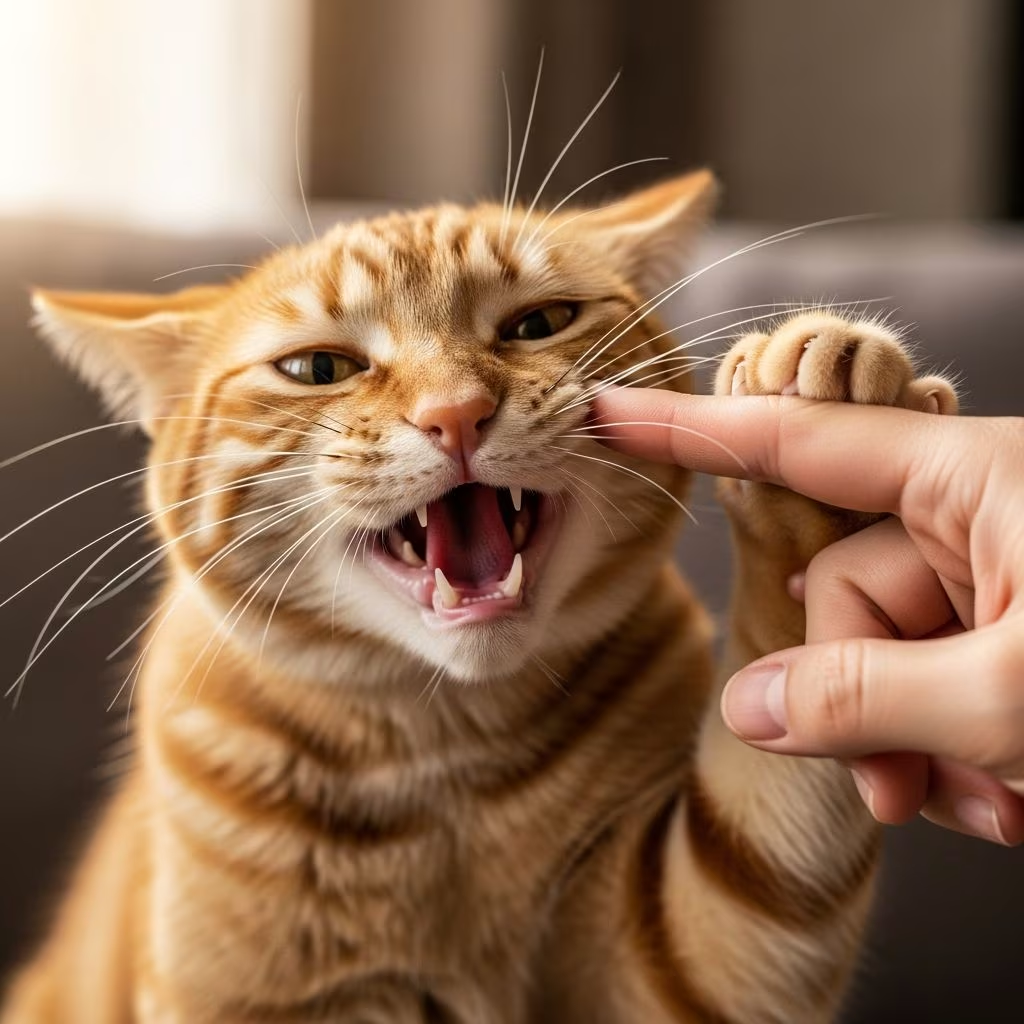
Why Does My Cat Attack My Hand During Petting?
Many cat owners experience a common and often confusing behavior: their cat seems to enjoy being petted, purrs contentedly, and then suddenly turns around and bites or scratches their hand. This sudden aggression can be startling and frustrating, leaving owners wondering what they did wrong. This behavior is called petting-induced aggression or overstimulation aggression, and it is far more common than you might think. Understanding the underlying causes and learning to recognize the warning signs can help you manage this behavior effectively and maintain a positive relationship with your feline companion.
Understanding Petting-Induced Aggression
Petting-induced aggression is an instinctive reaction that occurs when cats reach their sensitivity threshold for touch. Unlike humans, cats are generally less tolerant of prolonged petting compared to dogs, and their tolerance levels vary significantly from one individual to another. Some cats may enjoy only a few seconds of contact before becoming overwhelmed, while others may tolerate several minutes. The key to managing this behavior is understanding that your cat’s aggression is not personal—it is simply their way of communicating that they have reached their limit.
This behavior manifests when a cat that appears relaxed and content suddenly becomes agitated and bites or scratches the hand petting them. The transition can seem abrupt to owners, but cats typically provide subtle warning signals before escalating to aggression. Recognizing these signals is essential for preventing bites and maintaining your cat’s comfort level.
Main Causes of Petting-Induced Aggression
Several underlying factors can contribute to petting-induced aggression in cats. Understanding these causes will help you address the behavior more effectively.
Overstimulation and Sensitivity Threshold
The most common cause of petting-induced aggression is overstimulation. Cats have varying tolerance levels for physical contact, and what feels pleasurable at first can quickly become irritating. Think of it like someone continuously patting your back—while one or two pats feel nice, continuous patting eventually becomes annoying and you would ask them to stop. Your cat communicates this same frustration through aggression. The repetitiveness of petting can trigger an aggressive response as the cat’s way of saying, “I’ve had enough.”
Pain and Medical Conditions
If your cat’s aggressive behavior appears suddenly or is concentrated in specific areas of the body, pain should be your first consideration. Medical conditions such as arthritis, dental disease, ear infections, or dermatitis can make cats extremely sensitive to touch. When a cat experiences pain in the joints, limbs, neck, or back, even a slight shift in position during petting can trigger a defensive bite. Additionally, cats with skin conditions like dermatitis may find petting uncomfortable, particularly when contact continues for extended periods. A veterinary examination is crucial if petting-induced aggression develops suddenly or if the biting occurs primarily in specific body areas.
Poor Socialization and Early Experience
Cats that were not handled regularly as young kittens or those with poor socialization may not be familiar with or desire physical contact from humans. Some kittens that did not have littermates or a mother cat to teach them proper bite inhibition and appropriate interaction may display heightened sensitivity to handling. Additionally, if a cat’s comfort level with touch was pushed in the past—meaning someone ignored their cues to stop touching them—they may develop handling sensitivities as a protective response.
Control and Anxiety
Some cats display petting-induced aggression because they are attempting to control the situation. The cat may feel that when petting starts and stops should be their decision, not the human’s. Additionally, cats may experience fear or anxiety during petting. Since cats generally do not appreciate restraint, they may perceive the movement of your arm as a threat of restraint, even though you are simply trying to stroke them gently. Environmental stress, such as a new baby, a recent move, or other changes in the home, can lower a cat’s threshold for touch tolerance and increase irritability.
Warning Signs Before Your Cat Attacks
The key to preventing petting-induced aggression is learning to recognize the subtle warning signals that precede biting or scratching. Cats provide these cues before they escalate to aggressive behavior, giving you the opportunity to stop before the bite happens.
Physical Warning Signs
- Tail changes: Tail lashing, thumping, or slow movement changing to rapid swishing are classic indicators of impending overstimulation.
- Ear movements: Ears flattening against the head, rotating backwards, or resembling “airplane wings” signal discomfort.
- Skin reactions: Skin twitching, rippling, or the coat appearing to ripple along the back indicates mounting irritation.
- Pupil changes: Dilated pupils or pupils that constrict from a neutral state show heightened arousal.
- Body tension: Muscles tensing, body stiffening, or the cat freezing in place all signal growing discomfort.
- Coat fluffing: Hair standing on end, especially at the base of the tail, indicates arousal and stress.
Behavioral Warning Signs
- Purring stops: If your cat stops purring, it may signal the beginning of overstimulation.
- Body position shifting: Your cat may shift position, withdraw slightly from touch, or attempt to move away from your hand.
- Vocalizations: Low growling or hissing are clear indicators that your cat is uncomfortable.
- Fixed stares: A hard, fixed stare directed at your hand or arm precedes a bite.
- Head turning: Your cat’s head may turn quickly toward your hand without an immediate bite—this is a final warning before escalation.
- Fidgeting and restlessness: Your cat may fidget, tense up, or show slight movement away from touch.
Understanding these warning signs is critical. At the very first sign of these behaviors, stop petting your cat immediately and give them space. This prevents the aggressive behavior from escalating and teaches your cat that stopping early is more pleasant than biting.
How to Manage Petting-Induced Aggression
Step 1: Schedule a Veterinary Examination
The first and most important step is to have your cat examined by a veterinarian. Your vet will check for underlying medical conditions such as arthritis, dental disease, ear infections, or skin conditions that could be contributing to the behavior. Identifying and treating any medical issues may significantly reduce or eliminate petting-induced aggression. If your cat’s aggressive behavior developed suddenly, a veterinary examination is essential to rule out pain or illness.
Step 2: Learn and Recognize Warning Signals
Become an expert at reading your cat’s body language. Watch for the subtle warning signs listed above and stop petting the moment you notice them. This proactive approach keeps your cat below their sensitivity threshold and prevents the aggression from occurring. Over time, you may be able to gradually extend petting sessions as your cat becomes more comfortable, but always respect their boundaries.
Step 3: Modify Your Petting Technique
Different cats prefer different types of touch. Some cats may tolerate light scratching around the neck and chin rather than long strokes down the back and sides. Experiment with different petting techniques and areas to find what your cat enjoys most. Additionally, use shorter, lighter strokes and avoid petting sensitive areas like the lower back and tail base, where many cats are particularly sensitive.
Step 4: Keep Petting Sessions Brief
Start with very short petting sessions—just one to three strokes—and stop while your cat still appears relaxed and content. Gradually increase the duration over time if your cat tolerates it. This gradual approach helps your cat build tolerance while preventing overstimulation.
Step 5: Allow Your Cat to Solicit Petting
The most effective management strategy is to wait for your cat to solicit petting by rubbing against you before you initiate contact. When your cat asks for attention, they are more likely to tolerate petting and less likely to escalate to aggression. This approach respects your cat’s autonomy and preference for control over interactions.
Step 6: Avoid Punishment
Never punish your cat for biting or scratching during petting-induced aggression. Punishment can actually worsen the problem by creating anxiety and conflict behaviors, where your cat may allow petting but simultaneously feel anxious and nervous. Additionally, if you stop petting only after your cat bites, you may inadvertently reinforce the biting behavior as an effective way to end petting sessions. Instead, stop petting at the first warning sign, before aggression occurs.
Understanding Your Cat’s Individual Preferences
It is important to recognize that each cat has unique preferences and tolerance levels for physical contact. Some cats genuinely prefer minimal petting and may be perfectly content sitting close to you without being touched. Others may tolerate interaction only in specific areas like the head and neck. Rather than viewing petting-induced aggression as a problem to be “fixed,” consider it an opportunity to understand and respect your cat’s individual personality and preferences.
By accepting your cat’s boundaries and adjusting your expectations, you can develop a more harmonious relationship that works for both of you. A cat that sits on your lap without being touched or enjoys only brief, light scratches is still showing affection and trust—just in their own way.
Prevention and Long-Term Management
Long-term management of petting-induced aggression focuses on prevention through awareness and respect for your cat’s boundaries. Several strategies can help:
- Maintain regular veterinary check-ups to monitor your cat’s health and address pain or discomfort early
- Provide environmental enrichment and stress reduction to improve your cat’s overall emotional state
- Use positive reinforcement to reward your cat when they ask for petting and when they tolerate appropriate levels of contact
- Educate family members about your cat’s specific preferences and warning signs
- Consider using interactive play and toys as alternative forms of bonding that may be less likely to trigger overstimulation
- Keep petting sessions predictable and consistent to help your cat develop expectations about interactions
Frequently Asked Questions
Q: Is petting-induced aggression dangerous?
A: While petting-induced aggression is usually inhibited (not full-force biting), bites can be injurious in some cases. The best approach is prevention through early recognition of warning signs and stopping petting before aggression escalates.
Q: Can petting-induced aggression be completely cured?
A: Rather than a “cure,” management is the realistic goal. By understanding your cat’s preferences and respecting their boundaries, you can significantly reduce or prevent aggressive episodes. Some cats may never tolerate extended petting, and that is perfectly normal.
Q: Why does my cat purr and then bite me?
A: Purring indicates contentment, but it does not mean your cat will tolerate unlimited petting. Cats can purr while becoming increasingly overstimulated, and the purring may stop as they reach their threshold. Always watch for other warning signs beyond purring.
Q: Should I stop petting my cat entirely?
A: No, you do not need to eliminate petting entirely. Instead, respect your cat’s preferences, keep sessions brief, and stop at the first warning sign. Many cats can learn to tolerate more petting over time when given positive experiences below their sensitivity threshold.
Q: Is petting-induced aggression more common in certain cat breeds?
A: Aggressive behavior, including petting-induced aggression, can occur in cats of any breed, size, age, or gender. Individual temperament and early socialization are more important factors than breed.
Q: What if my cat suddenly develops petting-induced aggression?
A: Sudden changes in behavior warrant a veterinary examination to rule out pain or medical conditions. Once medical causes are excluded, implement the management strategies described above and focus on recognizing warning signs early.
References
- Cat Aggression When Touched or Petted — Maddie’s Fund. Accessed 2026-01-14. https://www.maddiesfund.org/cat-aggression-when-touched-or-petted.htm
- Petting-Induced Aggression — PAWS Chicago. Accessed 2026-01-14. https://www.pawschicago.org/fileadmin/media/images/News_Resources/Cat_Resources/CatResource_PettingInducedAggression_2019-web.pdf
- Petting-Induced or Overstimulation Aggression in Cats — Humane Society of the Vail Valley (HSHV). Accessed 2026-01-14. https://www.hshv.org/petting-induced-or-overstimulation-aggression-in-cats/
- Ask the SPCA: Cat Petting Aggression — SPCA British Columbia. Accessed 2026-01-14. https://spca.bc.ca/news/ask-spca-cat-petting-aggression/
- Cat Behavior Problems: Petting Aggression — VCA Animal Hospitals. Accessed 2026-01-14. https://vcahospitals.com/know-your-pet/cat-behavior-problems—aggression—petting-aggression
- Aggression in Cats — Petting Aggression — Humane Society of Missouri. Accessed 2026-01-14. https://hsmo.org/portfolio-item/aggression-in-cats-petting-aggression/
- Petting-Induced and Play Aggression in Cats — Animal Humane Society. Accessed 2026-01-14. https://www.animalhumanesociety.org/resource/petting-induced-and-play-aggression-cats



