

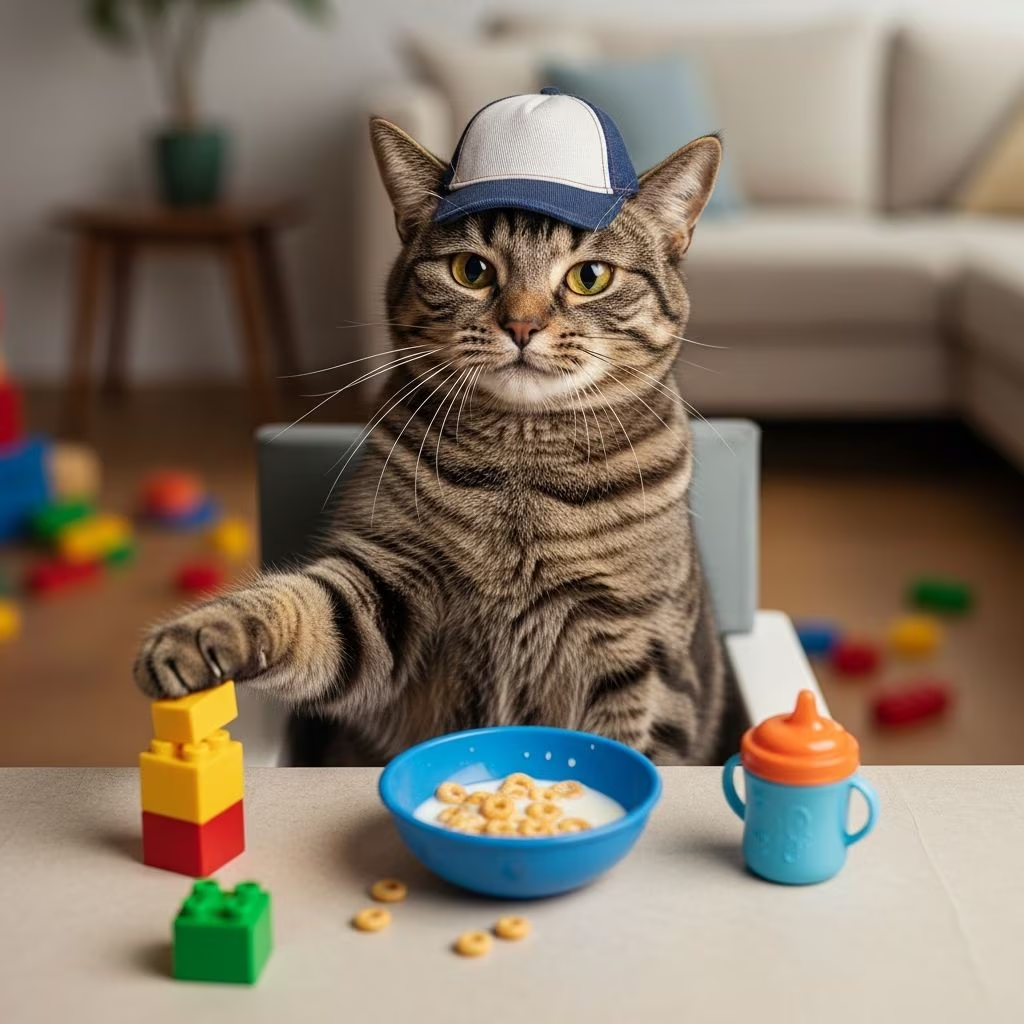
Why Does Your Cat Act Like a Child?
If you’ve ever wondered why your feline companion sometimes behaves more like a toddler than an independent predator, you’re not alone. Many cat owners notice that their pets exhibit distinctly child-like behaviors, from constant neediness to playful antics that mirror human children. These behaviors aren’t random quirks—they’re rooted in biology, psychology, and the unique relationship between cats and their owners. Understanding why cats act like children can deepen your appreciation for these remarkable animals and help you respond to their needs more effectively.
Neotenous Features: Why Cats Look Like Babies
One of the primary reasons we perceive cats as child-like is their **neotenous features**—characteristics that retain juvenile qualities throughout their lives. Cats possess physical traits similar to human infants, including large eyes relative to their head size, rounded facial features, and soft, delicate proportions. These features trigger what scientists call “cuteness responses” in humans, making us instinctively want to care for and nurture our feline companions.
This biological mechanism isn’t coincidental. Humans are naturally drawn to features associated with infancy and vulnerability, and cats have evolved to exploit this tendency. Their permanent kitten-like appearance keeps them perpetually endearing to their owners, creating a psychological bond similar to parent-child relationships. The bigger the eyes and rounder the face, the more we feel compelled to provide care and affection—a dynamic that cats have perfected over centuries of domestication.
Baby-Like Meowing and Vocalizations
One of the most telling signs that your cat views you as their parent is their meowing behavior. Interestingly, adult cats don’t typically meow at each other—this vocalization is reserved almost exclusively for communicating with humans. More specifically, cats often use meowing patterns that mirror **baby cries**, creating an emotional response in their owners.
Kittens naturally meow to their mothers for attention and care, but mature cats continue this behavior specifically with their human caregivers. Your cat has likely learned that meowing is more effective than other forms of communication for getting your attention, since humans rely less on body language than other cats do. This adaptation demonstrates sophisticated understanding: cats recognize that their humans perceive the world differently and adjust their communication accordingly. When your cat meows persistently or uses high-pitched vocalizations, they’re essentially calling out to their perceived parent for sustenance, comfort, or companionship.
Responding to Baby Talk and Feline Speech Patterns
Cats don’t just mimic child-like behaviors—they actively respond to baby talk and similar vocal patterns from their owners. Research indicates that cats receive and respond positively to this style of communication, much like human infants do. When you use a higher-pitched, softer tone with your cat, you’re engaging in a form of communication that mirrors how parents interact with their children.
This responsiveness creates a reinforcing cycle. You adopt baby-talk patterns because your cat responds positively to them, and your cat continues seeking this form of interaction because it signals safety and affection. The dynamic mirrors the mother-infant relationship, where specialized speech patterns facilitate bonding and ensure the infant’s receptiveness to the caregiver’s messages.
Kneading Behavior: Making Biscuits
Perhaps one of the most endearing cat behaviors is kneading—when your cat pushes their paws alternately against your lap, blankets, or your body in a rhythmic motion. This behavior is deeply rooted in kittenhood. Newborn kittens knead their mother’s belly to stimulate milk flow during nursing. Even after cats mature and no longer require nursing, many continue this behavior throughout their lives.
When your adult cat kneads you, they’re engaging in a behavior learned during their most dependent period. This suggests that your cat is regressing to a childlike state of comfort and security, viewing you as their nurturing mother figure. The act of kneading often accompanies purring and contentment, indicating that your cat associates you with the safety and nourishment they experienced as kittens. Some behaviorists believe that cats who continue kneading as adults may have been weaned too early or are seeking to recreate the comfort of their early maternal bond.
Following You Around: The Need for Security
Does your cat follow you from room to room, appearing distressed when you leave the house? This behavior directly parallels how young children require proximity to their parents for a sense of security. Kittens instinctively follow their mothers to learn survival skills and maintain protection. While adult cats are independent hunters, many retain this instinctive need for proximity to their primary caregiver.
Your cat’s constant shadowing is actually a sign of attachment and trust. They’ve bonded with you as their security figure, and your presence reassures them that they’re safe. When you leave, some cats experience separation anxiety—a condition remarkably similar to what human children experience when separated from their parents. This behavior demonstrates that your cat has internalized you as their primary source of comfort and safety, much like a child depends on their parent.
Copycat Behavior: Learning Through Imitation
Children learn by watching and imitating their parents, and cats do much the same with their human caregivers. Young kittens learn hunting and survival skills by observing their mothers, and domestic cats often learn behaviors by mimicking their human parents. You might notice your cat copying your daily routines, exploring objects you interact with, or displaying curiosity about your activities.
This imitative behavior serves multiple purposes. First, it’s a learning mechanism—your cat genuinely learns about their environment by observing how you interact with it. Second, it’s a bonding behavior that reinforces the parent-child dynamic. When your cat watches you intently, they’re gathering information about how to navigate their world while simultaneously reinforcing their attachment to you. This mimicry extends to less obvious behaviors too; some cats even adopt personality traits or behavioral patterns from their owners.
Tail Raising and Greeting Behaviors
When your kitten was born, it couldn’t even control its own bowel and bladder movements. The mother cat would stimulate these functions by licking the kitten’s rear end. To facilitate this necessary maternal care, kittens developed the behavior of raising their tails. This tail-raising greeting persists into adulthood as a sign of affection and recognition, usually directed toward the person the cat views as their parent.
When your cat greets you with an upright, quivering tail, they’re displaying a learned behavior from infancy that has become associated with their primary caregiver. The gesture carries emotional weight and represents the cat’s recognition of you as their parent figure. This simple action encapsulates the lifelong imprint of the maternal bond, even in adult cats who are otherwise fiercely independent.
Suckling and Nibbling Behavior
Some cats continue to suckle long into adulthood, and they may direct this behavior toward their human caregivers by nibbling or gently chewing on fingers, blankets, or other soft objects. This behavior originates in infancy when kittens nurse from their mothers. While some cats grow out of this behavior naturally, others retain it as a form of comfort-seeking and bonding.
When your cat suckles your fingers or kneads while apparently trying to nurse, they’re not actually expecting milk—rather, they’re seeking the comfort and security associated with their mother’s presence. This behavior indicates a deeply regressed emotional state where your cat is reconnecting with their earliest memories of safety and dependency. Cats who suckle as adults may have been separated from their mothers prematurely, leading them to seek this comfort throughout their lives.
Testing Boundaries: Growing Independence
Like children, cats are driven to test boundaries and establish independence, even while remaining emotionally dependent on their caregivers. Cats exude independence while simultaneously craving the security of parental oversight. When your cat knocks items off tables, scratches furniture, or ventures into forbidden areas, they’re testing the limits of acceptable behavior within their “family unit”.
This testing is actually developmentally healthy. By pushing boundaries in a controlled home environment, your cat is learning the rules of their world and developing confidence in their independence. Providing appropriate boundaries—establishing where scratching is allowed, what areas are off-limits, and what behaviors bring consequences—mirrors good parenting practices. When your cat tests a boundary and discovers there are gentle consequences, they’re learning valuable lessons about their place in the hierarchy and what behaviors maintain their parent’s approval.
Seeking Comfort and Physical Contact
Cats cherish snuggle time and often seek physical closeness with their owners. This behavior parallels how children need consistent physical affection from their parents. Your cat may curl up in your lap, sleep on your pillow, or demand head rubs and petting sessions. These aren’t just comfortable positions for cats—they’re emotional necessities that fulfill their need for reassurance and connection.
The physical contact between a cat and their owner triggers the release of oxytocin—the bonding hormone—in both species. This neurochemical response reinforces the attachment and creates a cycle where both cat and owner seek continued physical contact. Your cat’s insistence on being near you, especially during vulnerable times like sleeping, demonstrates that they’ve placed you in the role of protector and comfort-provider—roles typically filled by a parent in the child’s early life.
Observational Behaviors: Watching Your Every Move
Cats are naturally inquisitive creatures, but they display a particular type of watchfulness when observing their primary caregiver. Your cat watches as you walk around the room, eat, sleep, and work. This constant observation serves multiple purposes: it’s partly about maintaining proximity to their security figure and partly about learning and gathering information about their environment.
Young children similarly watch their parents constantly, learning through observation and gathering data about how the world works. Your cat’s attentive gaze—those big, trusting eyes following your movements—indicates they see you as the leader of their pride and the source of knowledge about navigating their world. This watchfulness provides your cat with a sense of security; as long as they can see their parent, they’re safe.
Understanding the Cat-Parent Bond
The reason cats act like children is fundamentally rooted in attachment and domestication. Over thousands of years, cats have evolved to form attachments with humans that mirror the bonds between mothers and their offspring. This doesn’t mean your cat is confused about being a cat—rather, they’ve adapted their natural social behaviors to the unique context of living with humans.
Your cat’s child-like behaviors represent a sophisticated evolutionary strategy. By displaying features and behaviors that trigger parental instincts in humans, cats have secured a niche in human society where they receive care, protection, and resources. In return, they offer companionship and the emotional benefits of a loving relationship.
Frequently Asked Questions
Q: Is it normal for adult cats to act like kittens?
A: Yes, many adult cats retain kitten-like behaviors throughout their lives, especially with their primary caregivers. This is a sign of healthy attachment and bonding.
Q: Why does my cat meow so much at me?
A: Cats primarily use meowing to communicate with humans, not other cats. Your cat likely meows because they’ve learned it’s an effective way to get your attention for food, play, or comfort.
Q: What does it mean when my cat kneads me?
A: Kneading is a leftover behavior from kittenhood when cats pushed their mothers’ bellies to stimulate milk flow. When your cat kneads you, they’re displaying affection and seeking comfort.
Q: Should I worry if my cat follows me everywhere?
A: Not necessarily. Following their owner around is a sign of attachment and security-seeking. However, excessive anxiety when separated may indicate separation anxiety that should be addressed.
Q: Can cats really see me as their parent?
A: Research suggests that cats form attachment bonds with their owners similar to those between parents and children, displaying behaviors and seeking reassurance in ways that parallel human family relationships.
Q: Why does my cat suckle on my fingers or blankets?
A: This behavior originates from nursing as a kitten. Some cats continue it into adulthood as a self-soothing behavior, indicating they’re seeking the comfort and security associated with their mother.
Q: How can I strengthen the bond with my cat?
A: Spend quality time together, use positive reinforcement for desired behaviors, provide physical affection, maintain consistent routines, and respect your cat’s need for space and independence.
References
- Top 3 Reasons Cats Are Like Kids — PetMD. Accessed January 2026. https://www.petmd.com/cat/pet_lover/MM_top3_catsarelikekids
- 7 Signs That Your Cat Thinks They Are Your Child — Feline Fanatics. October 31, 2024. https://www.youtube.com/watch?v=9uTTRbd9wN0
- 8 Reasons Your Cat Will Always Be Your “Baby” — Psychology Today. December 2021. https://www.psychologytoday.com/us/blog/the-modern-heart/202112/8-reasons-your-cat-will-always-be-your-baby



