

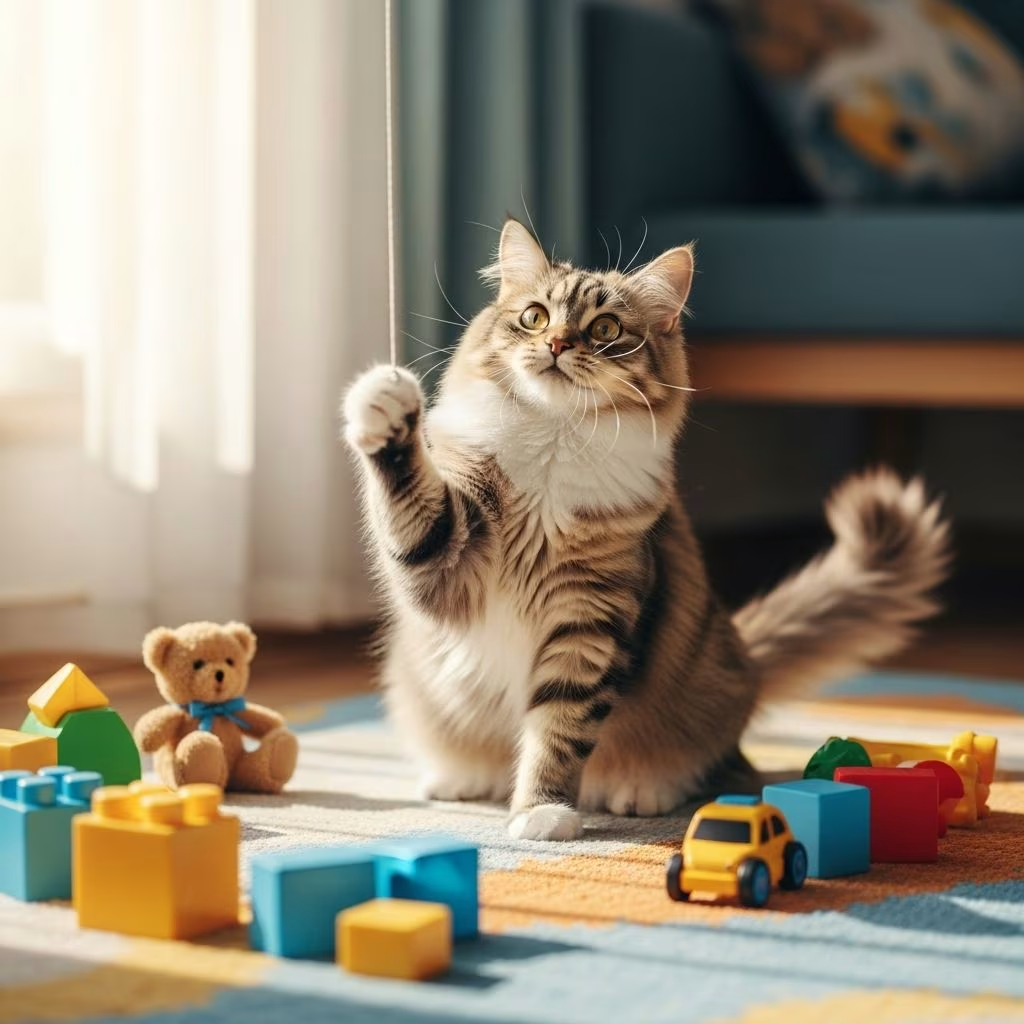
Your cat’s playful pounces, insistent meows, and cuddly kneading might remind you of a toddler. These behaviors stem from retained kitten-like traits called neoteny, where cats keep juvenile features and actions into adulthood to appeal to humans. Cats often treat owners as surrogate mothers, exhibiting childlike dependence for comfort, play, and attention.
Understanding Neoteny in Cats
Neoteny refers to the retention of juvenile characteristics in adult animals. Cats display this through large eyes, small noses, and playful behaviors that mimic human infants, fostering stronger bonds with people. Domesticated over thousands of years, cats evolved these traits to elicit caregiving responses from humans, much like how babies do.
This phenomenon explains why adult cats chase laser pointers with boundless energy or curl up for naps in laps. Unlike wild felines, domestic cats remain ‘kitten-like’ longer, prioritizing social interaction over full independence.
1. Persistent Meowing Like a Kitten
Kittens meow to summon their mother for food and care, a vocalization that fades among adult cats in the wild. However, domestic cats continue meowing excessively at humans, viewing us as their perpetual caregivers. This ‘baby talk’ gets attention, treats, or door-opening, reinforcing the child-parent dynamic.
Listen closely: high-pitched, repetitive meows signal hunger, boredom, or affection needs. Cats adapt their cries to our responses, much like children learning which whines prompt parental action. If your cat yowls at dawn, it’s channeling kitten instincts for maternal feeding.
2. Following You Everywhere
Like toddlers shadowing parents, cats trail owners from room to room or try slipping out doors. This stems from kitten behavior where young ones follow mama cats for safety and milk. Adult cats imprint on humans similarly, seeking constant proximity for security.
This ‘velcro cat’ trait shows trust and attachment. It may annoy during private moments, but it underscores your role as their world center. Kittens separated early from mothers often amplify this, treating owners as primary attachment figures.
3. Imitating Your Actions (Copycat Behavior)
Children mimic parents to learn; kittens copy mother cats’ hunting and grooming. Pet cats extend this to humans, pawing at keyboards or ‘helping’ with chores. Watch your cat batting at your moving phone or mimicking your stretches—it’s learned imitation for social bonding.
This play strengthens relationships, as cats observe and replicate to participate in your routine. It highlights their intelligence and desire for inclusion, blurring lines between pet and child.
4. Kneading and ‘Making Biscuits’
Kittens knead their mother’s belly to stimulate milk flow while suckling. Adult cats knead blankets, laps, or clothes, drooling in bliss—a comforting regression to infancy. This self-soothing behavior signals deep relaxation and maternal association with the owner.
Not all cats knead vigorously; some gently pat. Paired with purring, it’s a sign of utter contentment. Trim claws to prevent scratches during these loving sessions.
5. Greeting with Tail Up and Body Rubs
Kittens raise tails for mother cats to lick their genitals, aiding elimination since newborns can’t go alone. Adults retain this upright tail greeting and head-butts (bunting) to mark you with scent glands, claiming you as family.
These rituals blend affection with territory marking. A quivering tail tip adds excitement, like a child’s eager hug. Respond by petting gently to reciprocate the bond.
6. Suckling on Fingers or Blankets
Some cats progress from licking to suckling fingers, earlobes, or wool items, mimicking nursing. Orphaned or weaned early kittens are prone, seeking comfort in rhythmic sucking without expecting milk.
This can seem odd but reassures it’s not nutritional need—rather emotional security. Discourage if it leads to biting by redirecting to toys.
7. Testing Boundaries Like a Toddler
Cats push limits by jumping counters or knocking items, akin to kids testing rules. This independence quest balances with returning for cuddles, teaching resilience in a safe space.
Consistent boundaries prevent escalation, mirroring child-rearing. Reward good behavior to guide their ‘growth’.
Why Cats Bond This Way with Humans
Cats self-domesticated around human settlements 10,000 years ago, selecting for sociable, less aggressive traits. We fill the maternal role, providing food and shelter, so they retain kitten appeals like big eyes and voices.
Breeds vary: Siamese meow more, Maine Coons knead harder. Early socialization amplifies childlike traits.
How to Nurture Your Cat’s Inner Kitten
- Play daily: Use wand toys for hunting simulation, preventing overstimulation bites.
- Provide safe spaces: Litter boxes, perches, and quiet rooms reduce stress.
- Respond to meows: But set limits to avoid demanding habits.
- Offer soft fabrics: For kneading, enhancing comfort.
- Supervise kids: Teach gentle interactions; cats set interaction pace.
Enrich environments with puzzle feeders and vertical space to channel energy positively.
Cats vs. Children: Similarities Table
| Behavior | Cat Version | Child Version |
|---|---|---|
| Seeking Attention | Meowing loudly | Crying or calling |
| Following Parent | Trailing everywhere | Toddler shadowing |
| Boundary Testing | Counter jumping | Rule breaking |
| Comfort Seeking | Kneading & suckling | Thumb sucking |
| Mimicry | Copying actions | Imitating chores |
Frequently Asked Questions (FAQs)
What if my cat meows excessively at night?
Feed earlier, play before bed, ignore attention bids to reset schedule. Persistent issues warrant vet checks for pain.
Why does my cat knead painfully?
Instinctual; provide blankets, trim nails. It’s love, not aggression.
Is suckling normal in adult cats?
Yes, a soothing remnant. Redirect if destructive.
Can all cats act like this?
Feral or poorly socialized less so; domestics yes.
How to stop boundary testing?
Consistent ‘no,’ alternatives, positive reinforcement.
These childlike quirks make cats cherished companions. Embrace them for the profound, parent-like joy they bring.
References
- Top 3 Reasons Cats Are Like Kids — PetMD, Diana Waldhuber. Accessed 2026. https://www.petmd.com/cat/pet_lover/MM_top3_catsarelikekids
- Children and Cats — Wisconsin Humane Society. Accessed 2026. https://www.wihumane.org/behavior/ask-the-experts/cat-behavior/children-and-cats
- 7 Signs That Your Cat Thinks They Are Your Child — Feline Fanatics, YouTube. 2024-10-31. https://www.youtube.com/watch?v=9uTTRbd9wN0
- 8 Reasons Your Cat Will Always Be Your “Baby” — Psychology Today. 2021-12. https://www.psychologytoday.com/us/blog/the-modern-heart/202112/8-reasons-your-cat-will-always-be-your-baby



