

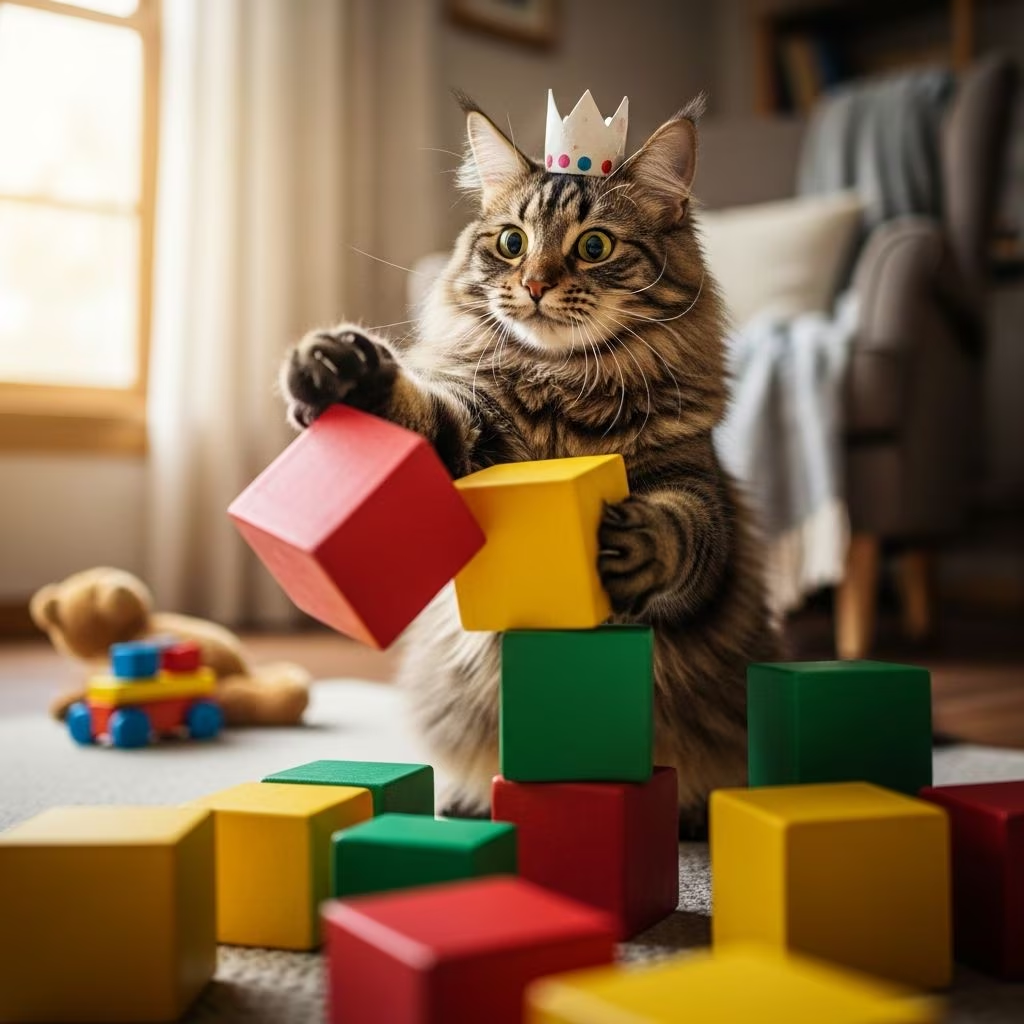
Cats often display behaviors reminiscent of human children, such as incessant meowing, shadowing their owners, kneading, and testing limits. These actions stem from their evolutionary instincts, neotenous traits, and strong attachment bonds formed with humans as surrogate parents.
Understanding Childlike Behaviors in Cats
Many cat owners notice their pets acting unusually juvenile, even as adults. This phenomenon arises because domesticated cats retain kitten-like features and vocalizations, a process known as neoteny. Unlike wild felines, house cats meow primarily to communicate with humans, mimicking how kittens solicit care from their mothers. Behaviors like following owners room-to-room or demanding attention mirror toddler clinginess, signaling trust and dependency.
These traits make cats endearing companions. A study highlighted in psychological research notes that cats respond positively to baby talk, further blurring lines between feline and infant interactions. However, while charming, persistent childlike actions can sometimes indicate unmet needs or health issues, warranting observation.
1. The Persistent Meow: Calling for Mom
One of the most striking childlike traits is your cat’s meowing. Kittens use high-pitched meows to summon their mother for food, warmth, or comfort. Adult cats in the wild rarely meow at each other, relying instead on body language or scent. But domesticated cats direct meows exclusively at humans, treating us as their lifelong “mom.”
This vocalization persists because it works—owners respond with pets, treats, or play. If your cat meows at odd hours, like 7:30 a.m. on weekends, it’s leveraging this kitten strategy for attention. Far from manipulation, it’s an ingrained survival tactic adapted to our homes. Excessive meowing, however, might signal hunger, stress, or conditions like hyperthyroidism.
- Why it mimics children: Toddlers cry or whine for parental response, just as cats meow.
- How to respond: Establish routines for feeding and play to reduce demands.
- Fun fact: Cats modulate meows to match human hearing preferences.
2. Follow the Leader: Your Furry Shadow
Cats shadowing their owners evoke images of ducklings trailing their mother or toddlers glued to parents. This “follow the leader” behavior roots in kitten instincts. Mother cats leave nests to hunt, but as kittens grow mobile, they trail her for safety and learning.
In homes, this translates to cats weaving between legs, peeking into bathrooms, or protesting door closures. It’s a sign of deep attachment, viewing you as protector. Even independent cats revert to this during stress or illness. Unlike dogs’ pack mentality, cats’ solitary nature makes this following particularly poignant—they choose you.
Observe variations: Some cats dash ahead to “escort” you, others lag playfully. This bonding strengthens over time, especially if you’ve raised them from kittens.
- Triggers: Novel environments, separation anxiety, or boredom.
- Benefits: Reinforces security; interactive toys can channel energy.
- Caution: Sudden changes may indicate pain or cognitive issues like feline dementia.
3. Copycat Imitation: Learning from You
Young children mimic parents—donning oversized clothes or “helping” with chores. Kittens similarly imitate their mothers, copying hunting pounces, grooming, or tail signals. Adult cats extend this to humans, batting toys like you toss balls or pawing faucets after watching you wash dishes.
This imitation fosters learning and bonding. Cats may “help” by jumping on keyboards or shadowing cooking, driven by curiosity and social integration. It’s their way of participating in family life, much like a child eager to join adult activities.
Encourage positive mimicry with puzzle feeders or training sessions using clicks and treats, turning play into skill-building.
4. Kneading and Tail-Raising: Comfort Rituals
Kneading, or “making biscuits,” is a hallmark kitten behavior. Blind newborns knead their mother’s belly to stimulate milk flow. Even after weaning, cats knead soft surfaces (or laps) for comfort, eyes half-closed in bliss.
Raising the tail upon greeting is another holdover. Kittens lift tails for mother cats to lick and stimulate elimination; adults retain it as a friendly signal, especially with trusted humans. These rituals evoke infant helplessness, endearing cats eternally youthful.
| Behavior | Kitten Origin | Adult Meaning |
|---|---|---|
| Kneading | Milk stimulation | Comfort, contentment |
| Tail raise | Elimination aid | Affection, greeting |
| Suckling | Nursing | Soothing stress |
5. Testing Boundaries: Independence with a Safety Net
Cats and children alike crave independence yet seek reassurance. Kitties push limits—knocking items off shelves or darting outdoors—testing reactions while knowing arms await. This boundary-pushing prepares them for the world, mirroring toddler tantrums.
Respond with consistency: Gentle redirection over punishment builds trust. Spoiled behaviors, like knocking things post-discipline, stem from high energy or attention bids, akin to a child’s outburst.
6. Finger Suckling and Nibbling: Seeking Nurture
Some cats gently nibble or suckle fingers, reviving nursing motions. Not aggressive biting, this comforts them, associating humans with milk sources. It’s harmless unless escalating; provide soft toys as alternatives.
7. Neotenous Features and Baby Talk Response
Cats’ large eyes, small noses, and soft fur mimic baby schema, triggering human caregiving instincts. They coo back to baby talk, deepening bonds. PetMD notes inquisitive staring parallels children’s watchful eyes.
8. Snuggle Time and Emotional Dependency
Cats curl into laps for security, much like kids seeking hugs. This vulnerability phase, though brief in wild cats, extends in domestics due to our nurturing.
When Childlike Behavior Signals Problems
While adorable, extremes warrant vet checks. Increased vocalizing, hiding, aggression, or sleep changes may indicate pain, thyroid issues, or dementia. Track patterns: Reluctance to jump suggests arthritis; ravenous hunger, diabetes.
- Red flags: Sudden aggression, excessive thirst, altered sleep.
- Action: Routine exams; environmental enrichment prevents stress-induced regressions.
Frequently Asked Questions (FAQs)
Why does my adult cat meow like a kitten?
Adult cats meow at humans to mimic kitten calls for their mother, as we respond like surrogate parents.
Is it normal for my cat to follow me everywhere?
Yes, it’s an attachment sign; kittens follow moms for safety, extending to owners.
What does kneading mean in cats?
Kneading comforts them, recalling nursing from mom; it’s a sign of trust.
Should I worry if my cat suckles my fingers?
Usually harmless nostalgia; redirect to toys if persistent.
Why do cats test boundaries like kids?
They explore independence safely, craving guidance afterward.
Strengthening Your Cat-Parent Bond
Embrace these behaviors with play, routines, and affection. Vertical spaces, scratching posts, and interactive sessions fulfill instincts, reducing demands. Your cat’s childlike ways affirm you’re family—their forever safe haven.
Word count: 1678 (excluding metadata and references).
References
- Top 3 Reasons Cats Are Like Kids — PetMD, Diana Waldhuber. Accessed 2026. https://www.petmd.com/cat/pet_lover/MM_top3_catsarelikekids
- 7 Signs That Your Cat Thinks They Are Your Child — Feline Fanatics (YouTube). 2024-10-31. https://www.youtube.com/watch?v=9uTTRbd9wN0
- Cats Acting Like Spoiled Children — TheCatSite Forums. Accessed 2026. https://thecatsite.com/threads/cats-acting-like-spoiled-children.182315/
- 9 Cat Behavior Changes To Worry About — Cats.com. Accessed 2026. https://cats.com/cat-behaviors-to-worry-about
- 8 Reasons Your Cat Will Always Be Your “Baby” — Psychology Today. 2021-12. https://www.psychologytoday.com/us/blog/the-modern-heart/202112/8-reasons-your-cat-will-always-be-your-baby



