

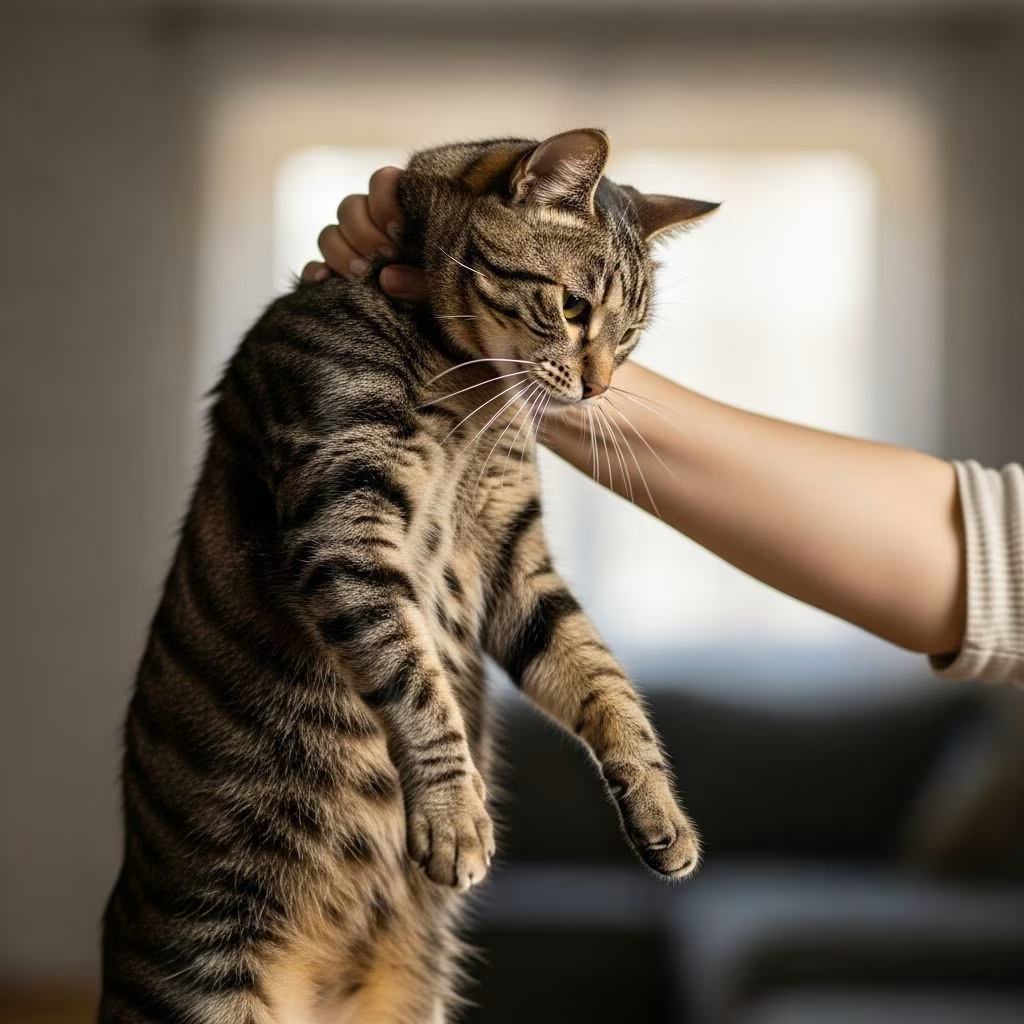
Many cat owners have observed their adult cats going limp when picked up by the scruff of the neck, a behavior that mimics how mother cats carry kittens. However, this reaction in adults is not the same calming reflex seen in young kittens. Instead, it often signals a stress response where the cat feels helpless and shuts down. Understanding this distinction is crucial for ethical and effective cat handling.
What Is Scruffing a Cat?
Scruffing involves grasping the loose skin at the back of a cat’s neck to lift or restrain them. This technique is commonly used by mother cats to transport very young kittens, triggering a natural **flexor reflex** that causes the kitten’s body to go limp and prevent injury during movement. In adult cats, however, this reflex diminishes after the first few weeks of life, and scruffing no longer produces the same involuntary relaxation.
Veterinary experts note that while scruffing may appear to calm an adult cat, it actually induces a state of learned helplessness. The cat perceives a total loss of control, leading to behavioral shutdown rather than true relaxation. This misconception stems from observing wild cats, where scruffing occurs during high-stress events like mating, fighting, or predator attacks—not gentle handling.
Why Do Kittens Go Limp When Scruffed?
Mother cats scruff their kittens primarily in the first few weeks of life to relocate them safely to the nest. This action activates the **flexor reflex**, a neurological response that relaxes the kitten’s muscles, curls their limbs inward, and prevents struggling that could cause harm during transport.
- The reflex ensures kittens remain still and protected while being moved.
- It is evolutionarily advantageous, reducing injury risk from falls or rough handling.
- This response is hardwired and automatic, much like other neonatal reflexes in mammals.
As kittens grow—typically beyond 4-6 weeks—the reflex fades. Their developing musculature and awareness make scruffing ineffective and uncomfortable. By adulthood, what looks like limpness is a fear-based freeze response, not the kitten reflex.
Why Do Adult Cats Go Limp When Scruffed?
Adult cats go limp due to a psychological shutdown, not a reflex. When grabbed by the scruff, they experience pain from the skin stretch, vulnerability from dangling hind legs, and a sense of inescapable control loss. This triggers a **freeze response**, a survival mechanism where the cat conserves energy and avoids escalating threats.
Key reasons include:
- Pain and discomfort: Adult necks have more muscle and weight, making scruffing strain the skin and spine.
- Learned helplessness: Repeated scruffing teaches cats they cannot escape, leading to passive resignation.
- Association with trauma: In nature, scruffing links to fights or predation, evoking fear.
Tufts University veterinary experts confirm this is not calmness; body language like dilated pupils, flattened ears, or tense muscles reveals underlying stress.
Is It Safe to Scruff an Adult Cat?
Scruffing adult cats is generally **not safe or recommended** for routine handling. While veterinarians may use it briefly in emergencies for safety, it poses physical and emotional risks.
| Risks of Scruffing Adult Cats | Details |
|---|---|
| Physical Injury | Neck strain, skin tears, or spinal stress from improper grip or heavy body weight. |
| Stress Response | Elevated cortisol levels, leading to shutdown or defensive aggression. |
| Behavioral Issues | Fear of handling, biting, hiding, or trust erosion over time. |
| Ineffective Control | Cats can still lash out with claws or teeth despite appearing limp. |
Humane societies like HSHV strongly advise against it, emphasizing that lack of movement is a sign of distress, not compliance.
The Problems with Scruffing Adult Cats
Regular scruffing leads to long-term issues:
- Fearful behavior: Cats become defensive, swatting or fleeing during petting or vet visits.
- Handling aversion: associating touch with pain reduces tolerance for grooming or exams.
- Broken trust: Erodes the human-cat bond, making training harder.
- Health impacts: Chronic stress weakens immunity and exacerbates conditions like cystitis.
Studies in veterinary behavior show scruffing reinforces negative associations, unlike positive reinforcement methods.
Alternatives to Scruffing Your Cat
Gentler techniques prioritize trust and minimize stress. These evidence-based methods are endorsed by veterinary behaviorists.
Towel or Burrito Wrap
Wrap your cat snugly in a towel, covering the body while exposing only the head for tasks like medication or nail trims. This provides security and limits movement without pain.
Positive Reinforcement Training
Use treats, praise, or toys to reward calm behavior. Train cats to enter carriers voluntarily or tolerate handling through short, fun sessions.
Proper Two-Handed Lift
Support the chest with one hand and hindquarters with the other. Slide one arm under the chest, using the other to scoop the back end for full body support.
Carrier Training
Make carriers positive by feeding meals inside and using pheromone sprays. This reduces vet trip stress.
- Leave carrier out daily with bedding.
- Pair entry with high-value treats.
- Practice short car rides.
Professional Help
Seek Fear Free-certified vets or behaviorists trained in low-stress handling.
When Is Scruffing Okay?
Scruffing is rarely justified outside veterinary emergencies where immediate safety is at stake, such as aggressive injuries. Even then, combine with towels or sedation, and use minimal force. For owners, avoid it entirely—safer alternatives exist for 99% of situations.
Building Trust with Your Cat
Foster a strong bond through:
- Short, positive interactions starting when relaxed (post-meal).
- Reading body language: Relaxed ears, slow blinks indicate comfort.
- Providing safe retreats like cat trees or boxes.
- Consistent routines to predict handling.
Patience yields cooperative cats who enjoy handling, per Tufts behaviorists.
Frequently Asked Questions (FAQs)
Does scruffing hurt my adult cat?
Yes, it often causes discomfort due to skin stretching and lack of support for their heavier body.
Why doesn’t my cat struggle when scruffed?
It’s a freeze response from helplessness, not relaxation—check for stress signs like panting or dilated pupils.
Can I train my cat without scruffing?
Absolutely; positive reinforcement works better, teaching voluntary calm.
Is scruffing ever used by vets?
Rarely, only in high-risk procedures with combined methods.
How do I safely pick up my fearful cat?
Use towel wraps or two-handed support, rewarding cooperation.
This comprehensive guide (word count: 1678) empowers cat owners to handle pets humanely, promoting welfare and stronger bonds.
References
- Scruffing Cats: The Surprising Truth About This Common Handling Myth — Humane Society of Huron Valley (HSHV). 2023. https://www.hshv.org/scruffing-cats-the-surprising-truth-about-this-common-handling-myth/
- Is It Safe to Scruff Cats? — Shawsheen Animal Hospital. 2024. https://shawsheenanimalhospital.com/blog/scruffing-a-cat/
- Is Scruffing the Best Way to Handle an Upset Cat? — Tufts University. 2019-08-14. https://now.tufts.edu/2019/08/14/scruffing-best-way-handle-upset-cat



