

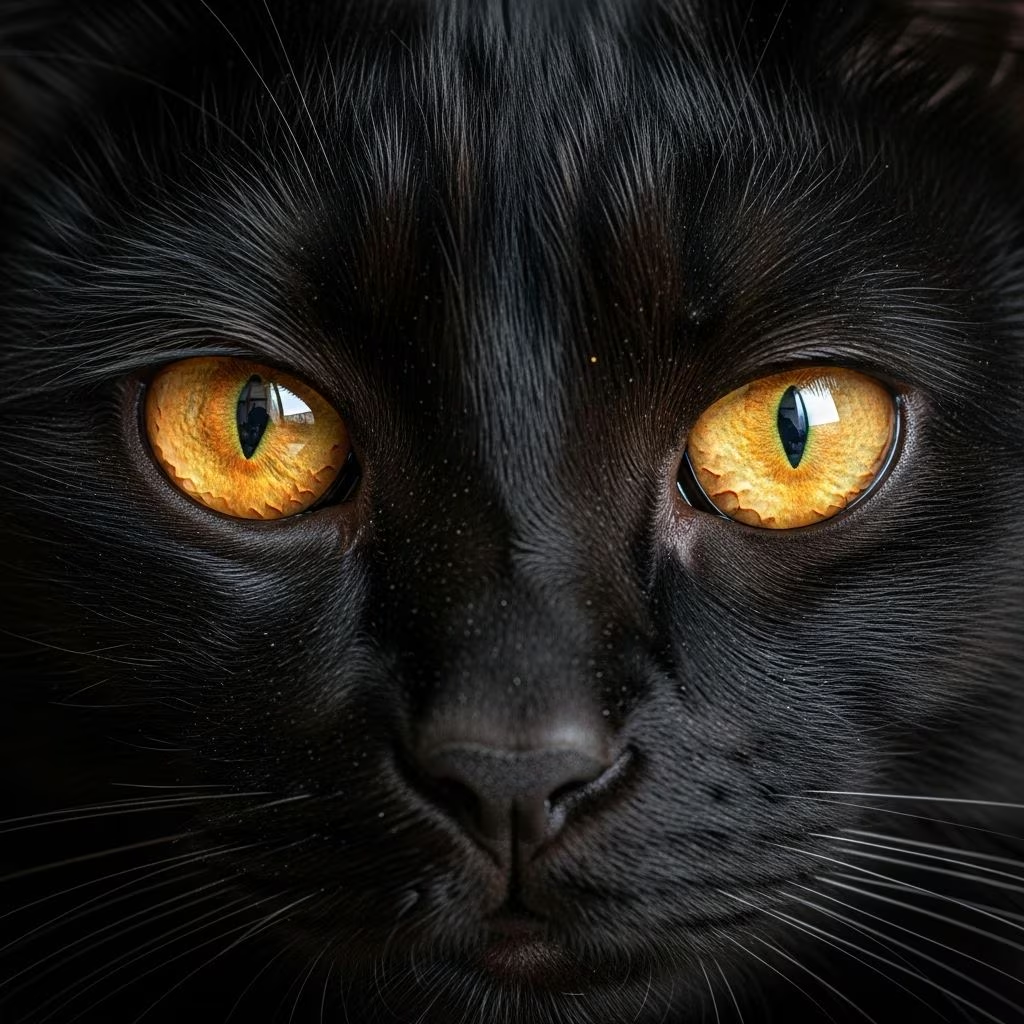
Black cats with vibrant orange eyes captivate many pet owners due to their striking contrast. This unique combination arises from feline genetics, where melanin production influences both coat and iris pigmentation. All cats’ eye colors stem from the presence and activity of melanocytes in the iris, with higher concentrations yielding warmer hues like orange.
What Determines a Cat’s Eye & Coat Color?
Genetics govern a cat’s fur and eye coloration through specialized cells called **melanocytes**, which produce and store melanin—the pigment responsible for shades in skin, fur, and eyes. In the hair shaft, melanocytes create two main pigment types: **pheomelanin** (red-yellow) and **eumelanin** (black-brown). Black cats predominantly produce high levels of eumelanin, resulting in their signature dark coats.
The orange gene, located on the X chromosome (O locus), plays a key role. The dominant O allele promotes pheomelanin over eumelanin, preventing black and orange pigments from coexisting on the same chromosome. This sex-linked trait means males (XY) are either fully orange or non-orange, while females (XX) can be tortoiseshell (Oo), blending both.
For eye color, melanin accumulates in the iris’s two layers: the stroma (front) and posterior pigmented epithelium (back). Kittens are born with blue eyes as melanocytes activate around 6-12 weeks, finalizing the hue based on pigment density. Black cats with abundant melanocytes often display eyes ranging from amber to copper-orange.
What Causes Orange Eyes?
Orange eyes in black cats result from a substantial number of active melanocytes in the iris stroma. More melanocytes mean greater melanin deposition, shifting eye color from blue (no melanin, light scattering) to yellow, amber, or intense orange. Black cats, rich in eumelanin producers, frequently exhibit this warm spectrum.
The intensity depends on melanocyte activity: moderate levels yield glowing tangerine, while high activity produces deeper copper. Unlike blue-eyed cats with minimal stromal melanin, orange-eyed ones absorb light effectively, creating their fiery glow. Genetic factors like polygenes further refine this, as seen in breeds selectively bred for vivid iris tones.
Mutations at loci like TYR (tyrosinase gene) can alter pigmentation pathways, affecting both eyes and coats. For instance, the extension locus (E/e) influences amber shades in some breeds, lightening black to resemble cream while retaining original paw and nose colors.
What Cat Breeds Can Have Orange Eyes?
While orange eyes are rare across cats, certain breeds are predisposed due to standards emphasizing copper-gold irises. Here’s a breakdown:
- Bombay: The only all-black breed, Bombays always have copper or golden eyes, complementing their panther-like coats. Selective breeding ensures this vivid pairing.
- Turkish Van: Known for heterochromia (odd-eyed) and amber-orange eyes, alongside their colorpoint patterns on white bodies. Blue or mismatched eyes are also standard.
- British Shorthair: Often display copper-orange eyes, with breeders selecting for rich tones via polygenic traits.
- Burmese: Feature yellow-gold eyes from sepia (c^b) alleles at the TYR locus, producing low-contrast colorpoints.
These breeds highlight how targeted genetics amplify orange eye prevalence, even in dark-coated cats.
Is Coat Color Associated With Eye Color?
Coat and eye colors are linked but not strictly correlated, influenced by shared melanin pathways. Albino mutations yield white coats with blue eyes due to absent tyrosinase activity. Colorpoint cats (Siamese, Burmese) from TYR mutations show blue (Siamese, c^s) or gold (Burmese) eyes with darker extremities.
| Coat Type | Typical Eye Color | Genetic Basis |
|---|---|---|
| Black (high eumelanin) | Orange/Copper | Abundant melanocytes |
| White (W gene) | Blue (often deaf) | Dominant white overrides pigments |
| Colorpoint (Siamese) | Blue | TYR point allele (c^s) |
| Sepia (Burmese) | Yellow-Gold | TYR sepia allele (c^b) |
| Orange (O gene) | Orange matching fur | X-linked pheomelanin dominance |
White cats with the dominant W gene invariably have white coats; blue eyes correlate with 65-85% deafness risk, versus 17-22% for non-blue. Neurological ties in TYR mutations explain cross-eyes in colorpoints. The orange O gene boosts pheomelanin body-wide, often aligning fur and eye tones in tabbies.
Frequently Asked Questions (FAQs)
Can all black cats have orange eyes?
No, but many do due to high melanocyte counts. Eye shade varies from green-gold to deep orange based on genetics.
Why do kittens’ eyes change color?
Kittens start blue; melanocytes activate at 6-12 weeks, depositing melanin for permanent color.
Are orange-eyed black cats rare?
Orange is uncommon overall, but prevalent in breeds like Bombay. Genetics and breeding make it notable.
Do eye color and deafness link in black cats?
Not typically; links are stronger in white cats with blue eyes via W gene.
Final Thoughts
Black cats with orange eyes embody feline genetic beauty, driven by melanocytes and loci like O, B, and TYR. From Bombays’ copper gaze to Turkish Vans’ amber, these traits blend science and allure. Understanding this enhances appreciation for our enigmatic companions.
References
- The Science Behind Cat Colors and Genetics — Zoetis Petcare. 2023-05-15. https://www.zoetispetcare.com/blog/article/science-behind-cat-colors
- Cat Coat Genetics — Wikipedia (citing primary genetic studies). 2025-01-10. https://en.wikipedia.org/wiki/Cat_coat_genetics
- Why Do Some Black Cats Have Orange Eyes? Vet Approved Facts — Catster. 2024-08-20. https://www.catster.com/cat-health-care/why-do-some-black-cats-have-orange-eyes/
- Can Cats Have Orange Eyes? Genetics, Breeds, and Care Guide — WoPet. 2024-03-12. https://wopet.com/can-cats-have-orange-eyes/
- Cat Genetics 2.0: Colours — Laboratoire de génétique vétérinaire. 2023-11-05. https://labgenvet.ca/en/cat-genetics-2-0-colours/



