

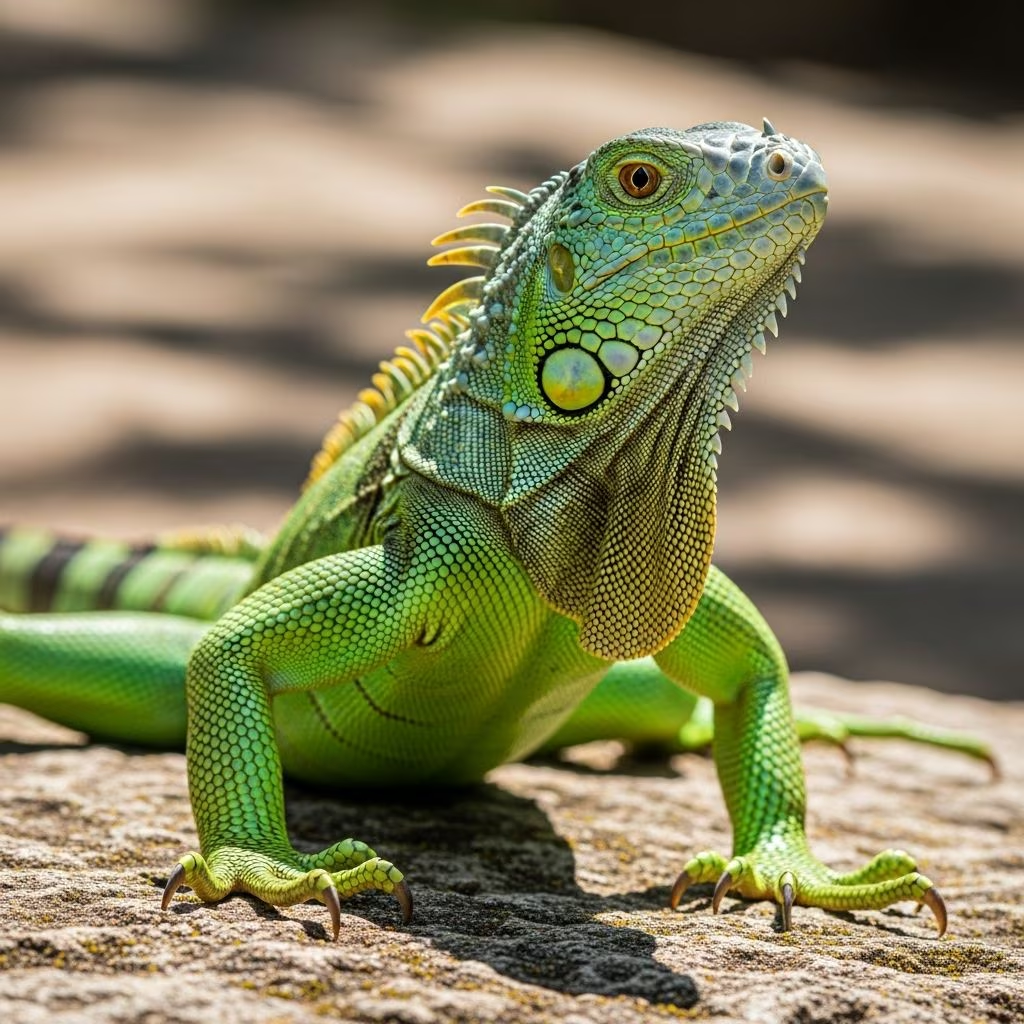
When you observe a lizard performing what appears to be push-ups, you’re witnessing one of nature’s most fascinating forms of communication. These reptiles aren’t simply exercising for fitness in the way humans do. Instead, their push-ups serve multiple critical functions in their daily survival, reproduction, and social interactions. Understanding this behavior provides valuable insight into the complex world of reptile communication and social dynamics.
Understanding Lizard Push-Ups
Lizards engage in push-ups by lowering the front of their body to the ground and lifting back up again, a motion that resembles the human exercise. However, the purpose and meaning behind these movements are far more sophisticated than simple physical exercise. Mark Pyle, a reptile educator and former president of the DFW Herpetological Society, explains that “lizards do push-ups for two main reasons: either because of a threat or a mating ritual.” This comprehensive behavior demonstrates the remarkable adaptability and communicative abilities of these reptiles.
What makes lizard push-ups particularly interesting is that they vary in speed, intensity, and style. Sometimes, lizards bob their heads or even alter the pace of their push-ups to convey different messages. Faster push-ups can tell other lizards to stay away from their territory, while a slower, relaxed pace might be a simple greeting or acknowledgment, such as “Hey, I see you watching me.” This variation in performance indicates that lizards have a nuanced communication system that allows them to express different intentions and emotional states.
Why Lizards Do Push-Ups
The motivations behind lizard push-ups are diverse and context-dependent. Each push-up performance tells a story about what the lizard is experiencing or trying to communicate. Understanding these reasons helps us appreciate the complexity of reptile behavior and the evolutionary advantages these displays provide.
Threat Display and Predator Awareness
One of the primary reasons lizards perform push-ups is to communicate with potential threats. In the same way that some animals let predators know they’ve been seen, lizards may be doing the same thing. According to reptile experts, they’ll even do push-ups as a threat display for people. This behavior serves a practical purpose: it makes the lizard appear larger and more intimidating to potential predators.
By performing push-ups, lizards essentially signal to predators that they are aware of being watched and are prepared to defend themselves. This confrontational display can discourage a predator from pursuing the lizard, potentially saving its life. The strategy works because many predators prefer to target prey that appears weak or unaware, so demonstrating alertness and physical capability makes a lizard a less attractive target.
Displaying Strength and Fitness
Lizards want to look as big and impressive as possible because it helps avoid confrontations, provides them with time to escape a predator, and shows females that they’re strong and healthy. When a male lizard performs push-ups, he’s essentially showcasing his physical condition and ability to survive and reproduce. As researchers have noted, if a lizard can perform many push-ups, it demonstrates that the individual is in prime physical condition. These displays of strength help avert actual physical confrontations between male lizards, which can be very fierce and destructive.
The impressiveness of push-ups relates directly to the lizard’s overall health status. A strong, well-nourished lizard can perform more vigorous and frequent push-ups than a weaker individual. This visual demonstration provides reliable information to other lizards about the performer’s fitness level without requiring actual combat.
Territory and Dominance Establishment
Push-ups play a crucial role in establishing and maintaining social hierarchies among lizards. Male lizards use push-ups to intimidate other males and carve out large territories where several females live. If another lizard ignores their push-ups, that polite conversation can escalate to head bobbing, more aggressive posturing, and sometimes a full-on fight.
Females also carve out territory and defend it from other lizards so they can have a safe area to lay their eggs. However, it’s usually a smaller chunk of land than the males defend. The territorial push-up display serves as a non-violent communication tool that allows lizards to establish boundaries without engaging in potentially injurious physical combat.
When you observe a lizard in the distance that’s doing push-ups, it’s worth noting where he’s looking. Wherever he’s directing his attention, there’s probably another lizard sitting right over there. This visual scanning during push-ups indicates that the lizard is communicating with specific rivals or potential mates in his environment.
Mating Behavior and Attraction
During mating season, push-ups take on additional significance as a courtship display. Male lizards use push-ups to attract potential mates by demonstrating their strength and vigor. Some species also add colorful accents during mating season. Males adjust their body position to show off their seasonal colors while they perform push-ups, and they make other motions to attract a mate.
It isn’t only the males communicating mating interest with push-ups; females will sometimes perform push-ups to let nearby males know they’re looking for a mate. When it comes to finding a mate, strength and health matter significantly. To get the best chance at finding and attracting a mate, males work hard to impress potential partners. In some species, the faster and stronger a lizard’s push-ups are, the more impressive they appear to potential mates.
The push-ups during courtship serve as an honest signal of reproductive fitness. A male capable of performing vigorous, sustained push-ups demonstrates that he possesses the physical resources and genetic quality that females seek in a mate. This behavior helps ensure that offspring will inherit favorable traits from their father.
Push-Ups with Multiple Purposes
Although lizards look like they’re working out, their push-ups have specific purposes. Whether they’re trying to attract a mate, defending their territory, or warning potential threats, push-ups and other body language form a vital part of their communication system. The nuance and flexibility of this behavior highlight the intelligence and adaptability of reptiles.
Communication Through Body Language
Push-ups represent just one component of a complex communication system that includes head bobbing, color changes, tail movements, and posturing. Even subtle differences in push-up performance can communicate different messages. Some lizards may perform slow, deliberate push-ups that convey calm confidence, while others perform rapid, aggressive push-ups that signal territorial aggression.
Species-Specific Variations
Each type of lizard has their own style, speed, and reason for doing push-ups, making the behavior as unique as it is fascinating. What might mean territorial aggression in one species could mean courtship in another. This variation reflects each species’ unique evolutionary history and ecological niche.
Thermoregulation and Physical Function
Beyond communication, push-ups serve important physiological functions for lizards. As ectothermic animals, lizards cannot generate their own body heat and must rely on environmental sources to regulate their temperature. A lizard doing push-ups may be trying to cool down by lifting its body above the hot surface, thereby increasing airflow around their abdomen.
Conversely, when needing to warm up, lizards press their bodies close to the ground to absorb heat more effectively. The muscles used during push-ups also generate metabolic heat, which can be beneficial during cooler periods of the day or year. This dual function—communication and thermoregulation—represents an elegant evolutionary solution where one behavior serves multiple purposes simultaneously.
Reading the Subtle Signals
Understanding lizard push-ups requires attention to the subtle variations in their performance. The pace, intensity, duration, and context of push-ups all contribute to their meaning. A lizard that’s slowly and calmly doing push-ups while looking at another lizard might be saying “I acknowledge you, but I’m not threatened.” The same lizard doing rapid, aggressive push-ups might be assertively declaring territory.
Color changes accompanying push-ups add another layer of communication. Males in breeding condition often display brighter colors during their push-up displays. The combination of movement and color enhancement creates a more compelling advertisement of fitness and reproductive value.
Frequently Asked Questions
Q: Why do some lizards do push-ups faster than others?
A: The speed of push-ups conveys different messages and may reflect the lizard’s motivational state. Faster push-ups typically indicate territorial aggression, warning other lizards to stay away. Slower, more relaxed push-ups might represent a casual greeting or acknowledgment. Additionally, a lizard’s physical condition affects its ability to perform rapid push-ups, so speed can communicate fitness levels.
Q: Do female lizards do push-ups as well as males?
A: Yes, female lizards do perform push-ups, though often for different reasons than males. Females use push-ups to defend territory where they can safely lay eggs and to signal mating interest during breeding season. However, males tend to perform push-ups more frequently and intensely as part of their competitive territorial and mating strategies.
Q: Can I tell what a lizard is thinking by its push-ups?
A: While you may not always know precisely why a lizard is doing push-ups, the lizards know! The context, speed, direction of gaze, and accompanying behaviors all provide clues about the lizard’s intentions. Observing these subtle differences helps you understand whether a lizard is being territorial, courtship-seeking, thermoregulating, or responding to a perceived threat.
Q: How do push-ups help with temperature regulation?
A: By lifting their bodies off the ground during push-ups, lizards increase air circulation around their abdomen, which helps them cool down during hot conditions. When they need to warm up, they press their bodies close to the ground to absorb heat. The muscle contractions during push-ups also generate metabolic heat, providing warmth during cooler periods.
Q: Do all lizard species do push-ups?
A: While most lizards engage in some form of push-up-like behavior, the frequency, style, and specific purpose can vary significantly between species. Some species may emphasize head bobbing over vertical push-ups, while others have developed unique variations suited to their specific ecological needs and social structures.
Q: What should I do if my pet lizard is constantly doing push-ups?
A: Constant push-ups could indicate several things: territorial stress, attempt to regulate body temperature due to improper environmental conditions, or mating-related behavior. Check that your lizard’s enclosure provides appropriate temperature gradients, adequate space for territorial expression, and proper lighting. If the behavior persists or seems excessive, consult a reptile veterinarian to rule out health issues.
References
- Why do lizards do push-ups? This bizarre behavior explained — A-Z Animals. 2024. https://a-z-animals.com/blog/why-do-lizards-do-pushups-this-bzarre-behavior-explained/
- Why Do Lizards Do Push-Ups? — Chewy Education. 2024. https://www.chewy.com/education/reptile-and-amphibian/training-and-behavior/why-do-lizards-do-push-ups
- Why Do Lizards Do Push-Ups? — Paws and Claws Animal Center. 2024. https://pawsandclawsanimalcenter.com/blog/lizards-do-push-ups/
- Why Do Lizards Do Push-Ups? — Live Science. https://www.livescience.com/32192-why-do-lizards-do-push-ups.html
- Wild Kids – Lizard Aerobics — Arizona Game and Fish Department. 2021. https://www.azgfd.com/wp-content/uploads/2021/11/WildKids_7_lizardaerobics.pdf
- Natural parasites in conjunction with behavioral and color traits in male Psammodromus algirus — National Center for Biotechnology Information (NCBI). 2024. https://pmc.ncbi.nlm.nih.gov/articles/PMC10926264/
- Lizard Push-ups and Jumping Spiders — Ask A Biologist, Arizona State University. https://askabiologist.asu.edu/listen-watch/lizard-push-ups-and-jumping-spiders



