

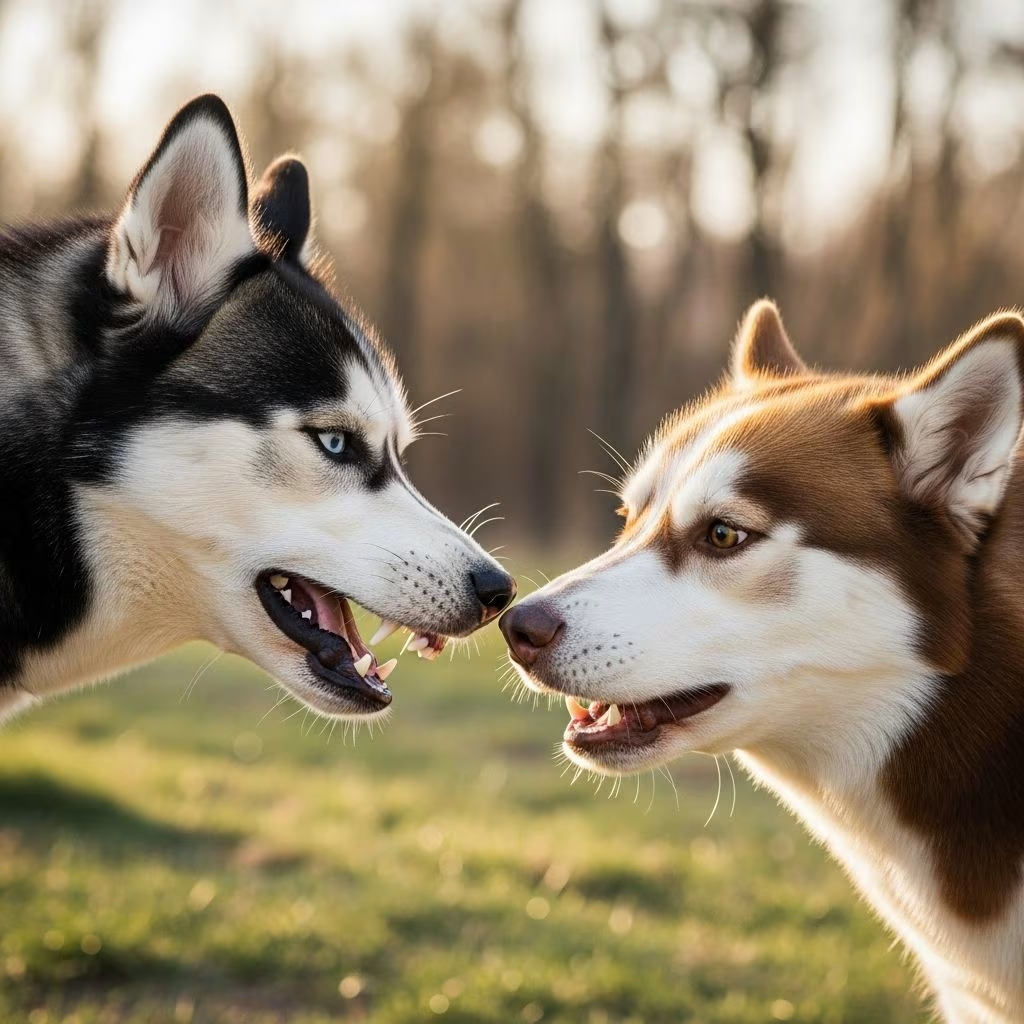
Siberian Huskies often appear to “argue” with their owners through vocalizations, stubbornness, or defensive posturing, but this behavior stems from their independent breeding history as sled dogs bred for endurance rather than blind obedience. These dramatic displays are frequently linked to resource guarding, jealousy, dominance, and a lack of clear leadership in the home.
What Does It Mean When Huskies “Argue”?
When Huskies “argue,” they typically vocalize loudly—through whines, howls, or talk-like grunts—refuse commands, stiffen their body, or even snap to assert control. This isn’t mere playfulness; it’s a sign the dog views itself as equal or superior in the household hierarchy. In multi-dog homes, this escalates to sibling rivalry where one Husky guards attention, toys, or space from others.
Owners report scenarios like their Husky blocking access to family members, lunging at newcomers, or snarling over an empty food bowl. These actions communicate, “This is mine,” treating humans and resources as possessions. Unlike affectionate protectiveness, this possessive behavior arises from an unbalanced relationship where the dog doesn’t recognize the owner as leader.
Common Causes of Husky Arguing
Husky arguing behaviors cluster around several key triggers. Understanding these helps target interventions effectively.
- Resource Guarding: Huskies guard food (even empty bowls), toys, furniture, or humans as high-value items. In nature, dominant pack members claim resources without challenge; domestic Huskies extend this to household dynamics.
- Jealousy and Possessiveness: Introducing a new person or dog sparks jealousy, as the Husky believes it “owns” the owner’s attention. This overlaps with resource guarding, where interlopers threaten their claim.
- Dominance and Control: Huskies dictate sleeping spots, door access, or movements of family members and other pets. They mount humans/dogs or mark territory with urine to assert dominance.
- Fear or Anxiety: Fear triggers automatic aggression, especially if the dog feels cornered or overwhelmed. In sibling rivalry, anxious dogs misread signals and escalate conflicts.
- Context-Dependent Rivalry: One dog may defer during feeding but challenge for attention, confusing hierarchies. Owner interventions trying to “make it fair” worsen issues by encouraging challenges.
Young, intact Huskies amplify these due to hormones, poor diet (high carbs/preservatives), or insufficient leadership from owners.
Signs Your Husky Is Arguing Due to Dominance
| Behavior | Description | Why It’s Dominant |
|---|---|---|
| Snarling/Snapping at Approaches | Lunges or snaps when others near owner/food/toys | Guards perceived property; believes it ranks higher |
| Body Blocking | Positions between owner and others | Controls access, dictating household flow |
| Refusal to Move/Comply | Ignores cues, stiffens, or pulls away | Challenges authority, testing leadership |
| Territorial Marking | Urine/feces indoors or excessive outdoor marking | Claims space as personal territory |
| Mounting | Mounts family members or dogs | Dominance display, irrelevant to reproduction |
If your Husky shows multiple signs, it’s likely a “furry dictator” enforcing its rules. Single instances in puppies are normal learning phases, but persistence signals deeper issues.
How to Stop Your Husky from Arguing
Correction requires reestablishing leadership, preventing triggers, and using reward-based training. Never punish mid-aggression, as it heightens fear; focus on prevention and consistency.
Step 1: Establish Strong Leadership
Huskies need owners who demonstrate calm authority. Step up by controlling resources: feed, walk, and play on your terms. Use verbal cues like “settle” for calm behavior, rewarding compliance.
- Enter doorways first.
- Eat before feeding the dog.
- Ignore demands for attention until calm.
Step 2: Address Resource Guarding
Trade-up method: Approach with higher-value treats to teach guarding isn’t necessary. For food/toys, remove calmly and return with praise. Never force removal, which escalates fear.
Step 3: Manage Sibling Rivalry
Identify the assertive vs. subordinate dog. Provide resources to the confident one first; make the other wait and defer. Use leashes, crates, or baby gates for controlled interactions. Teach settle commands separately.
- Supervise all multi-dog play.
- Use head halters/muzzles for safety during retraining.
- Countercondition assertive dog to relax during subordinate’s attention time.
Step 4: Daily Exercise and Enrichment
Huskies argue more when understimulated. Provide 1-2 hours of vigorous exercise daily (runs, hikes) plus mental puzzles. Fatigue reduces dominance displays.
Step 5: Diet and Health Check
Switch to high-protein, low-carb diets without dyes/preservatives. Spay/neuter if intact to curb hormone-driven behaviors. Consult vets for underlying anxiety.
If progress stalls, professional trainers or behaviorists are essential—especially for bites or severe cases.
Training Tips for a Non-Arguing Husky
- Consistency is Key: All family members enforce rules uniformly.
- Reward-Based Only: Positive reinforcement builds trust; punishment erodes it.
- Desensitize Triggers: Gradually expose to stressors (e.g., new people) with treats.
- Use Tools: Leashes, crates, head halters for control without force.
- Monitor Progress: Track incidents; adjust if no improvement in 2-4 weeks.
Why Huskies Are Prone to Arguing
Bred for Arctic sledding, Huskies prioritize pack survival over human deference. Their intelligence leads to manipulation if leadership lacks. Myths of innate aggression are false; it’s mismanagement. Proper handling yields loyal, fun companions.
Frequently Asked Questions (FAQs)
Q: Are Huskies naturally aggressive?
A: No, Huskies aren’t inherently aggressive. Perceived aggression stems from dominance, guarding, or poor training, not breed viciousness.
Q: How do I know if my Husky is resource guarding me?
A: Signs include blocking access to you, snarling at others approaching, or stiffening when you pet another pet/person.
Q: Can sibling rivalry be fixed in adult Huskies?
A: Yes, with strict management, training, and leadership. Severe cases may need separation or rehoming.
Q: How much exercise stops Husky arguing?
A: At least 60-120 minutes of high-intensity activity daily, plus mental stimulation.
Q: Should I punish a growling Husky?
A: No—punishment increases fear-aggression. Redirect and prevent instead.
Q: Does neutering fix possessive behavior?
A: It helps hormone-driven issues but won’t address learned dominance; combine with training.
References
- The Jealous, Over-Protective and Possessive Husky — Snowdog Guru. Accessed 2026. https://www.snowdog.guru/the-jealous-over-protective-and-possessive-husky/
- Dog Behavior Problems – Aggression – Sibling Rivalry – Treatment — VCA Animal Hospitals. Accessed 2026. https://vcahospitals.com/know-your-pet/dog-behavior-problems-aggression-sibling-rivalry-treatment



