

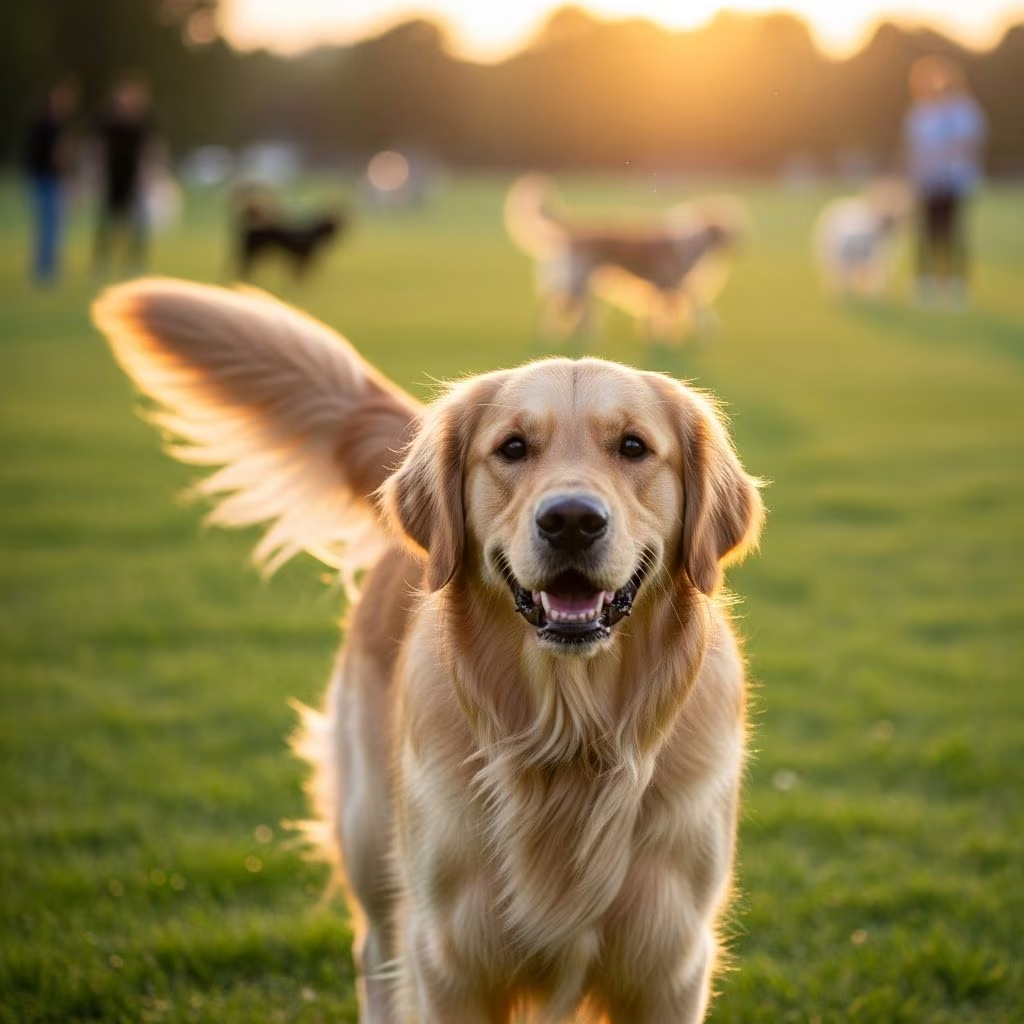
Why Do Dogs Wag Their Tails? Understanding Canine Communication
One of the most recognizable behaviors in dogs is tail wagging. From the gentle sway of a relaxed tail to the vigorous helicopter spin of an excited pup, a dog’s tail serves as a sophisticated communication tool that reveals their emotional state and intentions. While many people assume a wagging tail automatically means a happy dog, the reality is far more nuanced. A wagging tail can indicate excitement, fear, submission, aggression, or emotional conflict, depending on various factors including tail position, speed, and direction of the wag.
Understanding what your dog’s tail movements mean is crucial for safe and effective communication with your pet. It helps you recognize when your dog is comfortable, anxious, or potentially aggressive, allowing you to respond appropriately to their needs. Learning to read tail wags is an essential part of responsible dog ownership and can help prevent misunderstandings that might lead to unnecessary stress or conflict.
The Basics of Tail Communication
At its core, a wagging tail simply means your dog is responding to something in their environment. However, not all tail wags are created equal, and interpreting them correctly requires understanding two key factors: tail position and the speed of the wag.
Think of your dog’s tail as their version of human speech. The position of the tail can be thought of as the actual words they’re communicating, representing their general mood and emotional state. The speed of the wag functions like the volume and intensity of their voice—the faster the wag, the more intense their emotion, whether positive or negative.
This dual-factor system explains why a rapidly wagging tail doesn’t automatically indicate happiness. A dog wagging their tail very quickly while holding it low between their legs is expressing fear and anxiety, not joy. Conversely, a dog with a slowly wagging tail held in a neutral position might be expressing uncertainty or tentative interest rather than enthusiasm.
Tail Position and What It Reveals
The vertical position of a dog’s tail provides crucial information about their emotional state and intentions. Different positions indicate distinct emotional responses:
Neutral Tail Position
A tail held parallel to the ground or in a neutral position typically indicates a relaxed, comfortable dog. When combined with moderate-speed, full, sweeping side-to-side wagging movements, this position suggests the dog is approaching with positive intentions and is interested in friendly social interaction. A neutral tail position is your green light that the dog is feeling good.
Raised or High Tail Position
When a dog’s tail is raised higher than the neutral position, especially held vertically or arching over the back, it often indicates preparedness, alertness, or arousal. Dogs stand with their ears up and tails raised when they are alert and ready to confront whatever caught their attention. However, a high tail position can also indicate increased excitement in a positive context or assertive engagement in a potentially negative one.
Low or Tucked Tail Position
A tail held low or tucked tightly between the legs typically communicates fear, submission, or anxiety. This position represents a dog’s intention to maintain a submissive role in an interaction and effectively communicates “I’m no threat.” A tightly tucked, low tail can also occur when a dog is fearful and attempting to protect themselves. When a dog’s tail is tucked and they’re wagging only the tip in a tight, fast motion, they are expressing a fear response and seeking to pacify whoever they perceive as a threat.
Wagging Speed: The Intensity Indicator
The speed at which a dog wags their tail directly correlates with the intensity of their emotions. Understanding these speed variations helps you gauge how strongly your dog is feeling:
Fast or Rapid Wagging
Rapid tail wagging indicates high excitement and strong arousal. When dogs are eager for an interaction, they may wag their tails quickly, typically in a neutral or high position, communicating enthusiasm and positive anticipation. However, dogs that are fearful may also wag their tails rapidly, typically in a low position, expressing anxiety and distress. This is why assessing the tail position alongside the speed is critical for accurate interpretation.
Moderate Wagging
A moderate-speed wag combined with a neutral tail position and full, sweeping movements suggests relaxation and positive social interest. This is the classic “friendly” wag that indicates your dog is comfortable and wants to engage.
Slow or Tentative Wagging
When dogs are tentative or insecure about meeting a new person or another dog, they may wag their tails very slowly or with only slight movements. A slow wag often indicates the dog is taking a “wait and see” approach, uncertain about whether to proceed with the interaction. This tentative wag might also signal emotional conflict, where a dog is uncertain about continuing an interaction.
The Pause: No Wagging
When a dog suddenly stops wagging their tail and freezes with a stiff body, this often represents an attempt to pause or discontinue an interaction. Many dogs do this when petted by strangers to communicate that they no longer want to interact with them. This pause is not a sign of happiness—it’s a boundary-setting behavior that shouldn’t be ignored.
Special Tail Wag Patterns
The Helicopter Tail
One particularly distinctive wag pattern is the “helicopter tail” or “circle wag,” where the tail moves in circular motions rather than side-to-side. This wag is normally reserved for people your dog knows well and for close canine friends, usually indicating excitement and particularly social feelings. If you’re receiving the helicopter tail, your dog is really pleased to see you and expressing their joy through this exuberant movement. However, it’s important to note that some dogs can also display a helicopter tail when feeling anxious, aroused, or agitated, so context matters.
Focused Scent Tracking Tail
Some dogs tend to move their tails from side to side rapidly when focusing intently on a scent. You might observe this in your own dog if they’re searching for a hidden toy or have picked up an interesting smell to track. This movement doesn’t serve to communicate to others; it’s thought to be a sign of extreme concentration, much like when humans push their tongues out while concentrating hard.
Right-Sided vs. Left-Sided Tail Wagging
Scientific research has revealed a fascinating asymmetry in dog tail wagging that directly correlates with emotional valence. Dogs wag their tails slightly to the right when expressing positive emotions, and slightly to the left when experiencing negative emotions.
This difference has a neurological basis: the left side of the brain controls movement on the right side of the body and vice versa. The left brain is associated with positive feelings like love and serenity, so when a dog is happy, the left hemisphere activation causes the tail to wag to the right. Conversely, the right hemisphere is associated with negative feelings like fear and depression, so a frightened dog’s tail wags to the left due to right hemisphere activation.
Dogs wagging their tails slightly to the right tend to be friendlier and exhibit other behaviors indicating a willingness to interact socially. Dogs wagging their tails slightly to the left tend to be more stressed or anxious and exhibit avoidance or escape tendencies when presented with social opportunities. Some research even suggests that a dog may wag slightly to the right when recognizing a familiar person or dog, indicating a wag of recognition.
Interpreting Common Tail Wag Scenarios
Happy and Friendly Engagement
When a dog is expressing happiness or friendliness, their tail is typically in a neutral position or slightly upward, wagging at a moderate speed with relaxed, full, sweeping side-to-side movements. The overall body posture will be loose and relaxed, and the dog will be approaching you with an open demeanor. This is the tail wag most people recognize as the classic “happy dog” expression.
Fear and Submission
If a dog has their tail tucked tightly between their legs and is wagging the tip in a tight, fast motion, they are experiencing a fear response and seeking to pacify the person or dog they perceive as a threat. Many dogs show signs of submission when scared as a survival strategy. The rapid tip wagging is essentially the dog saying, “Please don’t hurt me!” If you observe this sign, it’s best to stop approaching or interacting with the dog and give them space to feel safe.
Aggressive or Threatening Behavior
A dog moving closer to exhibiting aggressive behavior will move their tail into a vertical position that often arches over their back. The tail becomes very stiff and may or may not be moving, or may move with tight, rapid movements. This position indicates the dog is preparing for an interaction that involves aggressive or confrontational behaviors. The tighter and faster the tail movement, the more agitated the dog is. An upright, high tail position may also aid in the release of pheromones from the anal sacs, further strengthening this aggressive communication.
Alertness and Attention
When dogs are alert and watching something intently, they stand with their ears up and tails raised in a preparedness posture. This indicates they are focused on whatever caught their attention and are ready to respond. The tail movement in this context signals alertness rather than emotion.
Why a Wagging Tail Doesn’t Always Mean a Happy Dog
One of the most dangerous misconceptions about dog body language is that a wagging tail automatically means a happy, friendly dog. This myth has led to numerous unnecessary incidents and bites, especially involving children who approach wagging dogs without understanding the full context of the wag.
Research consistently shows that tail wagging is frequently associated with both positive and negative arousal. A wagging tail can indicate increased arousal, which could represent pleasure or distress. Many dog bites occur when people misinterpret a wag as friendliness when the dog is actually expressing anxiety or warning signs.
Tail wags are often misinterpreted to mean that a dog is “friendly” and wants to engage, when the dog may actually be trying their best to find a way to end the interaction. Some dogs wag their tails rapidly as a reflection of emotional conflict and discomfort. When combined with other body language signals like stiff posture, whale eye (showing the whites of their eyes), or ears pulled back, a wagging tail indicates a stressed or anxious dog, not a welcoming one.
This miscommunication can sometimes end with physical confrontations such as snaps or bites. Learning to recognize the full picture of canine body language—not just the tail wag—is essential for safe interactions with dogs.
Dogs Wag for Non-Social Reasons Too
While tail wagging is often associated with social communication, dogs also wag their tails in response to non-social stimuli. Dogs frequently wag their tails in response to food, fans, plastic bags, and other objects, with tail wagging in these situations thought to indicate positive emotions and/or high arousal, but not fear or stress. This type of wagging demonstrates that tail movement is a general arousal response, not exclusively a social communication tool.
Reading the Complete Body Language Picture
It’s crucial to remember that no single body part tells the complete story about your dog’s emotional state. A tail wag must be interpreted in context with other body language signals including:
– Ear position (forward, back, or sideways)
– Eye appearance (soft, hard stare, whale eye)
– Mouth position (open, closed, pulled back, lips curled)
– Body posture (relaxed, stiff, leaning forward or backward)
– Overall muscle tension
– The situation and what’s happening around the dog
A dog may wag their tail while simultaneously displaying tense muscles, stiff ears, and a hard stare—this is not a friendly dog. Conversely, a dog with a wagging tail, soft eyes, relaxed ears, and an open mouth is expressing genuine friendliness. Always consider the complete package before determining what a dog is communicating.
Frequently Asked Questions
Q: Does a wagging tail always mean my dog is happy?
A: No. While a wagging tail can indicate happiness, it can also indicate fear, anxiety, arousal, or emotional conflict. The position and speed of the wag, combined with other body language signals, provide the true meaning.
Q: What does it mean if my dog’s tail wags to the left?
A: A left-sided tail wag typically indicates negative emotions such as fear, anxiety, or stress. This is due to right hemisphere brain activation, which is associated with withdrawal and negative feelings.
Q: Is a helicopter tail always a sign of happiness?
A: The helicopter tail (circular motion) usually indicates excitement and positive social feelings, especially with familiar people or dogs. However, some dogs may display this pattern when feeling anxious or agitated, so look at the complete body language picture.
Q: What should I do if a dog’s tail is tucked between their legs?
A: A tucked tail indicates fear or submission. Stop approaching or interacting with the dog and give them space. Forcing interaction could result in defensive behavior or biting.
Q: Can a rapidly wagging tail indicate fear?
A: Yes. Rapid wagging combined with a low, tucked tail position indicates fear and anxiety, not happiness. Speed indicates intensity of emotion, not necessarily the type of emotion.
References
- Why Do Dogs Wag Their Tails? — PetMD. 2024. https://www.petmd.com/dog/behavior/why-do-dogs-wag-their-tails
- Interpreting Tail Wags in Dogs — Humane Society of Missouri. https://hsmo.org/portfolio-item/interpreting-tail-wags-in-dogs/
- Interpreting Tail Wags in Dogs — VCA Animal Hospitals. https://vcahospitals.com/know-your-pet/interpreting-tail-wags-in-dogs
- Why do dogs wag their tails? — National Center for Biotechnology Information (NCBI/NIH). 2024. https://pmc.ncbi.nlm.nih.gov/articles/PMC10792393/
- Why Do Dogs Wag Their Tails? — Blue Cross. https://www.bluecross.org.uk/advice/dog/why-do-dogs-wag-their-tails



