

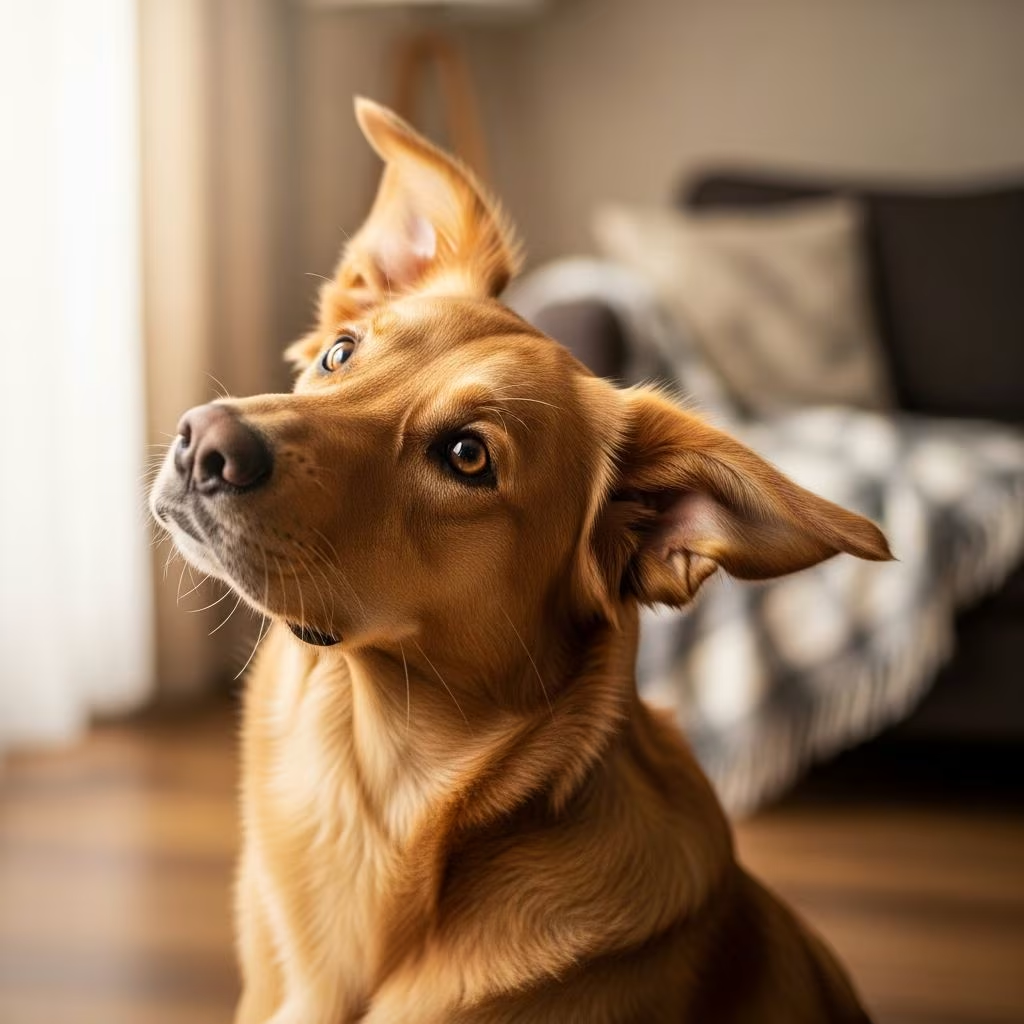
Why Do Dogs Tilt Their Heads: Understanding Your Dog’s Cutest Behavior
One of the most endearing behaviors dog owners witness is the classic head tilt. Whether your dog is responding to your voice, hearing an interesting sound, or simply observing something unusual, that adorable sideways head movement has captured hearts and sparked countless social media posts. But beyond the cuteness factor, this behavior has legitimate scientific explanations rooted in canine physiology, cognition, and health. Understanding why dogs tilt their heads can deepen your appreciation for your furry companion and help you recognize when this behavior might indicate a health concern.
The Science of Sound Detection and Acoustic Optimization
One of the primary reasons dogs tilt their heads relates to how they process sound. Dogs have superior hearing capabilities compared to humans, but their ear structure presents unique challenges that head tilting helps overcome. When a dog tilts its head, it’s optimizing the position of its ears to better capture and localize sounds from their environment.
Different dog breeds face varying acoustic challenges based on their ear structure. German Shepherds, for example, have ear flaps that cover only the back side of the ear canal, which can limit sound detection from the rear. Conversely, Cocker Spaniels have heavy ear flaps that cover their entire ear canals, potentially interfering with sound wave transmission from multiple directions. By tilting their heads, dogs compensate for these anatomical limitations and improve their ability to pinpoint sound sources accurately.
Research has demonstrated that when a dog tilts its head, it processes sound differently depending on the direction of the tilt. A tilt with the left ear positioned centrally sends auditory signals to the brain’s right hemisphere, while a right tilt directs signals to the left hemisphere. Additionally, studies show that dogs process segmental phonemic information from speech primarily in the left hemisphere, while voices lacking phonemic clues are processed in the right hemisphere. This sophisticated neurological response suggests that head tilting is an active strategy for optimizing auditory processing rather than a random or purely learned behavior.
Improving Vision and Visual Processing
Another significant explanation for head tilting relates to a dog’s facial structure and vision limitations. Dogs possess longer snouts than humans, which can sometimes obstruct their field of vision, particularly when trying to focus on objects or people directly in front of them. By tilting their heads, dogs can maneuver around their snout to achieve a better visual angle on whatever has captured their attention.
This behavioral adaptation is especially noticeable when dogs are trying to examine something closely or when they’re responding to their owners’ facial expressions and gestures. The head tilt allows them to reposition their eyes in a way that provides clearer visual information about the subject of their interest, whether it’s a toy, a treat, or a family member’s face.
Cognitive Processing and Word Recognition
Beyond sensory optimization, head tilting appears to play a role in cognitive processing and mental effort. A groundbreaking 2021 study published in Animal Cognition revealed fascinating insights into the connection between head tilting and canine cognition. Researchers found that dogs considered gifted word learners—those capable of linking specific words to particular objects—tilted their heads significantly more often when responding to spoken words they recognized compared to dogs without such verbal abilities.
This discovery suggests that head tilting may be associated with concentration and cognitive effort as dogs work to recognize, process, and respond to words they’ve learned. The behavior appears to be an outward manifestation of intense mental processing, similar to how humans might furrow their brow or tilt their own heads when concentrating on a challenging problem. This indicates that your dog’s head tilt might be a sign of active thinking and engagement with their environment.
The Role of Positive Reinforcement
Another key factor influencing head tilting behavior is positive reinforcement. Dogs are remarkably social animals that are keenly aware of how their behaviors affect their owners’ responses. When a dog discovers that tilting its head elicits positive reactions—such as laughter, treats, verbal praise, or increased attention—they may deliberately repeat the behavior more frequently.
This learned component of head tilting is particularly important to understand because it explains why some dogs tilt their heads more often than others. If your dog has received positive reinforcement for head tilting in the past, they may have incorporated it into their behavioral repertoire as a way to engage with you and secure your affection and attention. This doesn’t diminish the biological basis for the behavior; rather, it highlights how dogs can combine instinctive actions with learned social strategies.
When Head Tilting Indicates Medical Concerns
While occasional head tilting is typically a normal, benign behavior, persistent or sudden head tilting can indicate underlying medical issues that require veterinary attention. It’s crucial for dog owners to distinguish between playful head tilting and behavior that signals a health problem.
Vestibular Disease
The most common medical cause of persistent head tilting is vestibular disease, a condition affecting the vestibular system in the inner ear and its connections to the brain. The vestibular apparatus is responsible for maintaining balance, spatial orientation, and coordinating eye movements. When this system malfunctions, dogs often display a characteristic head tilt accompanied by other symptoms.
Vestibular disease is categorized into two types: peripheral vestibular disease, which originates in the inner ear and surrounding structures, and central vestibular disease, which involves the brain or brainstem. Peripheral vestibular disease is more common and generally carries a better prognosis. Idiopathic vestibular disease, also known as “old dog vestibular disease,” is particularly prevalent in senior dogs aged 10-12 years, affecting approximately 39% of vestibular disease cases in dogs.
Ear Infections
Ear infections represent one of the most frequently encountered causes of head tilting in dogs. The inner ear plays a critical role in balance maintenance, and when inflammation or infection affects this area, it can cause dizziness and difficulty holding the head straight. Additional symptoms of ear infections typically include frequent head shaking, scratching at the affected ear, a foul odor emanating from the ear, redness or swelling inside the ear, and discharge or pus.
Ear infections can be caused by bacterial, parasitic, or fungal organisms. Additionally, certain medications and ear cleaning solutions can damage the ear canal. Antibiotics containing aminoglycosides and ear washes with chlorhexidine have been documented as potential causes of ear damage leading to head tilting.
Additional Medical Causes
Several other medical conditions can result in head tilting behavior:
- Hypothyroidism: When the thyroid gland fails to produce adequate thyroid hormone, metabolism slows and peripheral vestibular syndrome can develop, causing head tilting.
- Nutritional Deficiencies: Deficiencies in essential nutrients, such as thiamine (vitamin B1), can cause neurological symptoms including head tilting.
- Neurological Conditions: Serious conditions such as brain tumors, head trauma, or stroke can cause unintentional head tilting as a symptom of underlying neurological damage.
- Toxicity: Exposure to certain toxins, including specific medications like metronidazole, toxic foods, plants, or chemicals like pesticides, can affect the nervous system and cause disorientation and head tilting.
Recognizing Abnormal Head Tilting Behavior
Understanding the distinction between normal and abnormal head tilting is essential for responsible pet ownership. Normal head tilting is typically occasional, occurs in response to specific stimuli (like hearing your voice), and is unaccompanied by other symptoms. The dog maintains normal balance, coordination, and overall behavior.
By contrast, abnormal head tilting that warrants veterinary evaluation may present with the following characteristics:
- Persistent or continuous head tilting
- Sudden onset of head tilting without prior history
- Accompanied by abnormal eye movements (nystagmus—rapid darting or rotating of the eyes)
- Associated with loss of balance, circling, or difficulty walking
- Combined with other neurological signs such as stumbling or rolling
- Accompanied by signs of nausea, including drooling, vomiting, or lack of appetite
- Present along with ear-related symptoms like scratching, discharge, or odor
When to Contact Your Veterinarian
If your dog displays sudden onset head tilting, especially if accompanied by any of the symptoms mentioned above, schedule a veterinary appointment promptly. Your veterinarian will perform a comprehensive neurological examination, including postural reaction testing and cranial nerve assessment, to determine whether the head tilting originates from a peripheral or central source. Additional diagnostics may include ear examination, blood work, and imaging studies depending on the veterinarian’s findings.
The prognosis for head tilting depends significantly on the underlying cause. Peripheral vestibular disorders, which are more common, typically have a more favorable prognosis than central vestibular disease. Early diagnosis and appropriate treatment can often resolve the issue or significantly improve your dog’s quality of life.
Frequently Asked Questions
Q: Is my dog’s head tilting always cute and harmless?
A: While occasional head tilting is typically normal and harmless, persistent or sudden head tilting can indicate medical issues. Monitor for accompanying symptoms and consult your veterinarian if the behavior changes significantly or is accompanied by other concerning signs.
Q: Do all dogs tilt their heads?
A: Not all dogs tilt their heads regularly. Some breeds and individual dogs may engage in this behavior more frequently than others, depending on their ear structure, learned behaviors, and individual personalities.
Q: Can head tilting be trained or encouraged?
A: Yes, head tilting can be reinforced through positive reinforcement. If you reward your dog when they tilt their head, they may learn to repeat the behavior more often as a way to gain your attention and affection.
Q: What should I do if my dog suddenly starts tilting their head constantly?
A: A sudden change in head tilting behavior, especially if persistent, warrants a veterinary examination. This could indicate vestibular disease, ear infection, or other medical conditions requiring professional evaluation and treatment.
Q: How can I tell if my dog’s head tilt is a medical problem?
A: Medical head tilting is usually accompanied by additional symptoms such as loss of balance, abnormal eye movements, nausea, ear discharge, or behavioral changes. Normal head tilting occurs occasionally and in response to specific stimuli without other accompanying symptoms.
References
- Why Do Dogs Tilt Their Heads? — Wisdom Panel. 2024. https://www.wisdompanel.com/en-us/blog/why-do-dogs-tilt-their-heads
- Head Tilt in Dogs: A Clinical Approach — Today’s Veterinary Practice. 2024. https://todaysveterinarypractice.com/neurology/head-tilt-in-dogs-a-clinical-approach/
- Head Tilt in Dogs — PetMD. 2024. https://www.petmd.com/dog/symptoms/head-tilt-dogs
- Hey Dr. B, Why Does My Dog Suddenly Have a Head Tilt? — The Sage Pet. 2024. https://thesagepet.com/hey-dr-b-why-does-my-dog-suddenly-have-a-head-tilt/
- Why Dogs Tilt Their Heads — VCA Animal Hospitals. 2024. https://vcahospitals.com/know-your-pet/why-dogs-tilt-their-heads
- Head Tilt in Dogs – Signs, Causes, Diagnosis, Treatment, Recovery — Wag Walking. 2024. https://wagwalking.com/condition/head-tilt
- Why Do Dogs Tilt Their Heads? The Science Behind the Tilt — Oaks Veterinary Referral Specialists. 2024. https://www.ovrs.com/blog/why-do-dogs-tilt-their-heads-the-science-behind-the-tilt/



