

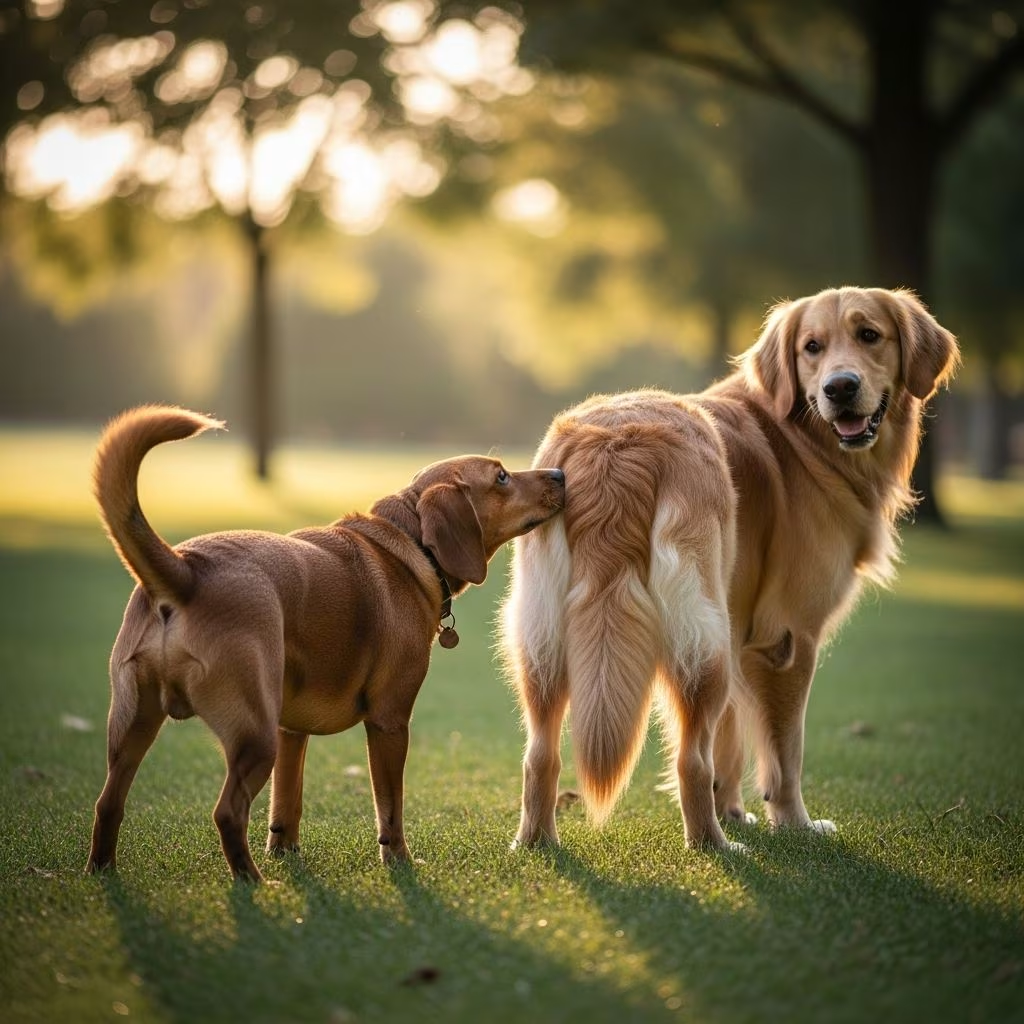
Dogs have an extraordinary sense of smell that far surpasses human capabilities, enabling them to gather a wealth of information from the anal glands of other dogs. This behavior, often embarrassing for owners in public, is a fundamental part of canine communication and social interaction. Through butt-sniffing, dogs identify individuals, assess health status, detect emotional states, and establish social hierarchies, all thanks to specialized scent glands and pheromones.
The Science of a Dog’s Nose
Dogs possess between 200 to 300 million olfactory receptors, compared to humans’ mere 5-6 million, allowing them to detect scents at concentrations as low as parts per trillion. During sniffing, inhaled air in a dog’s nostrils separates into two pathways: about 12-13% flows directly to the olfactory epithelium for odor accumulation, while the rest goes to the lungs. This unique nasal structure, including a large olfactory bulb and vomeronasal organ (VNO), processes both volatile scents via the main olfactory epithelium (MOE) and pheromones via the VNO.
Dogs exhibit nasal lateralization, often starting with the right nostril for novel or threatening odors, linked to right-hemisphere brain processing. They sniff up to 300 times per minute in short bursts, constantly refreshing scent particles. Nasal cycles, driven by autonomic nervous system changes, enhance detection in low-airflow conditions. This physiology makes dogs ideal for tasks like detecting diseases, drugs, or explosives, with field efficiencies up to 81%.
Why the Butt? Anal Glands and Pheromones
The anal sacs, located on either side of a dog’s anus, produce unique secretions rich in volatile compounds and pheromones. These glands express during defecation, stress, or excitement, leaving a ‘calling card’ of chemical signatures. When dogs sniff butts, they access this concentrated info source, far more informative than general body odors.
Pheromones from anal glands convey identity (like a unique ID), sex, reproductive status, diet, health issues, and emotional state. The VNO detects these non-volatile signals separately from regular smells, sending them to distinct brain pathways for instinctual responses. Unlike humans, where scents often stimulate trigeminal nerves alongside olfaction, dogs rely primarily on olfactory neuroepithelium for pure scent detection.
The Canine Greeting Ritual
Butt-sniffing is dogs’ version of a handshake, occurring first in greetings to quickly exchange personal data. A quick sniff reveals if the other dog is friend or foe, pack member or stranger, relaxed or aroused. Order matters: dominant dogs often sniff first, subordinates circle around.
This ritual fosters bonds, reduces uncertainty, and prevents conflicts. In multi-dog households, regular sniffing maintains social order. Owners interrupting this can cause frustration or incomplete info-gathering, leading to anxious behaviors.
What Dogs Learn from Butt-Sniffing
- Identity and Familiarity: Each dog’s anal scent is unique, like fingerprints, allowing instant recognition even after long separations.
- Age, Sex, and Reproductive Status: Pheromones signal maturity, gender, heat cycles, or neuter status.
- Health and Diet: Illnesses alter scents; dogs detect diseases like cancer or infections via subtle volatile changes. Diet influences gland secretions, revealing recent meals.
- Mood and Stress Levels: Stress pheromones indicate fear or aggression, helping dogs adjust responses.
- Social Status: Dominant dogs have stronger, more pungent scents; subordinates milder ones.
Sniffing Humans: Crotch and Beyond
Dogs apply similar sniffing to humans, targeting crotches and feet where apocrine glands produce scents. This gathers data on human health, emotions, and familiarity. Trained dogs detect diseases like COVID-19, cancer (88-99% accuracy), narcolepsy, low blood sugar, or migraines via breath, sweat, or blood scents.
While awkward, crotch-sniffing is polite in dog language—equivalent to asking ‘How are you?’ Redirect by offering hand or toy scents instead.
Health Benefits of Sniffing for Dogs
Sniffing isn’t just informational; it’s mentally enriching and stress-relieving. It activates the parasympathetic nervous system, lowering heart rate, cortisol levels, and reactivity. ‘Sniffari’ walks—leash walks focused on scent exploration—reduce anxiety, improve focus, and tire dogs mentally more than physical exercise.
Studies show extended sniffing sessions decrease stress signs and aid recovery from arousal. For working dogs, sniffing enhances discrimination between similar odors via ‘sniff cycles’ timed to respiration.
When Sniffing Becomes Excessive
Normal sniffing is brief (3-10 seconds per dog). Obsessive butt-sniffing or scooting may signal:
- Anal gland issues (impaction, infection)
- Parasites (worms, allergies)
- Stress or anxiety
- Skin infections or diarrhea
Consult a vet if accompanied by scooting, licking, odor, or blood. Treatments include gland expression, diet changes, or meds.
How to Handle Butt-Sniffing in Public
Don’t punish—it’s natural. Strategies:
| Situation | Tip |
|---|---|
| Park greetings | Allow 10-20 seconds, then redirect with ‘let’s go.’ |
| Leash reactivity | Increase distance; use sniffing games to calm. |
| Multi-dog walks | Short leashes for controlled sniffs. |
| Home visitors | Tether dog; offer chew toy. |
Train ‘leave it’ or ‘focus’ cues. Enrich environment with scent games: hide treats, use sniff mats.
Dog Sniffing FAQs
Is butt-sniffing normal for dogs?
Yes, it’s a primary communication method, essential for social dogs.
Why do dogs sniff human crotches?
Apocrine glands there provide health/mood info; it’s their greeting.
How can I stop excessive sniffing?
Rule out medical issues; provide outlets like sniff walks, puzzles.
Do all dogs sniff butts?
Most do, but shy or poorly socialized dogs may avoid it.
Is it hygienic?
Glands have bacteria, but healthy dogs’ immune systems cope. Monitor hygiene.
Why do puppies sniff butts more?
They’re learning social cues rapidly during development.
Enhancing Your Dog’s Sniffing Experience
Incorporate scentwork: frozen kong trails, urban sniffaris, or classes. Benefits include better behavior, stronger bond, and joy. Respect this instinct—it’s how dogs experience their world.
References
- Canine Olfaction: Physiology, Behavior, and Possibilities for Practical Applications — PMC/NCBI. 2021-08-25. https://pmc.ncbi.nlm.nih.gov/articles/PMC8388720/
- Why Dogs Need to Sniff: Benefits of Sniffing — Oakland Dog Trainer. 2023-05-12. https://www.oaklanddogtrainer.com/post/why-dogs-need-to-sniff-benefits-of-sniffing
- The Science of Sniffs: Disease Smelling Dogs — Understanding Animal Research. 2023-10-15. https://www.understandinganimalresearch.org.uk/news/the-science-of-sniffs-disease-smelling-dogs
- The Power of the Nose — Mud Bay Blog. 2022-07-20. https://blog.mudbay.com/blog/the-power-of-the-nose/
- Why Do Dogs Smell People’s Crotches? — PetMD. 2024-02-10. https://www.petmd.com/dog/behavior/why-do-dog-smell-peoples-crotches



