

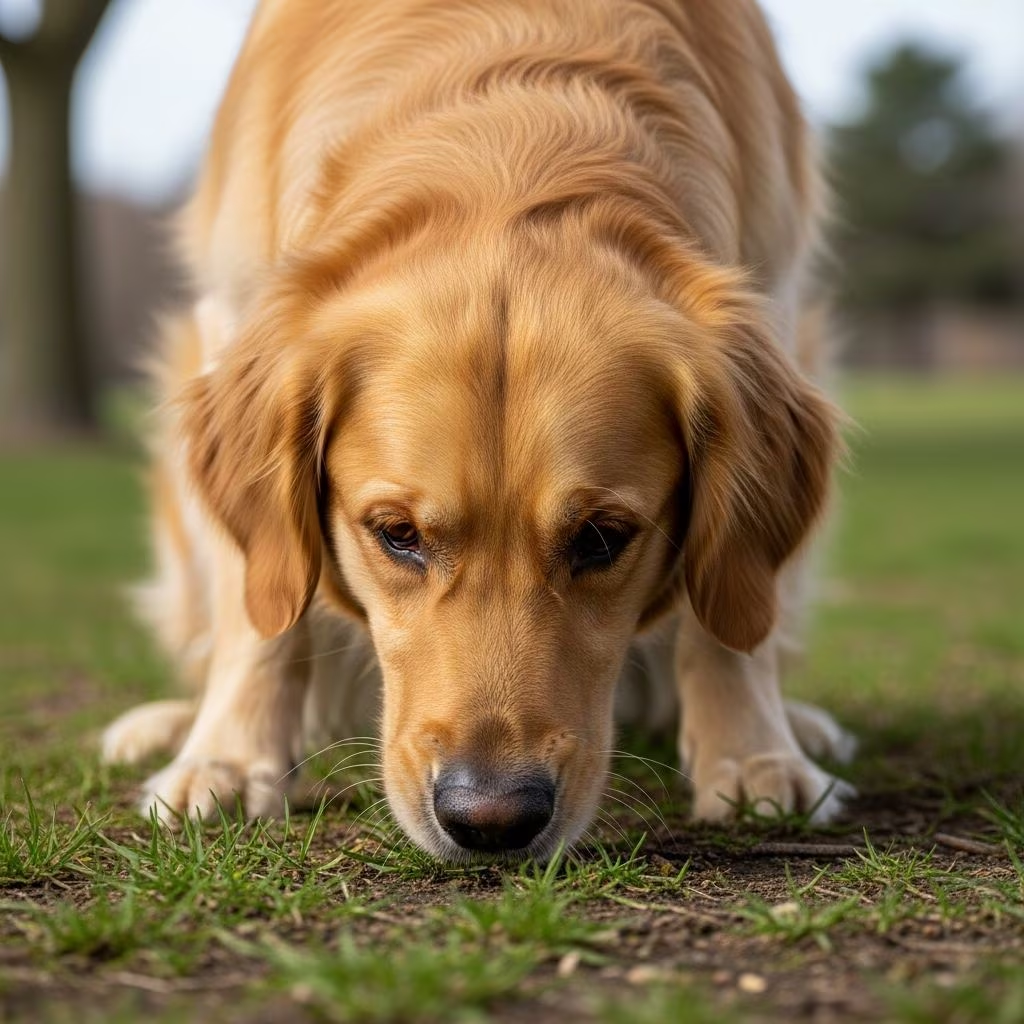
Have you ever stood shivering in the cold, leash in hand, while your dog sniffs every blade of grass before finally doing their business? You’re not alone. This seemingly endless sniffing ritual is one of the most common and frustrating behaviors dog owners encounter. But there’s a method to the madness—dogs have incredibly powerful noses, and sniffing before pooping serves multiple important purposes rooted in their instincts and biology.
Dogs possess up to 300 million olfactory receptors in their noses, compared to our measly 6 million, allowing them to detect scents we can’t even imagine. Before pooping, they use this superpower to gather critical information about their environment, ensure safety, communicate with other dogs, and select the ideal spot. Understanding these reasons can help you appreciate your dog’s behavior and know when it might signal a health issue.
The Power of a Dog’s Nose
A dog’s sense of smell is legendary—it’s their primary way of experiencing the world. Their olfactory bulb, the part of the brain dedicated to processing scents, is 40 times larger than ours relative to brain size. This allows dogs to not only detect odors but also analyze them for detailed information like the age, sex, health status, and emotional state of other animals.
- Jacobson’s organ: Dogs have a special organ in the roof of their mouth that transfers scent molecules directly to the brain for deeper analysis.
- Scent discrimination: They can distinguish between thousands of individual scents simultaneously, creating a ‘scent map’ of their surroundings.
- Memory association: Each smell triggers memories and emotional responses, helping dogs navigate familiar and unfamiliar territories.
Before pooping—a vulnerable moment when they’re stationary and exposed—dogs use their nose to perform a comprehensive environmental scan that takes humans minutes to accomplish with all our senses combined.
Gathering Intelligence: What Information Are They Collecting?
When your dog sniffs before pooping, they’re essentially reading the local news, checking social media, and conducting a security sweep all at once. Every patch of ground contains a wealth of information deposited by other animals.
| Scent Source | Information Gained |
|---|---|
| Other dogs’ urine/poop | Territory ownership, recent visitors, health status, reproductive status |
| Wild animals | Predator presence, prey availability, recent activity |
| Humans | Familiar people, strangers, emotional states (fear/sweat) |
| Environmental changes | Rain, temperature shifts, plant/animal decomposition |
This intelligence gathering helps dogs decide if the area is safe for their vulnerable pooping position and whether it’s a good location to leave their own territorial markers.
Safety First: The Vulnerability Factor
Pooping makes dogs temporarily defenseless. In the wild, this stationary position lasting 30-60 seconds leaves them exposed to predators. Domestic dogs retain this ancestral caution.
- Predator detection: Sniffing reveals if predators (foxes, coyotes, even cats) have recently passed through the area.
- Competitor assessment: They identify dominant dogs nearby and assess threat levels.
- Escape route planning: Dogs subconsciously note clear paths for quick retreat if needed.
More anxious or prey-driven breeds (herding dogs, terriers) often exhibit more pronounced sniffing rituals as their instincts remain closer to their wild ancestors.
Territorial Communication: Leaving Their Mark
Dogs have scent glands located around their anus, paws, and tail base that produce unique chemical signatures. Poop isn’t just waste—it’s a billboard advertisement announcing their presence.
By carefully selecting where to poop, dogs strategically place their scent markers:
- Over-marking: Pooping on top of other dogs’ waste to assert dominance.
- Boundary setting: Regular spots along property lines or walking routes establish territory.
- Social networking: Other dogs learn about your dog’s health, diet, stress levels, and reproductive status from their poop scent.
Females in heat release additional pheromones, making their markings particularly informative to intact males.
The Pre-Poop Dance: Circling and Positioning
That frustrating circling behavior serves multiple purposes beyond indecisiveness:
- Grass patrol: Wild ancestors trampled tall grass to flush out snakes, insects, or small predators.
- Magnetic alignment: Research suggests dogs prefer to align their body with the Earth’s magnetic north-south axis when pooping.
- Scent distribution: Circling spreads paw gland scents, creating a more comprehensive territory marker.
- Final safety check: Multiple angles allow thorough scent investigation of the chosen spot.
This elaborate ritual ensures maximum safety and communication effectiveness.
Instinctual Roots: Evolutionary Holdovers
Many bathroom behaviors trace back to wolves and wild canids:
- Concealment instinct: Wolves bury or scatter scat to avoid attracting predators—domestic dogs retain the site selection caution without the burial.
- Pack communication: Scent posts along territory boundaries keep packs informed without visual contact.
- Resource protection: Marking near food sources or dens advertises ownership and warns competitors.
Even pampered pets living in safe suburbs instinctively perform these ancient survival rituals.
When Sniffing Becomes Concerning
While normal sniffing lasts 1-5 minutes, extended sessions or sudden changes warrant attention:
| Potential Issue | Symptoms | Action Needed |
|---|---|---|
| Constipation | Straining, frequent squatting without results, hard/dry poop | Vet visit, increase fiber/water |
| Anal gland problems | Scooting, excessive licking, fishy odor, blood on stool | Veterinary anal gland expression |
| Urinary issues | Frequent small squirts, straining to urinate, accidents | Urgent vet exam (possible UTI) |
| Stress/anxiety | Diarrhea, pacing, hiding, clinginess | Behavior consultation, routine adjustment |
Monitor for additional symptoms like appetite changes, lethargy, or vomiting alongside prolonged sniffing.
Breed and Individual Differences
Not all dogs sniff equally:
- Scent hounds (Bloodhounds, Beagles): Extreme sniffers due to breeding for tracking ability.
- Toy breeds: Often more efficient due to less territory to defend.
- Working breeds: May show task-focused efficiency but retain thorough protocols.
- Puppies: Extra sniffing as they learn environmental cues and develop instincts.
Spayed/neutered dogs may show reduced territorial marking but retain safety sniffing.
Tips for Patient Pet Parents
- Allow 5-10 minutes for thorough investigation before intervening.
- Choose quiet routes during low-traffic times to reduce external distractions.
- Use consistent spots to build familiar scent markers that speed future decisions.
- Avoid rushing—interrupting mid-sniff can cause anxiety and incomplete elimination.
- High-value treats after successful completion reinforce good potty habits.
Frequently Asked Questions (FAQs)
Is it normal for my dog to sniff for 10+ minutes before pooping?
Occasional long sessions are normal, especially for scent breeds or in novel environments. Consistent 15+ minute sniffing with no results warrants a vet check for medical issues.
Why does my dog return to the same poop spots daily?
They’re territory battling with neighborhood dogs, continually over-marking each other’s scents to establish dominance over that location.
Should I stop my dog from sniffing everything on walks?
No—sniffing provides essential mental stimulation and environmental information. It’s like denying a human their sight. Allow regular sniff breaks.
Do female dogs sniff differently when in heat?
Yes, hormonal changes intensify their scent analysis as they detect male markers and assess breeding opportunities.
My senior dog sniffs less before pooping—is this normal?
Age-related cognitive decline or reduced olfactory function can decrease sniffing. Monitor for other dementia signs and consult your vet.
Why does my dog circle excessively before pooping?
Circling combines grass patrol for predators, magnetic field alignment, and even scent distribution from paw glands. It’s multi-purpose instinctual behavior.
References
- Why Do Dogs Spin Before They Poop? — American Kennel Club. 2023-05-15. https://www.akc.org/expert-advice/advice/why-do-dogs-spin-before-poop/
- Why Dogs Sniff Around Before Pooping — WagWalking (Veterinary Partner). 2024-02-10. https://wagwalking.com/behavior/why-dogs-sniff-around-before-pooping
- Animal Behavior Resources — USDA Animal and Plant Health Inspection Service. 2023-11-28. https://www.aphis.usda.gov/aphis/ourfocus/animalwelfare/SA_Animal_Welfare
- Why Do Dogs Sniff Around & Take Forever to Poop? — Rover.com Veterinary Review. 2024-08-05. https://www.rover.com/blog/how-dogs-decide-where-to-poop-in/
- Dogs’ Magnetic Sense and Pooping Alignment Study — Frontiers in Zoology (Peer-reviewed). 2013-10-02. https://doi.org/10.1186/1742-9994-10-80



