

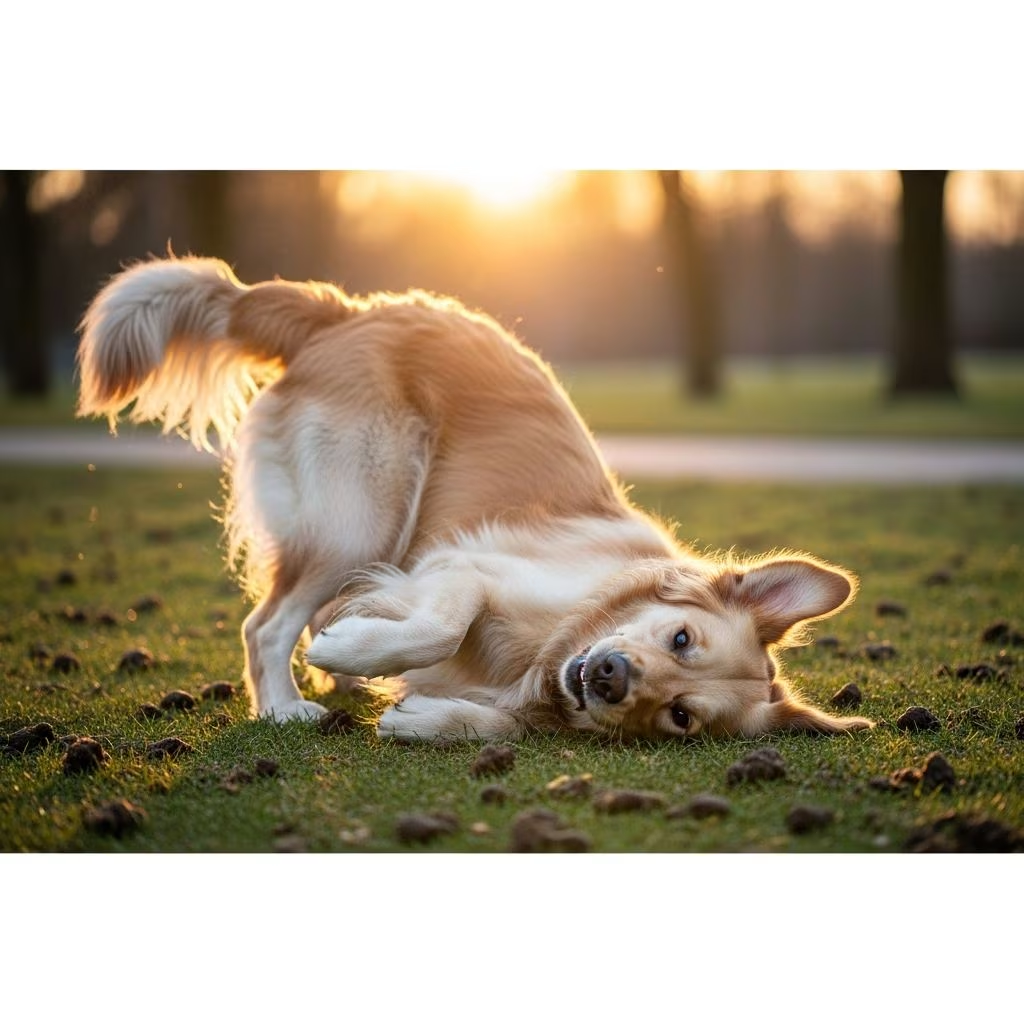
Why Do Dogs Roll in Poop: Understanding This Behavior
One of the most baffling and unpleasant behaviors dog owners encounter is watching their beloved companion gleefully roll in poop. Whether it’s during a leisurely walk in the park, a hike through the countryside, or right before an important outing, dogs seem to have impeccable timing for this messy activity. While this behavior may seem disgusting to humans, it is actually quite normal for dogs and stems from their evolutionary heritage and natural instincts. Understanding why dogs engage in this behavior is the first step toward managing it effectively and maintaining your pet’s health and hygiene.
The Evolutionary Origins of Poop Rolling
To understand why modern dogs roll in poop, we must first look back at their ancestral history. Dogs are descendants of wolves, and this behavior is deeply rooted in survival strategies that wild canines have used for thousands of years. In the wild, wolves and other canines would roll in feces and other strongly scented materials as a form of camouflage and tactical advantage during hunting expeditions.
The primary evolutionary theory suggests that by covering themselves in poop or other foul-smelling substances, wild dogs could mask their own natural scent. This camouflage technique served two critical purposes: it helped them avoid detection by larger predators and gave them a hunting advantage by masking their scent from prey animals. Despite domestic dogs no longer needing these survival skills, the instinct remains deeply embedded in their genetics, causing them to exhibit this behavior even when it serves no practical purpose in their modern lives.
Understanding the Current Theories
Scent Masking Hypothesis
One of the most widely recognized theories among veterinarians and animal behaviorists is the scent-masking hypothesis. According to this theory, dogs roll in poop to cover their own natural scent, which could potentially give them away to predators or prey. While this evolutionary explanation makes logical sense for wild canines, research has shown some interesting contradictions. Studies have demonstrated that wild animals, when given the choice, will sometimes roll in materials that are completely foreign to them, such as perfume and motor oil, which would not effectively mask their scent. This suggests that scent masking may not be the complete explanation for this behavior in modern dogs.
Scent Communication and Territory Marking
Another prominent theory involves scent communication and territorial marking. Rather than simply depositing feces onto themselves, dogs may be depositing their own scent onto the feces to mark their territory. When a dog returns to their pack or family after rolling in poop, they’re essentially bringing back “news” about their environment. This behavior can be compared to how humans share information about their day, except dogs communicate through scent rather than words.
This communication theory suggests that dogs use scent rolling as a way to share information about food sources, interesting animals, or important locations they’ve encountered. By mixing their scent with other strong odors, they create a unique olfactory signature that other dogs can detect and interpret. This form of scent communication is particularly important in pack dynamics and helps establish social hierarchies and territorial boundaries.
Simple Enjoyment of Strong Smells
Perhaps the simplest explanation is that dogs simply enjoy the smell. While humans find the odor of feces repulsive, dogs process scents through a highly developed olfactory system that perceives complex layers of information in smells we register as merely unpleasant. What seems disgusting to us might be genuinely fascinating or attractive to a dog’s sophisticated sense of smell. This is similar to how humans might enjoy wearing perfume or cologne—dogs appear to have their own version of scent preferences, and for some, the stronger and more pungent the smell, the better.
Is Rolling in Poop Normal Behavior?
Rolling in poop is indeed extremely common and normal canine behavior. Most dogs will engage in this activity at some point in their lives, and it occurs across all breeds, ages, and genders. However, research indicates that certain breeds are more prone to this behavior than others. Labrador Retrievers, Golden Retrievers, Cocker Spaniels, Jack Russell Terriers, and mixed-breed dogs show particularly high rates of poop rolling behavior compared to other breeds.
The behavior is not limited to feces alone. Dogs enjoy rolling in a variety of smelly, organic materials including dead animals, decomposing matter, muddy areas, and other pungent substances they encounter in their environment. The timing of this behavior is often frustratingly predictable—dogs frequently choose to roll in poop at the most inconvenient moments, such as right after a bath, just before company arrives, or immediately before getting into a clean car.
Health and Safety Considerations
While rolling in poop is a normal behavior, it does present legitimate health concerns for dog owners to consider. When dogs roll in feces, they expose themselves to potentially harmful bacteria, parasites, and other pathogens that can cause illness. This risk is particularly elevated when dogs roll in the waste of unfamiliar animals or wildlife, whose health status is unknown.
The primary health risk occurs if feces are inadvertently ingested during or after rolling. Even without ingestion, the bacteria and parasites present in feces can be transferred to the dog’s skin and fur, potentially spreading to other dogs, household members, or the family home. Common parasites and pathogens found in feces include roundworms, hookworms, E. coli, and Salmonella, all of which can cause serious health issues if transmitted.
Additionally, for some dogs, particularly those with certain health conditions or sensitive skin, the stress of having to bathe frequently after rolling incidents can negatively impact their wellbeing. Some dogs actively dislike baths, and repeated bathing can dry out their skin or cause behavioral issues related to the bathing process itself.
How to Prevent and Manage the Behavior
During the Rolling Incident
If you witness your dog beginning to roll in poop, timing is critical for intervention. Dogs often exhibit a specific behavioral pattern before rolling: they will sniff intensely at an area, lightly shake their head, and then twist their face to one side before initiating the roll. The moment you observe this sniffing and head-shaking behavior is your best opportunity to intervene.
At this crucial moment, issue a strong “leave it” command to redirect your dog away from the area. If your dog is responsive to training commands, this early intervention can prevent the rolling behavior entirely. However, according to veterinary behaviorists, once a dog has committed to rolling, there is limited you can do in the moment aside from trying to get the dog away from the area. Attempting to use high-value treats as a reward for leaving may not be effective, as the poop itself may be more rewarding to the dog than any treat you can offer.
Prevention Strategies
The most effective approach to managing poop rolling is prevention rather than intervention. Consider implementing the following strategies during walks and outdoor time:
- Maintain Leash Control: Keep your dog on a leash during walks, particularly in areas where wildlife or other animals are known to frequent. This gives you direct control to prevent your dog from reaching poop or other foul-smelling substances.
- Teach Strong Recall Commands: Work on developing a reliable “come” or “recall” command that your dog will respond to consistently. Practice this command in various environments and reward compliance generously.
- Avoid Problem Areas: When possible, steer clear of locations where animal waste is commonly found, such as areas frequented by wildlife, livestock pastures, or poorly maintained parks.
- Provide Alternative Activities: Engage your dog’s mind and body with interesting activities during walks to reduce their focus on environmental odors. Use sniff games, puzzle toys, and interactive play to keep their attention on you and approved activities.
- Regular Veterinary Checkups: Ensure your dog receives regular veterinary examinations to screen for parasites and other health issues that might increase their susceptibility to infection if they do roll in poop.
Post-Rolling Cleanup
If your dog does manage to roll in poop despite your best efforts, prompt and thorough cleaning is essential to prevent health issues. Bathe your dog with warm water and pet-safe products designed to remove bacteria and potential pathogens. Pay special attention to the face, ears, and any areas that had direct contact with the feces. After bathing, monitor your dog for any signs of illness such as vomiting, diarrhea, or lethargy that might indicate parasitic infection or bacterial exposure.
When to Consult Your Veterinarian
While occasional poop rolling is normal, excessive rolling may indicate underlying issues that warrant veterinary attention. In some cases, frequent poop rolling can be linked to nutrient deficiencies, digestive issues, or compulsive behavioral tendencies that require professional intervention. If your dog exhibits sudden changes in rolling behavior, or if rolling episodes increase dramatically, schedule a consultation with your veterinarian to rule out medical or behavioral concerns.
Frequently Asked Questions
Q: Is rolling in poop harmful to my dog?
A: Rolling in poop can expose dogs to parasites, bacteria, and other pathogens. While generally not immediately harmful to healthy dogs, ingestion of contaminated feces or skin contact with pathogens can lead to infections. Regular veterinary checkups and prompt cleaning after rolling incidents help minimize health risks.
Q: Can I completely stop my dog from rolling in poop?
A: Since rolling in poop is a natural canine instinct, completely eliminating the behavior is unlikely. However, you can significantly reduce its occurrence through prevention strategies such as leash control, recall training, and environmental management. Understanding and working with your dog’s instincts rather than against them typically yields better results.
Q: Why do some dogs roll in poop more than others?
A: Certain breeds, such as Labrador Retrievers, Golden Retrievers, and Cocker Spaniels, show higher propensity for poop rolling than others. Individual personality, age, environmental exposure, and training also influence how frequently a dog engages in this behavior.
Q: What should I do if my dog rolls in poop right before we leave for somewhere important?
A: If you have time, a quick rinse or wipe-down with pet-safe wipes or damp cloth can remove the worst of the debris. For future outings, try to schedule walks well in advance of departure times and avoid areas where poop rolling is likely to occur.
Q: Is there a specific time of year when dogs roll in poop more frequently?
A: Rolling in poop does not follow a specific seasonal pattern. However, dogs may engage in this behavior more frequently during seasons when wildlife is more active or when outdoor activities increase, such as spring and summer months.
Q: Can diet or nutrition affect how often a dog rolls in poop?
A: While diet itself doesn’t directly cause poop rolling, nutritional deficiencies or digestive issues may contribute to excessive rolling in some cases. Providing a balanced, high-quality diet and consulting your veterinarian about any digestive concerns can help maintain overall health.
References
- Why Do Dogs Roll in Poop? — Whole Dog Journal. Accessed 2025. https://www.whole-dog-journal.com/behavior/why-do-dogs-roll-in-poop/
- Why Do Dogs Roll in Poop? Understanding This Puzzling Behavior — PetsCare. Accessed 2025. https://www.petscare.com/news/post/dogs-roll-in-poop
- Why Do Dogs Roll in Smelly Stuff? — American Kennel Club. Accessed 2025. https://www.akc.org/expert-advice/lifestyle/why-dogs-roll-smelly-stuff/
- Why Do Dogs Roll in Poop? — PetMD. Accessed 2025. https://www.petmd.com/dog/behavior/why-do-dogs-roll-poop
- Why Do Dogs Roll in Garbage, Manure, or Other Smelly Stuff? — Psychology Today. Accessed 2025. https://www.psychologytoday.com/us/blog/canine-corner/200907/why-do-dogs-roll-in-garbage-manure-or-other-smelly-stuff



