

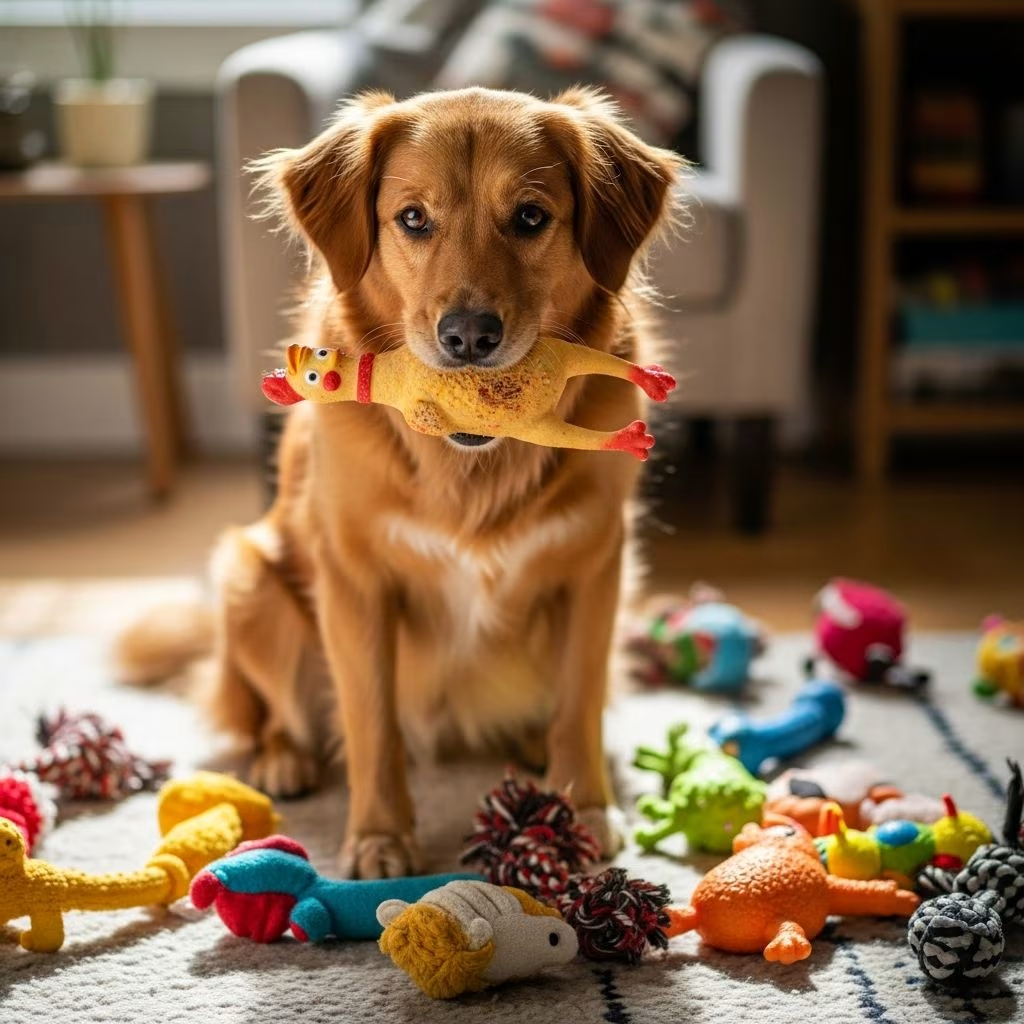
Dogs often develop intense, unwavering attachments to specific toys, carrying them everywhere, guarding them fiercely, and treating them like prized possessions. This behavior, known as imprinting, stems from instinctual survival mechanisms where puppies rapidly form irreversible bonds during critical developmental windows, mirroring attachments to mothers, littermates, or humans.
What Is Imprinting in Dogs?
Imprinting in dogs refers to a rapid learning process during early puppyhood where they form profound social attachments to objects, people, or animals, viewing them as family or pack members. Scientifically termed filial imprinting, it occurs in a critical window of 3-16 weeks, driven by survival instincts rather than mere affection. During this phase, a puppy’s brain sets permanent understandings of ‘who is my family’ and ‘what behaviors to mimic.’ Unlike fluid emotional bonding that builds over a lifetime through trust, imprinting is rigid and irreversible, akin to precocial animals like ducklings following the first moving object they see.
For toys, this manifests when a puppy associates a specific item with comfort, security, or play during sensitive periods. Dr. Valli Parthasarathy, a board-certified veterinary behaviorist, notes that puppies learn intra-species skills first (3-7 weeks) by observing mothers and littermates, then shift to human or object interactions (7-12 weeks). Toys entering this window can become surrogate ‘pack members.’
The Stages of Puppy Imprinting
Dog imprinting unfolds in three key stages, each priming the brain for specific attachments:
- Canine Imprinting Stage (3-7 Weeks): Puppies learn dog-specific behaviors like bite inhibition and social signals from mother and littermates. Toys introduced here may mimic littermates if they provide tactile comfort.
- Human/Object Imprinting Stage (7-12 Weeks): The pup adapts to humans and environment. A chew toy offered during play can imprint as a ‘security object,’ especially if it smells like the owner.
- Fear Imprinting Period (8-11 Weeks): Heightened sensitivity to trauma; positive toy associations here prevent lifelong aversions, while neglect can lead to object fixation.
These stages, detailed in veterinary behavior studies, close by 14-16 weeks, after which new imprints are harder to form.
Why Do Dogs Choose Specific Toys to Imprint On?
Dogs select toys based on sensory cues mimicking pack bonds: texture (soft like fur), scent (owner’s smell), sound (squeaks like prey), or size (mouth-fit). A toy present during stress relief, like teething, imprints as a comforter. Evolutionarily, wolves carry valued items to dens; domestic dogs extend this to toys, viewing them as ‘pups’ or ‘prey.’
Key factors include:
- Scent Saturation: Toys rubbed on the owner’s face or slept with absorb pheromones, triggering comfort responses.
- Emotional Association: Toys linked to praise or feeding become reward symbols.
- Texture and Movement: Plush toys evoke littermates; squeakers simulate hunting.
- Availability During Critical Windows: The first toy offered at 8 weeks often wins primacy.
Research from the American Veterinary Medical Association emphasizes early socialization objects reduce separation anxiety later.
Signs Your Dog Has Imprinted on a Toy
Recognize imprinting by these behaviors, paralleling human-attachment signs:
- Constant Carrying: The dog transports the toy everywhere, even to bed or outdoors, like a security blanket.
- Resource Guarding: Growling or hiding the toy from others signals it’s a ‘family member.’
- Excited Greetings: The dog brings the toy to you upon return, sharing its ‘prized possession’—a profound trust gesture releasing oxytocin.
- Sleeping with It: Cuddling the toy for protection, mimicking pack huddling.
- Distress Without It: Pacing or whining if separated, indicating emotional dependency.
- Mirroring Play: Treating the toy as a ‘pup,’ grooming or nudging it gently.
These mirror human-imprinting cues like eye contact or belly exposure, but directed at the toy.
Is Toy Imprinting Normal and Healthy?
Yes, moderate imprinting is normal and beneficial, providing emotional security akin to a child’s teddy bear. It reduces stress hormones (cortisol) during alone time and aids teething. A 2023 study in the Journal of Veterinary Behavior found imprinted toys lower anxiety in 78% of puppies post-adoption.
However, excessive attachment signals issues:
| Healthy Signs | Problematic Signs |
|---|---|
| Relaxes with toy but plays with others | Ignores all other toys/food when attached |
| Separates briefly without distress | Destructive anxiety when toy is removed |
| Shares toy during play | Aggressive guarding injuring others |
Balance prevents over-dependence; consult vets if guarding escalates.
Benefits of Dogs Imprinting on Toys
Imprinted toys offer multifaceted advantages:
- Stress Relief: Calms during crate time or thunderstorms via familiar scent.
- Training Aid: Use as high-value reward for commands.
- Developmental Support: Encourages chewing over furniture during teething.
- Emotional Regulation: Mirrors maternal comfort, aiding secure attachment styles.
- Longevity: Provides lifelong comfort object, reducing shelter surrender rates per ASPCA data.
Veterinary behaviorists recommend one imprinted toy per dog for optimal mental health.
When Toy Imprinting Becomes a Problem
Problems arise with over-attachment: severe guarding can lead to bites, hygiene issues from constant mouthing, or neglect of exercise. Breeds like Labs or Retrievers are prone due to retrieving instincts. Intervene if the dog skips meals or shows fear aggression.
How to Manage and Encourage Healthy Toy Imprinting
Foster positive bonds:
- Introduce During Critical Periods: Offer varied toys at 7-12 weeks.
- Scent Personalize: Sleep with toys overnight.
- Rotate Toys: Swap weekly to prevent fixation.
- Trade-Up Training: Exchange toy for treats to reduce guarding.
- Multiple Toys: Provide 2-3 options; dogs typically imprint on one primary.
- Professional Help: Behaviorists for aggression via positive reinforcement.
Avoid punishment, which heightens fear imprinting.
Can Dogs Imprint on Multiple Toys?
Rarely; dogs usually select one primary ‘favorite’ due to pack hierarchy instincts, imprinting on a single alpha object. Multi-imprinting occurs in multi-dog homes if toys represent littermates, but primary bonds dominate.
Frequently Asked Questions (FAQs)
What age do dogs imprint on toys?
Primarily 3-16 weeks, with peak human/object phase at 7-12 weeks. Post-window, attachments form via bonding, not true imprinting.
Why does my dog cry for its toy?
The toy provides pheromone comfort; separation mimics pack loss, triggering distress.
Is it bad if my dog imprinted on a sock instead of a toy?
Potentially; household items pose ingestion risks. Redirect to durable toys.
How do I break a toy imprint?
Impossible to fully erase, but dilute via rotation and new high-value items with gradual desensitization.
Do all dogs imprint on toys?
Most do to some degree, influenced by breed, early experiences, and environment.
This comprehensive guide empowers owners to nurture healthy attachments, enhancing the human-dog bond through understanding canine psychology.
References
- Dogs Imprinting on Humans: Know the Signs — NJ Dog Training. 2023-05-15. https://njdog.com/dogs-imprinting-on-humans-know-the-signs/
- Signs Your Dog Imprinted on You — Spark Paws. 2024-02-10. https://www.sparkpaws.com/blogs/community/signs-your-dog-imprinted-on-you
- Signs Your Dog Has Imprinted on You: Bond, Behaviors & Attachment — Pride + Groom. 2023-11-20. https://prideandgroom.com/blogs/news/signs-your-dog-has-imprinted-on-you
- Has Your Dog Imprinted On You? — PetLab Co. 2024-01-05. https://petlabco.co.uk/learn/behaviour/signs-dog-imprinted-on-you



