

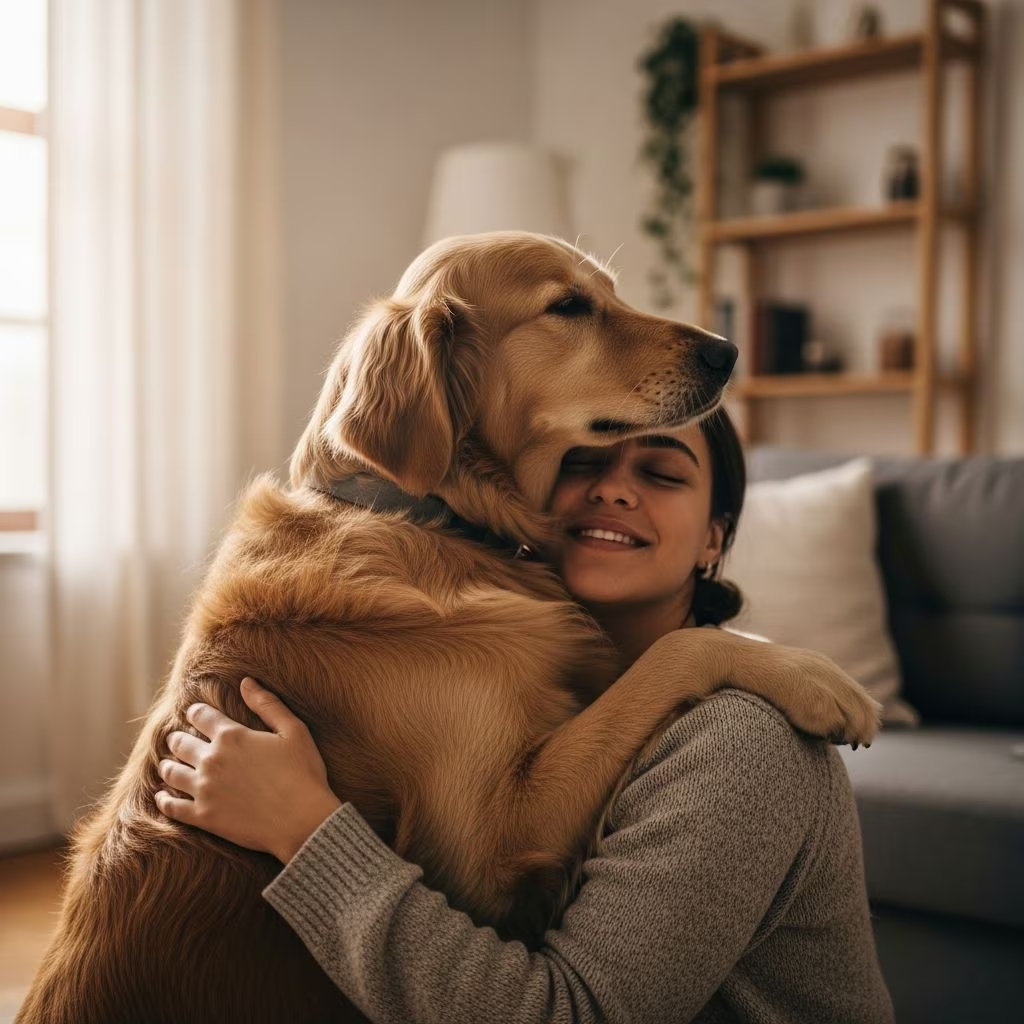
Dogs do not naturally hug each other as humans do; what we interpret as a “hug” from dogs often stems from different motivations like greeting, play, or seeking comfort, but human-style hugs frequently cause stress in canines.
While humans use hugs to express affection and intimacy inherited from primates like chimpanzees, dogs lack this behavior in their social repertoire, with the closest equivalent being mounting, which signals dominance or sexual intent rather than love. Understanding this mismatch helps pet owners foster healthier relationships by respecting canine communication.
Do Dogs Like Being Hugged?
Research and observations indicate that most dogs do not enjoy being hugged by humans. In an informal study by canine psychologist Stanley Coren, he analyzed 250 photographs of people hugging dogs sourced from Google images searching “hug dog” and “love dog.” Results showed 81.6% of dogs displayed at least one stress signal, such as tongue flicking, whale eye (visible whites of the eyes), or a tight closed mouth; only 7.6% appeared comfortable, and 10.8% were neutral or ambiguous.
This study, though not peer-reviewed, aligns with behaviorist insights that hugging immobilizes dogs, restricting their movement and activating flight responses they cannot execute. Patricia McConnell, a certified applied animal behaviorist, revisited the topic emphasizing that hugs represent restraint to dogs, lacking the reciprocal arm-embracing humans expect, often leading to appeasement signals like lip licking or paw lifting.
Individual variation exists: some dogs, particularly those acclimated from puppyhood or with strong trust bonds, may tolerate or even seek physical closeness resembling hugs. For instance, one owner described their dog initiating contact by leaning in with relaxed eyes and nudging for more, while another’s aging dog found comfort in being held during mobility loss. However, these exceptions underscore the need for observation over assumption.
Why Don’t Dogs Like Hugs?
Dogs perceive hugs as restraint, a primary stressor in their world where freedom of movement is key to safety. Unlike humans or apes who hug reciprocally, dogs cannot “hug back,” turning the gesture into unilateral control.
- Immobility and Loss of Control: Encircling a dog’s body or neck prevents escape, mimicking predatory restraint and spiking stress hormones.
- Non-Natural Behavior: Dogs greet with sniffing, play bows, or nose touches; hugs invade personal space without familiar cues.
- Face Proximity: Human faces inches from a dog’s during hugs can feel threatening, especially for those with poor socialization.
- Breed and Personality Factors: Independent breeds like herding dogs may resent confinement more than velcro breeds like Labradors.
Expert Kate Mornement notes hugs resemble dominance displays like mounting, not affection, explaining aggressive responses in unacclimated dogs. Socialization plays a role: puppies exposed positively to handling learn tolerance, vital for vet visits or emergencies.
Dog Body Language: Signs Your Dog Doesn’t Like Hugs
Recognizing stress signals prevents bites and builds trust. Dogs communicate discomfort subtly before escalating.
| Stress Signal | Description | Why It Matters |
|---|---|---|
| Whale Eye | Whites of eyes visible as dog looks away | Indicates anxiety; dog wants distance |
| Tongue Flicking/Lip Licking | Rapid tongue out or lip moisture | Appeasement or nausea sign; stress rising |
| Ears Back/Down | Ears flattened against head | Fear or submission; stop immediately |
| Paw Lift/Tail Tuck | One paw raised or tail lowered | Uncertainty or desire to flee |
| Turning Away/Yawning | Head turn, exaggerated yawn | Avoidance; dog is overwhelmed |
| Panting (when cool) | Heavy breathing without heat/exertion | Calming signal for distress |
Overt warnings include growling, baring teeth, snapping, or biting—immediate release required. Conversely, enjoyment signs feature a loose body, soft eyes, relaxed mouth, steady breathing, and leaning in.
Signs Your Dog Likes Hugs (Rare but Possible)
A minority of dogs show positive responses, often those with early positive conditioning.
- Relaxed posture: Soft, squinty eyes; loose muscles; head resting on you.
- Active engagement: Leaning into contact, tail wagging broadly, nudging for more.
- Neutral ears and breathing: No tension; steady respiration.
- Lying down willingly: Settling calmly rather than stiffening.
Oxytocin release from bonding touch supports why some dogs bond via petting, elevating “love chemicals” in both species. Breeds like Golden Retrievers, bred for companionship, may prefer closeness more.
Better Ways to Show Your Dog Affection
Replace hugs with dog-preferred interactions to strengthen bonds without stress.
- Petting Preferences: Stroke chest, base of tail, or under chin—avoid head pats for many.
- Play Sessions: Fetch, tug, or chase games release endorphins naturally.
- Eye Contact and Voice: Soft talk with brief gazes; dogs read tone better than hugs.
- Side-by-Side Contact: Sit together without encircling; allows escape.
- Treats and Training: Positive reinforcement builds trust deeper than physical holds.
Studies show petting boosts dopamine and oxytocin mutually, mimicking hug benefits sans restraint.
How to Hug a Dog Safely (If You Must)
If hugging is unavoidable, like for medical needs, condition gradually.
- Start young: Puppies via gentle handling games with rewards.
- Use loose styles: One arm over shoulders, not bear hugs.
- Watch duration: Release at first stress sign; keep under 10 seconds.
- Choose moments: Calm, non-excited times; never when distracted.
- Build trust first: Solid relationship prevents resentment.
One behaviorist shared success with a fearful rescue dog learning hugs through trust-building, responding passively.
Teaching Kids Not to Hug Dogs
Children pose risks due to impulsive hugs; education saves lives.
Incidents like an 11-year-old nipped by a German Shepherd highlight dangers. Teach:
- Hands Off First: Pet with permission; no surprise hugs.
- Read Cues: Show pictures of whale eye, etc.; quiz on signals.
- Alternatives: Toss toys or sit nearby.
- Supervise Always: Intervene early; model respect.
Acclimation protects kids and dogs, emphasizing consent in interactions.
Frequently Asked Questions (FAQs)
Do all dogs hate hugs?
No, but most show stress; observe your dog’s unique signals.
Why does my dog lean into hugs?
It trusts you deeply or was conditioned young; still monitor for subtle stress.
Is Stanley Coren’s study reliable?
Informal but insightful; photos may bias toward posed discomfort, yet aligns with expert views.
What if my dog growls during hugs?
Stop immediately; consult a behaviorist—it’s a warning.
Can I train my adult dog to like hugs?
Yes, via counter-conditioning with treats, but prioritize consent.
This comprehensive guide empowers you to decode your dog’s preferences, replacing potentially stressful hugs with joyful, mutual affection for a lifelong bond.
References
- Dogs and Hugs, Revisited — Patricia McConnell. 2016 (approx.). https://www.patriciamcconnell.com/theotherendoftheleash/dogs-and-hugs-revisited/
- A Canine Conundrum: To Hug or Not to Hug? — Kate Mornement, Pets Behaving Badly. 2017-01. http://katemornementanimalbehaviourist.blogspot.com/2017/01/a-canine-conundrum-to-hug-or-not-to-hug.html
- Is Hugging Part of Your Dog’s Love Language? — Downtown Dogs. 2023 (ref Newsweek). https://dtdogs.com/is-hugging-part-of-your-dogs-love-language/
- The Data Says “Don’t Hug the Dog!” — Psychology Today, Stanley Coren. 2016-04. https://www.psychologytoday.com/us/blog/canine-corner/201604/the-data-says-dont-hug-the-dog
- Hugging Dogs — Just Dogs with Sherri. 2016-05. https://www.justdogswithsherri.com/blog-1/2016/05/hugging-dogs.html



