

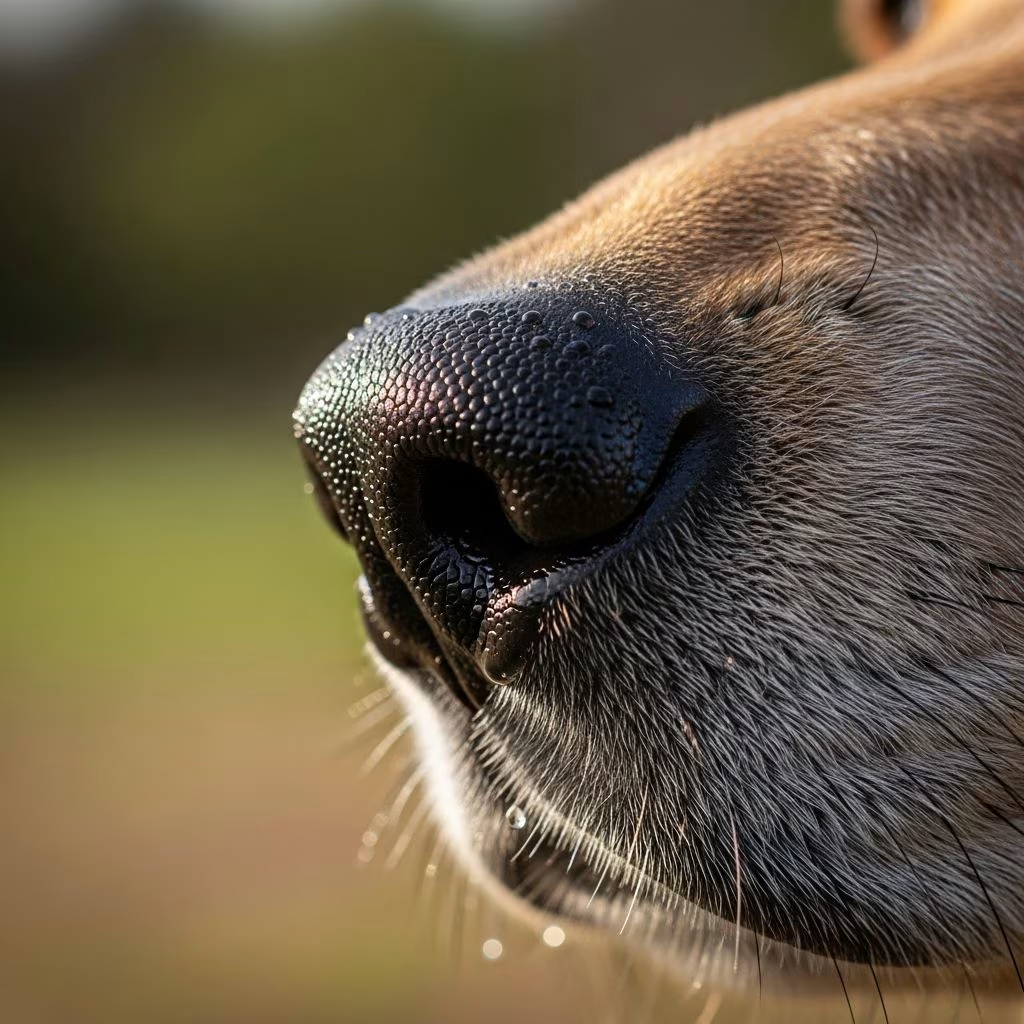
Why Is My Dog’s Nose Always Wet?
If you’ve ever wondered why your dog’s nose is always wet, you’re not alone. This distinctive feature is one of the most recognizable characteristics of our canine companions. The wet nose isn’t just a random occurrence—it serves several critical biological functions that are essential to your dog’s survival, comfort, and ability to interact with the world around them.
Dogs rely heavily on their sense of smell to navigate their environment and communicate with other animals. In fact, their brains prioritize scent information far more than visual information. This means that a well-functioning nose is absolutely essential to canine survival. The moisture on your dog’s nose plays a crucial role in making their olfactory system work at peak efficiency, allowing them to detect scents that humans could never perceive.
The Science of Canine Smell
To understand why wet noses matter for dogs, it’s important to grasp just how remarkable their sense of smell actually is. Dogs can smell somewhere between 1,000 to 10,000 times better than humans. This extraordinary ability gives them a completely different way of experiencing the world compared to what we see and hear.
Part of this enhanced olfactory capability comes from the sheer number of scent receptors dogs possess. Dogs have more than 100 million sensory receptors in their nasal cavity, compared to approximately 6 million in the human nose. This massive difference in receptor density alone explains much of their superior smell capabilities.
Beyond just having more receptors, dogs also possess an additional olfactory tool that humans lack entirely: Jacobsen’s organ, also known as the vomeronasal organ. This specialized structure is located inside the nasal cavity and opens into the roof of the mouth behind the upper incisors. Jacobsen’s organ functions as a secondary olfactory system that is specifically designed for chemical communication, allowing dogs to detect pheromones and other chemical signals that carry important information about their environment and other animals.
How Wet Noses Enhance Smell Detection
The moisture on your dog’s nose isn’t incidental—it’s fundamental to how their olfactory system functions. Scent particles need to stick to a damp surface to be effectively absorbed and processed by the olfactory receptors. A wet nose provides the perfect surface for this process.
The special mucus glands inside your dog’s nostrils produce a thin, watery fluid that serves multiple purposes. This fluid keeps the nasal canals moist and enhances the absorption of scent chemicals. When scent particles land on this moist surface, they dissolve more readily, allowing the olfactory receptors to pick them up more efficiently. Before odor molecules even reach the scent receptors, they pass through this layer of secreted mucus, where some molecules get absorbed quicker than others. This helps your dog identify and pre-sort different scents, allowing them to focus on the ones that are important and filter out the ones that aren’t.
The sensory receptors in your dog’s nose require this mucous to function properly. Without adequate moisture, your dog’s ability to detect and distinguish between various odors would be significantly compromised. This is why dogs instinctively work to keep their noses moist—they understand, on a biological level, that a wet nose works better than a dry one.
How Dogs’ Noses Get Wet
Understanding how dogs maintain their wet noses involves looking at both physiological and behavioral mechanisms. There are actually several ways that your dog’s nose stays wet throughout the day.
Noses Secrete Mucus
The primary mechanism for keeping a dog’s nose wet is mucus secretion. The inner lining of a dog’s nose contains specialized glands that continuously produce mucus to keep the nasal canals moist. A thin layer of mucus clings to the nostrils, and this isn’t random—it’s a carefully evolved system designed to enhance scent absorption.
These special mucus glands produce clear, watery fluid that serves a dual purpose. Beyond enhancing the dog’s sense of smell, this fluid also helps cool the dog as it evaporates. This cooling function becomes particularly important during hot weather or after exercise.
Nose Licking Behavior
Dogs also maintain their wet noses through frequent licking. You’ve probably noticed your dog licking their nose regularly throughout the day. This behavior isn’t just a nervous habit—it’s an intentional action that serves important biological functions.
When dogs lick their noses, they accomplish several things simultaneously. First, they gather scent particles from their nostrils and transfer them into their mouth. The mucus from the nose, laden with scent particles, is then carried to the roof of the mouth where Jacobsen’s organ is located. This transfers the scent information to this specialized secondary olfactory system, giving dogs an even more detailed understanding of what they’re smelling.
Additionally, there’s a small anatomical feature called the philtrum—the vertical groove between a dog’s nose and upper lip—that plays an important role. After each time a dog licks their lips, a small amount of saliva is retained in this groove. This saliva is pulled upward by capillary action, directing odorants from the mouth back to the smell receptors of the nose. This clever design helps keep the dog’s nose damp and maintains optimal conditions for scent detection.
Moisture is so important to the canine sense of smell that dogs learn to keep their nose moist and will instinctively lick their noses when they become dry. This behavior is hardwired into your dog’s biology.
Environmental Moisture Pickup
Finally, dogs pick up moisture from their environment simply by being active and curious. The canine nose works hard throughout the day as dogs use their sense of smell along with sight to navigate the world. Dogs probe with their noses when investigating something new, sticking them into everything from damp grass and leaves to plants and puddles.
During these investigations, the dog’s nose naturally picks up moisture from the environment. This environmental water combines with the mucus secretions to maintain optimal nasal moisture levels. It’s yet another way that nature has equipped dogs to maintain their extraordinary olfactory abilities.
Temperature Regulation and Cooling
Beyond smell enhancement, wet noses play a crucial role in helping dogs regulate their body temperature. This function becomes increasingly important during warm weather or periods of physical activity.
Unlike humans, dogs do not have sweat glands distributed throughout their bodies. Humans can sweat all over to cool down, but dogs lack this capability. Instead, dogs have developed alternative cooling mechanisms. They can dissipate heat through their foot pads and by panting, but the nasal passages serve as an additional important cooling mechanism.
In fact, the nose pad and the foot pads are the only places where dogs can sweat. On particularly hot days, part of the reason your dog’s nose may be wet is because they have been sweating. Their wet nose allows them to maintain a normal body temperature. Similarly, a dog’s feet will also sweat on a hot day, helping to keep them cool while also preventing their pads from becoming too dry.
The main way dogs keep cool is through panting, which allows them to push warm air out and bring cooler air into the body. However, the moisture on their nose also helps with this process. As saliva and nasal fluid evaporate from their nose and mouth, it helps a dog cool down and regulate their body temperature through evaporative cooling. The coldness of your dog’s nose actually indicates that this evaporative cooling mechanism is working properly.
The glands inside a dog’s nose secrete fluid that wicks out to the nose surface, evaporates, and then helps to cool the dog. This liquid can be especially important during hot weather or after vigorous exercise. If your dog seems to have a particularly wet nose on a hot day, they may be actively using this cooling mechanism to prevent overheating.
Additional Benefits of a Moist Nose
Beyond smell enhancement and temperature regulation, the moisture on a dog’s nose may provide other health benefits as well.
The moisture may help humidify the air as it moves into a dog’s nasal cavity, which keeps it from drying out their respiratory tract. This protective function may even help prevent respiratory infections by maintaining healthy nasal tissue. The moist environment created by these secretions is inhospitable to certain pathogens and helps maintain the integrity of the delicate nasal tissues.
Additionally, the long nasal passage and the bony structures within it, called turbinates or nasal conchae, play a crucial role in filtering, warming, and humidifying the inhaled air. These bony structures protrude from the side walls of the nasal cavity and contain the venous network. Approximately 5-15% of air inhaled by dogs is redirected to them. The increased surface area allows for scent molecules to interact with the olfactory receptors, enhancing a dog’s ability to detect and distinguish various odors. These turbinates are covered in a mucous membrane that contributes to the overall moisture in the nasal cavity.
The Role of Jacobsen’s Organ in Nose Licking
Understanding Jacobsen’s organ helps explain why dogs lick their noses so frequently and why keeping their nose moist is so important for their sense of smell.
When a dog licks their nose, they transfer the scent chemicals from their nose to the roof of their mouth. The extra absorption of scent chemicals gives a more accurate sense of smell of the world around them. Jacobsen’s organ projects to a separate bulb called the accessory olfactory bulb, and from there to the hypothalamus via the vomeronasal amygdala. This specialized system has its own distinct class of genes—the vomeronasal receptors (V1R and V2R)—along with Trp receptors. These genes sustain the production and maintenance of the vomeronasal system receptors and proteins, allowing its functioning as a whole system.
This secondary olfactory system is particularly important for detecting pheromones and other chemical signals. When a dog licks their nose, they’re not just keeping it moist—they’re actively using an additional sensory system to gather more detailed information about their environment.
Frequently Asked Questions About Dog Noses
Q: What does it mean if my dog’s nose is dry?
A: A dry nose isn’t necessarily cause for immediate concern, as dogs’ noses can naturally fluctuate between wet and dry throughout the day. However, a consistently dry nose combined with other symptoms like lethargy, loss of appetite, or discharge could indicate illness. If you notice persistent dryness or are concerned about your dog’s health, consult your veterinarian.
Q: Is a cold, wet nose a sign of good health?
A: A cold, wet nose generally indicates that your dog’s evaporative cooling system is functioning properly and their olfactory system is in good working order. The coldness comes from the evaporation of moisture on the nose surface. However, nose temperature and moisture alone aren’t reliable indicators of overall health. A dog can be healthy with a warm, dry nose and unwell with a cold, wet nose.
Q: Do all dogs have wet noses?
A: While most healthy dogs have wet noses due to the natural secretion of mucus and their frequent licking behavior, individual dogs may vary. Some dogs may have naturally drier noses, particularly older dogs or those with certain health conditions. Breeds with different nasal structures may also show variation in nose moisture.
Q: Can nose moisture tell me if my dog is healthy?
A: While a consistently wet nose is generally associated with good olfactory function and proper mucus production, nose moisture alone isn’t a definitive health indicator. Some sick dogs may have wet noses, while some healthy dogs may have dry noses. For accurate health assessment, observe your dog’s overall behavior, appetite, energy level, and consult your veterinarian if you have concerns.
Q: Why do dogs lick their noses so much?
A: Dogs lick their noses frequently to maintain optimal moisture levels for smell detection and to transfer scent particles to Jacobsen’s organ for more detailed sensory information. They also lick their noses to gather saliva, which helps with cooling and nasal moisture maintenance. This behavior is instinctive and essential to how dogs experience and understand their world.
Q: Should I be concerned if my dog’s nose changes color?
A: Some color changes in a dog’s nose are normal, particularly in dogs with pink noses that may lose pigmentation over time. However, sudden color changes, especially to very pale or discolored areas, could indicate health issues and warrant a veterinary consultation. Additionally, crusty or flaky noses could suggest hyperkeratosis or other conditions requiring professional evaluation.
References
- Why Do Dogs Have Wet Noses? — VCA Animal Hospitals. 2025. https://vcahospitals.com/know-your-pet/why-do-dogs-have-wet-noses
- Why Do Dogs Have Wet Noses? — Britannica. August 20, 2025. https://www.britannica.com/science/Why-Do-Dogs-Have-Wet-Noses
- Why Are Dog Noses Wet? — PetMD. https://www.petmd.com/dog/general-health/why-do-dogs-have-wet-noses
- What Does a Cold, Wet Dog Nose Mean? — Bond Vet. https://bondvet.com/blog/what-does-a-cold-wet-dog-nose-mean
- Why’s a Dog’s Nose so Special? — The Andys Veterinary Clinic. https://www.andysvetclinic.net/post/why-s-a-dog-s-nose-so-special
- Why Are Dogs’ Noses Wet? — NaturVet. https://naturvet.com/blogs/resources/why-are-dogs-noses-wet
- Rhinarium — Wikipedia. https://en.wikipedia.org/wiki/Rhinarium



