

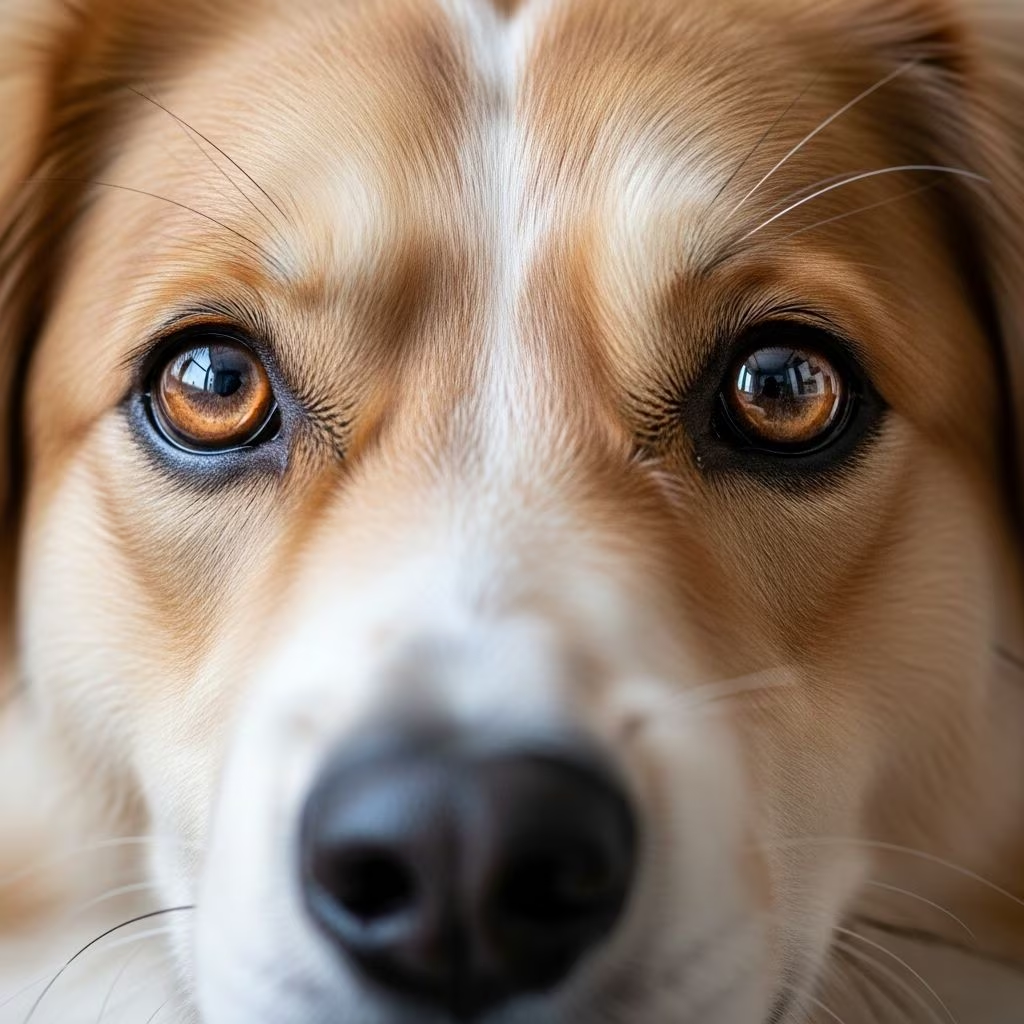
Most dogs possess striking **brown eyes**, a trait rooted deeply in their genetics and biology. This predominant eye color results from melanin pigment in the iris, the colored part of the eye, which protects against UV light and supports vision. While brown eyes dominate, variations like blue, amber, or heterochromia exist due to specific genetic factors. Understanding this reveals fascinating insights into canine evolution, breeding, and health.
The Science Behind Brown Eyes in Dogs
Dogs’ eye color is primarily determined by the amount of **melanin**, a pigment produced by melanocytes in the iris. Brown eyes occur when high levels of eumelanin—a black or brown pigment—accumulate. This is the default state for most mammals, including dogs, as it provides optimal light absorption and protection from bright sunlight.
Unlike humans, where blue eyes result from low melanin and light scattering, dogs rarely have naturally blue eyes without genetic modifiers. Eumelanin production is influenced by genes in the B and D series, which control pigment intensity. Recessive variants dilute this to amber or lighter shades, but full brown remains standard.
Pigment deposition begins in puppyhood. Newborn pups have blue-gray eyes due to immature melanocytes. By 9-16 weeks, melanin levels stabilize, revealing permanent color. This transition underscores why brown eyes prevail: evolutionary pressures favored robust pigmentation for outdoor lifestyles.
Genetics of Dog Eye Color
**Dog eye colors are entirely genetic**, inherited from parents via markers controlling melanin. The default is brown, tied to black eumelanin. Variants alter this:
- Brown Eumelanin: Recessive traits produce amber or copper eyes, common in breeds like Chows or Pharaoh Hounds.
- Diluted Pigments: Liver (B-locus recessive) or dilution (D-locus) genes create paler shades like lilac or green-blue.
- Merle Gene: An incomplete dominant causes patchy dilution, often leading to blue eyes or sectors.
- Piebald/White Spotting: Suppresses melanocytes, risking blue eyes and deafness.
- ALX4 Duplication: A DNA variant near ALX4 on chromosome 18 disrupts iris pigmentation, causing blue eyes independently.
Coat color genes overlap with eye color; merle or piebald dogs are prone to non-brown eyes. Rare independent blue-eye genes appear in Huskies.
Why Not Blue Eyes Like Humans?
Blue eyes in dogs differ from humans. Human blue results from stromal fibers scattering light (Tyndall effect) with minimal melanin. Dogs’ blue eyes stem from **pigment dilution or absence**, not scattering, often linking to merle, piebald, or ALX4 issues.
Breeds like Siberian Huskies or Border Collies may have blue eyes via separate genes, unaffected by coat. However, brown dominates for UV protection; blue-eyed dogs risk higher light sensitivity, though most adapt well.
Eye Color Changes in Puppies
All puppies are born with **blue or bluish-gray eyes** because melanocytes are underdeveloped. Pigment production ramps up post-birth:
- Weeks 1-8: Eyes appear blue due to clear irises.
- Weeks 9-12: Melanin deposits; color shifts to brown, amber, or blue.
- By 16 weeks: Final color sets.
This isn’t environmental; it’s genetic maturation. Heterochromia puppies show differences by 16 weeks. Owners should avoid myths about diet changing colors—it’s purely hereditary.
Heterochromia in Dogs
**Heterochromia** features different-colored irises or multi-colored ones, from melanin variations. Types include:
- Complete (Bi-eyed): One brown, one blue eye.
- Sectoral (Parti-eyed): Splits, flecks, or marbling in one iris.
- Central: Multi-ringed iris (rarer).
Inherited via merle or piebald genes, it’s common in Australian Shepherds, Huskies (10% affected), Dalmatians. Vision is typically normal, but piebald links to deafness. Acquired heterochromia signals health issues like injury or glaucoma—consult vets.
Breed-Specific Eye Colors
| Breed | Common Eye Color | Genetic Cause |
|---|---|---|
| Siberian Husky | Brown or Blue (one each) | Independent blue gene or merle |
| Australian Shepherd | Brown, Blue, Heterochromia | Merle gene |
| Dalmatian | Brown, Blue patches | Piebald spotting |
| Border Collie | Brown, occasional Blue | Merle or rare gene |
| Chihuahua | Brown, Amber | Eumelanin dilution |
| Labrador Retriever | Brown | Standard eumelanin |
Breeds with white coats or merling show more variation. Selective breeding amplifies rare colors.
Health Implications of Eye Color
Brown eyes offer UV shielding, reducing photophobia risk. Blue or lightly pigmented eyes may increase glare sensitivity or conditions like cataracts, though evidence is anecdotal.
Monitor for changes: Sudden shifts indicate glaucoma, uveitis, or tumors. Heterochromia with deafness warrants genetic testing. Regular vet checks ensure eye health.
Rare Eye Colors and Mutations
Beyond brown/blue:
- Amber/Copper: Diluted eumelanin; striking in liver breeds.
- Green/Blue-Green: Double recessives (liver + dilution).
- Wall Eyes: Blue in white-headed dogs.
Mutations like cryptic merle hide until breeding reveals them. Genetic tests (e.g., Embark) identify carriers.
Frequently Asked Questions (FAQs)
Why do most dogs have brown eyes?
Brown eyes result from high eumelanin levels, the genetic default for UV protection and vision.
Can a puppy’s eye color change after 16 weeks?
Rarely; color stabilizes by then. Changes signal health issues.
Is heterochromia harmful in dogs?
Inherited forms are cosmetic with normal vision; piebald types risk deafness.
Why do Huskies have blue eyes?
A separate dominant gene or merle causes pigment dilution, independent of coat.
Do blue-eyed dogs have vision problems?
Usually not, but they may be light-sensitive. Most function normally.
Conclusion
Dogs’ brown eyes exemplify genetic efficiency, with variations highlighting breed diversity. From melanin basics to merle complexities, eye color informs health and heritage. Genetic testing aids responsible breeding.
References
- What Is Heterochromia in Dogs? — Whole Dog Journal. 2023-05-15. https://www.whole-dog-journal.com/health/what-is-heterochromia-in-dogs/
- Embark Discovers Why Dogs Have Blue Eyes — Embarkvet. 2018-10-01. https://embarkvet.com/resources/embark-discovers-why-dogs-have-blue-eyes/
- How Is Pet Eye Colour Determined? — MP Labo. 2022-08-10. https://www.mplabo.com/en/emag/how-is-eye-colour-determined/
- Which Eye Colors Are Most Common in Dogs? — Orivet Genetic Pet Care. 2021-03-22. https://blog.orivet.com/which-eye-colors-are-most-common-in-dogs/
- Amber Eyes – Dog Coat Colour Genetics — DogGenetics.co.uk. 2020-11-05. http://www.doggenetics.co.uk/eyes.html
- Dog Eye Colors — Coats and Colors. 2023-07-18. https://coatsandcolors.com/dog-eye-colors/



