

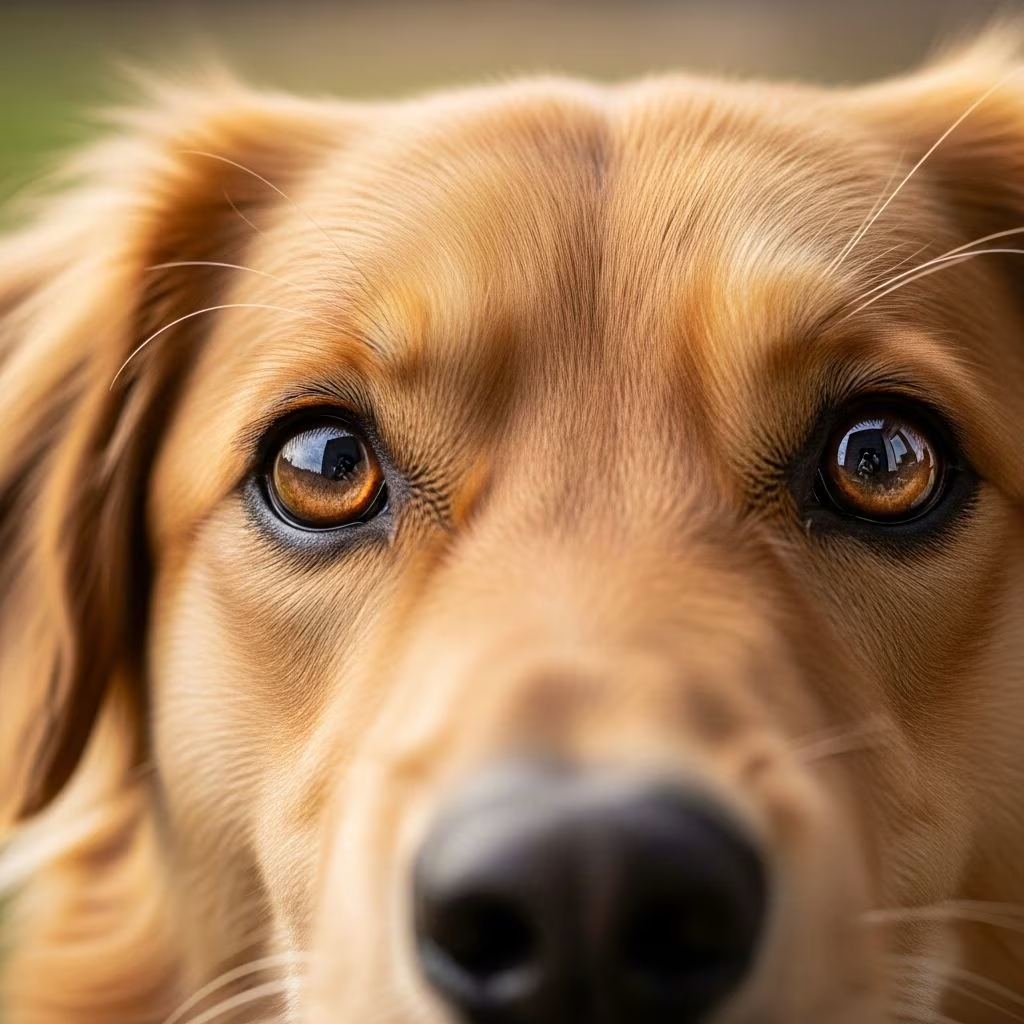
Most dogs possess striking **brown eyes**, a trait rooted deeply in genetics and pigmentation biology. This predominant eye color results from melanin, the pigment responsible for coloration in the iris, with brown being the default due to sufficient eumelanin production in canine eyes.
Understanding why dogs have brown eyes involves exploring melanin types, genetic factors influencing pigmentation, developmental changes in puppies, breed-specific variations, and exceptions like blue or heterochromatic eyes. This article delves into the science, drawing from genetic research to explain these fascinating aspects of canine physiology.
The Science of Melanin: Why Brown Eyes Dominate in Dogs
Melanin is the key pigment determining eye color in dogs, just as in humans. Two primary types exist: **eumelanin** (black or brown) and **phaeomelanin** (red or yellow). Brown eyes arise from high levels of eumelanin deposited in the iris during development.
The default eye color for dogs is brown because genes typically ensure adequate eumelanin production. Variations occur when genes dilute or suppress this pigment. For instance, recessive genes in the B or D series can modify eumelanin, leading to lighter shades like amber, but brown remains standard.
- Eumelanin dominance: Produces deep brown to black hues in the iris.
- Phaeomelanin influence: Less impactful on eyes but affects coat and skin tones.
- Genetic loci: B locus (brown) and D locus (dilution) modulate pigment strength.
Without interference, puppies’ eyes mature to brown by 16 weeks as melanin accumulates. This process ensures UV protection and visual clarity, evolutionary advantages for most dogs.
Puppy Eye Color Development: From Blue to Brown
All puppies are born with blue or bluish-gray eyes due to immature melanin production. The iris lacks full pigmentation at birth, appearing light until melanocytes activate.
Eye color stabilizes between 9-12 weeks, fully setting by 16 weeks. This transition reflects genetic programming: brown-eyed parents pass dominant alleles ensuring eumelanin buildup.
| Age Range | Eye Color Stage | Reason |
|---|---|---|
| Newborn (0-8 weeks) | Blue/Bluish-gray | Immature melanocytes; minimal pigment |
| 9-12 weeks | Transitioning | Melanin deposition begins |
| 16 weeks+ | Brown (most cases) | Full genetic expression |
This predictable shift underscores why brown eyes prevail—strong genetic defaults override temporary blue phases.
Genetics Behind Dog Eye Colors: The Role of Key Genes
Dog eye colors are entirely genetic, inherited from parents via alleles at specific loci. The K, B, and D loci control eumelanin, with dominant forms yielding brown eyes.
Recessive variants dilute pigment: bb at B locus turns black eumelanin brown (liver), while dd dilutes to blue-gray. However, brown remains common as dominant B ensures robust pigmentation.
- Merle gene: Incomplete dominant; causes patchy dilution, often blue eyes or heterochromia.
- Piebald gene: White spotting; suppresses melanocytes, risking blue eyes or deafness.
- ALX4 duplication: Near chromosome 18 gene; disrupts iris pigment, leading to blue eyes independently.
Coat color genes like merle and piebald link to eyes, explaining correlations in breeds.
Breeds with Brown Eyes vs. Rare Blue-Eyed Exceptions
Most breeds default to brown eyes: Labradors, Golden Retrievers, Beagles. Brown provides optimal light absorption for hunting and herding breeds.
Blue eyes appear in specific breeds via mutations:
- Siberian Huskies: ~10% have bi-eyed or parti-eyed heterochromia; separate blue-eye gene.
- Australian Shepherds: Merle pattern frequent cause.
- Border Collies, Dalmatians: Piebald or merle influences.
Amber eyes occur in breeds with diluted eumelanin, like some hounds, appearing coppery.
Heterochromia in Dogs: When Eyes Differ
**Heterochromia** features mismatched eye colors or sectors within one iris, due to melanin variation.
Types include:
- Complete (bi-eyed): One brown, one blue iris.
- Sectoral (parti-eyed): Multi-color sectors in one iris.
- Central: Rare ring around pupil differing from iris.
Inherited via merle or piebald genes; congenital cases show by 16 weeks with normal vision. Acquired forms from injury or disease are less common.
Breeds prone: Huskies, Aussies, Great Danes, Dalmatians. No vision issues typically, but double merles risk defects.
Health Implications: Do Eye Colors Affect Vision?
Brown eyes offer UV protection via melanin. Blue eyes, from low pigment, may increase light sensitivity but rarely impair vision in healthy dogs.
Exceptions: Double merles or piebalds risk blindness/deafness from melanocyte loss. Monitor for issues like cataracts, unrelated to color.
Frequently Asked Questions (FAQs)
Why do most dogs have brown eyes?
Brown eyes result from dominant eumelanin genes ensuring strong iris pigmentation.
Can a puppy’s eye color change after 16 weeks?
Rarely; color sets permanently by then, barring disease.
Are blue-eyed dogs unhealthy?
Not inherently; genetic blue eyes cause no issues, unlike breeding flaws like double merle.
What causes heterochromia?
Merle/piebald genes alter melanin distribution.
Do diet or environment change dog eye color?
No; purely genetic, not influenced externally.
This guide highlights why brown eyes define most dogs, blending genetics, evolution, and breed traits for optimal canine vision.
References
- What Is Heterochromia in Dogs? — Whole Dog Journal. 2023-05-15. https://www.whole-dog-journal.com/health/what-is-heterochromia-in-dogs/
- Embark Discovers Why Dogs Have Blue Eyes — Embarkvet. 2018-10-01. https://embarkvet.com/resources/embark-discovers-why-dogs-have-blue-eyes/
- How Is Pet Eye Colour Determined? — MP Labo. 2024-01-20. https://www.mplabo.com/en/emag/how-is-eye-colour-determined/
- Which Eye Colors Are Most Common in Dogs? — Orivet Genetic Pet Care Blog. 2023-08-10. https://blog.orivet.com/which-eye-colors-are-most-common-in-dogs/
- Amber Eyes – Dog Coat Colour Genetics — DogGenetics.co.uk. 2022-11-05. http://www.doggenetics.co.uk/eyes.html
- Genetics Basics: Coat Color Genetics in Dogs — VCA Animal Hospitals. 2024-03-12. https://vcahospitals.com/know-your-pet/genetics-basics-coat-color-genetics-in-dogs



