

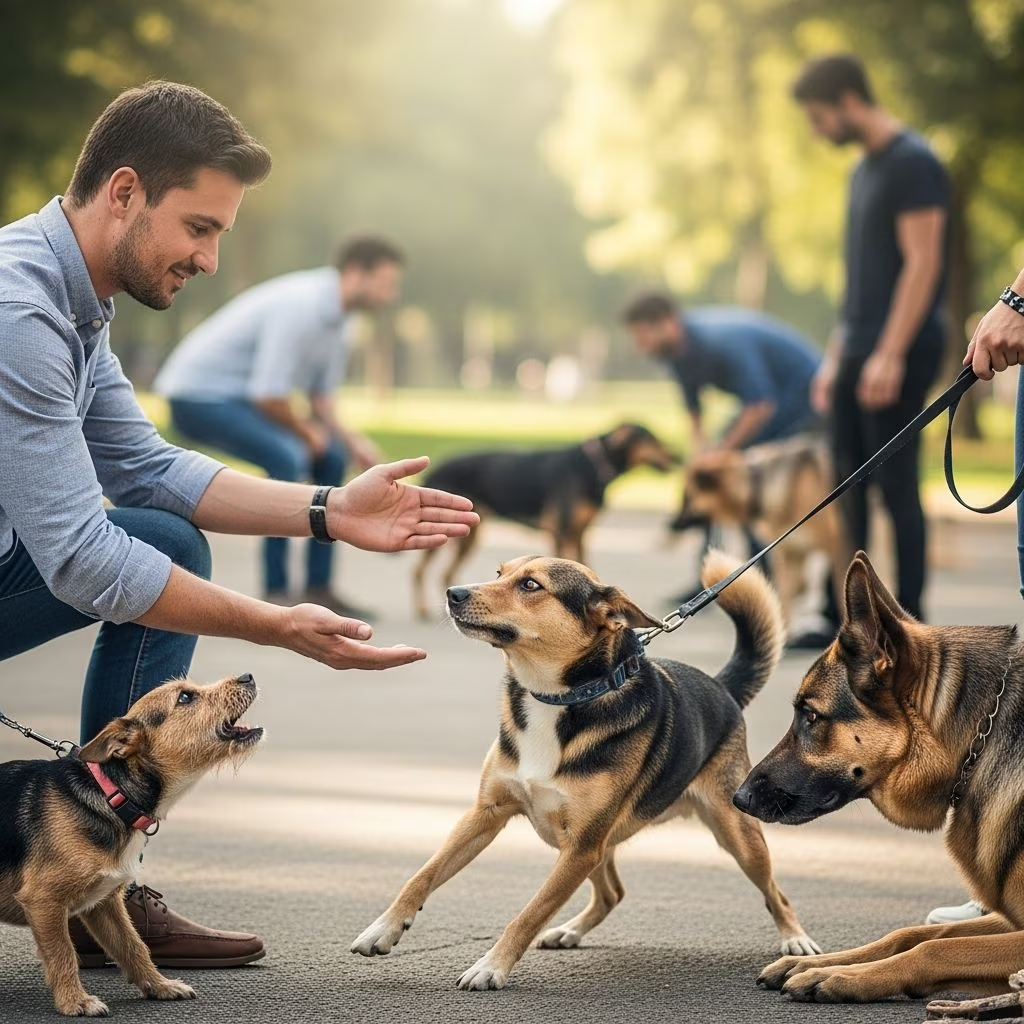
Not all dogs dislike men, but many pet owners notice their dogs becoming anxious, barking, or even aggressive around them. A 1999 study indicated dogs may display more defensive aggression toward men than women, sparking curiosity about this pattern. Experts like Dr. Ng emphasize it’s not about stereotyping men but recognizing common traits or behaviors that trigger fear responses in dogs. This comprehensive guide explores the key reasons—lack of socialization, negative past experiences, genetics, physical appearance, body language, and tone of voice—and provides actionable steps to help your dog overcome these fears through counterconditioning and positive reinforcement.
Why are so many dogs afraid of men?
Dogs’ fear of men often stems from a combination of developmental, experiential, and perceptual factors. Understanding these helps demystify the behavior and paves the way for effective training. Below, we break down the primary causes supported by veterinary insights and behavioral research.
They could be affected by a lack of socialization
The socialization period, typically between 3 and 14 weeks of age, is critical for puppies to form positive associations with various people, sounds, and environments. During this window, exposure to diverse individuals—including men of different ages, sizes, and appearances—helps build confidence. Dogs missing this exposure may develop generalized fears toward unfamiliar stimuli, such as men who differ from their primary caregivers (often women).
For instance, if a puppy is primarily cared for by a woman and rarely encounters men, it might perceive them as novel and threatening. Veterinary behaviorist Dr. Wayne Hunthausen stresses that inadequate socialization leaves dogs ill-equipped to handle real-world variety, leading to fear-based reactions. To prevent this, expose puppies gradually to men using positive experiences like treats and play, always monitoring stress levels.
They’ve had negative past experiences
Traumatic or even mildly unpleasant encounters can create lasting negative associations. Dogs don’t require dramatic abuse; subtle incidents suffice. Examples include a bookshelf toppling near a man, associating him with the scare, or a man unintentionally causing pain while helping a stuck dog under a fence.
Dr. Ng notes dogs generalize from specific traits: a deep voice, beard, hat, or cologne might link to the bad event. Even veterinary visits, where men handle leashes or exams, can reinforce fears if painful procedures coincide. These associations persist because dogs’ memories tie emotions to sensory cues, making men proxies for discomfort. Owners unaware of a dog’s history—especially rescues—may overlook these roots, perpetuating the cycle.
Genetics and temperament could play a role
Individual genetics influence baseline temperament, with some dogs predisposed to caution or reactivity. Breeds or lines selected for guarding may heighten wariness toward strangers, particularly those matching ‘intruder’ profiles like larger men. Dr. Ng explains that dogs from limited social environments or with anxious temperaments amplify fear responses to novel stimuli.
Research on canine behavior supports this; for example, studies show sex differences where males are less fearful but more aggressive, hinting at innate predispositions that interact with environment. While not deterministic, genetics set the stage, making some dogs more susceptible regardless of upbringing.
Physical appearance and body language also matter
Dogs perceive humans holistically through sight, sound, and smell. Men often stand taller (average height advantage over women), have broader builds, facial hair, or wear hats/tools, all unfamiliar or intimidating to under-socialized dogs. Dr. Hunthausen highlights how these traits signal ‘threat’ to sensitive pups.
Body language exacerbates this: assertive postures, direct stares, rapid movements, or leaning over read as dominance challenges. Dogs interpret confident strides or reached hands as invasions. Male pheromones, stronger due to testosterone, add a chemical layer—dogs’ superior noses detect these as alien or alarming. Women, statistically shorter with softer approaches, align more with ‘safe’ caregiver profiles.
- Taller stature and bulk: Looming presence triggers avoidance.
- Facial hair/hats: Obscures expressions, seems unnatural.
- Pheromones/scent: Unfamiliar odors provoke wariness.
- Assertive gestures: Direct eye contact or pats from above feel confrontational.
Tone of voice could trigger them
Men typically possess deeper, louder voices, which carry farther and resonate differently. Dr. Hunthausen observes this auditory difference alone can unsettle dogs attuned to higher female pitches associated with comfort. A booming “Who’s a good boy?” might boom like thunder to a fearful dog, unlike a softer coo.
Dogs discriminate pitches finely; lower tones mimic growls or alarms in canine communication. Combined with volume, it amplifies perceived threat, especially if past negatives involved male voices. Training tip: Men should use exaggerated high pitches initially for playfulness.
How can I help my dog feel less afraid of men?
Fortunately, fears are malleable. Counterconditioning (CC) and desensitization (DS) form the gold standard, replacing negative links with positive ones. Dr. Ng advocates gradual exposure: good things happen near men, without forcing contact. Patience yields results; rushing backfires.
Step-by-Step Counterconditioning Protocol
- Assess threshold: Note distance where dog stays calm (e.g., 20 feet from a man).
- Recruit helper: Choose a patient man; start distant, ignoring dog.
- High-value rewards: Toss treats/toys only when man appears, pairing sight/sound with joy.
- Gradual approach: As relaxation grows, shorten distance; add sits/praise.
- Monitor stress: Lip licks, yawning, avoidance? Back off. End positively.
- Repeat sessions: 5-10 mins daily; consistency builds neural pathways.
Advanced: Incorporate men’s voices by recording calm phrases fed treats. Never punish fear—it worsens. If severe, consult certified trainer/behaviorist.
| Common Mistake | Why It Fails | Better Alternative |
|---|---|---|
| Forcing cuddles | Increases panic, reinforces fear | Distant treats, let dog choose |
| Yelling to stop barking | Escalates arousal | Calm redirection with rewards |
| Inconsistent exposure | Confuses associations | Daily structured sessions |
Real-World Success Stories
Owners report transformations: One dog’s fence trauma faded after weeks of yard treats from a bearded man. Another’s vet fear resolved via lobby desensitization. Persistence pays; most see improvement in 2-4 weeks.
Frequently Asked Questions (FAQs)
Is it true all dogs hate men?
No, it’s a stereotype. Many dogs adore men; fears arise from specific causes like poor socialization. Individual variation rules.
Can genetics be overcome?
Yes, environment trumps predispositions with proper training. Even wary breeds respond to CC/DS.
How long until my dog improves?
Typically 2-6 weeks with consistent effort. Severity dictates timeline; pros accelerate.
What if my dog is aggressive, not just fearful?
Seek professional help immediately—muzzle train and avoid triggers meanwhile.
Do male dogs fear men more?
No evidence; studies show males less fearful overall, but experiences override.
Role of small dogs?
Smaller dogs may bark more defensively, feeling vulnerable, but fear men similarly.
References
- Why Do So Many Dogs Seem to Hate Men? — Kinship. 2023. https://www.kinship.com/dog-behavior/why-do-dogs-hate-men
- 4 Biggest Differences Between Male and Female Dogs — Kinship. 2023. https://www.kinship.com/news/behavioral-differences-dog-study
- Do Little Dogs Get ‘Small Man Syndrome’? — Kinship. 2023. https://www.kinship.com/uk/dog-behaviour/dogs-have-small-man-syndrome
- Effects of Neutering on Dog Behavior — Journal of Veterinary Behavior (via PMC/NCBI). 2021-10-15. https://pmc.ncbi.nlm.nih.gov/articles/PMC8370800/
- Psychological Effects of Dog Ownership — California State University Sacramento. 2019. https://www.csus.edu/faculty/m/fred.molitor/docs/dog%20ownership%20and%20depression.pdf



