

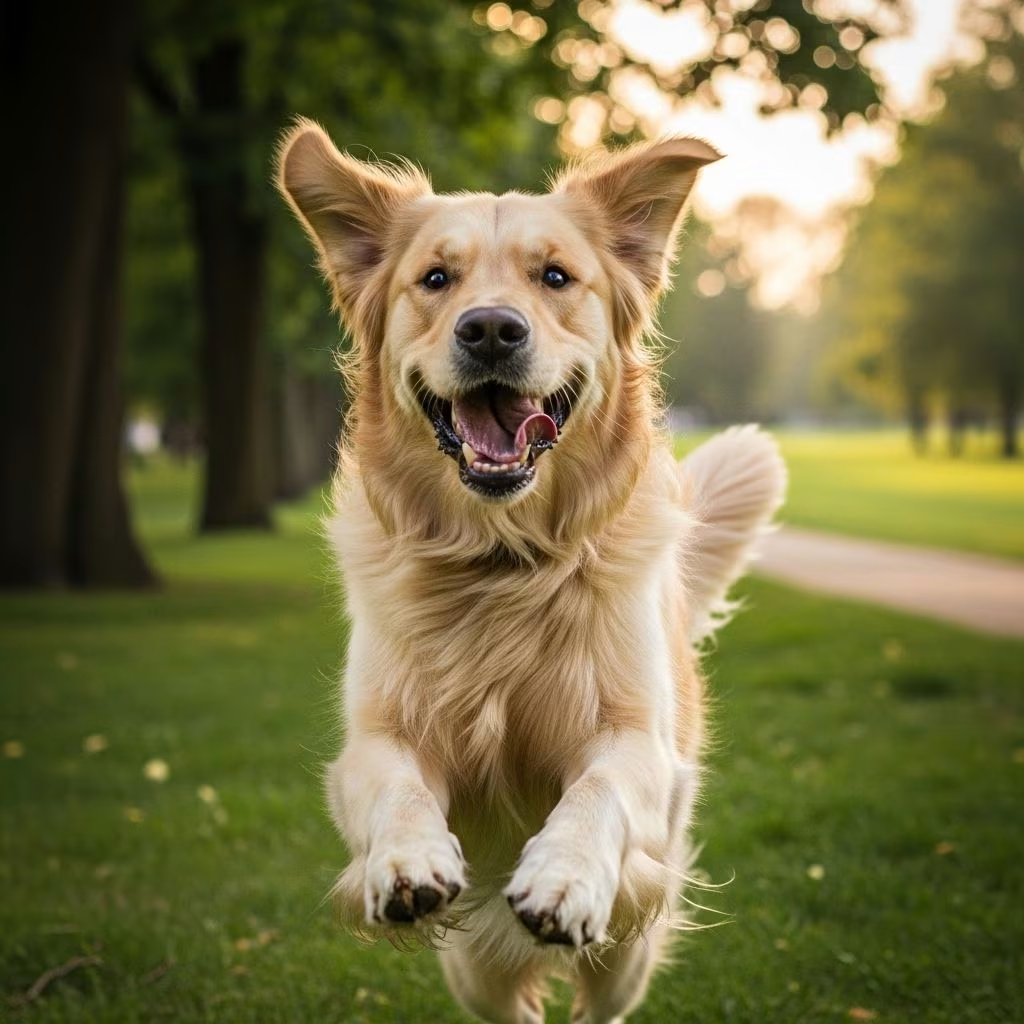
Dogs often display explosive enthusiasm through jumping, barking, spinning, and wiggling when they see their owners, toys, or other dogs. This high-energy response stems from a combination of biological drives, emotional states, and learned behaviors. While endearing, excessive excitement can signal over-arousal, potentially leading to stress or unwanted habits if unmanaged.
The Science Behind Canine Excitement
At its core, dog excitement arises from heightened arousal in the brain’s emotional centers. When a dog anticipates something rewarding—like a walk or play—dopamine surges, triggering the release of adrenaline and cortisol. These hormones prepare the body for action, increasing heart rate, respiration, and muscle tension. Positive arousal, or “happy arousal,” occurs during joyful moments, such as spotting a favorite toy, while it can flip to negative states like frustration in overwhelming situations.
Research shows excitability peaks in specific scenarios: owner returns home (94% of cases) and playtime (89%). Breeds like herding or sporting dogs may be genetically predisposed due to selective breeding for high drive, but any dog can overexcite in understimulated environments. Chronic high arousal keeps stress hormones elevated, normalizing overexcitement and linking it to issues like separation distress or reactivity.
Signs Your Dog Is Excited (And When It’s Too Much)
Recognizing excitement helps distinguish healthy enthusiasm from over-stimulation. Common signs include:
- Jumping and bounding: Bouncy, playful leaps toward stimuli indicate happy arousal.
- Barking and whining: High-pitched, repetitive vocalizations release pent-up energy.
- Spinning or zooming: Frenetic circles or “zoomies” vent emotional tension.
- Wiggling and tail wagging: Full-body shakes with loose, rapid tail movement signal joy.
- Panting and dilated pupils: Physiological markers of arousal, even without heat.
Overexcitement escalates when dogs can’t self-regulate: fixation on objects, rough mouthing, nipping, or inability to settle. Unhappy arousal shows tense posture, wrinkled brows, tight lips, or direct stares—contrasting playful energy. High arousal impairs impulse control as the amygdala overrides the prefrontal cortex, raising aggression risks.
Why Does Your Dog Get Excited Around Certain Triggers?
Specific triggers reliably spark excitement due to strong associations.
Owner Reunions and Greetings
The classic “zooming to the door” happens because dogs bond deeply with owners. Brief separations build anticipation, flooding the brain with reward chemicals upon reunion. Owners unwittingly reinforce by matching energy with pets or exclamations. Excitement urination often accompanies, leaking from an overfull bladder during enthusiastic hellos—not fear.
Playtime and Toys
Interactive play taps herding or prey drives, especially in ball-obsessed breeds. Endorphins from chasing mimic ancestral hunting, but endless sessions lead to frustration if denied. Fixation or yapping indicates unhealthy arousal, not pure fun.
Other Dogs or New People
Social excitement surges in dog parks or with guests, driven by pack instincts. Overstimulated dogs lunge, bark, or ignore signals, risking conflicts. Poor frustration tolerance from impulsive puppyhood amplifies this.
Walks and Car Rides
Leash anticipation builds from routine pairing with freedom. Hypervigilance—pacing, whining—signals chronic arousal if environments overwhelm.
The Risks of Over-Excitement in Dogs
While brief bursts are normal, chronic overexcitement harms health and behavior.
- Chronic Stress: Elevated cortisol erodes immunity, causes GI issues, and accelerates aging.
- Behavioral Escalation: Unchecked arousal manifests as pulling, chasing, jumping, or reactivity. It precedes aggression as fear/frustration mounts.
- Frustration Intolerance: “I want it now” demands lead to nudging, pawing, or ball obsession, straining relationships.
- Physical Strain: High heart rates and panting tax the body, especially in brachycephalic breeds.
Studies link excitable dogs to comorbidities: 70% show disobedience, 60% destructiveness, 50% chasing/barking. Overstimulation in adolescents risks permanent recall loss or dog-bullying.
How to Calm an Over-Excited Dog: Proven Strategies
| Trigger | Immediate Calm-Down Technique | Long-Term Prevention |
|---|---|---|
| Door Greeting | Ignore until settled; cue “sit” for attention | Practice 3-second separations daily |
| Play Sessions | Time-limit to 5 mins; end on calm note | Alternate with scent games |
| Walk Prep | Leash on crate/place; wait for 4 paws down | Randomize walk times |
| Visitors | Confine to crate with chew; greet later |
Core principle: Lower emotional arousal first—behaviors follow. Stay boring and still; energy mirrors yours. For excitement peeing, increase potty breaks and tone down greetings.
Training Exercises for Excitement Management
- Impulse Control: “Leave it” with high-value treats; progress to door drills.
- Relaxation Protocol: Reward mat-settling amid distractions (Karen Overall’s method).
- Pattern Games: Grisha Stewart’s unpredictable cues build focus.
- Mental Enrichment: Puzzle toys, sniffing walks reduce baseline arousal.
Exercises and Training Tips to Manage Excitement
Beyond management, proactive training builds resilience.
- Daily Threshold Work: Expose to triggers at sub-excitement levels, rewarding calm (e.g., see walker from afar).
- Body Language Reading: Teach cues like “watch me” to interrupt fixation.
- Breathing Exercises: Lick mats or long chews activate parasympathetic calm.
- Professional Help: For reactivity, consult certified trainers (CPDT/IAABC).
Consistency across family prevents mixed signals. Track progress: Aim for 50% reduction in episodes over 4 weeks.
FAQs: Dog Excitement Edition
Is excitement urination a sign of bad training?
No—it’s often physiological from overstimulation or full bladder, common in puppies. Rule out medical issues first, then manage greetings calmly.
Why do some dogs get more excited than others?
Genetics (high-drive breeds), age (adolescents peak), environment (understimulation), and reinforcement history play roles.
Can overexcitement lead to aggression?
Yes—unhappy arousal heightens fight/flight via amygdala hijack, increasing bite risk.
How long does puppy excitement last?
Typically fades by 2-3 years with training, though high-drive dogs retain it lifelong.
Is my dog’s zoomies normal?
Yes, if brief and post-relief (bathroom). Frenzied, daily episodes signal overarousal.
When to Seek Professional Help for Dog Excitement
Consult a vet/behaviorist if:
- Excitement pairs with fear/aggression.
- Daily life disrupted (can’t walk/settle).
- Accompanied by trembling, drooling, or elimination loss.
- No improvement after 4-6 weeks management.
Medications like fluoxetine may aid severe cases alongside behavior mod. Early intervention prevents escalation.
References
- Is Your Dog Overjoyed…or Just Overwhelmed? (Excitement or Stress: Decoding Your Dog’s Arousal Levels) — Instinct Dog Training. Accessed 2026. https://www.instinctdogtraining.com/excitement-or-stress-decoding-your-dogs-arousal-levels/
- Submissive and Excitement Urination in Dogs — UC Davis School of Veterinary Medicine. Accessed 2026. https://www.vetmed.ucdavis.edu/sites/g/files/dgvnsk491/files/inline-files/Submissive_and_Excitement_Urination_in_Dogs.pdf
- Excitement and Over-Stimulation in Dogs — Lead Changes. Accessed 2026. https://leadchanges.net/excitement/
- When Excitement Causes Your Dog to Tinkle: Conflict, Submissive, and Excitement Urination — CattleDog Publishing. Accessed 2026. https://cattledogpublishing.com/blog/when-excitement-causes-your-dog-to-tinkle-conflict-submissive-and-excitement-urination/
- Overexcitement Behaviors — Griffin Pond Animal Shelter. Accessed 2026. https://www.griffinpondanimalshelter.com/overexcitement-behaviors
- Characteristics of Excitable Dog Behavior Based on Owners’ Report Using a Novel Questionnaire — PMC (Peer-Reviewed). 2016-03-23. https://pmc.ncbi.nlm.nih.gov/articles/PMC4810050/



