

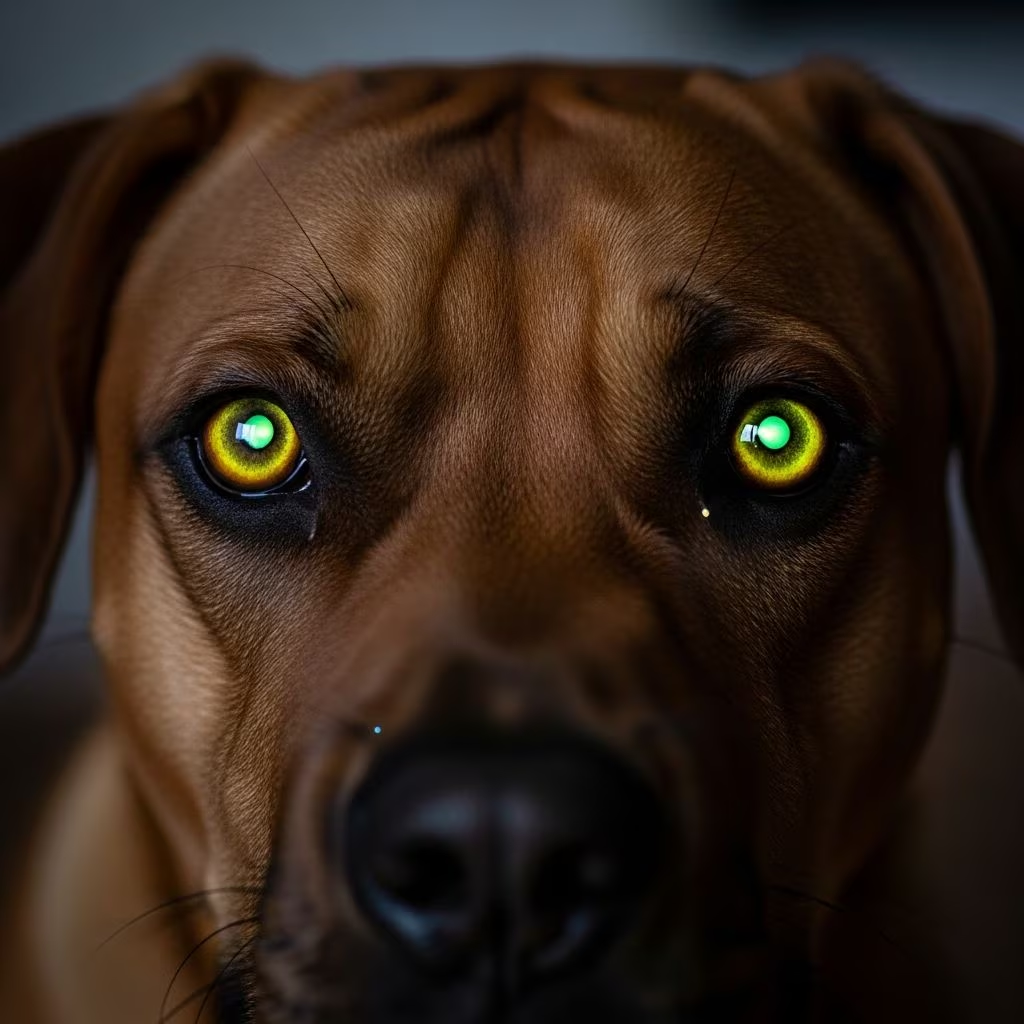
The eerie glow of a dog’s eyes in the dark or under flashlight has fascinated pet owners for generations. This phenomenon, known as eyeshine, stems from a unique anatomical feature called the tapetum lucidum, a reflective layer behind the retina that amplifies low light for better night vision.
What Causes Dogs’ Eyes to Glow?
Dogs’ eyes glow due to the tapetum lucidum, a mirror-like structure positioned just in front of the choroid (the vascular layer of the eye). When light enters the eye, it passes through the retina first. Any light not absorbed gets reflected back by the tapetum lucidum onto the photoreceptors a second time, boosting sensitivity in dim conditions.
This retroreflective property functions like thin-film optics, creating iridescent effects through constructive interference. The tapetum lucidum consists of specialized cells packed with reflective crystals, primarily zinc-based rodlets in dogs, arranged in 9-20 layers in the dorsal half of the fundus.
- Light Path: Incoming light hits retina → Unabsorbed light reflects off tapetum → Second chance for detection.
- Result: Enhanced vision in low light and visible glow when external light (e.g., headlights, flash) hits the eye.
The Science of the Tapetum Lucidum in Dogs
In canines, the tapetum lucidum is partial, covering only about half the fundus area, unlike the fuller coverage in cats. This structure improves night vision but trades some acuity for sensitivity, as scattered light can blur images slightly.
Dogs’ superior dark-adapted vision also relies on:
- Larger pupils that dilate more than humans’, allowing greater light intake.
- Higher rod-to-cone ratio in the retina, with rods optimized for dim light and motion detection.
- A lens positioned closer to the retina, concentrating light for brighter images.
Without the tapetum, humans rely solely on single-pass light absorption, explaining our poorer night vision.
Why Do Dog Eye Glow Colors Vary?
The glow color—yellow, green, blue, orange—depends on crystal spacing, refractive index, age, breed, and viewing angle due to iridescence. Most dogs exhibit yellow-green hues from zinc rodlets.
| Breed/Example | Glow Color | Notes |
|---|---|---|
| Schnauzers | Blue | Rare zinc crystal variation. |
| Siberian Huskies | Red/None | Often lack tapetum; blue-eyed dogs typically. |
| Most Breeds | Yellow-Green | Standard canine tapetum. |
| Cats (Comparison) | Green/Yellow | Denser layers (15-20) for brighter shine. |
Puppies’ glow may change in the first 3 months as the tapetum matures. Heterochromic eyes (one blue) show red shine in the blue eye, as blue irises correlate with absent tapetum.
Breeds Without Tapetum Lucidum (and Red Eye in Photos)
Not all dogs have a tapetum; those with blue eyes often lack it, leading to ‘red eye’ in flash photos from choroid blood vessel reflection, mimicking human red-eye effect. Examples include Siberian Huskies, Australian Shepherds (merle coat), and some Dalmatians.
- Blue-Eyed Rule: Any blue-iris animal typically shows red shine or none.
- Photo Impact: No tapetum means direct choroid visibility under flash.
This absence doesn’t severely impair vision; affected dogs compensate with other adaptations like rod density.
Why Can’t Humans See Like Dogs at Night?
Humans lack a tapetum lucidum, evolved for diurnal lifestyles. Our retina’s forward-facing photoreceptors are less efficient in low light without reflection. Dogs’ nocturnal ancestry favored eyeshine adaptations.
Key canine advantages:
- Tapetum Reflection: Doubles light exposure.
- Rod Concentration: Central retina packed for low-light motion.
- Pupil Size: Up to 8mm dilation vs. human 6mm.
Is Glowing Eyes a Sign of Health Issues?
Normal glow is symmetrical and consistent. Changes warrant a vet visit:
- Duller/Bright: Cataracts, retinal degeneration, or tapetal disruption.
- Asymmetrical: One eye different? Possible unilateral disease like detachment or tumor.
- Red/White Glow: Leukocoria signals cataracts or cancer; not normal eyeshine.
Certain drugs (e.g., ethambutol, macrolides) chelate zinc, disrupting tapetal crystals and night vision—monitor if your dog is on meds.
Eyeshine in the Wild: Comparisons to Other Animals
Over 50% of vertebrates have tapetum variants for crepuscular/nocturnal life. Colors signal species:
- Deer: Bright white-green for herbivore tapetum type.
- Wolves: Yellow-green, like dogs.
- Owls: Orange-red from riboflavin crystals.
Hunters use eyeshine for nocturnal tracking; color aids identification.
Frequently Asked Questions (FAQs)
Do all dogs have glowing eyes?
No, blue-eyed breeds like Huskies often lack tapetum lucidum, showing red-eye in photos instead.
Why do dogs see better in the dark than humans?
Combination of tapetum lucidum, more retinal rods, larger pupils, and lens positioning.
Is a changing eye glow bad?
Yes, asymmetry or dullness may indicate disease; consult a vet.
Can I reduce red-eye in dog photos?
Use off-camera flash or tapetum-present dogs; blue-eyed ones naturally show it.
What colors can dog eyeshine be?
Yellow, green, blue, orange; varies by breed and angle.
References
- Why Do My Dog’s Eyes Shine at Night? — American College of Veterinary Ophthalmologists (ACVO). Accessed 2026. https://www.acvo.org/tips-treatments-tricks/why-do-my-dogs-eyes-shine-at-night
- The Ghostly Green Glow: Why Do Animals’ Eyes Shine? — STVO Pets. 2016-12-15. https://stvopets.com/articles/eyes-shine/
- Dog Vision and Eye Anatomy: How Dogs See — PetMD. Accessed 2026. https://www.petmd.com/dog/general-health/how-do-dogs-see-world
- Tapetum Lucidum — Wikipedia (citing primary anatomical studies). Accessed 2026. https://en.wikipedia.org/wiki/Tapetum_lucidum



