

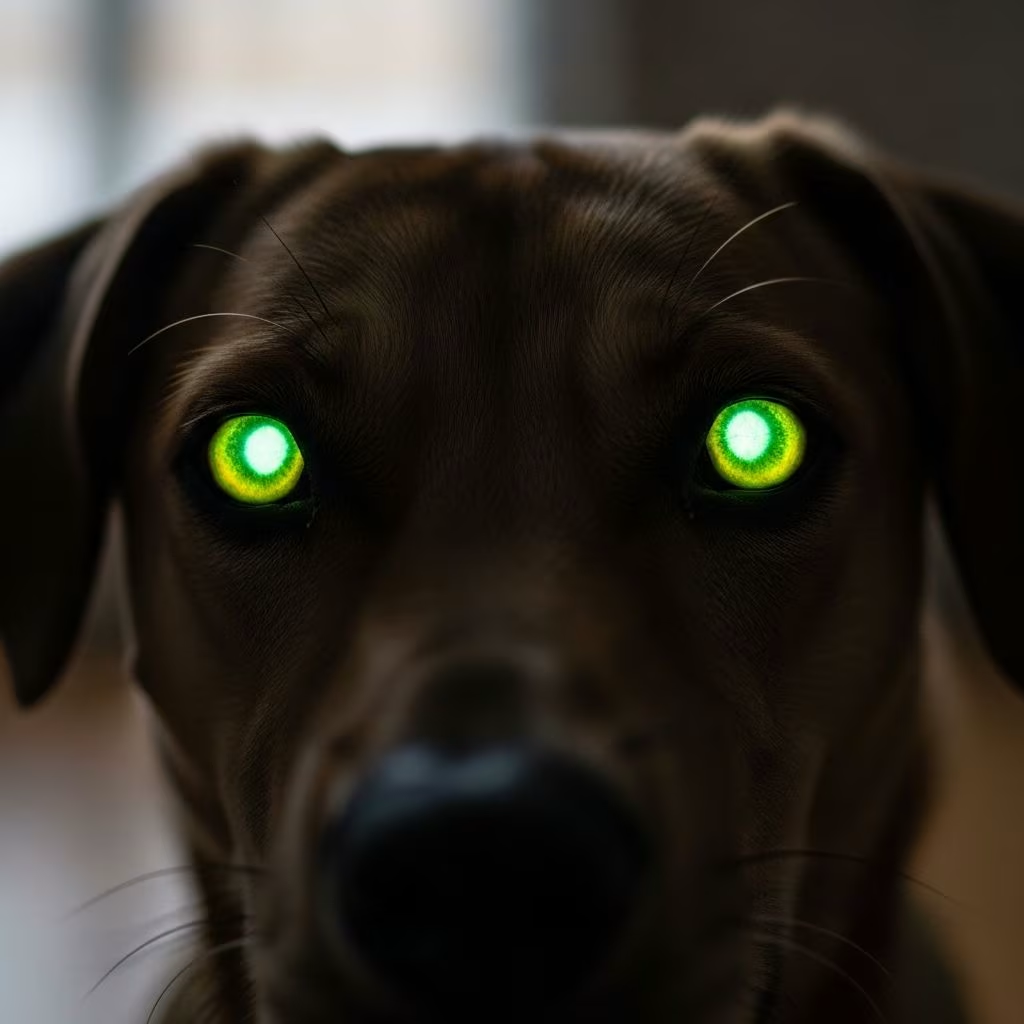
Have you ever caught your dog’s eyes glowing eerily in the dark, like tiny flashlights staring back at you? This mesmerizing phenomenon, known as **eyeshine**, is a natural feature unique to many animals, including dogs. It’s caused by a special reflective layer in their eyes called the **tapetum lucidum**, which enhances their ability to see in low-light conditions. Unlike humans, who lack this structure, dogs have evolved superior night vision thanks to this biological marvel.
In this article, we’ll dive deep into the science behind why dogs’ eyes glow, how it works, why the colors vary, when it might signal a health issue, and how it ties into their ancestral instincts. Understanding this can help you appreciate your furry companion’s incredible adaptations and spot potential problems early.
What Causes Dogs’ Eyes to Glow?
The glowing effect occurs when light—such as from a flashlight, car headlights, or camera flash—enters your dog’s eye and hits the **tapetum lucidum**. This is a thin, iridescent layer of tissue located behind the retina, just in front of the choroid (a vascular layer rich in blood vessels). The tapetum acts like a biological mirror, reflecting the light back through the retina for a second chance at detection by photoreceptor cells.
This retroreflective property amplifies available light, allowing dogs to function effectively in dim environments. In dogs, the tapetum consists of 9-20 layers of specialized rectangular cells filled with zinc-rich rodlets, arranged in parallel and thinning toward the eye’s periphery. These cells create constructive interference, boosting light quantity while preserving image sharpness and contrast on the retina.
Without the tapetum, light would pass through the retina once and be absorbed or scattered, reducing visibility in low light. Humans don’t have this layer, which is why our night vision is inferior—our eyes appear dark or show red-eye in photos due to blood vessel reflection.
The Tapetum Lucidum: Anatomy and Function
The **tapetum lucidum** is a hallmark of nocturnal and crepuscular (dawn/dusk-active) animals. In dogs, it’s situated in the dorsal half of the eye’s fundus. When light strikes it, the pupil glows because the tapetum bounces photons directly back along the incoming path, maximizing retinal exposure.
Dogs’ eyes are optimized for low light in several ways:
- More rod cells: Rods detect motion and function in dim light, outnumbering cones (color/motion detectors) compared to human eyes.
- Larger pupils: Dilate widely to admit more light.
- Brighter lens positioning: Closer to the retina for intensified images.
- Tapetum reflection: Provides photoreceptors extra light.
This combination makes dogs excel at night. Historical breeds like hounds, herders, and guards benefited from it during after-dark work. Puppies’ tapetum develops over the first 3 months, which is why newborn eyes don’t glow yet. Some dogs, especially those with blue eyes, lack it entirely, mimicking human red-eye in flashes.
Why Do Dogs’ Eyes Glow Different Colors?
Dogs’ eyeshine isn’t always the same hue. The most common is **greenish-yellow**, but you might see blue, orange, or even red depending on factors like:
- Breed and genetics: Breeds with prominent tapetums, like Boxers or Labradors, show brighter glows.
- Age: Older dogs may have duller or altered reflections due to tissue changes.
- Light angle and intensity: Optimal angles from flashes produce vivid effects.
- Pupil dilation: Wider pupils in darkness capture and reflect more light.
The color stems from the tapetum’s composition—zinc crystals create interference patterns like thin-film optics, producing iridescent hues. Blue-eyed dogs often lack it, revealing choroid blood vessels instead.
Dog Vision vs. Human Vision
Dogs perceive the world differently. Humans rely on cones for sharp, colorful daylight vision, but dogs prioritize rods for low-light motion detection. Their visual acuity is about 20/75 (vs. human 20/20), with dichromatic color vision (blues/yellows, poor reds/greens).
Key differences include:
| Feature | Dogs | Humans |
|---|---|---|
| Night Vision | Superior (tapetum, rods, pupil size) | Limited |
| Color Detection | 2 cones (blue/yellow) | 3 cones (RGB) |
| Motion Sensitivity | High | Moderate |
| Tapetum Lucidum | Present (most breeds) | Absent |
| Eye Shine | Glowing eyeshine | Red-eye effect |
This setup suits dogs’ predatory heritage, spotting prey in twilight.
Is Glowing Eyes a Health Concern?
Normally, eyeshine is harmless. However, monitor for changes:
- Cloudy haze: Possible cataracts or aging.
- Dull/uneven reflection: One eye differing from the other.
- Redness/tearing/squinting: Infection or injury.
- Light sensitivity: Corneal issues.
- Navigation issues in dark: Vision impairment.
Certain drugs (e.g., ethambutol, macrolides) can disrupt tapetal crystals by chelating zinc, impairing night vision. Consult a vet for anomalies—early detection via ophthalmologists is key.
Dogs’ Natural Instincts and Nighttime Behavior
Dogs are often **crepuscular**, active at dawn/dusk like wolf ancestors. The tapetum aided hunting/threat detection in low light. Modern pets retain this, navigating homes effortlessly at night while owners fumble. This explains heightened alertness evenings.
Frequently Asked Questions (FAQs)
Why don’t all dogs have glowing eyes?
Some lack a tapetum, common in blue-eyed breeds; puppies develop it by 3 months.
Can glowing eyes indicate disease?
Yes—changes like dullness or asymmetry warrant vet checks for cataracts or infections.
Do all animals have tapetum lucidum?
No, mainly nocturnal/crepuscular species; humans don’t.
Why no red-eye in dog photos?
Tapetum blocks blood vessel view, unlike humans.
Does age affect eyeshine?
Yes, older dogs may show altered/duller glows.
This covers the captivating world of canine eyeshine. Next time you see those glowing orbs, remember it’s evolution at work!
References
- Reflective Eyes Explained: Why Do Dogs’ Eyes Glow at Night? — Jordan Dog Training. 2023. https://jordandogtraining.com.au/reflective-eyes-explained-why-do-dogs-eyes-glow-at-night/
- Why Do My Dog’s Eyes Shine at Night? — American College of Veterinary Ophthalmologists (ACVO). 2023. https://www.acvo.org/tips-treatments-tricks/why-do-my-dogs-eyes-shine-at-night
- Dog Vision and Eye Anatomy: How Dogs See — PetMD. 2024-01-15. https://www.petmd.com/dog/general-health/how-do-dogs-see-world
- Tapetum lucidum — Wikipedia (citing peer-reviewed sources). 2024. https://en.wikipedia.org/wiki/Tapetum_lucidum
- Why Do Animal Eyes Glow? — American Kennel Club (AKC). 2023-05-20. https://www.akc.org/expert-advice/health/why-do-dog-eyes-glow/



