

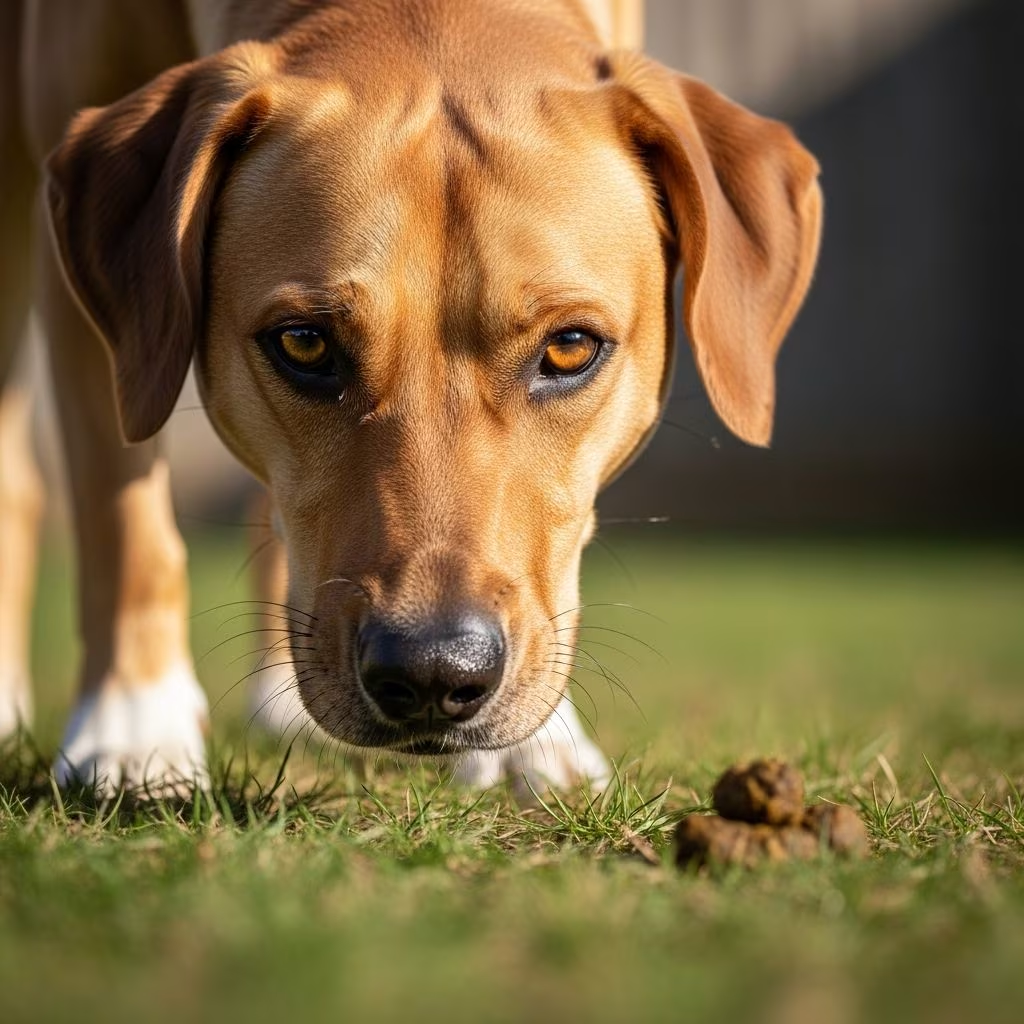
Understanding Canine Coprophagia: Why Dogs Eat Poop
One of the most puzzling and unpleasant behaviors dog owners encounter is their pet’s tendency to eat feces—a behavior scientifically known as coprophagia. While this habit may seem repugnant to humans, it is surprisingly common among dogs and has several legitimate explanations rooted in biology, evolution, and health. Understanding why your dog engages in this behavior is the first step toward addressing it effectively.
Dogs eating poop is not uncommon, with research indicating that approximately one in four dogs will eat stool at least once in their lives, while one in six dogs are classified as “serious” poop eaters. This behavior spans across age groups, breeds, and living situations, though certain factors make it more likely in some dogs than others.
The Science Behind Poop Eating
Coprophagia in dogs is driven by both behavioral and physiological factors. When examining this phenomenon, researchers have identified multiple interconnected reasons why dogs develop this habit, ranging from natural instinct to nutritional deficiency.
Ancestral and Evolutionary Instincts
One of the most significant explanations for why dogs eat poop lies in their evolutionary history. Research suggests that this behavior reflects an innate predisposition inherited from ancestral canids living in the wild. In nature, pack animals needed to maintain clean denning areas to protect their young from parasites and pathogens that thrive in fecal matter.
Mother dogs naturally engage in what scientists call “den sanitation behavior.” For approximately the first three weeks after giving birth, mother dogs will eat their puppies’ feces to keep the den clean and prevent parasitic infections. This protective maternal behavior helps shield vulnerable puppies from parasites whose eggs can take days or even weeks to become infectious. By consuming fresh poop before parasites mature, the mother dog significantly reduces her litter’s exposure to dangerous intestinal infections.
Puppies observe and replicate this maternal behavior, leading them to eat their own feces (autocoprophagia), feces from other dogs (allocoprophagia), and even feces from cats and other animals. While domesticated dogs no longer face the same survival pressures as their wild ancestors, these deep-rooted instincts remain encoded in their DNA, manifesting in behaviors that once served critical protective functions.
Learned Behavior and Environmental Factors
Beyond evolutionary instincts, dogs also learn poop-eating behavior through observation and environmental conditioning. Puppies may sniff fecal matter on their mother’s breath and confuse it with maternal scent, accidentally ingesting stool. Additionally, puppies raised in environments where food and feces are located in close proximity may develop associations between the two, potentially leading to accidental consumption of feces.
This learned component explains why some dogs continue the behavior into adulthood even when it no longer serves a protective function. The behavior becomes habitual, reinforced by environmental cues and sometimes even by the dog receiving attention from their owner in response to the behavior.
Nutritional and Health-Related Causes
Beyond behavioral explanations, numerous nutritional and medical factors can trigger or exacerbate coprophagia in dogs. These causes represent some of the most actionable reasons owners can address through dietary changes or veterinary intervention.
Nutritional Deficiencies
Dogs may eat feces as an attempt to supplement their diet with missing nutrients. This behavior is particularly common in dogs consuming low-quality food that fails to provide adequate nutrition or proper nutrient absorption. Nutrient malabsorption occurs when a dog’s digestive system cannot efficiently extract and utilize nutrients from their food.
Several specific nutritional gaps can trigger coprophagia:
- Insufficient fiber intake can drive dogs to seek dietary supplementation from feces, which contains partially digested plant matter
- Deficient B vitamins and minerals may create metabolic imbalances leading to abnormal eating behaviors
- Inadequate enzymatic digestion means dogs don’t fully break down and absorb nutrients from their regular meals
Research has even suggested that canines may consume ungulate feces—from herbivorous animals with hooves such as horses—specifically for their antioxidant properties, indicating a targeted nutritional motivation behind this behavior.
Gut Bacteria and Microbiome Imbalance
The health of a dog’s gut microbiome plays a crucial role in overall digestion and nutrient absorption. When beneficial bacteria populations decline, dogs may instinctively seek to restore these critical microorganisms by consuming feces, which contains naturally occurring gut bacteria.
This mechanism works as follows: beneficial gut bacteria not only help absorb nutrients from food but also actively produce certain nutrients the dog requires. When these bacteria populations diminish—due to antibiotic use, poor diet quality, or other factors—the dog lacks essential nutrients and experiences nutrient malabsorption. The dog’s body recognizes this deficit and drives the animal to eat feces as an instinctive attempt to reintroduce missing “good” bacteria.
Medical Conditions Associated with Coprophagia
While most cases of poop eating are behavioral or nutritional, certain medical conditions significantly increase the likelihood of coprophagia. Dogs exhibiting sudden increases in this behavior combined with other symptoms warrant veterinary evaluation.
Exocrine Pancreatic Insufficiency (EPI) represents one of the most common medical causes. In this condition, the pancreas fails to produce sufficient digestive enzymes needed to break down food into absorbable nutrients. Dogs with EPI develop an insatiable appetite and are drawn to pre-digested material like feces, which requires less enzymatic breakdown. This creates a vicious cycle where the dog cannot properly digest regular food and becomes increasingly motivated to eat already-digested feces.
Additional medical conditions that may increase poop-eating behavior include:
- Hypothyroidism – disrupts metabolism and appetite regulation
- Diabetes – affects nutrient processing and can create unusual food cravings
- Cushing’s disease – alters appetite and nutrient metabolism
- Intestinal parasites – deprive the dog of nutrients and cause digestive distress
- Malabsorption syndromes – prevent proper nutrient uptake regardless of food quality
Any dog showing sudden onset coprophagia combined with weight loss, lethargy, or changes in appetite warrants immediate veterinary attention to rule out underlying medical conditions.
Behavioral and Psychological Factors
Beyond physical and nutritional causes, behavioral and psychological factors significantly influence whether a dog develops or maintains poop-eating habits.
Stress, Anxiety, and Boredom
Dogs experiencing stress, anxiety, or insufficient mental stimulation may develop coprophagia as a coping mechanism or displacement behavior. Bored dogs confined without adequate enrichment or exercise may engage in this behavior to occupy themselves or relieve tension.
Attention-seeking also plays a role. Dogs quickly learn that engaging in coprophagia generates an immediate reaction from their owners—whether that reaction is disgust, commands, or active intervention. Some dogs deliberately perform this behavior to obtain this attention, even when the attention is negative.
Genetic Predisposition
Certain dog breeds demonstrate significantly higher predisposition to coprophagia than others. Labrador Retrievers and Golden Retrievers are nearly twice as likely to eat poop compared to any other breed of dog.
This breed-specific tendency appears linked to a genetic mutation affecting appetite regulation. This mutation impairs these breeds’ ability to activate satiety signals after eating, resulting in a perpetually “switched on” hunger drive. Dogs with this genetic predisposition exhibit excessive food-motivated behaviors and persistent food obsession, driving them to consume virtually anything edible—including feces.
Environmental and Contextual Influences
The environment and specific circumstances surrounding a dog can facilitate or encourage poop-eating behaviors:
- Poor sanitation – dogs with constant access to feces are more likely to eat it
- Social facilitation – dogs living with other coprophagic dogs may learn and replicate the behavior
- Outdoor exposure – access to wildlife feces (particularly appealing are horse manure and goose droppings) increases opportunities for the behavior
- Hunger and deprivation – inadequately fed dogs may resort to eating feces as a survival mechanism
- Age factors – puppies commonly exhibit this behavior naturally, though most outgrow it
How to Address and Prevent Coprophagia
Understanding the underlying cause is essential for selecting an effective intervention strategy. The following approaches address different causative factors:
Nutritional Interventions
For dogs with suspected nutritional deficiencies or malabsorption issues, dietary modifications often prove highly effective:
- Switch to high-quality, complete-and-balanced commercial dog food formulated to maximize digestibility
- Incorporate probiotic and prebiotic supplements to restore healthy gut bacteria populations
- Add digestive enzyme supplements to improve nutrient breakdown and absorption
- Increase dietary fiber through whole food additions or specialized fiber supplements
- Ensure the diet includes all essential vitamins and minerals in appropriate quantities
Medical Management
When medical conditions underlie the behavior, addressing the primary condition typically resolves coprophagia:
- Treat underlying parasitic infections with prescribed antiparasitic medications
- Manage conditions like EPI with pancreatic enzyme supplements added to each meal
- Address hormonal imbalances (thyroid, diabetes management) through appropriate medical therapy
- Regular veterinary checkups to monitor for emerging health issues
Environmental and Behavioral Strategies
For behavioral coprophagia, environmental management and training techniques prove valuable:
- Immediate cleanup – remove feces promptly from yards and living areas to eliminate the stimulus
- Increased exercise – provide adequate physical activity to reduce boredom and stress
- Mental enrichment – incorporate puzzle toys, training sessions, and interactive games
- Supervised outdoor time – prevent unsupervised access to feces
- Positive reinforcement training – reward dogs for ignoring or leaving feces rather than punishing the behavior
- Redirect attention – teach strong “leave it” commands and redirect focus to appropriate toys
- Avoid negative attention – excessive scolding can paradoxically reinforce attention-seeking behaviors
When to Seek Veterinary Guidance
Pet owners should consult veterinarians when:
- Coprophagia develops suddenly in a previously well-behaved dog
- The behavior accompanies weight loss, lethargy, or other concerning symptoms
- The dog shows signs of parasitic infection
- Dietary changes and increased exercise fail to resolve the behavior after several weeks
- The dog consumes feces from unfamiliar animals or contaminated environments
Frequently Asked Questions
Q: Is it dangerous for my dog to eat poop?
A: Yes, eating feces carries health risks including parasitic infection, bacterial contamination, and ingestion of harmful pathogens. It can also transmit intestinal parasites to humans. Preventing this behavior is important for your dog’s health and safety.
Q: Will my dog outgrow coprophagia?
A: Many puppies naturally eat feces as part of normal development and typically outgrow the behavior by 6-9 months of age. However, if the behavior persists into adulthood or develops later in life, intervention is recommended.
Q: Can diet changes eliminate poop eating?
A: For dogs with nutritional deficiencies or malabsorption issues, upgrading to high-quality food supplemented with probiotics and digestive enzymes often eliminates coprophagia. However, if the cause is behavioral or medical, diet alone may not be sufficient.
Q: Is coprophagia more common in certain breeds?
A: Yes, Labrador Retrievers and Golden Retrievers show significantly higher coprophagia rates, likely due to a genetic mutation affecting their appetite regulation. However, any dog breed can develop this behavior.
Q: How long does it take to stop coprophagia?
A: Timeline varies based on the underlying cause. Nutritional causes may resolve within 2-4 weeks of dietary changes, while behavioral issues may require several weeks to months of consistent management and training.
Q: Should I punish my dog for eating poop?
A: Punishment is generally ineffective and can worsen the behavior by creating anxiety or making it an attention-seeking game. Instead, focus on prevention through environmental management and positive reinforcement of alternative behaviors.
Q: Can supplements help prevent coprophagia?
A: Yes, probiotic supplements, digestive enzyme products, and prebiotic fiber can support healthy digestion and gut bacteria populations, potentially eliminating nutritionally-driven coprophagia. Consult your veterinarian about appropriate supplements for your dog.
References
- Why Do Dogs Eat Poop? — The Dish on Science, Stanford University. https://thedishonscience.stanford.edu/articles/rvuid1mxx6u1wkdlk1o6u40xv1zfga
- Feasting on Feces: Why Do Dogs Eat Poop? — Animal Biome. https://www.animalbiome.com/blogs/dog/feasting-on-feces-why-do-dogs-eat-poop
- Why Dogs Eat Poop And How To Stop It — American Kennel Club. https://www.akc.org/expert-advice/health/why-dogs-eat-poop/
- Why Do Animals Eat Poop? (And Why It Might Be a Good Thing) — National Zoo, Smithsonian Institution. https://nationalzoo.si.edu/center-conservation-genomics/news/why-do-animals-eat-poop-and-why-it-might-be-good-thing
- The Paradox of Canine Conspecific Coprophagy — NIH/PMC. https://pmc.ncbi.nlm.nih.gov/articles/PMC5980124/
- Why Does My Dog Eat Poop? — The Kennel Club (UK). https://www.thekennelclub.org.uk/health-and-dog-care/health/health-and-care/a-z-of-health-and-care-issues/why-does-my-dog-eat-poop/



