

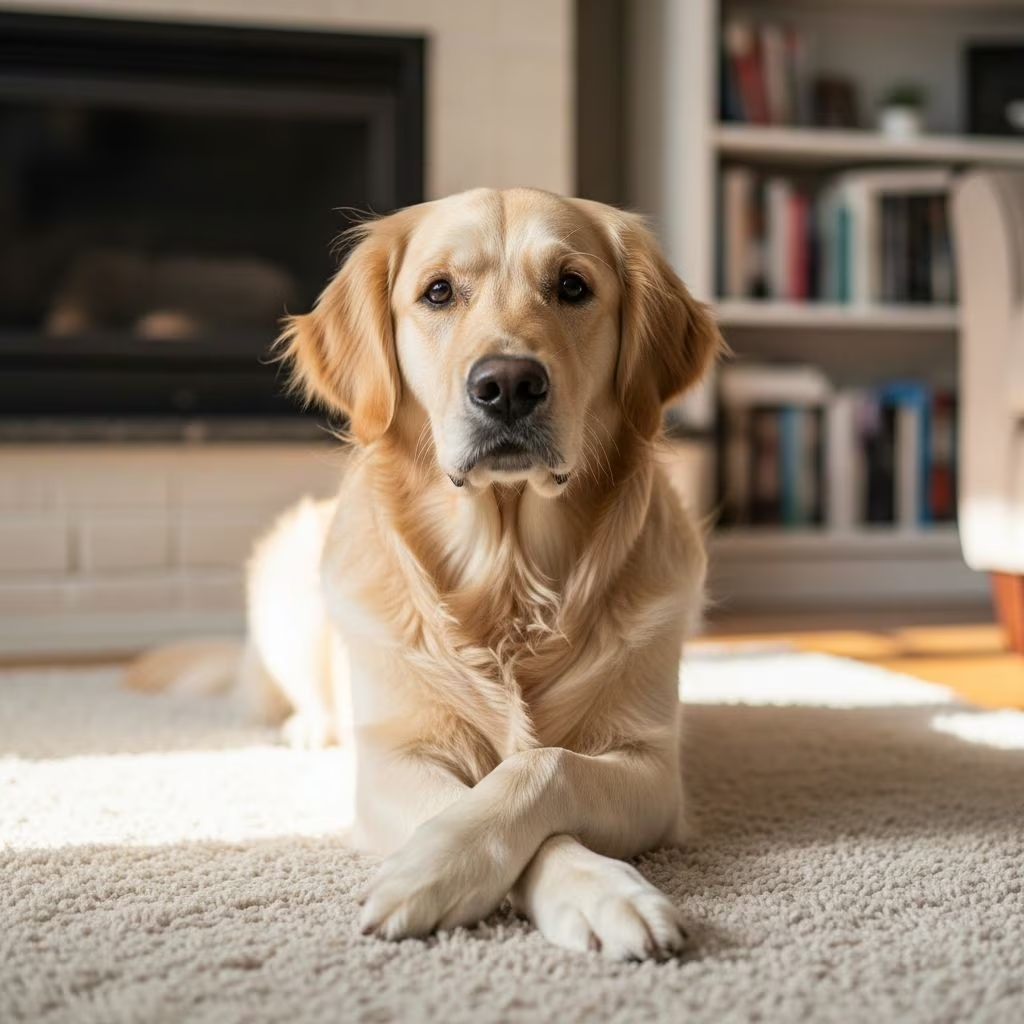
Imagine your dog lounging elegantly with their paws crossed, reminiscent of a character from Bridgerton with gloved hands folded neatly in their lap. This ‘polite paws’ behaviour captivates dog owners worldwide, sparking curiosity about its meaning. Paw crossing serves as a subtle form of communication, potentially signalling relaxation, contemplation, or even mild discomfort. Delving deeper reveals insights into your dog’s emotional state, physical comfort, breed characteristics, and overall well-being.
Dogs communicate volumes through body language, and crossed paws offer a window into their inner world. While it often appears as a charming quirk perfect for social media, understanding it enhances the bond between you and your pet. This article breaks down the primary reasons dogs adopt this pose, how to interpret accompanying signals, breed variations, and when to consult a vet. By the end, you’ll expertly read this endearing gesture.
What does it mean when dogs cross their paws?
The most common reason dogs cross their paws is **comfort and relaxation**. When a dog flops down with paws neatly crossed, it indicates full-body relaxation. Their muscles loosen, weight distributes evenly, and they feel safe in their surroundings. Anxious or threatened dogs rarely adopt this pose; instead, they tense up, keeping limbs ready for quick movement.
Picture your dog post-walk, after a hearty meal, curling up with crossed paws—this is peak contentment. Certified animal behaviour consultants note that crossing paws can relieve pressure on shoulders by rotating elbows outward, mimicking how humans cross legs for ease. Animal behaviorist Frania Shelley-Grielen explains: “The simplest reason might be it’s more comfortable when lying down, as rotating the elbows out takes weight off the shoulder.” This posture signals fatigue or bliss, much like humans reclining after a long day.
Another layer is **communication**. Dogs lack verbal speech, relying on body positions to convey emotions. Crossed paws might politely request attention, express nervousness, happiness, or submission—especially near larger animals. Observing context is key: a begging dog with crossed paws may mimic ‘praying’ for treats, blending comfort with subtle requests.
Many dogs exhibit **paw preference**, akin to human handedness. You might notice your dog consistently placing the left paw over the right. This stems from neurological dominance, influencing resting habits. Research on canine laterality shows about 70-80% of dogs prefer one side, affecting play, paw-lifting, and resting poses. Such quirks highlight individual personalities within the species.
Imitation plays a role too. Dogs learn by mirroring pack members or humans, as demonstrated in ethologist Claudia Fugazza’s ‘Do as I Do’ training method. If household dogs or you cross limbs, your pet may copy for social bonding or learned comfort. This observational learning strengthens group dynamics, making crossed paws a sign of integration.
Dog body language: reading crossed paws
Crossed paws alone don’t tell the full story—assess the **entire body**. Positive signs include soft eyes, loose body sprawl, floppy ears, and relaxed mouth/brow. These combine for unmistakable relaxation. Conversely, stiff posture, averted gaze, or weight-shifting away signals discomfort or a need for space.
Experts emphasise holistic reading: “Dogs do use their paws to communicate, but crossing forepaws while at rest probably has more to do with comfort,” says Amy Shojai. A content dog with polite paws is happy; one pairing it with lip-licking or yawning may feel overwhelmed. Tail wag speed, ear position, and eye contact provide context—slow wag with crossed paws means calm, rapid with tension means arousal.
To aid interpretation:
- Relaxed crossed paws: Loose body, half-closed eyes, even breathing, gentle tail thumps.
- Uncertain crossed paws: Ears back, whale eye (whites showing), body leaning away.
- Playful crossed paws: Play bow follow-up, bouncy energy, forward ears.
Monitoring changes prevents missing distress signals. Relaxed dogs cross paws freely; stressed ones curl tightly or stay rigid.
Why some dogs cross their paws more than others
Not all dogs cross paws equally—**personality** factors in. Calm, confident dogs lounge openly, while anxious ones prefer defensive curls. Rescue dogs with unknown histories may vary; DNA tests like Wisdom Panel reveal genetic predispositions matching behaviours.
**Breed conformation** is crucial. Long-legged, slender breeds like Golden Retrievers, Greyhounds, or Whippets cross effortlessly, skewing elbows for optimal rest. Short-legged breeds (Dachshunds, Basset Hounds, Corgis) or wide-bodied ones (Bulldogs, Pugs) struggle physically—limited flexibility prevents neat crossing. Behaviourists observe these dogs default to splayed or tucked positions instead.
Consider this breed comparison:
| Breed Type | Leg Structure | Paw Crossing Likelihood | Examples |
|---|---|---|---|
| Long-legged | Slender, flexible | High | Golden Retriever, Greyhound |
| Short-legged | Compact, limited range | Low | Basset Hound, Dachshund |
| Wide-bodied | Bulky torso | Low | Bulldog, Pug |
Genetics, upbringing, and environment interplay. Chilled breeds switch off easily, adopting polite paws for snoozes. Individuals defy norms—energetic Lapdogs might cross more than laid-back Mastiffs.
When crossed paws could signal a health issue
Typically benign, sudden or excessive paw crossing warrants attention, especially with **limp licking, limping, or reluctance to move**. These suggest **joint pain, arthritis, injury, or neurological issues** like nerve damage or degenerative myelopathy. Older dogs or breeds prone to hip dysplasia (e.g., Labs, German Shepherds) are at higher risk.
Vets recommend checks if:
- New behaviour post-injury/age milestone.
- Paws cross unevenly or tremble.
- Accompanied by whining, pacing, or appetite loss.
Early intervention via X-rays, bloodwork, or physio preserves mobility. Pain meds, joint supplements (glucosamine), or hydrotherapy help. Neurological scans rule out serious conditions. Routine vet visits catch issues proactively—don’t dismiss changes as ‘quirks’.
The Royal Veterinary College emphasises monitoring posture shifts in ageing dogs, as subtle signs precede mobility loss. Prompt care maintains quality of life.
Frequently Asked Questions (FAQs)
Is paw crossing always a good sign?
Usually yes, indicating relaxation, but context matters. Tense body language flips it to unease. Always scan full posture.
Why does my dog only cross paws at home?
Home feels safest, allowing vulnerability. Public caution keeps them alert.
Can I train my dog to cross paws?
Yes, via luring with treats, shaping, and ‘Do as I Do’ imitation. Reward consistently for tricks.
Do puppies cross paws?
Less often—adults refine for comfort. Pups sprawl clumsily.
What if my short-legged dog can’t cross paws?
Normal due to anatomy. Don’t force; celebrate unique poses.
Enhancing Your Understanding of Dog Behaviour
Beyond paws, master tail wags, ear flicks, and yawns for fluent communication. Positive reinforcement training builds trust, encouraging open body language. Enriched environments with toys, walks, and affection promote relaxation poses like polite paws.
Observe daily: journals track patterns, revealing mood shifts early. Professional behaviourists or apps aid interpretation. Celebrate quirks—crossed paws remind us dogs thrive in secure, loving homes.
References
- Why Dogs Cross Their Paws Like People, According to Science — Inverse / Rae Paoletta. 2018-05-01. https://www.inverse.com/article/42565-why-dogs-cross-their-paws-like-people-science-explains
- 6 Reasons Why Dogs Cross Their Paws — Anything German Shepherd (YouTube). 2023-12-24. https://www.youtube.com/watch?v=HwyTh4U5fdM
- Why Do Dogs Cross Their Paws? What This Cute Pose Really Means — Kinship. Accessed 2026. https://www.kinship.com/uk/dog-behaviour/why-do-dogs-cross-their-paws
- Posture and Mobility in Ageing Dogs — Royal Veterinary College (RVC). 2024-03-15. https://www.rvc.ac.uk/research/research-groups-and-centres/clinical-skills-and-professionalism/ageing-dog



