

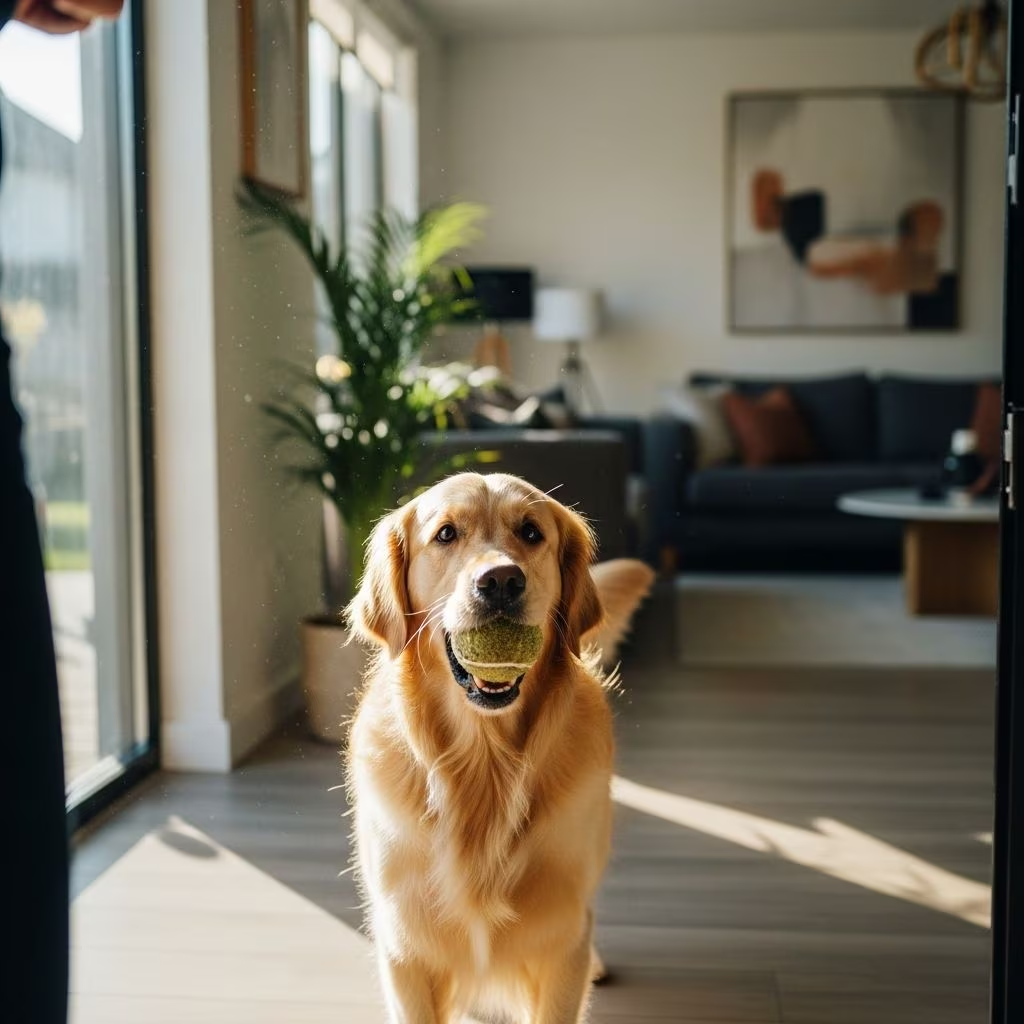
Picture this: you open your door to welcome a friend, and your dog bounds over with a slobbery tennis ball or a well-loved sock clutched in its jaws. This charming “gift-giving” behavior is common among dogs, especially during greetings with visitors. Far from random, it stems from deep-rooted instincts, emotional expressions, and learned responses that strengthen the bond between dogs and humans.
Dogs don’t distinguish guests from family in the same way we do; to them, any newcomer entering their territory is part of the social pack dynamic. Bringing a “gift”—be it a toy, shoe, or household item—serves multiple purposes, from showing respect to channeling excitement. Understanding these motivations not only deepens our appreciation for our canine companions but also helps us respond appropriately to foster positive interactions.
The Instinctual Roots of Gift-Giving
At its core, a dog’s tendency to bring gifts traces back to wild canine ancestors. Wolves and wild dogs carry prey or food back to their dens, caching it for later or presenting portions to pack leaders and pups. This prey-carrying behavior ensured survival during scarce times, much like squirrels hoard nuts.
In domesticated dogs, this instinct manifests as retrieving objects during greetings. When your dog trots up to a guest with a toy, it’s echoing the ancient ritual of offering tribute to the pack alpha—often perceived as the human visitor entering the home territory. Selective breeding has amplified this in certain breeds. Retrievers, like Labrador and Golden Retrievers, were specifically bred to “soft-mouth” birds and carry them undamaged to hunters, making gift-giving a genetic hallmark.
Terriers, bred to hunt vermin, may view their “gifts” as proud displays of a kill retrieved from a burrow. Even non-hunting breeds exhibit this if positively reinforced, blending nature and nurture seamlessly.
Pack Dynamics and Submission Signals
Dogs are pack animals, and gift-giving often signals respect and submission to a perceived leader. In the wild, subordinates present food to alphas to affirm hierarchy and gain favor. For your dog, a guest represents a new pack member or authority figure, prompting this appeasement gesture.
- Sign of trust: Sharing a prized possession, like a favorite toy, indicates the dog feels safe with the recipient. Possessive pups rarely relinquish treasures to strangers.
- Affection display: By offering something valuable to them, dogs express fondness and a desire to please, viewing humans as pack leaders worthy of tribute.
- Territorial welcome: Guests invade the dog’s home territory, so a gift diffuses tension, signaling ‘You’re welcome here.’
This behavior underscores dogs’ social intelligence. They read human cues astutely, using gifts to navigate interactions smoothly.
Excitement and Emotional Channeling
High energy often fuels gift-giving, especially with guests. A dog’s endorphin rush upon seeing visitors can overwhelm, leading them to grab the nearest object for their mouth—a natural outlet for canine emotion.
Holding something helps excitable dogs self-regulate. Instead of jumping or barking, they redirect energy into retrieving, calming themselves while engaging positively. This is common in greeters trained not to jump; the toy becomes a substitute outlet.
“Bringing you something is your dog’s way of showing they’re happy to see you, but it also helps them control their excitement and calm themself down.”
Not all gifts are toys—socks, remotes, or shoes appear because they’re accessible during the excitement burst. Praise reinforces this, associating greetings with joy.
Breed Predispositions and Genetics
| Breed Group | Examples | Gift-Giving Traits |
|---|---|---|
| Retrievers | Labrador, Golden Retriever | Strong retrieving instinct from hunting heritage; soft-mouthed carriers. |
| Terriers | Jack Russell, Fox Terrier | Proudly present ‘kills’ (toys/items) like vermin from hunts. |
| Herders | Border Collie, Australian Shepherd | Channel herding energy into offering objects. |
| Sighthounds | Greyhound, Whippet | Less common, but excitement-driven in playful individuals. |
While any dog can develop this habit, breeds with retrieving lineage show it most frequently. Genetics predispose them, but environment shapes expression.
Learned Behavior Through Reinforcement
Humans play a pivotal role. Our excited reactions—high-pitched voices, pets, play—teach dogs that gifts yield rewards. A simple ‘Good boy!’ with a toy drop conditions repetition.
Dogs are keen observers; they note how gifts prompt interaction, mistaking our delight for play invitations. Over time, this creates a greeting ritual, endearing yet habitual.
To illustrate:
- Positive loop: Dog brings toy → Owner praises/plays → Behavior repeats.
- Neutral/negative: Ignoring or scolding may diminish it, but rarely erases instinct.
When Gifts Signal Other Needs
Not always pure affection, gifts can indicate underlying issues:
- Boredom/stress: Random objects suggest insufficient stimulation; increase exercise/toys.
- Anxiety: Over-gifting with destructive items (e.g., chewed shoes) may signal separation issues.
- Attention-seeking: Persistent gifting ignores commands? Revisit training.
Monitor context: calm, selective gifts are healthy; frantic, inappropriate ones warrant vet/trainer consult.
How to Respond to Your Dog’s Gifts
Encourage or manage based on your preferences:
- Praise selectively: Reward desired items (toys), ignore others.
- Redirect energy: Toss the gift for fetch, tiring them positively.
- Train alternatives: Teach ‘sit’ for greetings, replacing gifts.
- Provide options: Scatter toys near door for appropriate choices.
For guests, brief them: ‘My dog might bring a toy—it’s their hello!’ This prevents mishaps and builds positive associations.
Benefits of Encouraging Gift-Giving
This habit offers perks:
- Calms greetings: Mouth occupied reduces jumping/nipping.
- Strengthens bonds: Shared play fosters trust.
- Enriches life: Mental/physical outlet prevents boredom.
Embrace it as a compliment—your dog respects and adores the recipient enough to share treasures.
Frequently Asked Questions (FAQs)
Why does my dog only bring gifts to some guests?
Dogs read body language; confident, calm guests elicit gifts as trust signals, while timid ones may intimidate.
Is gift-giving a sign of dominance?
No—it’s submission/respect, not control. Alphas receive tributes, not give them.
What if my dog brings gross items like dead bugs?
Praise effort, swap for toy. It mimics hunting pride; redirect to safe objects.
Can I stop the behavior entirely?
Yes, via consistent ignoring and alternative training, but it may suppress natural expression—consider if beneficial.
Do all breeds do this?
No, retrievers most prone, but any dog can learn via reinforcement.
Should guests take the gift?
Gently toss/play if willing; otherwise, ignore to avoid mixed signals.
(Word count: 1678)
References
- Why Do Dogs Bring Gifts to Us When We Arrive Home? — Katelyn Schutz, CPDT-KA. Wisconsin Petcare. 2023-05-15. https://wisconsinpetcare.com/dogs-bring-gifts-us-arrive-home-katelyn-schutz-cpdt/
- Why does your dog bring you random objects? — ElleVet Sciences. 2024-02-20. https://www.ellevetsciences.com/blog/why-does-your-dog-bring-you-random-objects/
- Why Do Dogs Bring Gifts — WagWalking. 2023-11-10. https://wagwalking.com/behavior/why-do-dogs-bring-gifts
- Why Do Dogs Bring You Toys When You Get Home? — PetMD. 2024-08-05. https://www.petmd.com/dog/behavior/why-do-dogs-bring-you-toys-when-you-get-home



